Table of Contents >> Show >> Hide
- 1. Michelangelo’s Sistine Chapel Ceiling – Vatican City
- 2. Raphael’s “School of Athens” – Vatican Museums, Rome
- 3. Giotto’s Scrovegni (Arena) Chapel – Padua, Italy
- 4. Villa of the Mysteries Frescoes – Pompeii, Italy
- 5. Masaccio’s “Holy Trinity” – Santa Maria Novella, Florence
- 6. Fra Angelico’s “Annunciation” – Convent of San Marco, Florence
- 7. Diego Rivera’s Detroit Industry Murals – Detroit Institute of Arts, USA
- 8. Goya’s Dome Frescoes – Royal Chapel of St. Anthony of La Florida, Madrid
- 9. Luca Signorelli’s Last Judgment Cycle – Chapel of San Brizio, Orvieto Cathedral, Italy
- 10. Bonus Chapel: The Entire Frescoed World of the Scrovegni / San Marco / Orvieto Triangle
- Traveler Experiences: How to Actually Enjoy Fresco-Hopping
- Final Thoughts: Turn Your Bucket List into Boarding Passes
If your idea of a perfect vacation mixes airline miles with art history nerdiness, fresco-hopping might be your new favorite sport. Frescoes are dramatic wall and ceiling paintings created directly onto wet plaster, so the pigments become part of the architecture itself. You don’t just “see” a fresco; you step into its world. From Italian chapels glowing with Renaissance color to a Detroit museum filled with industrial drama, these 10 famous frescoes deserve a permanent place on your travel bucket list.
Grab your most comfortable walking shoes (and maybe a neck brace for all that ceiling staring). Here’s a very Listverse-style countdown of frescoes that are worth crossing oceans, borders, and time zones to see in person.
1. Michelangelo’s Sistine Chapel Ceiling – Vatican City
Let’s start with the rock star of all frescoes. Between 1508 and 1512, Michelangelo covered the ceiling of the Sistine Chapel with a visual epic drawn from the Book of Genesis. You’ll recognize “The Creation of Adam” even if you haven’t opened an art history book in yearsthose almost-touching fingers of God and Adam have been parodied everywhere from cartoons to phone commercials.
The scale is jaw-dropping: over 12,000 square feet of painted surface, packed with prophets, sibyls, muscular ignudi (nude youths), and nine central scenes narrating the creation of the world and humanity. The frescoes have been cleaned and restored, so the once-muted colors now glow with vivid blues, pinks, and greens that feel almost shockingly fresh.
How to visit without losing your mind
The Sistine Chapel sits at the end of the Vatican Museums route, so by the time you get there, you’ll have walked through what feels like half of Western culture. Book timed tickets online, aim for the earliest slot, and expect shoulder-to-shoulder crowds. Photos are banned, talking is discouraged, and you will crane your neck so hard you’ll suddenly understand Michelangelo’s complaints about painting it in the first place. Totally worth it.
2. Raphael’s “School of Athens” – Vatican Museums, Rome
Just a few rooms away from the Sistine Chapel sits another Renaissance legend: Raphael’s “School of Athens.” Painted between 1509 and 1511 for the papal apartments, this fresco turns a wall into the ultimate philosophy fan convention. In a grand, imaginary classical hall, Plato and Aristotle stride down the center, surrounded by a crowd of ancient thinkers, mathematicians, and scientists, all caught mid-conversation.
Raphael slips in portraits of his contemporariesLeonardo da Vinci is thought to pose as Plato, while Michelangelo shows up as a brooding Heraclitus. The architecture is a masterclass in perspective, drawing your eye straight into the painting’s depth and making the room feel bigger than it is.
Travel tip
The “School of Athens” is part of the Stanze di Raffaello in the Vatican Museums. When the room is crowded, stand as far back as you can against the opposite wall to take in the full composition, then move closer to hunt for individual faces and details. If you can, pause for a few seconds in the centerthis fresco is basically the Renaissance’s cinematic universe, and you’ll want a moment to soak it in.
3. Giotto’s Scrovegni (Arena) Chapel – Padua, Italy
Before Michelangelo and Raphael, there was Giotto. Around 1305, he transformed a small, barrel-vaulted chapel in Padua into a storybook of the lives of Christ and the Virgin Mary. Every surface is painted: rows of narrative panels along the walls, a starry blue ceiling overhead, and a thunderous Last Judgment over the entrance.
Giotto’s figures feel surprisingly modern. They bend, embrace, and grieve with real weight and emotion. His famous Lamentation scene, where mourners gather around the dead Christ, feels heartbreakingly intimatemore like a snapshot of real grief than a distant religious icon.
Travel tip
The chapel is small and extremely fragile, so visits are tightly controlled. You must book ahead and arrive early to sit in a “decontamination” room where humidity and temperature are stabilized. After a short video, you get a precise number of minutes inside. Use them wisely: walk the length of the nave to feel the rhythm of the scenes, then turn around for the Last Judgment and let that enormous wall of souls sweep over you.
4. Villa of the Mysteries Frescoes – Pompeii, Italy
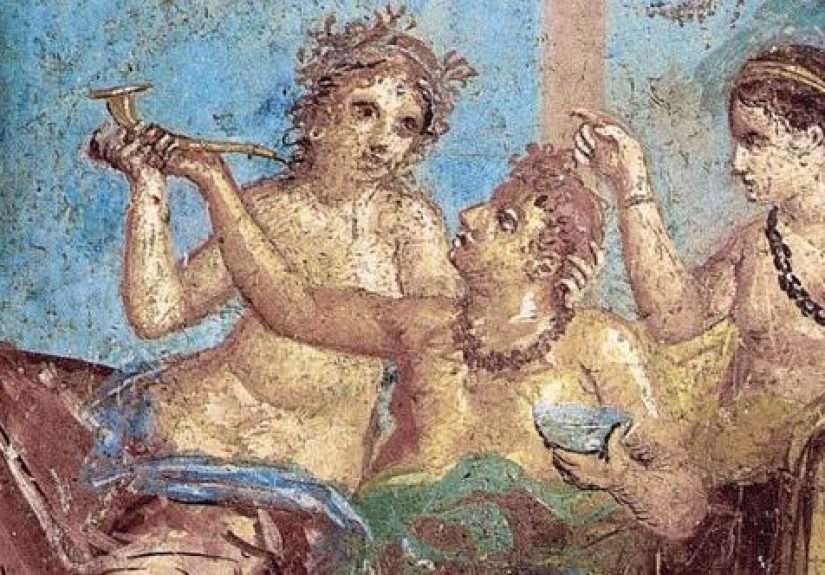
Pompeii is filled with painted walls, but the Villa of the Mysteries is the showstopper. In one room, a nearly life-sized frieze runs around all four walls, filled with dramatic red backgrounds and figures caught in what appears to be a mysterious initiation rituallikely tied to the cult of Dionysus, god of wine, ecstasy, and theater.
Women dance, read, are whipped in symbolic rites, and are attended by satyrs, winged figures, and priestesses. Because the eruption of Vesuvius in 79 CE buried the villa under ash, the colors are remarkably well preservedthose rich reds almost vibrate in the light.
Travel tip
Pompeii gets blisteringly hot and crowded, so aim for early morning or late afternoon. The Villa of the Mysteries sits a bit away from the main forum area; allow extra time to walk there. Bring water, sunscreen, and a hat, and give yourself a few quiet minutes to simply sit and let the ancient room “resurrect” itself in your imagination.
5. Masaccio’s “Holy Trinity” – Santa Maria Novella, Florence
Masaccio’s “Holy Trinity,” painted around 1427, looks deceptively calm, but it quietly changed the history of art. In this church fresco, God the Father holds the cross bearing Christ, with the dove of the Holy Spirit between them. Mary and St. John stand nearby, while two donors kneel at the front and a stark skeleton rests in a painted tomb below.
What makes it legendary is Masaccio’s use of linear perspective. The painted architecture recedes convincingly into space, creating the illusion of a stone chapel carved into the wall. For viewers in the 15th century, this would have felt shockingly reala window into another world anchored by mathematical precision.
Travel tip
Santa Maria Novella is an easy walk from Florence’s main train station and is often less chaotic than the Duomo. Once inside, walk slowly toward the “Holy Trinity” from a distance; the perspective “snaps” into place when you reach the ideal viewing point. Don’t forget to look down at the memento mori inscription near the skeleton, quietly reminding you that life is shortso you might as well keep traveling.
6. Fra Angelico’s “Annunciation” – Convent of San Marco, Florence
Fra Angelico was a Dominican friar, and his frescoes at San Marco were meant for quiet contemplation, not tourist selfies. At the top of the staircase leading to the friars’ cells, his “Annunciation” shows the angel Gabriel and the Virgin Mary in a serene cloister. Soft light, delicate colors, and gentle gestures turn the wall into a meditation on humility and grace.
The architecture in the painting mirrors the real architecture of the convent, so the holy scene feels like it’s unfolding right in the hallway with you. This was the first image the monks saw on their way to prayer, a visual reminder to approach their day with reverence.
Travel tip
San Marco is now a museum, but it still feels surprisingly peaceful. Go early or on a weekday, move slowly, and peek into the individual cellseach has its own fresco, many also by Fra Angelico or his workshop. The “Annunciation” at the top of the stairs is the emotional heart of the complex; give it the same quiet attention it was designed to inspire.
7. Diego Rivera’s Detroit Industry Murals – Detroit Institute of Arts, USA
Not all great frescoes are in Italy. In the early 1930s, Mexican muralist Diego Rivera painted a monumental cycle of 27 fresco panels in the Detroit Institute of Arts, celebrating (and critiquing) the city’s industrial might. Towering workers, roaring machinery, assembly lines, and scientific imagery fill the walls of the Rivera Court.
Rivera based the scenes on Ford’s River Rouge plant, weaving in references to technology, labor, and even Aztec mythology. The murals sparked controversy when they were unveiledsome saw Marxist propaganda, others saw blasphemybut they’re now recognized as a National Historic Landmark and one of the greatest mural cycles of the 20th century.
Travel tip
The Rivera Court is a perfect place to rest your feet between galleries. Sit on a bench and let your eyes wander: notice how Rivera balances heroic workers with looming machines, and how small details (a baby with animals, a cross-section of a fetus, a gas mask) complicate the story. If you can, join a docent-led tour; the symbolism runs deep.
8. Goya’s Dome Frescoes – Royal Chapel of St. Anthony of La Florida, Madrid
Francisco Goya’s frescoes in this small neoclassical chapel feel intimate and surprisingly modern. Painted in the 1790s, the dome shows the miracle of St. Anthony of Padua, but Goya sets the scene among ordinary Madrileños of his own timeworkers, gossiping women, curious onlookers leaning over a balustrade to see what’s happening below.
The light, loose brushwork and casual poses make the figures feel as if they could step right out of the painted architecture. The chapel also holds Goya’s remains; the artist was eventually reburied here under the frescoed dome he created.
Travel tip
The chapel is smaller and far less crowded than Madrid’s blockbuster museums, making it a perfect “deep cut” for art lovers. After visiting, you can pair the experience with a trip to the Prado Museum to see Goya’s easel paintings, including the famously unsettling “Black Paintings.” Together they give you a full spectrum of his geniusfrom airy religious ceiling to psychological horror.
9. Luca Signorelli’s Last Judgment Cycle – Chapel of San Brizio, Orvieto Cathedral, Italy
If you like your frescoes with a side of apocalyptic drama, head to the hilltop town of Orvieto. In the Chapel of San Brizio, Luca Signorelli’s late-15th-century frescoes explode across the walls and vaults with scenes from the Apocalypse and the Last Judgment. Bodies fly, twist, and tumble as angels and demons fight over human souls.
Signorelli’s mastery of anatomy and daring foreshortening made a huge impression on later artistsMichelangelo almost certainly studied these frescoes before painting his own Last Judgment in the Sistine Chapel. The result is part theology lesson, part high-octane Renaissance action movie.
Travel tip
Orvieto is an easy day trip from Rome or Florence; the funicular ride up the cliff alone is worth the journey. Inside the cathedral, the chapel is off to the side of the main altar. Let your eyes adjust to the darker space, then walk the room slowly, panel by panel. Don’t rushthese frescoes reward close looking, especially the small details of demons, instruments, and expressive faces.
10. Bonus Chapel: The Entire Frescoed World of the Scrovegni / San Marco / Orvieto Triangle
Choosing just one more fresco is nearly impossible, so think of this last entry as a combo level: Giotto’s Scrovegni Chapel in Padua, Fra Angelico’s quiet cells in San Marco, and Signorelli’s apocalyptic visions in Orvieto. Together they trace a kind of fresco evolutionfrom early emotional storytelling, through meditative monastic art, to muscular Renaissance spectacle.
If you’re dreaming of an art-focused Italian itinerary, linking these three sites with Florence and Rome creates a legendary “fresco road trip” that hits multiple centuries, styles, and spiritual moods in one journey.
Traveler Experiences: How to Actually Enjoy Fresco-Hopping
Reading about frescoes is one thing; standing under them is another. To make your bucket-list quest feel more like an adventure and less like an endurance test, it helps to know what you’re getting into.
1. Expect crowds, climate control, and strict rules
The most famous frescoes live in delicate environments, and conservation comes first. That means timed entries, small groups, and lots of “no photos” signs. In the Sistine Chapel, guards repeatedly shush the crowd; in the Scrovegni Chapel, you sit in a sealed room to stabilize humidity before you’re even allowed inside. It can feel fussy in the moment, but those rules are the reason these works are still around to see.
2. Give your neck and eyes a break
Ceiling frescoes are beautiful, but your cervical spine will absolutely file a complaint. Alternate between looking up and looking straight ahead so you don’t exhaust yourself in the first five minutes. Some chapels have benches or ledgesuse them. Sit down, lean back, and let the scene wash over you instead of trying to “scan” every square inch like a human photocopier.
3. Learn one or two key stories beforehand
You don’t need an art history degree to enjoy frescoes, but knowing a few anchors helps tremendously. For the Sistine Chapel, pick out “The Creation of Adam” and one or two other Genesis scenes to find. In the Villa of the Mysteries, read a short summary of Dionysian mystery cults so the ritual gestures make more sense. For Signorelli’s Last Judgment, familiarize yourself with the broad idea of the Resurrection of the Dead and the separation of the blessed and the damned. When you recognize even a couple of scenes on your own, the whole space feels more alive and less like a blur of anonymous figures.
4. Pair frescoes with the city around them
Every fresco is anchored in a specific time, place, and community. Detroit Industry hits differently when you’ve just walked through a city built on (and rattled by) the auto industry. Goya’s chapel feels richer after wandering Madrid’s streets and then seeing the same types of people immortalized on the dome. In Florence, moving from Masaccio and Fra Angelico to the bustling piazzas outside makes it easier to imagine Renaissance citizens stepping into these same spaces centuries ago.
5. Slow travel beats checklist travel
It’s tempting to cram in as many masterpieces as possible“If it’s Tuesday, this must be the School of Athens.” But frescoes really shine when you give them time. Instead of racing from chapel to chapel, choose one or two per day and build your schedule around them. Grab a coffee nearby and jot down what you noticed: the way color changes in different light, a facial expression you can’t forget, or a detail that surprised you. Those small observations stick with you far longer than a blurry phone picture taken from the back of a packed group.
6. Let yourself feel things (not just analyze them)
Some frescoes are quiet; others are chaotic. You might feel awe, discomfort, sadness, or even a bit of claustrophobia in smaller chapels. All of that is part of the experience. Remember that these works were designed to move their original audiences emotionally and spiritually, not just give them something pretty to look at. If you walk out of a chapel feeling oddly shakenor strangely calmthat’s a sign the art did its job.
Final Thoughts: Turn Your Bucket List into Boarding Passes
Frescoes are the ultimate slow art: fragile, immovable, and tied to the buildings that hold them. You can’t bring them home, and reproductions never capture the real effect of standing in a painted space. That’s exactly why they make such perfect anchors for a travel bucket list. Each one gives you not just a destination, but a whole atmospherea combination of architecture, history, local culture, and color that you can only experience on-site.
Whether you start with the obvious big names or track down quieter chapels and side rooms, fresco-hopping turns your trips into a series of unforgettable, highly painted moments. Book the ticket, pack the neck pillow, and let your next journey be guided by walls and ceilings that have been watching visitors walk in for centuries.
SEO JSON