Table of Contents >> Show >> Hide
- Before You Plant: 5 Rules That Make Porch Containers Look “Styled”
- 10 Front Porch Planter Ideas to Drape Your Entryway in Color
- 1) The “Welcome Committee” Pair: Matching Statement Urns
- 2) Color-Drenched Monochrome Pots (One Color, Three Textures)
- 3) The Porch “Runner”: Long Window Boxes or Rail Planters
- 4) A Tiered “Stepscape” Using Graduated Pot Sizes
- 5) The “Thriller + Trellis” Vertical Pop for Narrow Porches
- 6) Edible-Pretty Planters (Herbs That Still Look Like Decor)
- 7) Shade-Loving “Lush Lounge” Planters for North-Facing Porches
- 8) Tropical Vacation Pots (Even If You’re Not Going Anywhere)
- 9) Four-Season Structure: Evergreens + Seasonal Color Swaps
- 10) “Moody & Modern” Planters with Dark Foliage and High Contrast
- How to Keep Porch Planters Looking Good All Season
- Common Porch Planter Mistakes (And How to Avoid Them)
- Extra: Real-World Porch Planter Experiences and Lessons (So You Don’t Learn the Hard Way)
Your front porch is basically your home’s handshake. And if that handshake currently says, “Nice to meet youplease ignore the sad doormat and the one lonely spider plant,” we can fix that.
Front porch planters are one of the fastest ways to add curb appeal, show off your style, and make your entryway feel intentional (even if inside you’re still hiding the laundry basket from guests). The trick isn’t just throwing flowers in a potit’s choosing plants that play well together, look good from the street, and can handle your porch’s specific reality: sun, shade, wind, heat, pets, and the occasional delivery person who bumps into everything.
Below are 10 front porch planter ideaseach with specific plant pairings, color strategies, and layout tipsplus a practical care section so your planters don’t peak in May and crumble into crispy regret by July.
Before You Plant: 5 Rules That Make Porch Containers Look “Styled”
1) Match plants by sun and water needs
If you pair a thirsty hydrangea with a heat-loving succulent, one of them is going to have a very dramatic summer. Build each pot around the same light exposure (full sun, part sun, shade) and similar watering needs.
2) Use the “thriller, filler, spiller” formula
This classic container design approach keeps planters from looking flat. A tall thriller adds height, a mounding filler adds body, and a trailing spiller softens edges and “drapes” color over the rim.
3) Scale matters (street-view is the real view)
Small pots can disappear on a porch. If your entry has wide steps or a big façade, go bigger: tall urns, wide bowls, or grouped planters of different heights.
4) Drainage is non-negotiable
No drainage hole = soggy roots = sad plants. Use containers with drainage, elevate pots slightly if they sit on a flat surface, and never let a pot sit in standing water.
5) Skip garden soiluse potting mix
Porch containers need a lightweight potting mix that drains well but still holds moisture. Garden soil compacts in pots and can suffocate roots.
10 Front Porch Planter Ideas to Drape Your Entryway in Color
1) The “Welcome Committee” Pair: Matching Statement Urns
Why it works: Symmetry frames the doorway and instantly looks polishedeven if the rest of your porch is still “in progress.”
Try this combo (sun): Purple fountain grass (thriller) + geraniums (filler) + sweet potato vine (spiller).
Try this combo (shade/part shade): Tall fern (thriller) + coleus (filler) + creeping Jenny (spiller).
Pro tip: Use identical pots and repeat the same plants on both sides for a designer look. If you want it softer, keep the pot the same but swap one plant color (like pink geraniums on one side, coral on the other) to make it feel “matched, not mirrored.”
2) Color-Drenched Monochrome Pots (One Color, Three Textures)
Why it works: A single color reads bold from the street. Texture keeps it from looking boring.
Pick a color theme: All-white, all-purple, all-hot-pink, or even “sunset” (coral + orange + yellow) if you like drama.
Example (purple theme, sun): Purple salvia (thriller) + purple petunias (filler) + purple calibrachoa or verbena (spiller).
Texture trick: Combine one spiky plant, one mounded bloomer, and one trailing vine so the pot has movementeven without multiple colors.
3) The Porch “Runner”: Long Window Boxes or Rail Planters
Why it works: Window boxes and rail planters “drape” color across your entryway like a floral banner.
Classic sun mix: Geraniums + petunias + bacopa (white bacopa is a great edge-softener).
Classic shade mix: Wax begonias + coleus + ivy.
Design tip: Repeat plants in a pattern (A-B-A-B) so it looks intentional. Make sure your box is deep enough for rootsshallow planters dry out fast.
4) A Tiered “Stepscape” Using Graduated Pot Sizes
Why it works: Steps create built-in shelving. Using different pot sizes turns stairs into a mini garden gallery.
How to style it: Place the tallest pot near the door, medium pots mid-step, and smaller pots toward the bottom. Repeat a unifying elementsame color pot, same plant, or same accent color.
Easy plant ideas: Mandevilla on a trellis (height) + bright annuals (bulk) + trailing ivy or sweet potato vine (edge). For a softer cottage look, use calibrachoa, lobelia, and trailing verbena.
5) The “Thriller + Trellis” Vertical Pop for Narrow Porches
Why it works: If your porch is tight, go vertical. A trellis adds height without taking floor space.
Try: Clematis or mandevilla on a small trellis, with a base of petunias and trailing bacopa or ivy.
Practical note: Place climbers where they won’t snag sleeves or smack into the door. (We love a lush entryway, not a botanical ambush.)
6) Edible-Pretty Planters (Herbs That Still Look Like Decor)
Why it works: Herbs smell amazing, look clean and fresh, and you can literally harvest your porch.
Sun-friendly combo: Upright rosemary (thriller) + basil (filler) + trailing oregano or thyme (spiller).
Add color without “flower overload”: Tuck in marigolds or nasturtiumsboth bring bright blooms and a playful vibe.
Care note: Edible containers often need regular feeding and consistent watering because you’re encouraging fast growth.
7) Shade-Loving “Lush Lounge” Planters for North-Facing Porches
Why it works: Shade porches can look cool and elegantthink leafy, layered, and rich with texture.
Try: Boston fern or Japanese painted fern (thriller) + heuchera/coral bells or coleus (filler) + creeping Jenny or ivy (spiller).
Color strategy: In shade, foliage is often the star. Mix lime green, deep burgundy, and silver leaves for high contrast without relying on constant blooms.
8) Tropical Vacation Pots (Even If You’re Not Going Anywhere)
Why it works: Big leaves + bright blooms = instant “resort” energy.
Try (sun/part sun): Cannas or elephant ear (thriller) + lantana or begonias (filler) + trailing sweet potato vine (spiller).
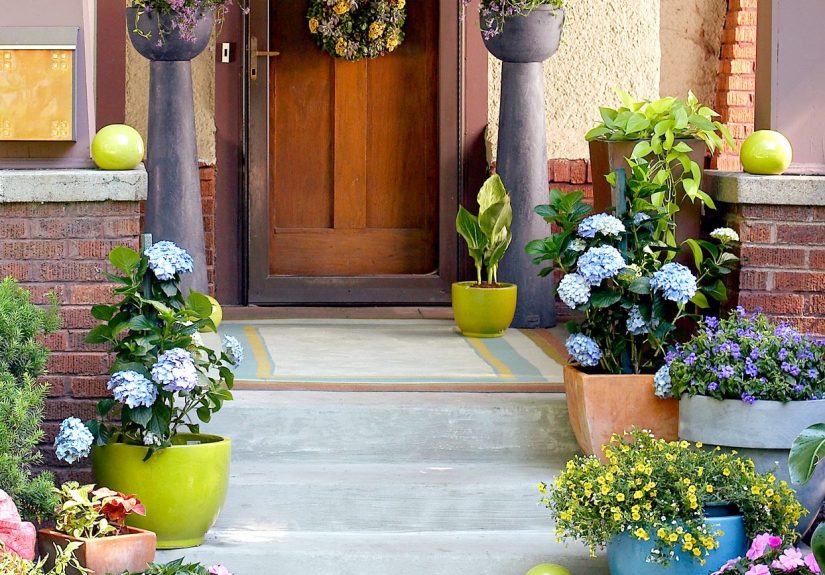
Bonus move: Use a bright ceramic pot in turquoise, yellow, or white. Tropical plants look best when the container also commits to the vibe.
9) Four-Season Structure: Evergreens + Seasonal Color Swaps
Why it works: You keep the “bones” year-round, then rotate in seasonal plants for color.
Structure plants: Small boxwood, dwarf conifer, or other compact evergreen suited for containers.
Seasonal swap ideas:
- Spring: pansies, violas, or early bulbs
- Summer: petunias, calibrachoa, or begonias
- Fall: mums, ornamental peppers, or asters
- Winter: cut evergreen boughs, pinecones, berries, and decorative branches
Design tip: Choose one consistent accent color (like white or purple) in every season so the porch always looks coordinated.
10) “Moody & Modern” Planters with Dark Foliage and High Contrast
Why it works: Dark foliage reads sophisticated and makes bright blooms pop like neon signage (but prettier).
Try: Black mondo grass or deep burgundy coleus (filler) + white petunias (contrast) + trailing silver dichondra or white bacopa (spiller).
Container choice: Matte black, charcoal, or concrete-look pots lean modern. Add one metallic accent (like a brass lantern nearby) and suddenly your porch looks like it has a Pinterest manager.
How to Keep Porch Planters Looking Good All Season
Water like you mean it (but don’t drown them)
Containers dry out faster than in-ground beds, especially on sunny or windy porches. Check moisture regularly by feeling the potting mix; water when the top layer is dry, and water thoroughly until it drains out the bottom. In extreme heat, daily watering (or even twice daily for thirsty pots) isn’t unusual.
Feed regularly (containers get hungry)
Frequent watering can wash nutrients out of potting mix, so most porch planters benefit from fertilizer. Many gardeners use a slow-release fertilizer at planting time and supplement with a water-soluble fertilizer on a regular schedule during the growing season. Always follow label directionsmore fertilizer isn’t “extra love,” it’s how plants get burned.
Groom weekly for nonstop color
Spend five minutes once a week doing quick maintenance:
- Deadhead spent flowers (especially petunias, geraniums, and calibrachoa)
- Trim long spillers to keep shape
- Rotate pots if one side is stretching toward the light
- Pull yellow leaves early (often a watering issue, not a “mystery disease”)
Common Porch Planter Mistakes (And How to Avoid Them)
Using a pot with no drainage
If water can’t escape, roots can rot. If you must use a decorative cachepot, keep plants in a nursery pot inside it and empty standing water after watering.
Planting too tightly with no plan to prune
Full planters look great… until they get crowded and stressed. If you like a packed look, choose plants that tolerate close spacing and be ready to trim mid-season.
Choosing “pretty” plants that hate your porch conditions
A north-facing shaded porch won’t turn lavender into a sun-lover. Pick plants that thrive where you are, and you’ll spend less time troubleshooting and more time enjoying.
Extra: Real-World Porch Planter Experiences and Lessons (So You Don’t Learn the Hard Way)
Porch planters are one of those projects that feel simple until you realize your porch is basically a microclimate with opinions. The “real life” learning curve usually starts the first week of summer, when your once-glorious petunias suddenly look like they’re auditioning for a wilted salad commercial. The good news is that most porch planter problems are predictableand once you’ve seen them, you can build around them.
Lesson #1: Wind is a secret plant bully. A front porch can channel wind like a hallway. That wind steals moisture fast and can snap tender stems. If your porch is breezy, choose sturdier thrillers (ornamental grasses, rosemary, dwarf evergreens) and keep floppier flowers (like some petunias) in slightly more protected spotsnear a wall, behind a railing, or in heavier containers that don’t tip. A heavier pot also prevents the classic “overnight planter migration” where one strong gust rearranges your porch decor for you.
Lesson #2: Dark pots are gorgeous… and also tiny solar ovens. Black or deep charcoal planters look modern and crisp, but in full sun they can heat up quickly, which stresses roots. If you love the look, you can still make it work: use a bigger container (more soil buffers temperature swings), pick heat-tolerant plants (lantana, vinca, sweet potato vine), and consider placing the pot where it gets a little afternoon shade. Mulch the soil surface lightly (even decorative pebbles can help) to slow evaporation.
Lesson #3: “Just add more water” is not always the answer. Drooping can mean the pot is dryor that roots are waterlogged and unhappy. That’s why the finger test is so useful: check the potting mix before you water. When you do water, do it thoroughly so moisture reaches the full root zone, then let the pot drain. If your pot sits in a saucer, empty it after watering. A container that stays soggy can cause yellow leaves and stalled growth, which often gets mistaken for “my plant needs more fertilizer.”
Lesson #4: Repetition is the cheat code for “designer” porches. One planter can look cute; two or three coordinated containers can make the whole entryway feel finished. Repeating a single plant (like the same trailing spiller in multiple pots) or repeating one color (like white blooms in every container) creates that styled look you see in magazines. It’s not about having more plantsit’s about having a plan.
Lesson #5: Seasonal swaps are easier than perfect plants. Expecting one container to look perfect from April through October is like expecting one outfit to work for every event all year. Instead, treat porch planters like seasonal décor. Spring pansies can transition to summer petunias, then fall mums, then winter greens. When you think of containers as “rotating displays,” you’ll feel less pressure to keep every plant alive indefinitelyand your porch will look fresh more often.
Lesson #6: The best porch planters aren’t just colorfulthey’re readable from the sidewalk. Up close, tiny blooms are adorable. From the street, they can disappear. That’s why bold foliage, strong shapes, and bigger flowers matter. Even a simple pot with a tall thriller and a confident spiller can look more dramatic than a busy mix of small, fussy plants. If you’re unsure, step back to the curb and look at your porch the way visitors see it. Your eyes will tell you what’s missing: height, fullness, or a trailing edge to soften the pot.
In the end, porch planters are part gardening and part storytelling. They tell people, “Someone lives here who notices beauty,” even if you’re also the person who sometimes forgets where you put your keys (again). Start with one idea, keep care simple, and build from there. Your entryway will feel more welcomingand you’ll get that tiny daily joy of walking up to a front porch that looks alive.