Table of Contents >> Show >> Hide
- The 10 Wild Airliners That Could Redefine Flying
- 1. Airbus MAVERIC: The Flying Wing That Hates Wasted Fuel
- 2. The Delft Flying-V: A Giant V With Passengers in the Wings
- 3. Boeing X-66 and the Truss-Braced Wing: Super-Thin Wings for Super-Efficient Jets
- 4. Airbus ZEROe Turbofan & Turboprop: Hydrogen Joins the Jet Age
- 5. Boom Overture: Supersonic Business-Class for the 2030s
- 6. NASA X-59: The Quiet Supersonic Pathfinder
- 7. Blended Wing Body Airliners: From X-48 to Full-Scale Giants
- 8. Heart Aerospace ES-30: The Hybrid-Electric Regional Workhorse
- 9. Eviation Alice: The Nine-Seat Electric Trailblazer
- 10. Hydrogen Blended-Wing Flagships: Long-Haul Without the Carbon Hangover
- Big Themes Behind Tomorrow’s Airliners
- What It Might Feel Like to Fly On Future Airliners
Commercial jets have looked basically the same for decades: a long metal tube, wings stuck on the sides, engines slung underneath, and a cabin where your knees and the seat in front of you develop an uncomfortably close relationship. But behind the scenes, engineers are sketching aircraft that look like flying boomerangs, giant Vs, super-thin birds, and silent electric buses with wings.
These proposed airliners of the future aren’t just for sci-fi posters. They’re serious attempts to solve aviation’s biggest problems: fuel burn, emissions, noise, airport congestion, and passengers who actually want legroom. Some concepts are already flying as testbeds. Others exist as scale models, CFD simulations, or very expensive PowerPoint decks. All of them show how radically different your next-generation flight could be.
Let’s tour ten of the most intriguing proposed future airliners, Listverse-style – part geeky analysis, part wild speculation, and a little bit of humor to make the turbulence more bearable.
The 10 Wild Airliners That Could Redefine Flying
1. Airbus MAVERIC: The Flying Wing That Hates Wasted Fuel
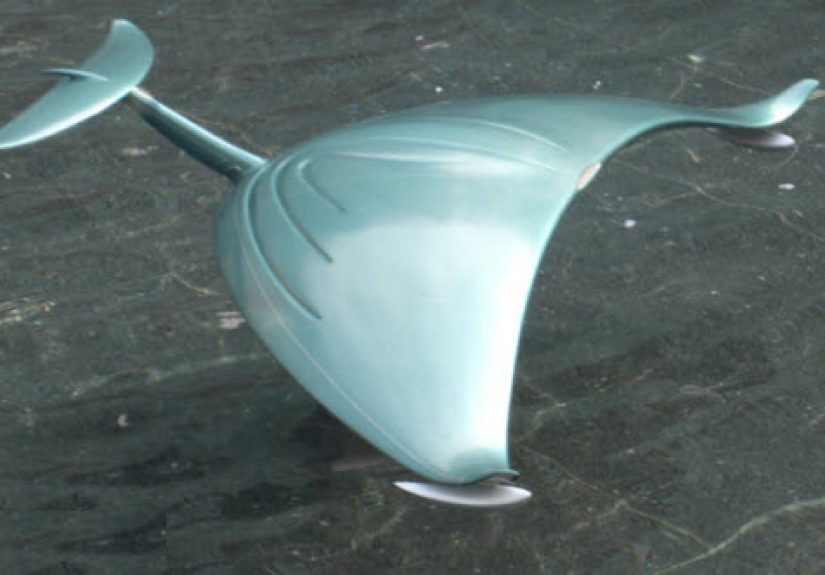
MAVERIC (Model Aircraft for Validation and Experimentation of Robust Innovative Controls) looks nothing like a normal jet. Instead of a tube with wings, it’s a “blended wing body” – the fuselage and wings are smoothly merged into one broad, manta-ray-like shape. Airbus flight tested a 2-meter-long scale model to see how stable and efficient this layout could be, and the early results are promising.
The key selling point: fuel efficiency. Airbus has suggested that a MAVERIC-style airliner could cut fuel burn by up to 20% compared with today’s single-aisle jets, thanks to better aerodynamics and more efficient integration of engines and systems. The wide interior volume opens up unusual cabin layouts too – think lounges, staggered seating zones, maybe even space where economy passengers can actually stretch.
The catch? Blended-wing bodies are tricky to design and certify. Emergency exits, pressurization, and ensuring everyone gets a reasonably similar ride (instead of wild motion near the wingtips) are all challenges. Still, MAVERIC shows that the “flying Dorito” shape isn’t just an internet meme – it’s a serious candidate for future medium-haul airliners.
2. The Delft Flying-V: A Giant V With Passengers in the Wings
If MAVERIC looks like a manta ray, the Delft Flying-V looks like someone folded an Airbus A350 into a boomerang. Developed by TU Delft in the Netherlands with support from KLM, this concept merges the cabin, cargo hold, and fuel tanks into two long, swept wings that form a big V-shape.
On paper, the Flying-V would carry about 314 passengers and the same cargo volume as an A350, but with 20% lower fuel burn on long-haul flights. The wingspan is similar to existing widebodies, so it could (in theory) use today’s gates, runways, and hangars without airports having a nervous breakdown over infrastructure upgrades.
A scaled model has already flown test flights, proving that the unusual layout can be controlled in the real world. But airlines will need convincing that passengers will happily sit far out in the wings, and that boarding, catering, and evacuations are manageable in such an unconventional layout. If it works, though, this might be the ultimate “window seat or nothing” airplane.
3. Boeing X-66 and the Truss-Braced Wing: Super-Thin Wings for Super-Efficient Jets
Traditional jet airliners use relatively thick wings optimized for today’s speeds and materials. Boeing’s truss-braced wing concept – embodied in the experimental X-66 – stretches those wings into long, ultra-slender structures supported by diagonal struts. Think “glider meets airliner,” with high-aspect-ratio wings that slice through the air with far less drag.
Studies suggest this architecture could cut fuel consumption and emissions by as much as 20–30% for future single-aisle aircraft, while carrying 130–210 passengers. The X-66 program has gone through changes and pauses, but the core idea remains powerful: make the wings lighter and longer, support them with clever structural bracing, and you can dramatically improve cruise efficiency without reinventing the rest of the aircraft.
The tricky part is fitting ~170-foot wings into today’s airports – hence the need for folding wingtips or clever gate operations. But if airlines can make the logistics work, truss-braced wings could be the “stealth revolution” that makes the next generation of narrowbody jets look oddly graceful.
4. Airbus ZEROe Turbofan & Turboprop: Hydrogen Joins the Jet Age
Aviation’s CO₂ problem is stubborn, and sustainable aviation fuel alone won’t fix it. That’s why Airbus launched its ZEROe initiative: a series of hydrogen-powered aircraft concepts that could potentially enter service in the mid-2030s (timeline now pushed back, but the vision remains).
Among the proposed designs are a hydrogen turbofan aimed at short- to medium-haul missions and a turboprop for regional routes. Both would burn hydrogen in modified gas-turbine engines, offering the potential for drastically lower lifecycle emissions if the hydrogen is produced cleanly. The turboprop concept, for example, targets around 100 passengers and more than 1,000 nautical miles of range – enough for many busy regional and domestic routes.
Hydrogen isn’t a free lunch: it needs bulky cryogenic tanks, new airport infrastructure, and careful safety and regulatory work. That’s why timelines have slipped. But if hydrogen can be made practical, ZEROe-style airliners could be the first mainstream jets whose climate guilt comes mostly from your airport snack choices, not the fuel.
5. Boom Overture: Supersonic Business-Class for the 2030s
Miss the Concorde but not its ticket prices or noise? Boom Supersonic wants to bring back faster-than-sound commercial flights with Overture, a new-generation supersonic airliner. Designed to cruise at Mach 1.7 and altitudes around 60,000 feet, Overture is aimed at shaving hours off long overwater routes like New York–London or Tokyo–Seattle.
The aircraft is expected to carry about 60–80 passengers, all in a business-class-style cabin, over roughly 4,250 nautical miles. It uses a slender delta wing and four medium-bypass turbofan engines, and it’s being designed to run on 100% sustainable aviation fuel. Airlines have already placed provisional orders, and Boom’s XB-1 demonstrator has successfully broken the sound barrier – a big credibility boost.
Challenges remain: engine development, noise regulations, economics, and public perception. But if Overture makes it to service, “I’ll be there in three and a half hours” might become a completely normal thing to say on transatlantic Zoom calls.
6. NASA X-59: The Quiet Supersonic Pathfinder
Strictly speaking, NASA’s X-59 isn’t an airliner – it’s a technology demonstrator. But its entire purpose is to unlock future commercial supersonic jets that can legally fly over land. Instead of the thunderclap sonic boom that grounded the Concorde over continents, X-59 is designed to produce a much gentler “sonic thump.”
Built by Lockheed Martin’s Skunk Works, the X-59 has an absurdly long nose, a top-mounted engine, and no front windshield. Pilots “look out” using a high-resolution external vision system that stitches together camera feeds and flight data on a cockpit display. The airplane is designed to cruise around Mach 1.4 at 55,000 feet while keeping its noise footprint within levels regulators might eventually allow over populated areas.
As NASA flies the X-59 over test communities and gathers data on how people perceive the noise, the results will feed into future rules. If regulators decide a sonic thump is acceptable, future airliners could use similar design tricks to bring supersonic schedules to routes that are currently subsonic-only.
7. Blended Wing Body Airliners: From X-48 to Full-Scale Giants
MAVERIC and the Flying-V are part of a wider family of “blended wing body” (BWB) concepts. NASA and Boeing have been exploring BWBs for years, including with the X-48, an unmanned demonstrator that flew at NASA’s test centers to study handling and efficiency.
BWBs offer three main advantages: excellent lift-to-drag ratio (which saves fuel), a large internal volume (for passengers or cargo), and potentially lower noise thanks to embedded engines and shielding shapes. Concept studies have imagined huge BWB transports that could carry hundreds of passengers or massive cargo loads with far less fuel than current jets.
The challenges revolve around certification, emergency egress, structural design, and public acceptance (“Wait, where exactly am I sitting?”). But if one major manufacturer commits to a full-scale BWB airliner, the familiar tube-and-wing silhouette that has dominated since the 1950s could finally evolve.
8. Heart Aerospace ES-30: The Hybrid-Electric Regional Workhorse
Not every airliner of the future has to look bizarre. The Heart Aerospace ES-30 looks almost like a conventional regional turboprop… until you peek at the powertrain. It’s a 30-passenger, battery-electric aircraft with a hybrid backup system.
The ES-30 targets an all-electric range of about 200 kilometers, with a hybrid-assisted range of up to 800 kilometers on reduced passenger loads. That’s enough to handle many regional routes in Scandinavia, North America, and parts of Asia, where short hops connect smaller cities to major hubs. Short runway performance and low noise would also open up more airports closer to where people actually live.
The concept here is less “sci-fi mega jet” and more “clean, quiet replacement for noisy regional aircraft.” If ES-30-style planes proliferate, you might one day step onto a regional flight that feels more like an overgrown electric bus than a roaring turboprop.
9. Eviation Alice: The Nine-Seat Electric Trailblazer
Eviation’s Alice is technically a small commuter aircraft, not a full-fledged airliner. But it’s worth including because it represents a direction aviation is clearly headed: fully electric aircraft for short routes, with the potential to scale up.
Alice is designed for nine passengers and two crew, with twin electric propulsion units and a cruising speed around 260 knots. The aircraft’s sleek design, efficient propulsors, and advanced fly-by-wire systems are all aimed at showing that battery-powered flight can make commercial sense at the regional and charter level.
If these concepts succeed and battery technology improves, you can imagine a future where the “family tree” of Alice leads to 20- to 40-seat electric airliners serving dense short-haul markets. It’s not hard to picture an all-electric shuttle hopping between close cities, marketed as guilt-minimized flying for business travelers and tourists alike.
10. Hydrogen Blended-Wing Flagships: Long-Haul Without the Carbon Hangover
Blend the blended wing body approach with hydrogen propulsion and you get some of the most futuristic airliner concepts on the drawing board: huge, wide platforms that run on liquid hydrogen stored in tanks integrated into the body, feeding ultra-efficient engines.
Airbus and others have explored hydrogen-powered blended-wing bodies as a long-haul complement to their more conventional ZEROe turbofan and turboprop concepts. The idea is to pair the aerodynamic efficiency of a BWB with the emissions reductions of hydrogen. In theory, such aircraft could significantly cut or nearly eliminate CO₂ emissions during flight, while also offering very spacious cabins inside the wide body.
The trade-offs are substantial: the need for cryogenic storage, complex safety systems, and entirely new ground infrastructure at airports. But as climate pressure builds, the idea of a hydrogen-powered, blended-wing flagship airliner might shift from “cool rendering” to “board meeting agenda item” faster than we expect.
Big Themes Behind Tomorrow’s Airliners
Cleaner Energy and Lower Emissions
Almost every concept on this list targets a dramatic reduction in fuel burn or emissions: hydrogen, electric, hybrid-electric, or very high-efficiency aerodynamics. Future airliners will be judged not just by seat-mile cost, but by grams of CO₂ (or CO₂ equivalent) per passenger-kilometer. That’s a huge change from the “just fly faster and cheaper” mindset of the early jet age.
Radical Shapes for Practical Reasons
Blended wings, Vs, and truss-braced wings aren’t weird for the sake of being weird. They’re all attempts to squeeze more lift and less drag out of every square meter of airframe. That means big gains in efficiency, but it also means rethinking everything from cabin layouts to where the fuel tanks live.
Noise, Comfort, and Community Acceptance
Supersonic designs like Overture and technologies like the X-59 are laser-focused on noise. It’s not enough to move people quickly; regulators, communities, and even airport neighbors have to accept these aircraft. Quiet approaches, restrained sonic signatures, and lower community noise footprints are becoming as important as range and speed.
Infrastructure and Certification: The Unsexy Boss Level
The biggest barrier to many of these proposed airliners isn’t physics; it’s everything else. Hydrogen needs storage tanks and pipelines. Electric aircraft need high-capacity chargers and grid upgrades. Blended-wing bodies need new evacuation rules. Supersonic overland travel needs regulatory changes. The future of airliners will be decided as much in standards committees and government hearings as in design studios.
What It Might Feel Like to Fly On Future Airliners
It’s one thing to stare at renders of futuristic aircraft; it’s another to imagine yourself boarding one. So picture this: you arrive at the airport for your first flight on a blended-wing airliner. From the terminal windows, the airplane looks more like a sleek UFO than a traditional jet. The wing and body flow together, and the engines are tucked into the back, partly shielded by the airframe. Even before you board, you notice how quiet taxi operations seem compared with the roaring narrowbody parked at the next gate.
Inside, the cabin feels wider and more open than you’re used to. Instead of the familiar single, straight aisle, the blended-wing layout gives you multiple short aisles and seating zones. Some rows curve gently with the shape of the wing, and there are small lounge-like spaces where people can stretch or stand during long flights. If you’re seated farther from the centerline, the view outside your window is more wing and sky than runway and terminalalmost like sitting near the tip of a giant glider.
Takeoff feels familiar, but the sound is different. On a hybrid-electric or hydrogen aircraft, the engines may spool up with a softer, more muted pitch. Cabin announcements are easier to hear, and the low-frequency rumble you associate with old-school jets is noticeably reduced. On short regional routes with all-electric operation, the acceleration can feel surprisingly smooth and quiet, more like a powerful train than a roaring jet. The biggest reminder you’re flying might be the view out the window rather than the noise in your ears.
On a hydrogen-powered long-haul flight, much of the passenger experience could feel surprisingly normalsame boarding pass panic, same search for overhead bin spaceuntil you start noticing little differences. The safety briefing mentions cryogenic fuel systems and emergency procedures tailored to the unique layout. Real-time displays show not just altitude and speed but also emissions savings compared with a conventional flight on the same route. Airlines will absolutely turn those numbers into marketing bragging rights.
Supersonic travel would feel different again. Imagine boarding a sleek, needle-nosed jet where every seat is business class. The cabin is narrower, the windows slightly smaller, but the sense of exclusivity is higher. Flight time on a transoceanic route is cut almost in half. You eat one proper meal, watch a single movie, answer a few emails, and descend. For frequent travelers, the biggest “experience upgrade” isn’t the onboard serviceit’s getting half your day back on every long trip.
Even at the low end of the capacity scale, electric commuter aircraft could change what “flying” means. Instead of one giant hub airport hours away, you might show up at a smaller airfield closer to home. Boarding is quicknine or thirty passengers instead of two hundredand turnaround times are short because electric aircraft have fewer fluids to manage and simpler systems to inspect. The flight itself is quiet enough that normal conversation doesn’t feel like yelling over a vacuum cleaner. For many travelers, that combination of convenience, quiet, and “green bragging rights” could be even more compelling than a fancy amenity kit.
Will every one of these proposed airliners become reality? Probably not. Some will stay as research projects or inspirational dead ends. But together they hint at a future where flying isn’t just a choice between “cheap, noisy, and cramped” or “expensive, slightly less cramped.” If even a handful of these concepts make it into service, your grandchildren’s default mental image of an airplane might be something very different from today’s aluminum tube with two wings and a tail.