Table of Contents >> Show >> Hide
- 1) There’s a federal law basically saying “Don’t rig game shows.”
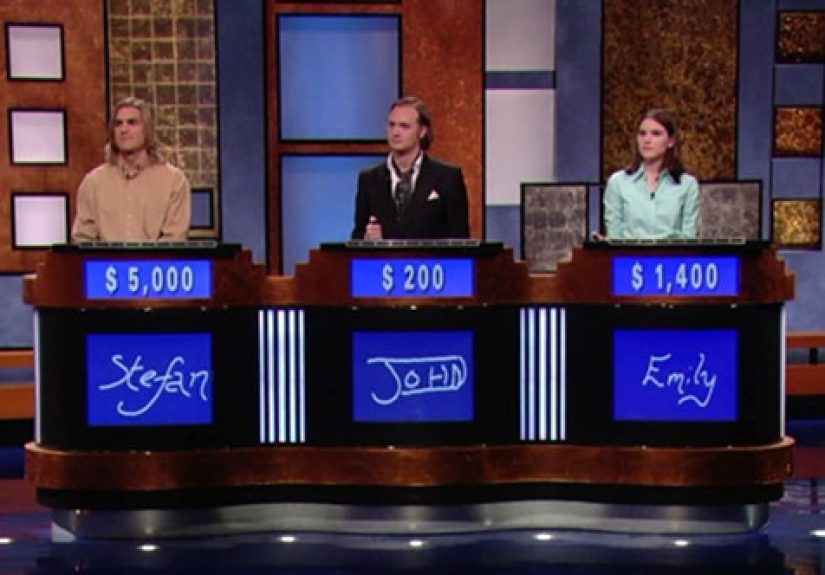
- 2) On Jeopardy!, the buzzer isn’t “fastest finger.” It’s “fastest finger… after permission.”
- 3) A “tape day” can produce a full week of Jeopardy! episodes.
- 4) The Wheel of Fortune wheel is heavy enough to qualify as gym equipment.
- 5) Family Feud’s “We asked 100 people…” is not a poetic phrase. It’s the whole game.
- 6) One guy “beat” Press Your Luck by treating it like a pattern puzzle, not a random game.
- 7) Winning a car can feel amazing… until taxes show up like a surprise bonus round.
- 8) There are wardrobe rules because TV cameras are petty about stripes.
- 9) Game shows use compliance and oversight because “fair” is the whole product.
- 10) On Let’s Make a Deal, costumes aren’t just for laughsthey’re a selection strategy.
- Why we can’t quit game show trivia
- 500 More Words: The “Game Show Experience” We All Somehow Share
Game shows are the purest form of American optimism: walk in with a name tag, leave with a boat (and a sudden need to learn what “taxable benefit” means).
We watch for the big wins, the brutal buzzer misses, and the occasional contestant who looks like they were launched onto the set by a T-shirt cannon.
But behind the bright lights and louder theme songs, game shows are packed with rules, history, and odd little truths that arefranklystranger than a “Zonk.”
Below are 10 weird facts about game shows that are all real, all fascinating, and all proof that “simple TV fun” is held together with equal parts legal paperwork,
engineering, and human chaos. Along the way, you’ll pick up some great game show trivia, learn how contestant rules actually work, and see why game show scandals
basically gave America an entire new rulebook.
1) There’s a federal law basically saying “Don’t rig game shows.”
If you’ve ever wondered whether game shows are “for real,” here’s your answer: the U.S. government has a law making it illegal to secretly prearrange or influence
the outcome of certain broadcast contests (the kind you’d call a game show, a quiz show, or a televised contest of knowledge/skill/chance).
This isn’t a random fun fact someone made up on the internetit’s part of the post–1950s cleanup after America learned that some early quiz shows were manipulated.
Viewers felt betrayed, Congress got involved, and the industry’s “trust me, bro” era ended in a pile of hearings and rule changes.
Why it’s weird
Most TV genres don’t come with their own “Thou shalt not cheat” federal statute. Sitcoms can’t be “rigged” unless you count a laugh track. But game shows? Different
storybecause money, fairness, and public trust all collide on camera.
2) On Jeopardy!, the buzzer isn’t “fastest finger.” It’s “fastest finger… after permission.”
Jeopardy! looks like a speed contest, but the signaling devices aren’t live whenever a clue is on screen. Contestants can’t legally “jump” the host. The system activates
only after the host finishes reading the clue, and an offstage staff member controls that activation.
Why it’s weird
At home, it feels like you’re yelling answers into a void. In the studio, it’s more like a high-stakes rhythm game: listen, time the cadence, and react when the system
opens. In other words, “knowing stuff” is only half the battleyour thumb’s got to behave.
Also: if you ring in early, you don’t get a gold star for enthusiasm. You get a competitive disadvantage. So yes, Jeopardy! has taught generations of Americans the
importance of waiting their turn… with consequences.
3) A “tape day” can produce a full week of Jeopardy! episodes.
Many game shows batch-produce episodes. On Jeopardy!, a typical tape day involves shooting multiple episodes back-to-backenough to cover a big chunk of the broadcast
week. That means contestants might be living several days of television in a single workday.
Why it’s weird
Imagine taking a final exam… then immediately taking four more… while trying to keep your facial expressions consistent so your mom doesn’t text,
“Why do you look tired on Wednesday?”
This production reality also explains why experienced viewers talk about “game stamina.” Even if someone is brilliant, mental fatigue is realespecially when the lights
are hot and your brain is doing Olympic-level sprinting.
4) The Wheel of Fortune wheel is heavy enough to qualify as gym equipment.
That iconic wheel isn’t a cute little prop. Reported figures put it at roughly 2,400 pounds, with dozens of mechanical elements contributing to that
legendary clicking sound and on-camera drama.
Why it’s weird
Wheel of Fortune is basically a word puzzle show that casually includes a physics demonstration. The wheel’s size, weight, and mechanics aren’t just set dressingthey
shape the experience. A wheel that looks easy to spin on TV can feel like you’re trying to rotate a small planet.
Also, it’s hilarious that a show about letters has one of the most aggressively engineered objects in daytime television.
5) Family Feud’s “We asked 100 people…” is not a poetic phrase. It’s the whole game.
Family Feud is weirdly honest about its core mechanism: it’s built on survey responses. The points are tied to how many surveyed people gave a particular answer.
That’s why “good” answers sometimes lose to “popular” answers. The game isn’t testing truth. It’s testing what a crowd is likely to say.
Why it’s weird
This turns the show into a social mirror. Family Feud trivia often goes viral because the board reveals what people think other people think.
It’s a psychology experiment disguised as a buzzer battle.
It also means you can be objectively correct and still wrong in the only way that matters: wrong on TV.
6) One guy “beat” Press Your Luck by treating it like a pattern puzzle, not a random game.
Press Your Luck had a computerized “Big Board” that looked random. But in the 1980s, a contestant named Michael Larson famously studied the board and recognized
repeating patterns. On the show, he timed his presses to land on favorable squares and avoided the dreaded Whammy over and over.
His winnings hit a jaw-dropping level for a daytime game show run, and the moment became so infamous it’s been revisited in major media stories and dramatized later.
Producers suspected cheating, investigated, and ultimately couldn’t prove rule-breakingbecause what he did was closer to “out-prepared” than “tampered.”
Why it’s weird
Game shows usually reward quick thinking in the moment. This was the opposite: slow, obsessive prep that turned a TV game into something like speedrunning.
It’s the rare case where “I watched a lot of episodes and took notes” wasn’t a quirky hobbyit was a strategy.
7) Winning a car can feel amazing… until taxes show up like a surprise bonus round.
In the U.S., game show winningscash and many non-cash prizesare generally treated as taxable income. That means a “free” car isn’t truly free in the way people mean
when they scream “IT’S FREE!” while confetti attacks them.
Why it’s weird
The audience sees a shiny prize. The winner sees a shiny prize and a new vocabulary list: “fair market value,” “tax form,” and “please don’t make me sell this jet ski.”
It’s common for winners to choose cash alternatives (if offered) or sell prizes to cover tax obligations and associated costs.
It’s not the show being mean. It’s just how prize taxation works. But it does mean that the real skill isn’t just guessing pricesit’s planning for the after-party.
8) There are wardrobe rules because TV cameras are petty about stripes.
Ever notice how many contestants wear bright, solid colors? That’s not just personal styleit’s also practical. Patterns can create odd visual effects on camera, and
clothing with big logos can trigger legal and broadcast concerns.
Some shows and tapings publish dress guidance encouraging colorful clothing while discouraging certain choices (like very light colors) and restricting corporate logos
or suggestive text. In short: you can absolutely be memorable, but you can’t be a walking billboard.
Why it’s weird
Your outfit is part of your “contestant strategy,” but not in a glamorous way. It’s less “high fashion” and more “please don’t break the camera.”
Game show contestant rules often start before you ever touch a buzzer.
9) Game shows use compliance and oversight because “fair” is the whole product.
After the quiz show scandals era, game shows became extremely serious about standards, documentation, and process. Large productions may involve standards-and-practices
oversight, detailed rulebooks, and careful procedures designed to prevent manipulation and maintain trust.
Why it’s weird
The show looks spontaneous. Behind the scenes, it can be closer to a controlled experiment. If a game show is entertaining, that’s greatbut if it’s not fair (or if it
can’t prove it’s fair), the whole premise collapses. There’s a reason the legal framework exists, and why producers are allergic to anything that smells like
“predetermined.”
10) On Let’s Make a Deal, costumes aren’t just for laughsthey’re a selection strategy.
Let’s Make a Deal is famous for audience members showing up in wild costumes. That tradition has a simple logic: the show selects “traders” from the audience, and
standing out increases your odds of catching the host’s eye.
Why it’s weird
Most competitions start once you’re playing. Let’s Make a Deal starts in the lobby, in line, and in your closet. It’s one of the only mainstream shows where “being a
pineapple” can be a rational tactical decision.
Also, it’s delightful that an entire game show ecosystem evolved where adults dress like cartoon objects in pursuit of money and prizes, and everyone agrees this is normal
and good.
Why we can’t quit game show trivia
The best weird facts about game shows all point to the same truth: these programs are engineered experiences. They’re part performance, part psychology, part logistics,
and part legal agreement printed in a font size usually reserved for prescription side effects.
And that’s exactly why they’re so fun. Every buzzer has a backstory. Every prize has fine print. Every “simple” rule exists because somebody, somewhere, once tried to
break itprobably while smiling for the camera.
So the next time you’re watching a contestant celebrate a win, remember: behind that moment is a whole world of game show behind-the-scenes quirks, contestant rules,
and production wizardry that makes the chaos feel effortless.
500 More Words: The “Game Show Experience” We All Somehow Share
Even if you’ve never stood behind a podium or spun a wheel the size of a small patio, game shows create a surprisingly universal experience. It usually starts the same
way: you’re on the couch, snacks within reach, and you’re confident you could dominate. Not “maybe do okay.” Dominate. You’re practically writing your own winner’s speech
while the opening theme plays.
Then the first clue drops, and reality arrives. The answer you “definitely knew” evaporates the moment the host finishes the sentence. You shout something like,
“It’s… the guy… with the thing… from the place!” and your dog looks at you the way a standards-and-practices officer might: disappointed, but not surprised.
That’s the magic of game shows at homeyou get the adrenaline without the existential dread of a national audience.
There’s also the uniquely social experience of playing along with other people. If you watch with friends or family, you quickly learn everyone has a role.
One person is a walking encyclopedia. One person is amazing at word puzzles but freezes under time pressure. One person insists the correct strategy is always
“Go big or go home,” even when “go big” would absolutely send them home. And somehow, there’s always someone who tries to enforce house rules like you’re
running a tiny living-room tribunal: “No, you said it after the buzzer. That doesn’t count!”
If you ever attend a taping (or even just read about how tapings work), the experience gets even stranger. You realize how much of the energy is built on pacing.
The crowd is coached to stay loud. The set lights are intense. The host’s charm is part performance, part traffic controlkeeping everything moving so the show feels
effortless on TV. And the contestants? They’re balancing excitement, nerves, and the weird pressure of trying to act like a normal human while your brain is doing
calculus at sprint speed.
The most relatable “game show moment” might be the one nobody plans for: the near-miss. You were one beat too slow on a buzz. You picked the wrong envelope.
You changed your answer at the last second. At home, you groan and keep eating chips. Onstage, it’s a whole emotional roller coaster in eight seconds.
That’s why game shows stick with usbecause the wins feel huge, the losses feel personal, and the whole thing is wrapped in a package that says,
“Don’t worry, it’s just fun,” while your heart rate politely disagrees.
In the end, the shared experience is simple: game shows make everyday skillsremembering facts, reading people, solving puzzles, staying calmfeel heroic.
They turn a Tuesday into a stadium sport. And whether you’re a contestant or a couch champion, you walk away thinking,
“Okay… but I could totally do that.” (And that, friends, is how they get you.)