Table of Contents >> Show >> Hide
- 1. Start with a Light, Airy Color Palette
- 2. Use Mirrors Like Secret Windows
- 3. Declutter HardThen Declutter Again
- 4. Choose Furniture with Slim Lines and Visible Legs
- 5. Edit and Scale Your Layout
- 6. Hang Curtains High and Wide
- 7. Layer Lighting (Don’t Rely on a Single Overhead)
- 8. Pick See-Through and Reflective Pieces
- 9. Use Rugs to Define and Stretch the Space
- 10. Maximize Vertical Space
- 11. Create Visual Flow with Repeated Colors and Materials
- Real-Life Ideas for Different Small Rooms
- of Practical Experience: Living with a Small Room
If your home has a room that feels more like a shoebox than a sanctuary, you’re not alone. City apartments, starter homes, dorms, and bonus rooms all tend to lean on the “cozy” side of the real estate listing. The good news: You don’t need to knock down walls to make a small room look bigger. With a few smart design tricksmany of which interior designers use every dayyou can stretch your square footage visually and make even a tiny room feel open, airy, and welcoming.
Below are 11 easy, practical ways to make a small room look bigger, using ideas from interior designers and home décor experts. We’ll talk paint colors, furniture layouts, lighting, mirrors, and more, plus real-life examples you can copy this weekend.
1. Start with a Light, Airy Color Palette
Paint is one of the fastest ways to change how big (or small) a room feels. Light, soft colorsthink warm whites, creams, pale gray, and soft pastelsbounce more light around the room, which naturally makes a space feel larger and more open. Deep jewel tones can create drama, but in a tiny bedroom or living room, they can make the walls feel like they’re inching toward you.
For the most expansive feel, paint the walls, ceiling, and trim in the same light color or very close shades. This reduces harsh lines and visual breaks so your eye glides around the space instead of stopping at every corner. If you like contrast, keep it gentle: a warm white on the walls with slightly deeper greige on the trim, or a very soft blue on the walls with crisp, white baseboards.
Not a fan of all-white everything? Consider a high-contrast scheme: very light walls with a single darker accent wall behind the bed or sofa. The darker wall recedes visually, adding depth and making the room feel longer without overwhelming the space.
2. Use Mirrors Like Secret Windows
Mirrors are the oldest trick in the “make a room look bigger” bookand they still work because they double the light and views in a space. A large mirror placed across from or next to a window will reflect natural light and outdoor views, instantly making the room feel brighter and more open.
In a small living room, hang a big mirror over the sofa or opposite the main doorway. In a tiny bedroom, try a floor-length mirror leaning against a wall or a mirrored closet door. If one large mirror isn’t an option, create a mirror gallery wall with several smaller pieces. Just keep the frames fairly simple and cohesive so the wall doesn’t start to feel busy.
Bonus: Mirrors can also act as a focal point. A round mirror over a console table or a windowpane-style mirror over a fireplace subtly says, “Look at me,” and when people are focused on the stylish focal point, they’re not thinking about the room’s compact footprint.
3. Declutter HardThen Declutter Again
Nothing shrinks a room faster than clutter. When every horizontal surface is covered with knickknacks, stacks of mail, random chargers, and “I’ll put that away later” items, the room feels cramped, even if it isn’t actually that small.
Do a ruthless edit of what’s in the room. If you don’t use it weekly or it doesn’t make you genuinely happy to look at, it probably doesn’t need to live there. Clear off side tables, nightstands, and the top of your dresser. Keep decor minimal and intentional: a single plant, a candle, a framed photo, not 17 tiny souvenirs lined up like they’re in a museum gift shop.
Then, give every remaining item a homepreferably behind doors, inside storage baskets, or in drawers. Hidden storage keeps your small room from feeling visually noisy, which is half the battle when it comes to making a space feel bigger.
4. Choose Furniture with Slim Lines and Visible Legs
Oversized, bulky furniture is the enemy of a small room. A huge, overstuffed sectional or a chunky dresser will dominate the space and make everything else feel crammed in around it. Instead, look for pieces with slimmer silhouettes, clean lines, and legs that lift them off the floor.
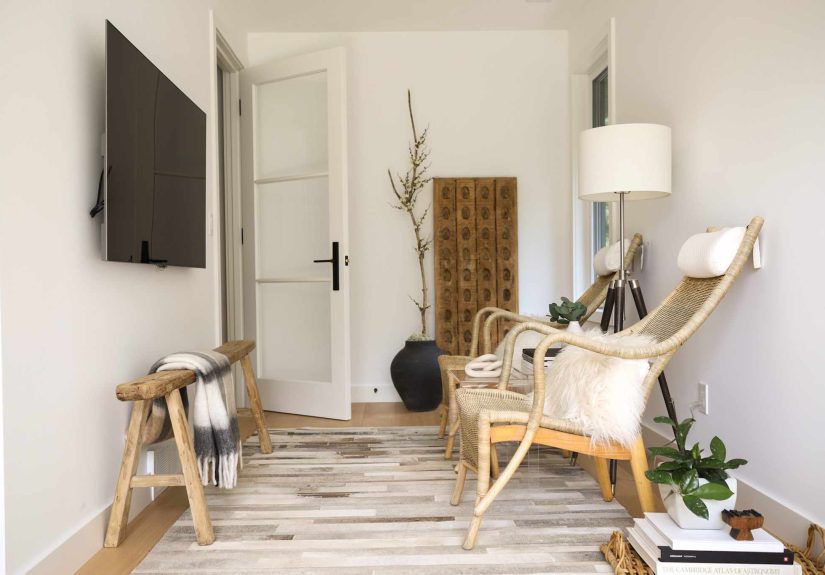
Sofas and chairs with exposed legs allow you to see more floor, which instantly creates a sense of openness. Midcentury-inspired furniturethink tapered legs and streamlined framesis especially friendly to small spaces. In bedrooms, a bed with a simple headboard and a low-profile frame will feel lighter than a big, ornate sleigh bed.
When in doubt, choose fewer but slightly larger pieces rather than a bunch of tiny items. One appropriately sized sofa and a chair often make a room feel more open than three small chairs and multiple side tables scattered around.
5. Edit and Scale Your Layout
Even the right furniture can look wrong in a cramped layout. Instead of pushing everything flat against the walls, experiment with pulling pieces a few inches away. When furniture has a little breathing room, the space feels more intentional and less like a waiting room.
In a small living room, try floating the sofa opposite the TV on a media console, then tuck a slim console table or storage bench behind the sofa. In a small bedroom, center the bed on the longest wall (if possible) and use small, matching nightstands to create symmetry. Avoid blocking pathways with furnitureif you constantly have to sidestep a coffee table or squeeze past a dresser, the room will always feel too small, no matter what color you paint it.
Try to allow at least one clear, straight path through the room. That line of movement tricks your brain into feeling like the room is more open and navigable.
6. Hang Curtains High and Wide
Window treatments can either visually squash your room or stretch it. The trick is to treat your windows like they’re taller and wider than they really are. Hang curtain rods several inches above the top of the window frameideally closer to the ceilingand extend them beyond the window frame by a few inches on each side.
This creates the illusion of taller windows and more wall space, drawing the eye upward and outward. Choose curtains in a light, airy fabric like linen or cotton, and let them just skim the floor for a tailored look. Avoid heavy, dark drapes that block light and feel bulky.
If you have a very small room or minimal wall space, consider using simple roller shades or roman shades mounted inside the window frame. They keep things streamlined and let more wall show, which can make the room feel less crowded.
7. Layer Lighting (Don’t Rely on a Single Overhead)
A lone overhead light in the middle of the ceiling tends to create harsh shadows in corners, which can make a room feel smaller and closed in. Instead, aim for three layers of lighting: ambient (general), task (reading or working), and accent (highlighting art or architectural features).
In a small living room, that might mean a ceiling fixture or track lighting paired with a floor lamp next to the sofa and a table lamp on a side table. In a bedroom, combine a flush-mount or pendant light with bedside lamps or wall sconces and maybe a small accent light on a dresser.
Spreading light around the room eliminates dark corners and visually pushes the walls back. Warm white bulbs (around 2700K–3000K) tend to feel cozy and flattering, especially in small spaces where you’re up close to everything.
8. Pick See-Through and Reflective Pieces
Transparent or reflective furniture is like a visual magic trick. Glass coffee tables, acrylic chairs, and metal-framed side tables all function like solid pieces but feel almost weightless because they let your eye travel through or past them.
In a tiny living room, a glass-top coffee table will feel much lighter than a chunky wood trunk. In a small dining area, a round glass table with slim metal legs can seat four without dominating the room. Likewise, glossy finishes on side tables, metallic accessories, and mirrored trays help bounce light around and add sparkle without clutter.
Just keep the balance in mindtoo many shiny surfaces can feel cold. Mix them with soft textures like a cozy rug or linen cushions so the room still feels inviting.
9. Use Rugs to Define and Stretch the Space
The right rug can subtly “redraw” the footprint of your room. An undersized rug makes everything feel cramped and awkward, like your furniture is clinging onto a postage stamp. Ideally, your rug should be large enough that at least the front legs of your main pieces (sofa, chairs, bed) sit on it.
In a living room, a larger rug that extends under the sofa and chairs creates one cohesive zone and makes the room feel more expansive. In a bedroom, choose a rug that sticks out at least 18–24 inches on either side of the bed so you have a soft landing and the bed doesn’t look like it’s balancing on something tiny.
As for pattern, light or medium tones with simple, understated designs usually work best. Bold, high-contrast patterns can be fun, but in a small room they sometimes visually “busy” up the floor and make the space feel choppy.
10. Maximize Vertical Space
When you can’t spread out, go up. Using vertical space draws the eye higher, making ceilings feel taller and the room more spacious. Think bookcases that nearly reach the ceiling, tall shelving units, or vertical wall storage.
In a small entryway, a row of wall hooks above a slim bench uses the wall instead of the floor. In a small home office or bedroom, install shelves above the desk or headboard to store books, baskets, and decor. You can even treat your ceiling as a “fifth wall” by using a very subtle pattern or a slightly lighter or darker shade of your wall color to add interest without crowding.
The key is to keep vertical storage tidy and curated. Overpacked shelves can make the walls feel like they’re closing in, so mix books and baskets with breathing room between them.
11. Create Visual Flow with Repeated Colors and Materials
One reason small rooms can feel chaotic is that they often collect random furniture and accessories from other parts of the home. To make the room feel bigger, create visual flow by repeating a handful of colors and materials throughout the space.
For example, you might choose a palette of white, soft gray, and camel. The sofa could be light gray, the rug a pale neutral, and the throw pillows a mix of those tones. Add a wood coffee table that echoes the tone of your picture frames or shelving. When your eye sees the same colors and finishes repeated, the room feels cohesive and therefore larger.
You can still add personality with a few accent colors or patternsa bold throw blanket, a piece of art, or a patterned cushionbut keep them limited to avoid overwhelming the space.
Real-Life Ideas for Different Small Rooms
Small Living Room
Try a compact sofa with slim arms, one accent chair, and a glass coffee table. Hang a large mirror opposite the window, use a neutral rug that extends under all the seating, and layer two or three lamps instead of relying on the overhead fixture. Add a few plants to bring life and height to corners.
Small Bedroom
Center the bed and skip the giant headboard. Use wall-mounted sconces in place of bulky bedside lamps, and choose small nightstands with drawers for extra storage. Light bedding and walls create an airy feel, while a large mirror and a simple, soft rug under the bed visually expand the space.
Small Home Office or Study Nook
Use a narrow desk with open legs and a slender chair. Add floating shelves above the desk for storage instead of a big filing cabinet. A task lamp, a small plant, and a framed piece of art can make the area feel intentional rather than like your desk just wandered into a corner and got stuck there.
of Practical Experience: Living with a Small Room
Theory is great, but nothing beats real-life trial and error when it comes to small-space living. Here are some experience-based tips and observations that often don’t show up in glossy magazine shotsbut make a huge difference day to day.
First, be honest about how you actually use the room. Maybe your “living room” is really a Netflix-and-snacks zone, or your dining nook mostly functions as a workspace. When you design for your real life, you avoid constantly fighting the room. For example, if you almost never host big dinners, you might be better off with a small round table against the wall and one or two comfy chairs that can rotate toward the TV when needed, instead of a rectangular table that’s always in the way.
Second, don’t underestimate the power of editing furniture down. Many people try to cram in everything they think a room is “supposed” to have: sofa, loveseat, armchair, coffee table, two side tables, a big TV stand, and maybe a bookshelf for good measure. In a small space, that can feel like living in a furniture warehouse. Try removing one or two pieces and living with the new layout for a week. You might realize you don’t miss that extra chair at allbut you love having space to walk freely.
Another lesson learned the hard way: measure everything. Twice. That “small” sofa online can turn out to be surprisingly chunky, and the chic dresser may block the door by half an inch. Use painter’s tape on the floor to outline potential furniture footprints before you buy. It’s a simple step that helps you see whether circulation paths remain open and if you’ll still be able to, you know, open drawers.
Lighting is also more emotional than we give it credit for. A small room with only a bright overhead light can feel like a waiting room or a classroomneither of which screams “relax here.” Experiment with multiple light sources: one warm floor lamp in a corner, a small table lamp near your reading spot, and maybe string lights or LED strips on a shelf. You may notice that you start spending more time in the room simply because it feels more inviting at night.
Storage-wise, closed storage is your best friend. Open shelves are beautiful when they’re styled like a magazine spread, but in real life, they quickly attract clutter: random mugs, papers, mismatched containers. If you’re not the type who enjoys constantly restyling shelves, opt for cabinets with doors, storage ottomans, or baskets that can hide everyday items. You get the function without staring at visual chaos.
Finally, remember that “bigger” is mostly about how a room feels, not its actual square footage. A small room that’s bright, tidy, thoughtfully furnished, and easy to move around in often feels much more luxurious than a large room that’s dark and cluttered. Give yourself permission to keep only what you love and use, invest in a few pieces that truly fit the space, and tweak things over time as your life changes.
With these 11 strategiesand a bit of experimentationyou can turn even the tiniest room into a space that feels open, comfortable, and completely yours.