Table of Contents >> Show >> Hide
- Before We Time-Travel With a Diagnostic Manual
- 11 Historical Figures Who May Have Had Autism
- 1) Isaac Newton (1642–1727): The Hyperfocus Hall of Fame Inductee
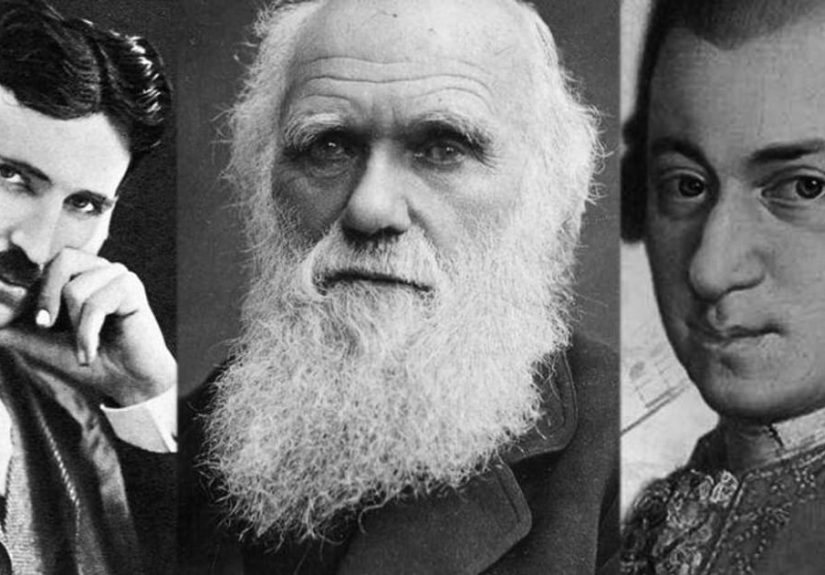
- 2) Nikola Tesla (1856–1943): Routines, Sensory Quirks, and a Brain That Would Not Log Off
- 3) Albert Einstein (1879–1955): The Kid Who Didn’t Like Rote Learning
- 4) Thomas Jefferson (1743–1826): The “Early Modern Office” Guy
- 5) Emily Dickinson (1830–1886): The Poet Who Preferred the Indoors
- 6) Ada Lovelace (1815–1852): Pattern-Spotting Before It Was Cool
- 7) Henry Cavendish (1731–1810): “Painfully Shy” and Brilliant
- 8) Charles Darwin (1809–1882): The Man Who Could Not Stop Noticing Things
- 9) Wolfgang Amadeus Mozart (1756–1791): The Original “Special Interest: Music” Legend
- 10) Michelangelo (1475–1564): Singular Focus, Monumental Output
- 11) Ludwig Wittgenstein (1889–1951): The Philosopher Who Needed Isolation to Think
- What to Do With This List (Besides Argue in the Comments)
- Shared Experiences: 500+ Words on What These Stories Can Feel Like
- Conclusion
If you’ve ever read a biography and thought, “Wow… this person sounds very familiar,” you’re not alone.
Plenty of readersespecially autistic adults and familiesnotice patterns in the lives of famous thinkers, artists, and inventors:
intense focus, unusual routines, sensory sensitivities, social “out-of-sync-ness,” and a lifelong preference for depth over small talk.
But here’s the big, responsible, party-pooper disclaimer: we cannot diagnose historical figures.
Autism spectrum disorder (ASD) is a modern clinical diagnosis that depends on direct observation, developmental history, and context.
What we can do is explore why certain people are often discussed in autism conversationsand use those stories to learn about
neurodiversity, not to slap a label on someone who can’t consent to it.
Before We Time-Travel With a Diagnostic Manual
What autism is (in plain American English)
Autism spectrum disorder is a developmental disability linked to differences in the brain. It’s typically described through two broad areas:
(1) differences in social communication and social interaction, and (2) restricted or repetitive behaviors, interests, or routines.
Many autistic people also experience sensory differences (sounds, textures, lights, smells), different learning styles, and uneven skill profiles.
“Spectrum” doesn’t mean “mild to severe” so much as “many possible combinations.”
Why “retro-diagnosing” is tricky (and why people keep doing it anyway)
Retrospective diagnosisusing today’s categories to interpret lives from the pastcan be intellectually tempting and emotionally meaningful.
It can also be messy: old letters are not medical records, biography is not a clinician’s interview, and culture changes how “odd” behavior is perceived.
Historians and ethicists often emphasize uncertainty here: at best, you’re making a probability-based interpretation from incomplete evidence, not issuing a verdict.
The most useful approach is often syndromic (describing patterns) rather than declaring a specific diagnosis with certainty.
So this article is written in the spirit of: “These are patterns people point to,” not “Here are 11 confirmed diagnoses delivered by a time machine.”
Think of it like stargazing. You can connect the dots, but you’re still looking at light from far away.
11 Historical Figures Who May Have Had Autism
Each mini-profile below includes: what’s well documented, what traits spark autism-related discussion, and a quick reality check.
Because nuance is the real “main character” here.
1) Isaac Newton (1642–1727): The Hyperfocus Hall of Fame Inductee
Newton’s work helped shape modern physics and optics. The man famously explored light and color with prismsturning a sunbeam into a scientific revolution.
- Why people speculate: reports of intense solitary work, deep fixation on specific problems, and a tendency toward narrow, consuming interests.
- What’s documented: his landmark experiments and writings; his methodical approach to observation and theory-building.
- Reality check: intense focus can reflect temperament, era, or personalitynot necessarily autism. Also, “being obsessed with prisms” is not a clinical criterion (even if it sounds like one).
2) Nikola Tesla (1856–1943): Routines, Sensory Quirks, and a Brain That Would Not Log Off
Tesla’s life reads like a novel: brilliant inventions, grand visions, and a personal style that was… unmistakably Tesla.
Accounts describe strict hygiene practices, vivid mental imagery, and unusual aversionstraits that people sometimes interpret as sensory sensitivity and ritualized routines.
- Why people speculate: strong preference for solitude, rigid habits, reported phobias/aversions (like avoiding certain stimuli), and unusually intense internal visualization.
- What’s documented: he could be highly social in selective settings, yet also prized isolation for thinking and idea generation.
- Reality check: OCD, anxiety, trauma history, or simply eccentricity can also explain strict routines and fears. One label rarely captures a whole life.
3) Albert Einstein (1879–1955): The Kid Who Didn’t Like Rote Learning
Einstein is often pulled into autism discussions because biographies highlight early social differences and a childhood style that didn’t match school expectations.
Some accounts describe him as quiet, intensely curious, and frustrated by rigid teaching methods.
- Why people speculate: late speech reported in some biographies, intense fascination with concepts (like geometry), and discomfort with rote instruction.
- What’s documented: strong independent thinking; a preference for understanding over memorization; a notable drive to ask “why.”
- Reality check: being quiet or hating school doesn’t equal autism. Still, many autistic adults relate to the “my brain needs meaning, not drills” vibe.
4) Thomas Jefferson (1743–1826): The “Early Modern Office” Guy
Jefferson’s surviving record is enormousthousands upon thousands of letters, careful systems, and an almost industrial commitment to documentation.
He described long stretches of letter-writing as daily labor, and he built workflows to manage the flood of correspondence.
- Why people speculate: intense written communication, strong systems/routines, and deep focus on cataloging, organizing, and research.
- What’s documented: structured work habits, heavy reliance on tools and organization, and sustained output over decades.
- Reality check: high productivity and love of systems can be autism-adjacentbut also fits personality, politics, and the demands of leadership.
5) Emily Dickinson (1830–1886): The Poet Who Preferred the Indoors
Dickinson is often described as private and intensely inwardsomeone who built a vast world with words, while keeping a small physical orbit.
Her poetry is precise, compressed, and emotionally electric (like a lightning bolt that went to finishing school).
- Why people speculate: social withdrawal later in life, strong preference for solitude, and intense focus on language and observation.
- What’s documented: her Massachusetts roots, her deep reading and writing life, and the posthumous impact of her work.
- Reality check: privacy can come from many causeshealth, anxiety, family dynamics, culture, or choice. Don’t reduce a poet’s entire existence to one trait.
6) Ada Lovelace (1815–1852): Pattern-Spotting Before It Was Cool
Lovelace is remembered for her early writing on Charles Babbage’s Analytical Engine, including notes that described how the machine might process symbols
not just numbers. She compared it to a Jacquard loom weaving patterns, which is basically the most poetic metaphor ever used in early computing history.
- Why people speculate: strong “systems” thinking, deep engagement with abstract patterns, and a style that blends intense focus with imaginative leaps.
- What’s documented: her unusual education in mathematics for a woman of her era; her deep involvement with Babbage’s ideas; her extensive notes.
- Reality check: mathematical talent isn’t a diagnostic sign. But autistic people often describe pattern-thinking as both a strength and a comfort.
7) Henry Cavendish (1731–1810): “Painfully Shy” and Brilliant
Cavendish was a major experimental scientist, credited with identifying hydrogen (which he called “flammable air”).
Some historical descriptions paint him as extremely shyso shy he avoided contact whenever possible.
- Why people speculate: intense social avoidance paired with deep scientific engagement and meticulous experimentation.
- What’s documented: his scientific achievements, including work on gases and efforts to measure Earth’s density.
- Reality check: social avoidance may reflect anxiety, trauma, personality, or other conditions. Autism is one possibility among many, not an automatic answer.
8) Charles Darwin (1809–1882): The Man Who Could Not Stop Noticing Things
Darwin’s voyage on the HMS Beagle reshaped how humanity understands life. His work required obsessive observation: small differences, tiny patterns,
the slow grind of evidence, and the patience to let an idea ferment for years.
- Why people speculate: intense, sustained interest in classification and natural patterns; long-term fixation on gathering and organizing evidence.
- What’s documented: his Beagle voyage and its role in inspiring his theory of evolution by natural selection.
- Reality check: “meticulous scientist” is a job description, not a diagnosis. Still, autistic readers often recognize the comfort of deep, structured curiosity.
9) Wolfgang Amadeus Mozart (1756–1791): The Original “Special Interest: Music” Legend
Mozart was a child prodigy and later an adult composer whose output is frankly ridiculous in volume.
Historical accounts describe early musical ability and composing from a very young agebasically the sort of childhood that makes other parents whisper,
“Should I have done more flashcards?”
- Why people speculate: extraordinary early focus, intense immersion in a single domain, and unusual developmental profile (brilliant in one lane, messy in others).
- What’s documented: early composing, performances for royalty, and a lifetime output estimated in the hundreds of works across genres.
- Reality check: prodigy ≠ autism. Giftedness has many paths. But the “music as a full-body operating system” experience is relatable to many autistic people.
10) Michelangelo (1475–1564): Singular Focus, Monumental Output
Michelangelo’s name is shorthand for mastery. He worked across sculpture, drawing, and architecture, and became known for a relentless pursuit of excellence.
Even without psychoanalyzing him, you can say this safely: the man did not dabble.
- Why people speculate: accounts of intense dedication, preference for working alone, and a life shaped around craft above social comfort.
- What’s documented: his era (Renaissance), his Florentine identity, and the vast body of surviving work attributed to him.
- Reality check: Renaissance workshop culture, patron demands, and personal ambition also explain a work-centered life.
11) Ludwig Wittgenstein (1889–1951): The Philosopher Who Needed Isolation to Think
Wittgenstein’s biography reads like an intensity warning label: brilliant, idiosyncratic, and often drawn to solitude.
He pursued engineering before turning toward philosophy, studied with major thinkers, and repeatedly retreated into isolation to work.
- Why people speculate: strong preference for solitude, highly idiosyncratic habits, intense focus, and a communication style others described as “obstinate” or unusual.
- What’s documented: his engineering studies, his turn toward philosophy, and periods of retreat for concentrated work.
- Reality check: temperament and mental health can also shape isolation-seeking. Still, autistic people often describe solitude as a way to regulate and think clearly.
What to Do With This List (Besides Argue in the Comments)
The point of exploring autism-adjacent traits in history isn’t to “claim” famous people like trading cards.
It’s to widen our sense of what minds can look likeand how society responds to difference.
When someone is celebrated as “eccentric” because they’re wealthy, male, and productive, while another person is punished for the same traits without support,
that tells us something about powernot diagnosis.
It’s also a reminder that autism is not a synonym for genius. Many autistic people are brilliant; many are average; many need significant daily support.
The through-line is not “talent.” It’s neurodevelopmental difference, shaped by environment, opportunity, and accommodation.
Shared Experiences: 500+ Words on What These Stories Can Feel Like
Even if we never retro-diagnose a single person, biographies can still function like mirrorsespecially when you’re autistic,
raising an autistic child, or trying to understand someone you love who experiences the world differently.
Across many autistic narratives (and many historic lives), a few experiences tend to repeat like a familiar chorus.
First: the “deep dive” relationship with interest.
For a lot of autistic people, an interest isn’t a hobbyit’s a life raft, a compass, and sometimes a whole personality operating system.
Reading about Newton obsessing over light, Darwin cataloging nature’s tiny variations, or Lovelace translating machines into metaphors
can feel like watching someone find safety and joy in depth. The world can be loud, confusing, and socially unpredictable;
a focused interest is often structured, learnable, and honest. It doesn’t fake politeness. It just… is.
Second: the comfort of routine and the stress of disruption.
Many autistic people describe routines as a kind of nervous-system scaffolding: predictable patterns that reduce cognitive load.
Historical accounts of strict schedules, meticulous systems, or repeated habits can resonatenot because routine is “weird,” but because it’s regulating.
The modern lesson isn’t “everyone should be rigid.” It’s that when a person relies on structure, mocking it is unhelpful.
Support looks like making transitions gentler, giving warnings, offering choices, and not treating change as a character test.
Third: selective social energy.
The stereotype says autistic people “don’t like people,” but many describe something subtler:
they like people in the right conditions, in the right topics, in the right sensory environment, with enough recovery time afterward.
A figure like Tesla might be described as enjoying certain salons but needing solitude for his real work;
Dickinson might have had rich connections through writing while avoiding constant in-person access.
In modern terms, this maps to a common autistic experience: deep connection matters more than constant connection.
You can be loving and still need alone time like you need water.
Fourth: being misunderstoodand then turning that misunderstanding into identity.
Many autistic people grow up hearing they’re “too intense,” “too picky,” “too blunt,” “too sensitive,” or “too quiet.”
Over time, that can create a pressure to maskcopying social behavior, forcing eye contact, laughing at jokes you don’t get,
acting “fine” while you’re actually overwhelmed. Historical figures who were called eccentric, aloof, obstinate, or odd
can echo that pattern of public misreading. The difference, of course, is that some of them had status or outputs that protected them.
Plenty of autistic people never get that shieldand that’s why modern support, acceptance, and accurate information matter.
Finally: the bittersweet relief of recognition.
For some readers, a list like this brings comfort: “Maybe I’m not broken; maybe minds like mine have always existed.”
That feeling can be powerfulespecially for someone who grew up thinking they were the only one.
The healthiest version of that relief doesn’t require certainty. You don’t need a signed diagnosis from the 1600s.
You just need permission to say: human brains are diverse, and that diversity has always shaped art, science, culture, and history.
Conclusion
“May have had autism” is not a stamp, and it shouldn’t be used to sanitize anyone’s flaws or idolize anyone’s talents.
But exploring autism-adjacent traits in history can help us see neurodiversity as part of the human storynot a modern glitch.
If this topic resonates because you recognize these patterns in yourself or someone you love, the next step isn’t a history debate.
It’s learning what autism can look like today, and building environments that support real people in real time.