Table of Contents >> Show >> Hide
- Why Lighting Matters So Much in a Small Bedroom
- 15 Small Bedroom Lighting Ideas That Work Hard and Look Good
- 1. Swap Table Lamps for Wall Sconces
- 2. Use a Flush-Mount or Semi-Flush Ceiling Light
- 3. Pick Warm, Dimmable LED Bulbs
- 4. Layer Overhead, Task, and Accent Lighting
- 5. Hang Bedside Pendants to Save Even More Space
- 6. Brighten Dark Corners with a Slim Floor Lamp
- 7. Add LED Strip Lighting Under Shelves or the Bed
- 8. Place a Mirror to Bounce Light Around the Room
- 9. Use Sheers by Day and Blackout Curtains by Night
- 10. Choose Light Fixtures with Visual Breathing Room
- 11. Put Lamps on Smart Plugs or Dimmers
- 12. Create a Reading Nook with Focused Task Lighting
- 13. Let Lighting Double as Decor
- 14. Use Cordless or Rechargeable Lamps for Flexible Glow
- 15. Make the Bedroom More Sleep-Friendly at Night
- How to Choose the Right Lighting Plan for Your Room
- Real-Life Experiences With Small Bedroom Lighting Ideas
- Final Thoughts
Small bedrooms are charming right up until sunset, when the room suddenly feels like a shoe box with a pillow. The good news? Smart lighting can make a tiny bedroom feel bigger, calmer, prettier, and far more useful without demanding extra square footage. You do not need a ballroom-sized primary suite to create a cozy, stylish retreat. You just need better light in the right places.
The secret is to stop asking one lonely overhead fixture to do all the work. In a compact room, lighting needs to multitask: brighten dark corners, make reading easier, flatter the room, save precious surface space, and help your brain realize that bedtime means “sleep now,” not “let’s scroll for two more hours.” The best small bedroom lighting ideas combine ambient lighting, task lighting, and accent lighting in a way that feels intentional rather than accidental.
Below, you will find 15 practical and design-forward ideas that work especially well in small bedrooms, plus real-life lessons on what actually changes the way a room feels once the lights come on.
Why Lighting Matters So Much in a Small Bedroom
In a small room, every design decision gets a little louder. A bulky lamp can hog a nightstand. A harsh ceiling bulb can flatten the whole space. A dark corner can make the room feel smaller than it really is. Good lighting fixes all three problems at once. It can visually open the room, define functions like reading or dressing, and create a softer mood at night.
That is why designers so often recommend layered lighting in bedrooms. A ceiling fixture handles general brightness, bedside lighting supports reading, and accent light brings warmth and depth. Once those layers work together, even a tiny bedroom starts to feel thoughtful instead of cramped.
15 Small Bedroom Lighting Ideas That Work Hard and Look Good
1. Swap Table Lamps for Wall Sconces
If your nightstand is already fighting for its life under a phone charger, water glass, book, lip balm, and whatever mystery object appeared there last week, wall sconces are your new best friend. They free up surface space, keep the room looking lighter, and bring focused light exactly where you need it. In a small bedroom, that is a triple win.
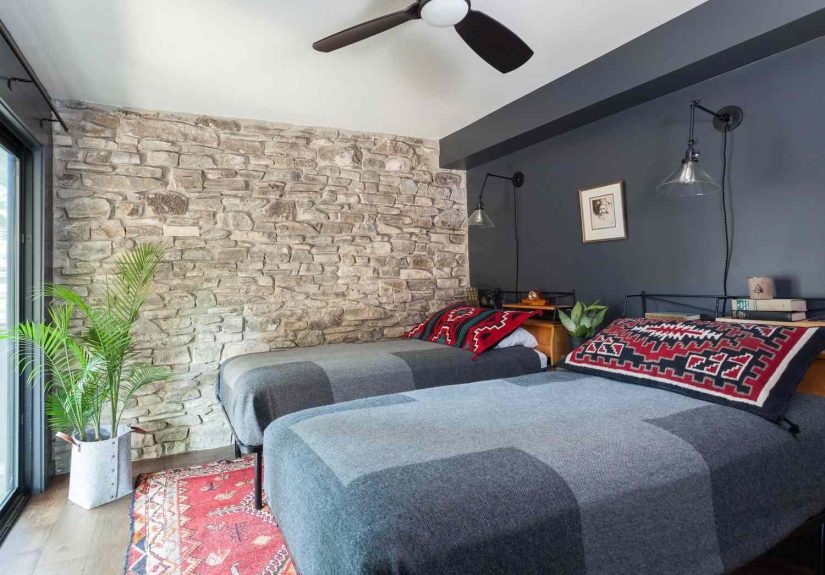
Choose swing-arm sconces if you read in bed, or install fixed sconces for a cleaner, hotel-inspired look. Matching sconces on both sides of the bed create balance, but an asymmetrical setup can work just as well in a particularly tight room.
2. Use a Flush-Mount or Semi-Flush Ceiling Light
If your ceilings are low, skip anything that hangs like it is auditioning for a ballroom. A flush-mount or semi-flush ceiling light keeps headroom intact while still giving the room a polished focal point. This is one of the simplest small bedroom lighting ideas because it instantly improves general illumination without visually weighing the room down.
Look for a fixture with a diffuser or fabric shade to soften the light. Tiny room, yes. Interrogation room, no.
3. Pick Warm, Dimmable LED Bulbs
Bulbs matter more than people think. The wrong bulb can make a beautiful room look like a waiting area at the DMV. For bedrooms, warm white bulbs usually create the most relaxing atmosphere. Dimmable LEDs are especially useful because they let you shift the room from bright and practical in the morning to soft and cozy at night.
They also have the bonus of using less energy and lasting much longer than old-school incandescent bulbs, which is good for both your electric bill and your future self who does not want to replace bulbs every five minutes.
4. Layer Overhead, Task, and Accent Lighting
This is the golden rule. If your small bedroom has only one light source, it is doing too much and probably doing at least half of it badly. A layered plan creates flexibility. Use overhead lighting for general brightness, bedside lighting for reading, and accent lighting to soften corners or highlight decor.
The result is a room that feels more expensive, more comfortable, and more intentional. Layered light also helps a small bedroom feel larger because it reduces heavy shadows and spreads brightness more evenly across the space.
5. Hang Bedside Pendants to Save Even More Space
If sconces are the sensible older sibling, bedside pendants are the stylish one with excellent cheekbones. Hanging mini pendants over each side of the bed frees up both the tabletop and the wall space near eye level. It also adds vertical interest, which is especially helpful in a small bedroom where drawing the eye upward can make the room feel taller.
Keep the scale modest and the shape simple. In a tiny room, a pendant should say “design moment,” not “I have arrived with luggage.”
6. Brighten Dark Corners with a Slim Floor Lamp
Not every small bedroom has room for a floor lamp, but when there is an empty corner, a slim design can work wonders. Dark corners make compact spaces feel closed in. Add a narrow floor lamp, and suddenly the room has depth.
This is especially effective in bedrooms with one window or awkward layouts. A tall, narrow lamp can also emphasize height, helping the eye travel upward instead of focusing on the limited floor area.
7. Add LED Strip Lighting Under Shelves or the Bed
LED strip lighting is one of those rare upgrades that is modern, affordable, and actually useful. Installed under floating shelves, behind a headboard, or under the bed frame, it creates a soft halo effect that makes the room feel more layered and less boxy.
In a small bedroom, this kind of subtle glow can act like visual magic. It adds dimension without consuming any floor space. Choose warm-toned strips and avoid the icy blue nightclub effect unless your bedroom moonlights as a spaceship.
8. Place a Mirror to Bounce Light Around the Room
Technically, a mirror is not a light fixture. Emotionally, in a small bedroom, it is a lighting assistant with star potential. A mirror opposite or near a window helps reflect daylight deeper into the room. It can also amplify lamplight in the evening, making the space feel brighter and more open.
A full-length mirror works especially well because it is useful and decorative. If your room feels dim no matter what, a good mirror placement can be just as important as adding another lamp.
9. Use Sheers by Day and Blackout Curtains by Night
The best bedroom lighting plan does not begin at sundown. It starts with how you handle natural light during the day. In a small bedroom, sheer curtains let sunlight filter in while still giving some privacy. That natural brightness helps the room feel airier and more open.
At night, blackout curtains are helpful for sleeping, especially if outside streetlights or early morning light tend to interrupt rest. Layering sheers with blackout panels gives you flexibility, which is always useful in a compact space where every element needs to earn its spot.
10. Choose Light Fixtures with Visual Breathing Room
One of the easiest mistakes in a small bedroom is picking a fixture that feels heavy. Thick shades, chunky bases, and overly ornate designs can add visual clutter fast. Instead, look for fixtures with airy lines, open frames, pale finishes, or materials like glass, linen, or woven natural fibers.
This does not mean your lighting has to be boring. It just means the fixture should contribute style without making the room feel crowded. Think elegant, not elephant-sized.
11. Put Lamps on Smart Plugs or Dimmers
Convenience matters. In a small bedroom, the fewer awkward reaches and fumbling midnight acrobatics, the better. Smart plugs, smart bulbs, or simple dimmer switches let you control brightness more easily and tailor the room’s mood throughout the day.
This setup is particularly helpful if you want the room softly lit in the evening but brighter while folding laundry, getting dressed, or hunting for that sock that absolutely existed a minute ago.
12. Create a Reading Nook with Focused Task Lighting
If your small bedroom includes a chair, bench, or even just a corner where you like to read, give that spot its own task lighting. A directed beam is much more comfortable than relying on overhead light alone. It also helps define the area, which makes the room feel more purposeful and well designed.
A plug-in sconce or small adjustable lamp often works better than a big decorative fixture here. The goal is comfort and function, not dramatic theater unless your reading material is that exciting.
13. Let Lighting Double as Decor
When square footage is limited, every object should do more than one job. Your light fixture can be practical and decorative at the same time. A sculptural sconce, a textured lamp shade, or a small vintage-inspired ceiling fixture can add personality without demanding extra furniture or accessories.
This is especially smart in minimalist bedrooms, where lighting can serve as the room’s jewelry. A little sparkle, a little texture, a little wow. Nothing excessive, just enough to keep the space from feeling anonymous.
14. Use Cordless or Rechargeable Lamps for Flexible Glow
Rechargeable lamps are surprisingly handy in small bedrooms, especially rentals, dorm-style spaces, or rooms with annoying outlet placement. They can sit on a shelf, dresser, or narrow ledge without a cord snaking across the room like a trip hazard with ambition.
These portable lights are great for adding a soft layer of illumination where hardwiring or rewiring is not practical. They also make it easy to experiment with placement until the room feels right.
15. Make the Bedroom More Sleep-Friendly at Night
A beautiful bedroom should also help you sleep. Bright, cool-toned light too close to bedtime can work against that goal, especially if it is paired with glowing screens. In the evening, shift to lower, warmer lighting whenever possible. Bedside lamps, dimmed sconces, and soft accent lighting are all better choices than blasting the overhead fixture at full power right before bed.
This idea may not be the flashiest, but it is one of the most practical. Great small bedroom lighting does not just look good in photos. It makes the room feel calm when the day is over.
How to Choose the Right Lighting Plan for Your Room
If you are starting from scratch, begin with function. Ask yourself what really happens in your bedroom besides sleeping. Do you read in bed? Get dressed there every morning? Work from a small desk? Need the room to feel restful at night but useful during the day? Your answers will tell you what layers of light matter most.
Next, think about space. If your nightstands are tiny, prioritize sconces or pendants. If your room has a gloomy corner, add a floor lamp or accent light there. If the ceiling feels low, keep your overhead fixture close to the ceiling. If the room already gets strong daylight, focus more on evening mood and sleep-friendly lighting.
Finally, stay consistent with bulb warmth and style. A small bedroom feels calmer when the lighting works together rather than competing for attention. The goal is not to cram in every trend. The goal is to make the room feel bigger, softer, and easier to live in.
Real-Life Experiences With Small Bedroom Lighting Ideas
One of the most interesting things about small bedroom lighting ideas is how dramatic the changes can feel, even when the actual upgrades are modest. People often expect that making a tiny bedroom feel better will require a major renovation, but in reality, lighting is usually the shortcut. A room can have the same bed, the same paint color, and the same square footage, yet feel completely different once the lighting improves.
A common experience is realizing that the “big light” was the whole problem. Many small bedrooms rely on a single overhead fixture that is either too harsh, too dim, or both somehow at once, which is honestly a talent. Once that single light is supplemented with bedside lighting and a softer accent layer, the room suddenly becomes more inviting. Reading gets easier, late-night wind-down time feels calmer, and the room stops looking flat.
Another common lesson is that wall-mounted lighting changes daily life more than people expect. In small bedrooms, every inch of nightstand space matters. Replacing bulky lamps with sconces often makes the room feel tidier without anyone technically “decluttering” anything. You still have the same belongings, but the space feels less crowded because the light source moved off the furniture and onto the wall. It is one of those changes that sounds minor on paper and feels major in real life.
People also tend to notice a strong emotional shift when they switch from cool, bright bulbs to warm, dimmable ones. The room becomes more relaxing almost immediately. Evening routines feel gentler. The bedroom starts to signal rest instead of productivity. For anyone whose bedroom doubles as a place to answer emails, fold clothes, doom-scroll, and attempt to be a functional adult, this distinction matters a lot.
There is also a practical side to these experiences. Better lighting can improve how people use the room every morning. A focused bedside light helps with reading, a properly placed ceiling fixture makes getting dressed easier, and a mirror placed to reflect natural light can save a dim room from feeling gloomy all day. When several small improvements work together, the bedroom feels less like a compromise and more like an intentional retreat.
Perhaps the biggest takeaway is that good lighting does not always shout. In small bedrooms, the most successful choices are often subtle: a pendant that frees the nightstand, a soft LED strip that adds depth, a dimmer that lets the room transition from morning brightness to evening calm. These upgrades do not demand attention. They quietly make life better. And that is really the charm of a well-lit small bedroom: it does not need to look enormous. It just needs to feel good.
Final Thoughts
The best small bedroom lighting ideas are not about stuffing more fixtures into less space. They are about choosing the right light sources, placing them with purpose, and giving the room flexibility. A tiny bedroom can still feel airy, stylish, restful, and fully functional when the lighting plan is doing its job.
Start with one smart upgrade if that feels easier. Add sconces. Change the bulbs. Install a dimmer. Put a mirror where it can work harder. Once the room begins to glow in all the right places, you may be surprised by how much larger and calmer it feels. Tiny bedroom, big payoff.
Note: HTML body only. Source links intentionally omitted for clean web publishing, and unnecessary citation artifacts have been removed.