Table of Contents >> Show >> Hide
- The Calm Formula: Light + Color + Texture + Nature + Less Stuff
- 15 Soothing Decor Ideas
- 1) Layer Your Lighting (and Put Your Overhead Light on a Time-Out)
- 2) Choose Warm-White Bulbs for Evening Areas
- 3) Paint (or Accent) with Calming Colors: Soft Blues, Greens, and Warm Neutrals
- 4) Keep a Simple, Cohesive Palette (So Your Eyes Can Rest)
- 5) Bring Nature In (Plants Count, Even If You’ve… Lost Plants Before)
- 6) Max Out Natural Light (Then Soften It)
- 7) Add Touch-Friendly Textures (Because Calm Should Be Physical)
- 8) Upgrade Bedding into “Hotel Mode” (Without Turning Your Bedroom into a Catalog)
- 9) Soften Sound with Rugs, Curtains, and Upholstery
- 10) Create One “Clear Surface” per Room
- 11) Hide Visual Noise with Baskets, Cabinets, and “Contained Clutter”
- 12) Declutter in Micro-Moves (Decor Works Better When Your Home Can Breathe)
- 13) Style Your Home’s Scent (Subtle Wins Here)
- 14) Add a Spa-Lite Corner in the Bathroom
- 15) Build a “Unwind Nook” (Even If It’s Just a Chair with Good Intentions)
- How to Put It All Together (Without Overthinking It)
- Conclusion
- Real-Life Experiences: What These Changes Feel Like (and Why They Stick)
Your home should feel like a deep exhalenot a place where your eyes ping-pong from clutter pile to doom-laundry to that one blinking router light that somehow feels judgmental. The good news: you don’t need a full renovation (or a celebrity designer hiding behind your ficus) to make your space feel calmer. You need a few smart, sensory-friendly choices: softer light, gentler colors, touchable textures, less visual noise, and a couple of “ahhh” moments sprinkled around your day.
Below are 15 decor ideas that work because they support how people actually relax: reducing harsh stimulation, making everyday routines easier, and giving your brain fewer reasons to stay on high alert. Each idea includes a practical examplebecause “create tranquility” is lovely, but “swap the bulb” is actionable.
The Calm Formula: Light + Color + Texture + Nature + Less Stuff
If soothing decor had a secret recipe, it would be this: warm, layered lighting; a quiet, cohesive color palette; soft textures; natural elements; and edited surfaces. Think of it as designing for your nervous system. Your goal isn’t “perfect.” It’s “peaceful enough that you stop clenching your jaw.”
15 Soothing Decor Ideas
1) Layer Your Lighting (and Put Your Overhead Light on a Time-Out)
Overhead lights can be usefullike a vacuum cleaner. Necessary, but not the vibe. For relaxing, use layered lighting: a table lamp, a floor lamp, maybe a wall sconce, plus optional accent light (like a small lamp on a shelf). The effect is softer shadows and a more flattering glow that feels less “interrogation room.”
- Try this: Use at least two light sources in the room, placed at different heights.
- Easy upgrade: Add a dimmer or smart bulb so you can lower brightness at night without living by candlelight like it’s 1783.
2) Choose Warm-White Bulbs for Evening Areas
Lighting color temperature matters. Cooler, bluish light reads as energetic and “daytime.” Warmer light reads as cozy and restful. In spaces where you wind downliving room, bedroom, reading nookaim for warm-white bulbs so your evening feels like a gentle landing, not a productivity seminar.
- Try this: Put warm bulbs in bedside lamps and living-room lamps first (the places your eyes go at night).
3) Paint (or Accent) with Calming Colors: Soft Blues, Greens, and Warm Neutrals
Color is basically emotional background music. Cool tones (muted blues and greens) often feel serene, while warm neutrals (creamy whites, taupes, sand tones) create a cozy calm that doesn’t feel clinical. You don’t have to repaint your whole homean accent wall, a painted door, or even a large textile can shift the mood.
- Try this: Bedroom: soft blue-green. Living room: warm neutral with natural-wood accents.
- Shortcut: If repainting sounds like a weekend you’d rather not spend with painter’s tape, use a large rug or curtain in a calming shade.
4) Keep a Simple, Cohesive Palette (So Your Eyes Can Rest)
You can love color and still love calm. The trick is cohesion: repeat a few tones instead of introducing a new color in every corner. When everything coordinateseven looselyyour space feels quieter, and your brain doesn’t have to “solve” the room.
- Try this: Pick 3 core colors (one neutral, one soft color, one warm accent like brass, terracotta, or honey wood).
- Example: Cream + sage + natural oak, repeated in pillows, art, and a throw.
5) Bring Nature In (Plants Count, Even If You’ve… Lost Plants Before)
Natural elements help a home feel restorative: greenery, wood, stone, linen, and anything that reminds your brain it’s not trapped in a spreadsheet. If you’re not a plant whisperer, start with easy-care options and place them where you’ll actually see them.
- Try this: One medium plant in the living room + one small plant in the bathroom or kitchen window.
- Low-stress picks: Snake plant, pothos, ZZ plant (the “I forgot to water” champions).
6) Max Out Natural Light (Then Soften It)
Daylight can boost mood and make rooms feel more open. But harsh glare can feel overstimulating. The sweet spot is bright-but-soft: let sunlight in, then filter it with light curtains or woven shades so it feels gentle instead of blinding.
- Try this: Replace heavy drapes in a daytime room with sheer panels layered over blackout curtains for nighttime.
7) Add Touch-Friendly Textures (Because Calm Should Be Physical)
A soothing room isn’t just prettyit’s tactile. Textures like linen, cotton, wool, bouclé, velvet (in moderation), and chunky knits add warmth and comfort. Bonus: texture makes a neutral palette feel rich instead of boring.
- Try this: Layer a linen throw over a sofa, add a textured pillow, and place a soft rug underfoot.
- Rule of thumb: If it makes you want to sit down and stop scrolling, you’re doing it right.
8) Upgrade Bedding into “Hotel Mode” (Without Turning Your Bedroom into a Catalog)
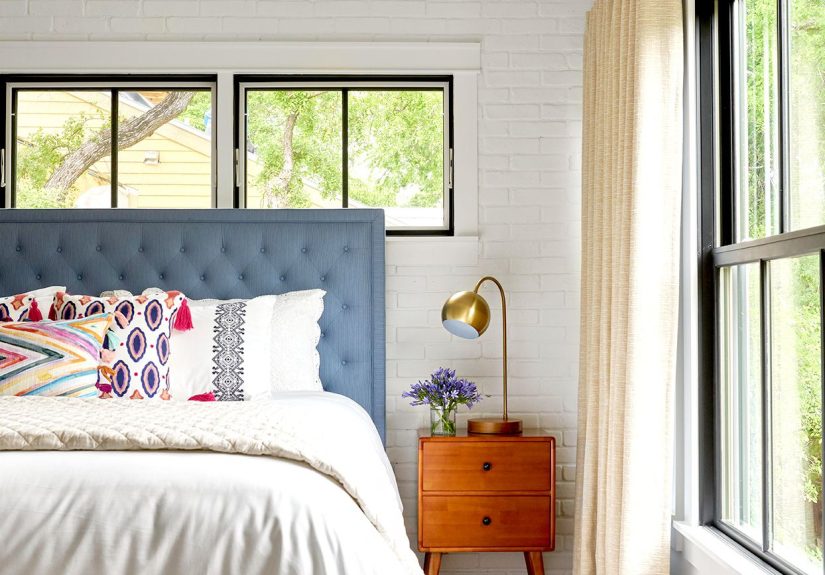
The bed is the emotional center of a restful home. If your bedding feels scratchy, flat, or mismatched, the room won’t read as relaxing. Aim for breathable layers, a consistent palette, and one “luxury” detaillike a quilted coverlet or a cloud-like duvet.
- Try this: Crisp sheets + cozy duvet + one textured throw at the foot of the bed.
- Small upgrade: Add two extra pillows in a matching color to create instant calm symmetry.
9) Soften Sound with Rugs, Curtains, and Upholstery
If your home echoes, it can feel subtly stressfullike your space is always “on.” Soft materials absorb sound and make rooms feel calmer. This is especially helpful in apartments, open layouts, or rooms with lots of hard surfaces.
- Try this: A medium-pile rug + lined curtains + a fabric ottoman or upholstered chair.
- Bonus calm: A rug pad makes the rug feel thicker and quieter underfoot.
10) Create One “Clear Surface” per Room
You don’t need a minimalist home. You need a place for your eyes to land. Pick one surfacecoffee table, nightstand, entry consoleand keep it intentionally simple. That clear space becomes a visual reset button.
- Try this: Use the “rule of three”: one functional item, one natural element, one personal touch.
- Example: Nightstand = small lamp + book + tiny tray for lip balm/earplugs.
11) Hide Visual Noise with Baskets, Cabinets, and “Contained Clutter”
Some clutter is just life. The trick is containment. Closed storage reduces the “busy” feeling that can keep your brain in problem-solving mode. Baskets, lidded boxes, and cabinets let you keep what you needwithout seeing everything at once.
- Try this: Put a basket where clutter naturally collects (blankets, toys, mail) and commit to tossing things in it daily.
- Make it pretty: Choose storage that matches your palette (woven natural tones, soft fabric bins, warm wood).
12) Declutter in Micro-Moves (Decor Works Better When Your Home Can Breathe)
Decor can’t relax you if your space feels chaotic. But decluttering doesn’t have to be a dramatic weekend purge where you argue with a drawer of tangled cords. Small, repeatable “micro-moves” build calm fast: clear one shelf, reset one corner, make one donation bag.
- Try this: Set a 5-minute timer and clear only one surface (no spiraling into the closet of mystery).
- Keep calm long-term: Create a “drop zone” for keys, sunglasses, and chargers so they don’t migrate like tiny runaway pets.
13) Style Your Home’s Scent (Subtle Wins Here)
Scent is powerful. It can signal comfort and routinelike a “closing time” cue for the day. Keep it gentle: you want “fresh and relaxing,” not “candle aisle sprint.” Candles, essential oil diffusers, reed diffusers, and simmer pots can all work.
- Try this: Evening scent cue: lavender, chamomile, vanilla, cedar, or clean citrus.
- Simple simmer pot: Water + orange slices + herbs (like mint or rosemary) + a pinch of spice.
14) Add a Spa-Lite Corner in the Bathroom
Bathrooms are underrated calm zones. A few tweaks can make everyday routines feel more grounding: plush towels, a bath tray, a small plant, and one warm light source that doesn’t scream “fluorescent office.”
- Try this: Decant soap into a nice dispenser, add a candle (or flameless candle), and hang towels in a tidy, hotel-like way.
- Extra soothing: Keep counters mostly clear and store backups out of sight.
15) Build a “Unwind Nook” (Even If It’s Just a Chair with Good Intentions)
A calming home has at least one spot that’s designed for restnot work, not chores, not “where the laundry waits.” Create a tiny nook: a comfortable chair, a soft throw, a lamp, and a small table for tea or a book. It’s a physical reminder that resting is allowed.
- Try this: Add a basket with a blanket and a journal nearbyso relaxing feels easy, not like another task.
- Optional but delightful: A footstool. Your ankles deserve a vacation too.
How to Put It All Together (Without Overthinking It)
If you try to do all 15 ideas at once, you’ll be “stress-decorating,” which is… ironic. Start with the biggest calm-makers: lighting, one clear surface, a cohesive palette, and one comfort upgrade (bedding or a rug). Then add sensory touchestexture, scent, greenerylike you’re seasoning soup. A little at a time, taste as you go.
Conclusion
Soothing decor isn’t about copying a perfect photo online. It’s about making your home feel supportivesoft where life is sharp, quiet where the world is loud, and simple where your brain is already full. Choose two or three ideas that solve your biggest friction points, and build from there. The goal is a home that helps you unwind on purpose… and occasionally convinces you to put your phone down because the room is doing enough.
Real-Life Experiences: What These Changes Feel Like (and Why They Stick)
The most surprising thing about calming decor is that it doesn’t just change a roomit changes your behavior in small, measurable ways. Picture a typical weekday: you walk in with your shoulders up around your ears, carrying a bag, a half-finished thought, and the faint sense you forgot something (you didit was “inner peace,” but you’re picking it up now).
In a stressful home setup, the first thing you see is clutter: shoes that migrated, mail that multiplied, cords in a slow-motion knot, and a harsh ceiling light that turns everything into a crime scene. You’re not “choosing” to feel tenseyour senses are being recruited into a tiny emergency meeting.
Now imagine the calmer version. The entry has a small tray for keys and a hook for your bag. There’s a warm lamp on, not the overhead light. Nothing dramaticjust a softer landing. Your body reads the room and gets the message: we’re safe; we can drop the day. That’s why the “layered lighting” trick feels almost unfair in how effective it is. You didn’t solve every problemyou just removed an unnecessary alarm bell.
The same thing happens in the living room. When surfaces are mostly clear, your eyes stop scanning for tasks. If the coffee table holds only a book, a candle, and a small plant, your brain gets a break from decision-making. You’re more likely to sit down for five minutes because sitting down doesn’t come with a side of guilt. It’s not minimalism as a lifestyleit’s editing as a kindness.
Texture changes the experience too. A soft rug under your feet makes the room feel warmer, quieter, and more “human.” A linen throw encourages you to curl up. Better bedding makes you take sleep seriouslynot as a productivity hack, but as a comfort ritual. People often notice they start going to bed earlier simply because the bedroom feels inviting. You’re not forcing rest; you’re making rest the easiest option.
Then there’s scentthe stealthiest mood tool in the house. When the same gentle scent shows up at the same time each evening, it becomes a cue: day’s done, nervous system off-duty. Some nights it’s a candle; other nights it’s a simmer pot with citrus and herbs that makes the whole place feel freshly cared for. It’s hard to stay in a doom spiral when your home smells like “I have my life together” (even if your laundry says otherwise).
And perhaps the biggest “experience upgrade” is the unwind nook. People who create one often describe it as permission made visible. A chair with a lamp and a blanket doesn’t just take up spaceit marks a boundary between rest and work. You sit there for ten minutes, then fifteen, then suddenly you’ve read a chapter of a book instead of ten minutes of other people’s opinions. That’s not just decor. That’s a lifestyle pivot disguised as a throw pillow.
Over time, these small experiences stack. You feel less irritable at home, less “buzzed” at bedtime, and more capable of resetting after a long day. The goal isn’t to create a museum of calm. It’s to create a home that helps you recoverone lamp, one clear surface, one cozy texture at a time.