Table of Contents >> Show >> Hide
- Set Yourself Up for Success: The French Dessert “Basics” That Matter
- 17 Authentic French Desserts You Can Master at Home
- 1) Crème Brûlée
- 2) Tarte Tatin
- 3) Clafoutis
- 4) Madeleines
- 5) Chocolate Mousse (Mousse au Chocolat)
- 6) Crêpes Suzette (Without the Drama)
- 7) Profiteroles (Cream Puffs)
- 8) Éclairs
- 9) Paris-Brest
- 10) Mille-Feuille (Napoleon)
- 11) Canelés de Bordeaux
- 12) Tarte au Citron (French Lemon Tart)
- 13) Crème Caramel
- 14) Île Flottante (Floating Island)
- 15) Financiers
- 16) Far Breton (Brittany Prune Custard Cake)
- 17) Kouign-Amann
- French Dessert Shortcuts That Aren’t Cheating
- Final Bite: How to Think Like a French Home Baker
- of Real-Life “At-Home French Dessert” Experience (What You’ll Actually Notice)
French desserts have a reputation for being fancy, fussy, and guarded by pastry chefs who wear tall hats and never spill anything. The truth?
Most classic French sweets are built from a few repeatable “mother techniques”custard, whipped egg whites, caramel, shortcrust pastry, and pâte à choux
then dressed up like they’re headed to Paris Fashion Week.
In this guide, you’ll meet 17 authentic French desserts you can master at homewhether your kitchen is stocked like a patisserie or your “stand mixer”
is one determined arm and a whisk. Expect practical tips, a little science, and zero snobbery. (Your butter will still be treated with respect. It’s French.)
Set Yourself Up for Success: The French Dessert “Basics” That Matter
Before we get to the delicious lineup, here are a few small habits that make a huge difference when you’re baking French-style at home:
- Measure like you mean it: A kitchen scale makes pastries less dramatic. If you use cups, level themdon’t scoop like you’re digging for treasure.
- Read the whole recipe first: French desserts love chilling, resting, and “surprise, you needed room-temperature eggs.”
- Mind your temperatures: Cold butter is great for flaky layers; soft butter is great for cakes; melted butter is great for “I regret nothing” batters.
- Don’t fear egg-based desserts: Custards and creams are easier than they lookyou’re mostly controlling heat and stirring like a calm person.
- Use the freezer strategically: Chilling dough, setting mousse, and firming pastry cream are not cheating. They’re planning.
- Keep it simple: “Authentic” doesn’t mean complicated. Many French home desserts are intentionally rustic.
17 Authentic French Desserts You Can Master at Home
Each dessert below includes what it is, why it’s iconic, and the home-kitchen move that makes it doable. If you’re new, start with the “easy wins”
and work your way toward choux and laminated pastry when you feel ready.
1) Crème Brûlée
A silky vanilla custard with a glassy sugar “crack” on topbasically dessert with built-in sound effects. The secret is gentle heat:
bake the custard in a water bath so it cooks evenly and stays creamy. For the brûlée, a torch is ideal, but a hot broiler can work if you watch it like
it’s a toddler near an open marker.
Home-kitchen win: Strain the custard before baking for ultra-smooth results.
2) Tarte Tatin
The famous upside-down caramelized apple tart that tastes like autumn learned French. You cook apples in caramel, cover with pastry, bake, then flip.
The “master at home” trick is choosing firm apples and building flavor with a slightly darker carameldeep amber, not “fire alarm.”
Home-kitchen win: Add a pinch of salt to the caramel to sharpen the flavor.
3) Clafoutis
Clafoutis is the weeknight hero of French desserts: fruit (traditionally cherries) baked in a flan-like batter. It’s rustic, forgiving, and looks
intentionally charmingeven if your batter pour was… abstract. Serve warm with powdered sugar and pretend you planned that casual elegance.
Home-kitchen win: Let it cool 10–15 minutes so the custard sets and slices cleanly.
4) Madeleines
These shell-shaped little cakes are light, buttery, and dangerously easy to “taste test” until they disappear. The classic sign of success is the
madeleine “hump,” which you encourage by chilling the batter and baking in a properly buttered pan.
Home-kitchen win: Brush the pan thoroughly; those scallops love to cling.
5) Chocolate Mousse (Mousse au Chocolat)
French chocolate mousse is rich but airylike a cloud that pays rent. At home, the key is temperature control: melted chocolate should be warm, not hot,
so it doesn’t seize when it meets eggs or whipped cream. Chill it long enough to become spoonable magic.
Home-kitchen win: Fold gentlythink “tuck into bed,” not “stir a pot of chili.”
6) Crêpes Suzette (Without the Drama)
Thin crêpes in a buttery orange sauce. In restaurants, there’s sometimes flambé; at home, you can skip flames and still keep it authentic.
The real signature is the citrusy, caramel-kissed sauce and tender crêpes. Make the crêpes ahead, then sauce right before serving.
Home-kitchen win: Rest the batter so the crêpes cook up tender, not chewy.
7) Profiteroles (Cream Puffs)
Little hollow puffs of pâte à choux that you fill with whipped cream, pastry cream, or ice creamthen drizzle with chocolate like you’re signing your work.
Choux dough looks unusual on the stove, but it’s mostly about drying the dough and adding eggs gradually until it’s glossy and pipeable.
Home-kitchen win: Don’t open the oven earlysteam is what makes the puffs puff.
8) Éclairs
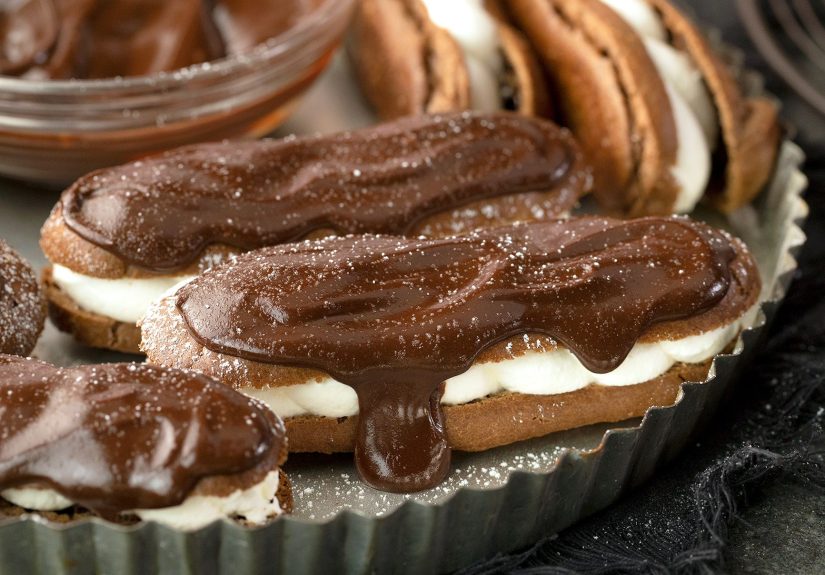
Éclairs are basically profiteroles that went to finishing school: oblong choux filled with pastry cream and topped with chocolate glaze.
Make it manageable by splitting the process: bake shells one day, make pastry cream the next, assemble when you want to impress someone (including yourself).
Home-kitchen win: Poke small holes in baked shells and dry them briefly to keep them crisp.
9) Paris-Brest
A showstopper ring of choux with praline-flavored cream, inspired by a bicycle race. It’s not hard because it’s “fancy,” it’s hard because it has steps.
Treat it like a mini-project: make praline cream (or a nutty pastry cream) and bake the ring. The payoff is huge.
Home-kitchen win: Pipe a thick ring and top with sliced almonds for texture and crunch.
10) Mille-Feuille (Napoleon)
Flaky layers of puff pastry plus pastry cream, often finished with icing. You can absolutely master this at home without laminating dough from scratch:
use quality store-bought puff pastry and focus your energy on making a smooth, not-too-sweet pastry cream. That’s the French way: effort where it counts.
Home-kitchen win: Bake puff pastry between sheets/pans to keep layers even and crisp.
11) Canelés de Bordeaux
Canelés are tiny custardy cakes with a deeply caramelized shellcrisp outside, tender inside. They’re famous for being moody.
The “master at home” move is patience: let the batter rest (often overnight) so flavor develops and the texture bakes correctly.
Home-kitchen win: Use a hot oven at the start to set the crust, then lower to finish cooking through.
12) Tarte au Citron (French Lemon Tart)
A bright lemon filling in a crisp tart shellsharp, sweet, and elegant without trying too hard. Authentic lemon tart tastes like lemon, not lemon candy.
Balance is everything: enough sugar for smoothness, enough acid for zing, and a shell baked fully so it stays snappy.
Home-kitchen win: Blind-bake the shell until golden so the crust doesn’t go soggy.
13) Crème Caramel
The quieter cousin of crème brûlée: a baked custard with caramel sauce that pools on top when unmolded. It’s classic, nostalgic, and surprisingly low-stress.
The big trick is making caramel that’s amber (for flavor) and using a gentle bake to avoid bubbles in the custard.
Home-kitchen win: Chill thoroughly before unmolding for a clean release.
14) Île Flottante (Floating Island)
Soft meringue “islands” floating on crème anglaise (a pourable vanilla custard). It looks like a fancy restaurant dessert, but it’s mostly whipped egg whites
plus a calm custard. Poach the meringues in simmering milk or water, then spoon them over chilled sauce.
Home-kitchen win: Keep the poaching liquid barely simmeringboiling makes meringue sad.
15) Financiers
Small almond cakes traditionally made with egg whites and browned butter (beurre noisette), which adds a nutty depth that tastes “expensive.”
They’re a genius way to use leftover egg whites, and they bake quickly. You’ll feel very Parisian… while wearing pajamas.
Home-kitchen win: Brown the butter until it smells like toasted hazelnuts, then cool slightly before mixing.
16) Far Breton (Brittany Prune Custard Cake)
Far Breton is a custardy baked dessert, often studded with prunes (or other fruit), somewhere between flan and cake. It’s simple, homey, and deeply French.
Mix the batter like you would for crêpes, pour into a buttered dish, and bake until set with a bronzed top.
Home-kitchen win: Soak dried fruit in warm water (or just use juicy fruit) so it stays tender after baking.
17) Kouign-Amann
This Breton pastry is buttery, caramelized, and unapologetically richlike a croissant that joined a band and stopped answering texts.
Traditional kouign-amann uses laminated dough with layers of butter and sugar that caramelize in the oven. At home, you can start with a simplified lamination
or even a “lazy” version using store-bought dough, focusing on the caramelized sugar-butter magic.
Home-kitchen win: Bake in a well-buttered muffin tin so the edges caramelize and release.
French Dessert Shortcuts That Aren’t Cheating
Real French home baking is practical. If a shortcut helps you bake more often (and with less stress), it’s worth it. Try these:
- Store-bought puff pastry: Use it for mille-feuille, quick tarte tatin, or elegant tart bases.
- Make-ahead components: Pastry cream, tart dough, and crêpe batter all improve with chill time.
- One “signature” skill at a time: Nail custard first, then choux, then meringue, then laminated dough.
- Flavor with intention: Real vanilla, citrus zest, good chocolate, and browned butter do more than extra decorations ever will.
Final Bite: How to Think Like a French Home Baker
If French desserts feel intimidating, remember the pattern: master a few foundations, then remix confidently. Custard becomes crème brûlée, crème caramel,
and lemon tart. Choux becomes profiteroles, éclairs, and Paris-Brest. A simple batter becomes clafoutis, far Breton, and tender cakes.
The goal isn’t perfectionit’s repeatability. Bake one dessert twice, and you’ll learn more than you will from scrolling 47 “life-changing” recipe videos.
Pick one dessert this week. Make it once to learn it, and a second time to own it. That’s how “I can’t bake” quietly turns into “I made tarte tatindo you want a slice?”
of Real-Life “At-Home French Dessert” Experience (What You’ll Actually Notice)
Here’s the funny part about mastering French desserts at home: the biggest transformation usually isn’t your piping skillsit’s your confidence.
The first time you make something like crème brûlée, you’ll probably hover over the oven as if the custard might suddenly decide to run away.
By the second batch, you’ll recognize the gentle wobble that means “set but creamy,” and you’ll stop treating the water bath like a high-stakes science fair.
That’s how French baking sneaks up on you: it teaches calm repetition.
You’ll also start noticing that most “mystery” pastry problems have boring, solvable causes. Choux puffs that collapse? Often they needed more drying time,
more baking time, or just a few extra minutes in the turned-off oven to shed steam. Pastry cream that seems lumpy? Usually it needed a whisk earlier,
or a strain at the end (which feels like a magic trick and takes 20 seconds). Tart dough that shrinks? It wasn’t rested long enough, or the butter got too warm,
or you stretched it into the pan like it owed you money. Once you see these patterns, you stop blaming yourself and start adjusting like a pastry chefminus the scary silence.
Another very real experience: your grocery list gets simpler but more specific. You’ll buy fewer random “baking hacks” and more of the good basics:
real butter (because of course), eggs that aren’t ancient, citrus you actually want to zest, and chocolate you’d snack on straight.
You’ll also learn which tools matter and which ones are just shiny distractions. A fine-mesh sieve? Surprisingly powerful. A digital scale?
Quietly life-changing. A fancy gadget that claims to “instantly make macarons”? Suspicious. French desserts reward the humble tools that help you control texture.
And yes, you’ll have moments that feel extremely French, even if your kitchen view is a parking lot. Waiting for madeleine batter to chill can feel dramatic
until you realize the payoff is real: better texture, better rise, and that iconic shape. Letting canelé batter rest overnight feels like you’re joining a secret club.
When you finally unmold a batch with dark caramelized sides, you’ll understand why people chase them. The experience is part patience, part “oh wow, that worked.”
Most importantly, you’ll discover that “authentic” doesn’t mean complicatedit means intentional. A clafoutis isn’t trying to be perfect; it’s trying to be comforting.
A lemon tart isn’t trying to be sweet; it’s trying to be balanced. A tarte tatin isn’t trying to look pristine; it’s trying to taste like caramel and fruit had a great day together.
Once you bake with that mindset, French desserts stop being intimidating and start being… fun. (Also buttery. Always buttery.)