Table of Contents >> Show >> Hide
- Why Daffodils Deserve Prime Garden Real Estate
- The 13 Official Daffodil Divisions, Plus 4 Garden Favorites
- 1. Trumpet Daffodils
- 2. Large-Cupped Daffodils
- 3. Small-Cupped Daffodils
- 4. Double Daffodils
- 5. Triandrus Daffodils
- 6. Cyclamineus Daffodils
- 7. Jonquilla Daffodils
- 8. Tazetta Daffodils
- 9. Poeticus Daffodils
- 10. Bulbocodium Daffodils
- 11. Split-Corona Collar Daffodils
- 12. Split-Corona Papillon Daffodils
- 13. Species and Wild-Type Daffodils
- 14. Miniature Daffodils
- 15. Fragrant Daffodils
- 16. White Daffodils
- 17. Pink-Cupped Daffodils
- How to Choose the Best Daffodil Types for Your Garden
- Quick Growing Tips for Bigger, Better Daffodil Displays
- What Gardeners Often Experience with Mixed Daffodil Plantings
- Final Thoughts
- SEO Tags
Daffodils are the overachievers of spring. They show up early, look cheerful even when the rest of the yard still seems half asleep, and ask for surprisingly little in return. Plant them once, give them decent drainage and a sunny spot, and they repay you with a parade of color that returns year after year. That is the kind of relationship most gardeners dream about.
But not all daffodils look alike. Some are classic yellow trumpets straight out of a childhood drawing. Others are frilly, fragrant, petite, butterfly-shaped, or so elegant they look like they expect applause. If you have ever thought all daffodils were basically the same flower wearing different hats, welcome to the delightful correction.
This guide covers 17 types of daffodils that can brighten up your garden, including the 13 official daffodil divisions gardeners use to classify Narcissus, plus four popular garden-style categories people love to plant for color, fragrance, and design impact. Along the way, you will also find practical growing advice so your spring display does not turn into a one-season magic trick.
Why Daffodils Deserve Prime Garden Real Estate
Before we get to the lineup, here is why daffodils remain such a favorite. They are reliable spring bulbs, widely loved for naturalizing, generally avoided by deer and rabbits, and available in a surprising range of bloom times, flower forms, and colors. In other words, they are not just pretty; they are strategic. A thoughtful mix of early, midseason, and late varieties can stretch your display for weeks, which is excellent news for gardeners and terrible news for people who thought they could get by with one sad planter on the porch.
Most daffodils perform best in full sun to part shade and well-drained soil. Plant bulbs in fall, usually from September through November depending on climate, and resist the urge to tidy up the foliage too soon after bloom. Those leaves may not be glamorous, but they are doing the important job of recharging the bulb for next year. In gardening, as in life, the messy phase is often where the real work happens.
The 13 Official Daffodil Divisions, Plus 4 Garden Favorites
1. Trumpet Daffodils
Trumpet daffodils are the icons. Each stem carries one flower with a central trumpet that is as long as or longer than the petals. These are the bold, classic spring blooms that read from across the yard. Varieties like ‘Dutch Master’ are famous for their vigor, bright color, and strong naturalizing ability. If you want that unmistakable “spring has officially clocked in” look, start here.
2. Large-Cupped Daffodils
Large-cupped daffodils also bear one flower per stem, but the cup is shorter than a trumpet while still making a strong statement. This group offers huge variety in color combinations, from white petals with golden cups to creams, apricots, and orange accents. They are excellent for mixed beds because they feel refined without being fussy. Think of them as the daffodils that know how to dress well without bragging about it.
3. Small-Cupped Daffodils
Small-cupped daffodils have a corona that measures no more than one-third the length of the petals. The result is often a flatter, more graceful flower with a balanced silhouette. These are perfect for gardeners who want something softer and a bit more elegant than the blockbuster trumpet types. ‘Barrett Browning’ is a classic example, with crisp white petals and a vivid orange-red cup that looks like it was painted on by a perfectionist.
4. Double Daffodils
Double daffodils are the drama queens of the group, and I say that with respect. Their petals, cups, or both are doubled, creating a ruffled, full appearance that can resemble peonies or gardenias. Some are sunny yellow, while others mix cream, orange, and soft peach tones. Cultivars like ‘Tahiti’ and ‘Delnashaugh’ are especially popular for cut flowers because they look luxurious and a little over-the-top in the best possible way.
5. Triandrus Daffodils
Triandrus daffodils usually produce two or more nodding flowers per stem, with slightly reflexed petals and a delicate, airy habit. These blooms seem to float rather than stand at attention. The beloved variety ‘Thalia’ is a standout, with pure white flowers and a graceful shape that makes it a favorite for moon gardens, cottage borders, and anyone who prefers understated beauty over floral fireworks.
6. Cyclamineus Daffodils
Cyclamineus daffodils have sharply swept-back petals and a forward-projecting cup, giving them a windswept look. They tend to bloom early and are especially useful in containers, rock gardens, and front-of-border plantings. Because their flowers tilt and flare with such energy, they look almost animated, like they are trying to tell you a very exciting story about spring.
7. Jonquilla Daffodils
Jonquilla daffodils are known for their sweet fragrance, slim rush-like foliage, and clusters of smaller flowers per stem. They are particularly popular in warmer regions because many perform well where some big-flowered daffodils struggle. If your ideal spring garden includes scent drifting through the air instead of just color doing all the work, jonquils deserve a top spot on your list.
8. Tazetta Daffodils
Tazetta daffodils also bear multiple flowers per stem and often bring excellent fragrance to the party. Paperwhites fall into this broader group, though many tazettas are also terrific outdoor garden plants in mild climates. Their clusters look generous and festive, almost as if each bulb decided one blossom was simply not enough and went ahead with a whole bouquet.
9. Poeticus Daffodils
Poeticus daffodils are elegant late bloomers with white petals and a small, neat cup usually edged in yellow, green, or red. They are often strongly fragrant and beloved for naturalizing. ‘Actaea’ is a famous example. These flowers have a calm, composed beauty that feels almost old-world, as though they should be growing beside a stone path near a novel set in the countryside.
10. Bulbocodium Daffodils
Bulbocodium daffodils are commonly called hoop petticoat daffodils, which is already an excellent name and frankly hard to beat. Their oversized cups and reduced petals make them look unlike the traditional daffodil form. They are small, charming, and especially useful in rock gardens and containers where their unusual shape can be appreciated up close. These are the daffodils for gardeners who enjoy a little botanical plot twist.
11. Split-Corona Collar Daffodils
In split-corona collar types, the cup is split and lies in two petal-like whorls close to the main petals, creating a fuller, layered effect. These blooms are ruffled and eye-catching without being as dense as doubles. They bring texture to spring plantings and pair beautifully with tulips and pansies when you want a bed that looks curated rather than accidental.
12. Split-Corona Papillon Daffodils
Papillon split-corona daffodils have a cup that opens more like a butterfly, spreading wide from the center and giving the flower a flamboyant, almost exotic profile. If regular daffodils are polite applause, papillon types are a standing ovation. They are perfect when your border needs a conversation starter instead of another predictable yellow face.
13. Species and Wild-Type Daffodils
This division includes botanical species and naturally occurring forms rather than heavily hybridized garden cultivars. These daffodils often have a more delicate, natural look and can be especially appealing in woodland edges, meadow-style plantings, and collectors’ gardens. They may be smaller, but they bring authenticity and charm that feel wonderfully unmanufactured.
14. Miniature Daffodils
Now we move into popular garden categories rather than formal divisions. Miniature daffodils can belong to several divisions, but they are grouped together because of their size and versatility. Varieties such as ‘Tête-à-Tête’ are beloved for edging, container gardens, window boxes, and tight spaces where standard daffodils might look oversized. Small flower, big optimism.
15. Fragrant Daffodils
Fragrance is not limited to one division, but gardeners often shop specifically for scented daffodils. Jonquillas, tazettas, and poeticus types are especially known for perfume. A fragrant daffodil planting changes the whole mood of a garden because it adds an invisible layer of pleasure. You may forget exactly which shade of yellow you planted, but you will remember stepping outside and thinking the air itself had improved.
16. White Daffodils
White daffodils deserve their own mention because they create a completely different visual effect from the usual golden palette. Cultivars like ‘Mount Hood’ and ‘Thalia’ can make a border feel cooler, calmer, and more sophisticated. White flowers also blend beautifully with blue muscari, purple hyacinths, and silver foliage, proving that daffodils are not limited to cheerful cottage charm. They can absolutely do elegance too.
17. Pink-Cupped Daffodils
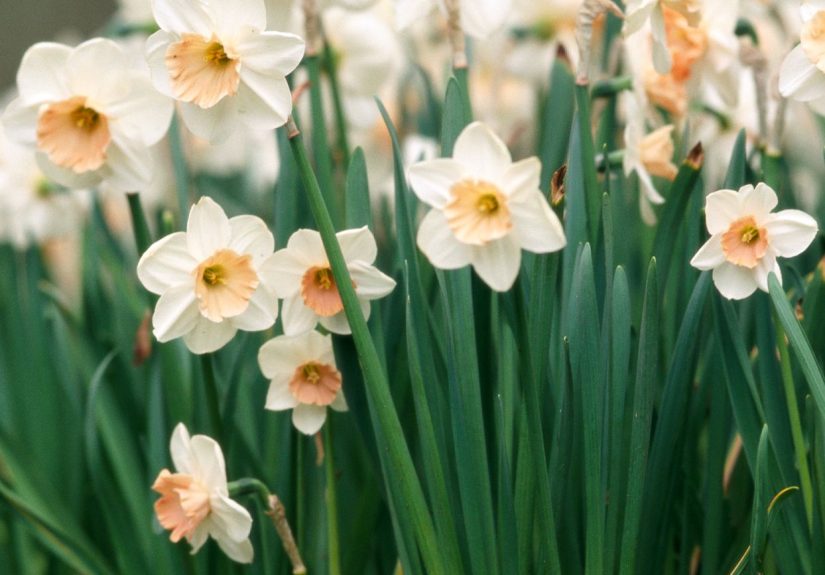
Pink daffodils are the surprise guests that steal the show. To be clear, the petals are usually white or pale yellow, while the cups shift into salmon, apricot, or coral-pink tones. Varieties like ‘Pink Charm’ and ‘Accent’ are favorites for gardeners who want something romantic and slightly unexpected. They still say “spring,” but with better accessories.
How to Choose the Best Daffodil Types for Your Garden
If you want the longest possible season, combine early-blooming cyclamineus and trumpet daffodils with midseason jonquillas and doubles, then finish with poeticus forms. If fragrance matters most, lean hard into jonquilla, tazetta, and poeticus varieties. If you garden in a warmer southern climate, jonquils, tazettas, species daffodils, and selected poeticus types often perform more reliably than some large-flowered late bloomers.
For naturalized drifts, look for strong returners and plant them in irregular sweeps rather than stiff little rows. For containers, choose miniature, cyclamineus, or select large-cupped varieties. For a polished landscape design, blend white, yellow, and bicolor cultivars rather than buying one giant bag of the same bulb and hoping repetition alone counts as style.
Quick Growing Tips for Bigger, Better Daffodil Displays
Plant daffodil bulbs in fall in well-drained soil, generally about two to three times the height of the bulb deep, or roughly 6 inches for many standard bulbs. Water after planting so roots can begin establishing before winter. In spring, deadhead spent flowers if you like, but do not cut the leaves until they yellow naturally. That waiting period matters. It is the difference between a future encore and a one-hit wonder.
If clumps become crowded and flowering declines, divide them after the foliage dies back. A little compost, sensible spacing, and patience go a long way. Daffodils are forgiving, but they are not magicians. Even the happiest bulb cannot thrive in soggy soil and chronic impatience.
What Gardeners Often Experience with Mixed Daffodil Plantings
One of the most satisfying experiences with daffodils is realizing how much personality different types bring to the same garden. A mixed planting rarely feels flat. The trumpets open first with all the confidence of a brass band, then the doubles roll in looking ruffled and glamorous, followed by fragrant jonquils that make the path smell better than any candle trying too hard on a coffee table. By the time the late poeticus daffodils appear, the whole display feels layered and intentional, even if the original planting plan was drawn on the back of a seed packet with a pencil you found in the garage.
Gardeners also notice that daffodils change how they use outdoor spaces in early spring. A front walk suddenly becomes a place to linger. A border near the mailbox turns a routine chore into a tiny daily event. You start opening the curtains earlier because there is finally something worth seeing besides damp mulch and last year’s regrets. Even a modest patch of bulbs can make a yard feel cared for, hopeful, and somehow more awake.
Another common experience is learning that flower form really matters. Many people start with standard yellow trumpets because they are familiar, then discover that a white triandrus or a pink-cupped large-cupped variety can completely change the mood of a bed. The more kinds you grow, the more you notice texture, posture, fragrance, and timing. It becomes less about “having daffodils” and more about composing a spring sequence. That is when gardeners typically fall down the rabbit hole and begin using phrases like “early midseason bloom” in casual conversation, which is how you know the hobby has escalated.
There is also the practical joy of seeing bulbs return. Unlike fussier plants that treat survival as an optional lifestyle choice, daffodils often settle in and come back with reassuring consistency. When planted in drifts under deciduous trees, along fences, or at the edge of shrub borders, they can multiply into generous clumps that look better every few years. Watching that happen is deeply satisfying because it feels like the garden is finally meeting you halfway.
Of course, every daffodil grower eventually has the foliage conversation. The blooms fade, the leaves flop, and suddenly the tidy-garden instinct starts whispering dangerous ideas. Experienced gardeners learn to live with that awkward in-between period because they know those green leaves are feeding next year’s flowers. Many plant daylilies, hostas, catmint, or other companion perennials nearby so the fading foliage disappears into fresh growth. It is a small design trick, but it feels like wizardry the first time it works.
Perhaps the best experience of all is how daffodils mark time. They are one of those plants that turn the calendar into something visible. When the first miniature blooms open, winter feels less permanent. When the fragrant varieties hit their stride, the garden seems to exhale. And when the last late blooms fade, they leave behind not disappointment but momentum, handing the season off to tulips, alliums, peonies, and whatever comes next. Daffodils do not just brighten a garden. They teach it how to begin again.
Final Thoughts
If you want a spring garden that feels richer, longer-lasting, and far more interesting than a basic patch of yellow blooms, diversify your daffodil planting. Mix official divisions with fragrant, miniature, white, and pink-cupped favorites. Pay attention to bloom sequence, not just flower color. And plant more than you think you need, because future you will absolutely be annoyed if present you shows restraint.
The beauty of daffodils is that they manage to be both easygoing and impressive. They can naturalize under trees, sharpen the edge of a path, lighten up containers, and turn a sleepy garden into a full seasonal opening act. In short, they are not just spring flowers. They are a spring strategy.