Table of Contents >> Show >> Hide
- What you’ll find in this article
- Barn doors: the reality check
- Sizing & hardware basics (so your barn door doesn’t become a wall decoration)
- 22 barn door ideas by room
- 1) Entryway coat closet: go slim and simple
- 2) Mudroom gear zone: the “hide the mess” slider
- 3) Living room to playroom divider: two doors for a wide opening
- 4) Media room / den: go solid-core for fewer “I can hear everything” moments
- 5) Dining room: a modern glass-panel barn door
- 6) Kitchen pantry: a chalkboard or message-center door
- 7) Coffee bar / appliance garage: mini barn door, maximum payoff
- 8) Laundry room: separate sound, lint, and visual chaos
- 9) Linen closet: a quiet upgrade for a boring door
- 10) Under-stairs storage: turn awkward space into “custom built-in” energy
- 11) Hallway utility closet: keep doors from clashing
- 12) Home office: frosted glass for “I’m here but don’t look at my spreadsheet tears”
- 13) Study nook: pocket-vibes without pocket-door construction
- 14) Bedroom closet: a space-saving swap for bifolds
- 15) Primary bedroom: a statement door as wall art
- 16) Ensuite bathroom: choose overlap + lock, or skip it
- 17) Powder room: a bold door that doubles as decor
- 18) Toilet room (water closet): the “high privacy” barn door approach
- 19) Nursery: soft-close is your best friend
- 20) Kids’ room: durable finishes and pinch-point awareness
- 21) Guest room: flexible privacy without crowding the room
- 22) Sunroom or indoor-outdoor transition: barn-style, but weather-smart
- Style & material cheat sheet
- DIY vs. buy: a quick decision guide
- Real-world experiences: what living with barn doors is really like (the stuff you won’t learn from the photo)
- 1) The “privacy gap” is realplan for it upfront
- 2) A perfectly level track is the difference between “smooth” and “possessed”
- 3) Soft-close hardware is the upgrade people wish they’d bought first
- 4) Wall obstacles are more annoying than you think
- 5) The door becomes part of your “traffic pattern”
- 6) Maintenance is small, but it’s not zero
- Conclusion
Barn doors used to live on farms, minding their own business and keeping hay where it belongs. Now they’re in our homes, sliding around like they pay rent.
And honestly? When you use them in the right spot, sliding barn doors can be equal parts space-saver and statement piece.
When you use them in the wrong spot… well, let’s just say your bathroom shouldn’t sound like it has an open-mic night.
This guide gives you 22 barn door ideas for every roomfrom pantries and closets to bedrooms, home offices, and beyondplus practical tips on
sizing, hardware, privacy, and real-life “wish I knew that sooner” lessons so your barn door looks amazing and works like it should.
Barn doors: the reality check
Why people love them
- They save floor space because there’s no swing radiusgreat for tight hallways, small bedrooms, and awkward corners.
- They add architectural interest fast. A barn door can make a plain opening look intentional (and expensive).
- They’re flexible for open layoutsslide it closed when you want separation, open when you want flow.
Why people complain (and they’re not totally wrong)
- Privacy and sound control are weaker than a traditional hinged door. Barn doors don’t seal tightly, so light and sound can leak around the edges.
- You need wall space beside the opening so the door can slide fully open.
- Wall obstacles matter (switch plates, vents, outlets, trim). A gorgeous door that blocks your light switch is… a choice.
- Hardware needs solid support because doors can be heavy. A shaky install = noisy rollers, sagging, or alignment drama.
Bottom line: barn doors are fantastic for closets, pantries, laundry rooms, room dividers, and “hide-the-chaos” zones. For
bathrooms and bedrooms, they can workbut you’ll want to plan for privacy (locks, overlap, and maybe sound/edge seals).
Sizing & hardware basics (so your barn door doesn’t become a wall decoration)
Measure the opening like you mean it
- Door width: Aim for the door to cover the opening with about 1–2 inches of overhang on each side for better coverage.
If you’re using it where privacy matters, lean toward the larger end. - Door height: Plan for about 1 inch of overlap at the top and around 1/2 inch clearance at the bottom
so it glides without scraping your floors (especially important if you have rugs). - Wall space: Make sure there’s enough empty wall for the door to slide fully open. Double doors need space on both sides.
Hardware essentials you shouldn’t skip
- Mounting board / header (backer board): Helps distribute weight across studs and keeps the track secureespecially on older walls or when studs don’t line up perfectly.
- Floor guide: Keeps the door from swinging away from the wall like it’s trying to escape.
- Stops + anti-jump parts: Stops prevent the rollers from running off the track; anti-jump blocks/discs help keep the door safely on the rail.
- Soft-close add-ons: Optional, but great for quiet, smooth closing (and for preventing “barn door slams,” which is a sentence no one wants in their home).
Pro tip: if your baseboards stick out, you may need spacers or a thicker mounting board so the door clears the trim.
Getting the track perfectly level is the difference between “luxury glide” and “why is the door slowly opening by itself?”
22 barn door ideas by room
Below are 22 practical, design-forward barn door ideas organized to cover nearly every room in a typical home. Each idea includes a
“why it works” and a “do this to make it better” tip.
1) Entryway coat closet: go slim and simple
A single, flat-panel barn door keeps your entry looking tidy without a closet door swinging into your face while you’re holding groceries.
Choose a clean plank or shaker-style door for a modern look.
Make it better: Add a recessed pull so it doesn’t snag sleeves and bags when you walk by.
2) Mudroom gear zone: the “hide the mess” slider
Shoes, leashes, sports gearmudrooms are basically organized chaos. A barn door lets you conceal the clutter quickly when guests arrive.
Make it better: Use a durable finish (painted or sealed wood) and a soft-close to protect the door from high-traffic “toss and go” habits.
3) Living room to playroom divider: two doors for a wide opening
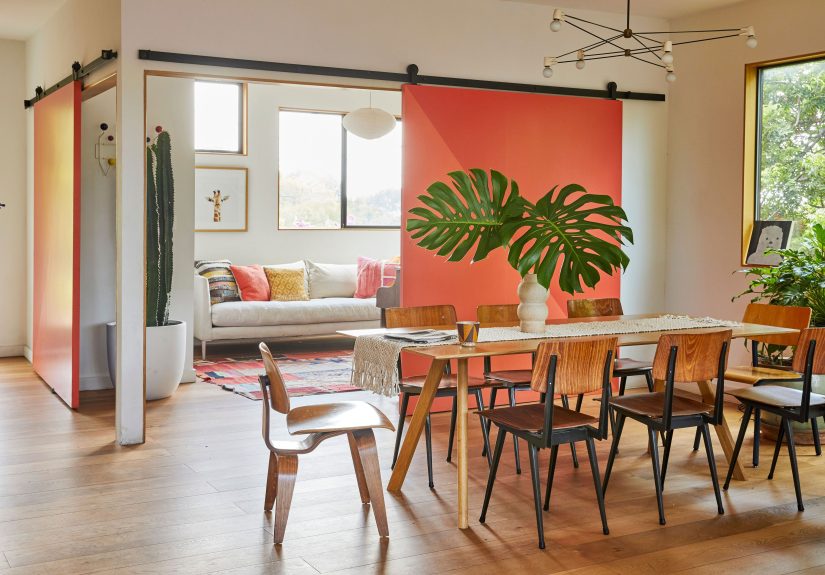
Double barn doors can close off noise and visual clutter without building a wall. They’re ideal for open layouts where you want “together” and “separate” options.
Make it better: Consider a bypass or double-track setup if wall space is limited but the opening is wide.
4) Media room / den: go solid-core for fewer “I can hear everything” moments
A barn door can be a stylish way to close a TV room, but lightweight hollow doors won’t help much with sound.
Make it better: Choose a heavier slab (solid wood or solid-core) and add edge seals if you want noticeably better sound control.
5) Dining room: a modern glass-panel barn door
Want separation without darkening the space? A frosted or reeded glass barn door is a sleek, modern upgrade that still lets light travel.
Make it better: Match metal finishesblack, brushed nickel, or brassto your lighting for a cohesive look.
6) Kitchen pantry: a chalkboard or message-center door
A pantry barn door is practically made for a chalkboard finish: grocery lists, menus, reminders, doodles… all fair game.
Make it better: Use a smooth, paint-grade door (MDF or primed) so writing wipes cleanly.
7) Coffee bar / appliance garage: mini barn door, maximum payoff
If you have a beverage station or a counter niche, a smaller sliding door can hide cords and countertop clutter.
Make it better: Choose compact hardware rated for lighter doors and keep the pull low-profile.
8) Laundry room: separate sound, lint, and visual chaos
Laundry rooms love barn doors because they’re often in tight hallways. Sliding keeps circulation clear and looks intentional.
Make it better: Pick a moisture-resistant finish and wipeable hardware (laundry rooms are sneaky-humid).
9) Linen closet: a quiet upgrade for a boring door
Linen closet doors are usually the most forgettable doors in the houseuntil you swap one for a crisp, modern barn door.
Make it better: Use a simple two-panel or shaker style to match trim and interior doors.
10) Under-stairs storage: turn awkward space into “custom built-in” energy
Under-stairs closets can be narrow and weird. A barn door makes access easier and turns that blank wall into a design moment.
Make it better: Use a shorter door or custom cut to match the anglebonus points for a diagonal plank pattern.
11) Hallway utility closet: keep doors from clashing
In tight hallways, swinging doors collide with people, pets, and each other. Barn doors keep the hallway walkable.
Make it better: Confirm your door won’t cover key switches or thermostats when open.
12) Home office: frosted glass for “I’m here but don’t look at my spreadsheet tears”
A glass barn door can make a home office feel bright and modern while still offering separation.
Make it better: Use frosted/reeded glass (not clear) if you want fewer distractions and more visual privacy.
13) Study nook: pocket-vibes without pocket-door construction
If you have a small study alcove, a barn door can close it off at night or during Zoom callsno wall demo required.
Make it better: Pick a lightweight door if the opening is small and the wall structure is limited.
14) Bedroom closet: a space-saving swap for bifolds
Barn doors are a popular alternative to bifoldsespecially when you want smoother access and a more polished look.
Make it better: If the closet is wide, consider two doors or a bypass configuration so you can access more of the opening at once.
15) Primary bedroom: a statement door as wall art
A bold color (deep blue, soft sage, warm terracotta) can make a barn door feel like a deliberate design feature instead of a trend.
Make it better: Tie the color to one other element in the roompillows, a rug, or artworkso it looks curated.
16) Ensuite bathroom: choose overlap + lock, or skip it
Barn doors can work for an ensuite because traffic is predictable (usually you and someone who already knows your favorite snack).
But they need privacy planning.
Make it better: Use a barn-door lock designed for sliders and maximize overlap. If this is a shared or guest bath, consider a traditional door instead.
17) Powder room: a bold door that doubles as decor
Powder rooms are small, so a swinging door can feel cramped. A barn door can be practical here, but privacy matters a lot.
Make it better: Choose a heavier door and add a lockthen consider a small “occupied” sign if your household enjoys chaos.
18) Toilet room (water closet): the “high privacy” barn door approach
If your primary bath has a separate toilet room, a barn door can be a sleek solution if you treat privacy as non-negotiable.
Make it better: Add a lock and consider edge seals or a jamb kit to reduce gaps.
19) Nursery: soft-close is your best friend
A sliding door can reduce the chance of accidental door slams during nap time (aka the sacred hour).
Make it better: Use soft-close hardware and install anti-jump pieces properly for safety.
20) Kids’ room: durable finishes and pinch-point awareness
Kids will treat a barn door like a spaceship hatch. Plan accordingly.
Make it better: Choose a durable painted finish and consider finger-safe pulls. Teach “hands off the track” early.
21) Guest room: flexible privacy without crowding the room
In smaller guest rooms, a barn door can keep furniture placement flexible while still giving guests a sense of separation.
Make it better: Use a classic style (shaker, multi-panel) so it won’t feel dated in two years.
22) Sunroom or indoor-outdoor transition: barn-style, but weather-smart
For a sunroom or enclosed porch entry, a sliding barn-style door can create a breezy, casual transitionespecially in coastal or farmhouse-inspired homes.
Make it better: Use materials and finishes suitable for humidity and temperature swings, and keep hardware maintained so it doesn’t corrode.
Style & material cheat sheet
Door styles (pick the vibe)
- Plank: clean, simple, modern-friendly.
- Z-brace: classic farmhouse energy (without buying a tractor).
- X-brace / crossbuck: bold, traditional, statement-making.
- K-brace: slightly more detailed and architectural.
- Multi-panel: feels closer to a standard interior doorgreat if you want timeless.
- Glass (frosted/reeded): bright and modern, excellent for offices and dining areas.
- Chevron or horizontal plank: a modern pattern that feels custom and intentional.
Materials (choose based on use, not just looks)
- Solid wood / solid-core: heavier, sturdier, better for bedrooms and sound-sensitive areas.
- MDF or primed composite: smooth for painting, stable indoors, great for chalkboard/murals.
- Reclaimed wood: beautiful character, but seal it well (especially near bathrooms or laundry).
- Metal + glass: modern industrial, lighter visually, helps keep rooms bright.
Hardware choices that actually change daily life
- Soft-close: quieter, safer, and less wear over time.
- Bypass tracks: useful when you need two doors but don’t have enough wall space for standard doubles.
- Floor guides: mandatory if you want the door to feel stable and not swing.
- Locks: choose slider-specific locks (not “random latch from the garage”) for bathrooms and bedrooms.
DIY vs. buy: a quick decision guide
If you’re handy, a barn door can be a satisfying weekend project. If you’re not, you can still get the look with a pre-made slab and a quality hardware kit.
Here’s the fastest way to decide:
DIY makes sense if…
- You want a custom size or design (especially for odd openings).
- You enjoy woodworking (or you’re at least on speaking terms with a level and stud finder).
- You want to match existing trim, paneling, or a specific pattern (like chevron or shiplap).
Buying makes sense if…
- You want predictable results quickly.
- You’re installing in a high-visibility room and want a clean factory finish.
- You need a heavier, more stable door without guessing on structure and joinery.
Either way, prioritize correct sizing, solid mounting, and quality hardware. A cheap track with a heavy door is like
putting roller skates on a refrigerator: technically possible, emotionally upsetting.
Real-world experiences: what living with barn doors is really like (the stuff you won’t learn from the photo)
Barn doors photograph beautifullyclean lines, cozy textures, dramatic hardware. But the real test is what happens after the novelty wears off and you’re
sliding that door every day. Based on common homeowner and contractor feedback, here are the most consistent “experience-based” lessons people
share after installing interior barn doors.
1) The “privacy gap” is realplan for it upfront
The most common surprise is how much light and sound can leak around the edges. In a living room or laundry room, it’s no big deal. In a bathroom?
That’s where people get regretful fast. The best experiences come from treating privacy as a design requirement:
choose extra overlap, add a proper sliding lock, and consider edge seals or a jamb-style kit when the room truly needs discretion.
If your powder room opens right into a main entertaining space, a barn door can feel like a party trick you didn’t mean to perform.
2) A perfectly level track is the difference between “smooth” and “possessed”
If the track is even slightly unlevel, some doors will drift open or slide closed on their own. That’s not “charming rustic character”that’s physics.
The best installs involve careful leveling, solid fasteners into studs (or a properly anchored mounting board), and a quick test slide before tightening everything.
People who skip the level step often spend weeks doing micro-adjustments and wondering why the door hates them.
3) Soft-close hardware is the upgrade people wish they’d bought first
Soft-close isn’t just about luxury. It prevents slammed doors, protects fingers, and reduces wear on stops and rollers. In homes with kids,
pets, or roommates, soft-close turns a barn door from “noisy novelty” into a calm, daily-use feature. It’s one of those add-ons that feels optional
until you live without itthen it becomes a must-have.
4) Wall obstacles are more annoying than you think
Homeowners often realize too late that a barn door can cover a light switch, thermostat, vent, or outlet when it’s open. The fix might be relocating
electrical (which is rarely anyone’s favorite surprise expense). The best experiences come from mapping the door’s travel path before purchase:
tape it out on the wall, mark where the door will sit when open, and confirm you’re not blocking something you use daily.
5) The door becomes part of your “traffic pattern”
A swing door opens and closes without you thinking much about it. A barn door requires a slidemeaning you need a clear approach and an easy grip.
People are happiest when the handle placement feels natural (not too high, not too low) and when the door glides with minimal effort.
If the door is heavy and the rollers are cheap, it can feel like a tiny workout every time you want a towel. That’s cute exactly once.
6) Maintenance is small, but it’s not zero
Tracks can collect dust, and rollers may need occasional tightening or lubrication. Most people don’t mind simple maintenance, but they do mind squeaks
and rattles that show up months later. The best long-term experiences come from doing a quick “hardware check” a few times a year:
tighten bolts, wipe the track, and confirm the door is still aligned with the floor guide and stops.
The takeaway: barn doors are absolutely worth it when you install them like a grown-up and not like a weekend reality show montage.
The happiest barn door owners pick the right room, plan for privacy (when needed), invest in decent hardware, and make sure the track is solid and level.
Conclusion
If you want a design upgrade that also solves real layout problems, barn doors can be a smart moveespecially for closets, pantries, laundry rooms, and
flexible room dividers. Choose a style that matches your home (not just the internet), size it correctly, mount it securely, and don’t ignore privacy if the door
guards a bathroom or bedroom. Do that, and your barn door won’t feel like a trendit’ll feel like it always belonged.