Table of Contents >> Show >> Hide
- What Hummingbirds Look for in Flowers
- 26 Best Hummingbird Flowers to Plant
- 1. Bee Balm (Monarda)
- 2. Cardinal Flower (Lobelia cardinalis)
- 3. Zinnia (Zinnia elegans)
- 4. Salvia (Salvia spp.)
- 5. Bleeding Heart (Lamprocapnos spectabilis)
- 6. Butterfly Bush (Buddleja davidii)
- 7. Trumpet Creeper (Campsis radicans)
- 8. Lupine (Lupinus x hybridus)
- 9. Eastern Red Columbine (Aquilegia canadensis and hybrids)
- 10. Petunia (Petunia spp.)
- 11. Penstemon (Penstemon spp.)
- 12. Trumpet Honeysuckle (Lonicera sempervirens)
- 13. Coral Bells (Heuchera spp.)
- 14. Flowering Tobacco (Nicotiana alata)
- 15. Delphinium (Delphinium spp.)
- 16. Fuchsia (Fuchsia spp.)
- 17. Lantana (Lantana camara)
- 18. Foxglove (Digitalis purpurea)
- 19. Daylily (Hemerocallis spp.)
- 20. Cuphea (Cuphea spp.)
- 21. Catmint (Nepeta spp.)
- 22. Phlox (Phlox spp.)
- 23. Red Hot Poker (Kniphofia)
- 24. Hummingbird Mint (Agastache cana and hybrids)
- 25. Morning Glory (Ipomoea purpurea)
- 26. Canna Lily (Canna spp.)
- How to Design a Hummingbird-Friendly Garden
- Real-World Experiences with Hummingbird Flowers
If you’ve ever watched a hummingbird zip past your head like a glittery little jet, you know how addictive these tiny birds can be. The good news: you don’t need fancy feeders or sugar chemistry skills to bring them in. Plant the right flowers, and hummingbirds will do fly-bys of your yard all season long.
In general, hummingbirds are obsessed with bright, nectar-rich, tubular bloomsespecially reds, oranges, pinks, and purples. Native plants tend to offer more reliable nectar and also support the insects hummingbirds eat, so they’re a win-win for the whole backyard ecosystem.
What Hummingbirds Look for in Flowers
Before we dive into the plant list, it helps to know what makes a great “hummingbird flower”:
- Bright colors: Red is classic, but orange, pink, and purple are also irresistible.
- Tubular shape: Long, narrow blooms fit a hummingbird’s bill and tongue perfectly, helping them reach deep nectar.
- Nectar-rich blooms: Hummers are high-energy athletes; they need serious fuel.
- Plenty of blooms over time: A mix of early, mid, and late-season flowers keeps food available from spring through fall.
- No pesticides: Chemicals can harm both birds and the insects they also depend on.
With those basics in mind, here are 26 of the best hummingbird flowers to plant, plus tips for using them in your yard or balcony garden.
26 Best Hummingbird Flowers to Plant
1. Bee Balm (Monarda)
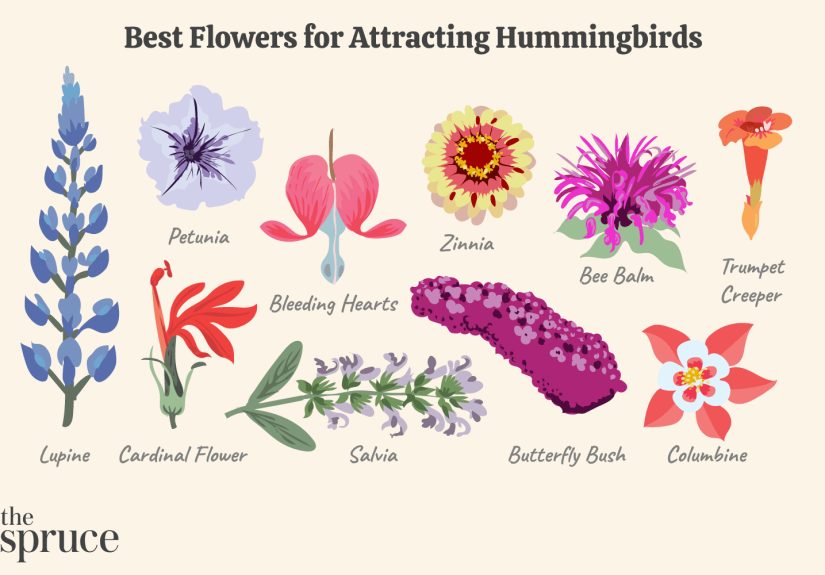
Bee balm looks like a firework exploded in your borderin the best way. The shaggy red, pink, or purple flower heads are like neon signs for hummingbirds, and they’re rich in nectar. Plant it in full sun with consistently moist soil, and it’ll reward you with weeks of color. It can spread, so give it room or divide clumps every few years to keep it healthy.
2. Cardinal Flower (Lobelia cardinalis)
If you want a “guaranteed hummingbird magnet,” cardinal flower is it. The tall spikes of scarlet, tubular blooms scream “all-you-can-eat buffet.” It thrives in rich, consistently moist soil and partial sun, so it’s perfect for rain gardens, stream edges, or the damp corner of your yard you’re not sure what to do with.
3. Zinnia (Zinnia elegans)
Zinnias are easy, fast, and ridiculously colorful. While the blooms are more daisy-like than tubular, they’re loaded with nectar and pollen, attracting hummingbirds, butterflies, and bees. Start from seed after frost, give them full sun, and you’ll have a hummingbird-approved cutting garden from summer to fall.
4. Salvia (Salvia spp.)
Salvias come in many species and colors, but the red, blue, and purple varieties are hummingbird favorites. Their vertical spikes of tubular flowers provide a buffet from mid-summer into fall. Plant them in full sun with well-drained soil, and deadhead spent blooms to keep the show going.
5. Bleeding Heart (Lamprocapnos spectabilis)
In spring, bleeding hearts dangle delicate, heart-shaped flowers along arching stemsan early nectar source before many other flowers wake up. Hummingbirds appreciate the cool, shaded spots where bleeding hearts thrive. Plant them in part shade with rich, moist soil and let their foliage die back naturally in summer.
6. Butterfly Bush (Buddleja davidii)
Butterfly bush doesn’t just attract butterflies; hummingbirds flock to its long, cone-shaped flower clusters, too. It blooms from mid-summer into fall and loves full sun and well-drained soil. In some regions, this plant can be invasive, so look for sterile or non-invasive cultivars, or choose native alternatives if that’s a concern in your area.
7. Trumpet Creeper (Campsis radicans)
Also known as hummingbird vine, trumpet creeper produces large, trumpet-shaped orange or red flowers that hummingbirds absolutely adore. It’s vigorousborderline pushyso give it a strong support (like a sturdy arbor or fence) and be ready to prune regularly. Full sun and average soil are all it needs to take off.
8. Lupine (Lupinus x hybridus)
Lupines send up towers of pea-like flowers in beautiful blues, purples, pinks, and bi-colors. They bloom in late spring to early summer, offering early-season nectar when hummingbirds are just returning. They prefer cool climates, full sun, and well-drained, slightly acidic soil. In hot areas, they’re often grown as annuals.
9. Eastern Red Columbine (Aquilegia canadensis and hybrids)
Columbine flowers look like tiny rockets, complete with spurs that hold nectar at the base. Red and yellow varieties are especially popular with hummingbirds. These perennials enjoy full sun to part shade and well-drained soil, and they’ll gently reseed to create natural-looking drifts over time.
10. Petunia (Petunia spp.)
Petunias are container royalty. Their funnel-shaped flowers hold plenty of nectar and come in every color you can dream up. Plant them in hanging baskets, window boxes, or borders in full sun. Deadhead or lightly shear them to encourage new blooms and keep your hummingbird “drive-thru” open all season.
11. Penstemon (Penstemon spp.)
Penstemons, often called beardtongues, produce sturdy spikes loaded with tubular flowers in red, purple, and pink. They love full sun and well-drained soil and are generally drought-tolerant once established. They’re a great bridge plant between spring and mid-summer nectar sources.
12. Trumpet Honeysuckle (Lonicera sempervirens)
This native honeysuckle vine is a far better choice than invasive common honeysuckle. Clusters of red, coral, or orange tubular blooms appear in spring and can rebloom through the season. Plant it near a trellis, pergola, or mailbox post in full sun to part shade, and you’ll have a hummingbird favorite that also fits nicely into native-plant designs.
13. Coral Bells (Heuchera spp.)
Best known for their colorful foliage, coral bells also send up wiry stems topped with tiny bell-shaped flowers that hummingbirds enjoy. They do well in part shade with rich, well-drained soil, and they’re perfect for edging paths, tucking into shady borders, or underplanting shrubs.
14. Flowering Tobacco (Nicotiana alata)
Flowering tobacco has star-shaped, often tubular blooms that release fragrance in the eveninggreat for people and pollinators. Hummingbirds appreciate the nectar-rich flowers, especially in white and lime-green varieties that stand out at dusk. Grow it as an annual in full sun to part shade with moist, well-drained soil, and note that the plant is toxic to humans and pets.
15. Delphinium (Delphinium spp.)
Delphiniums are tall, dramatic perennials with densely packed spikes of blue, purple, or white flowers. Hummingbirds work these flower towers methodically, sipping from each tiny bloom. Delphiniums prefer cooler climates, full sun to light shade, and rich, moist, well-drained soil. They often need staking and some protection from strong winds.
16. Fuchsia (Fuchsia spp.)
Fuchsias are made for hanging baskets where their pendulous, two-toned flowers can dangle at hummingbird level. Shades of red, pink, purple, and white create a jewel-like display. They prefer cooler temperatures, bright shade or morning sun, and consistently moist soil. In hot climates, treat them like pampered annuals and keep them out of harsh afternoon sun.
17. Lantana (Lantana camara)
Lantana forms colorful clusters of tiny tubular flowers that shift shade as they age. Hummingbirds, butterflies, and bees all visit. It loves full sun, heat, and well-drained soil and can be grown as a perennial in warm climates or an annual in colder ones. In some regions, lantana can be invasive, so check local guidance and opt for well-behaved cultivars if needed.
18. Foxglove (Digitalis purpurea)
Foxgloves produce stately spires of bell-shaped flowers that hummingbirds can easily probe for nectar. Plants are usually biennial, flowering their second year, but they self-seed generously. Grow them in full sun to part shade with well-drained, slightly acidic soil. They are highly toxic if ingested, so avoid planting them where pets or small children might nibble.
19. Daylily (Hemerocallis spp.)
Daylilies may only open each bloom for a day, but there are so many buds that hummingbirds get a steady supply of nectar during their flowering season. They tolerate heat, poor soil, and general neglect, making them a great low-maintenance option. Plant them in full sun with reasonably fertile, well-drained soil.
20. Cuphea (Cuphea spp.)
Often nicknamed cigar or firecracker plant, cuphea produces tiny tubular flowers in orange, red, and yellow. Hummingbirds find them irresistible, especially when the plant is massed. It loves full sun, warmth, and well-drained soil, and it’s particularly good in containers where you can place it close to your seating areas for up-close bird watching.
21. Catmint (Nepeta spp.)
Catmint’s airy spikes of purple or blue flowers are buzzing with pollinators all summer long. While it’s best known for attracting bees, hummingbirds also visit, especially when nectar is scarce elsewhere. It prefers full sun and well-drained soil and is drought-tolerant once established, making it ideal for low-water gardens.
22. Phlox (Phlox spp.)
Garden phlox and some creeping phlox varieties offer clusters of fragrant, tubular flowers in white, pink, purple, and blue. Hummingbirds appreciate both the nectar and the long bloom season. Plant them in full sun to part shade with rich, well-drained soil and good air circulation to prevent mildew.
23. Red Hot Poker (Kniphofia)
Red hot poker plants send up tall, torch-like flower spikes that transition from yellow to orange to redbasically a hummingbird traffic light that always says “go.” They prefer full sun and well-drained soil and work beautifully in mixed borders or more naturalistic plantings. Avoid soggy sites to prevent rot.
24. Hummingbird Mint (Agastache cana and hybrids)
Agastache, often sold as hummingbird mint or hyssop, produces spikes of tubular flowers in pinks, purples, or oranges. The foliage is aromatic, and the plants thrive in hot, dry conditions. They’re perfect for xeriscapes, gravel gardens, and sunny borders where hummingbirds can visit throughout summer and fall.
25. Morning Glory (Ipomoea purpurea)
Morning glories are fast-growing annual vines with large, trumpet-shaped blooms that open early in the day. Hummingbirds learn quickly that your trellis or fence line is breakfast central. Give them full sun, support to climb, and moderately fertile, well-drained soil. They reseed easily, so be prepared to thin seedlings if they get too enthusiastic.
26. Canna Lily (Canna spp.)
Canna lilies bring a tropical vibe with bold foliage and flashy red, orange, or yellow blooms. Hummingbirds love the nectar-rich flowers, and you’ll love the drama they add to beds or containers. Plant rhizomes in full sun with rich, moist, well-drained soil and feed regularly during the growing season for maximum bloom.
How to Design a Hummingbird-Friendly Garden
Now that you’ve got a plant list as long as a hummingbird’s to-do list, how do you put it all together?
- Layer your planting: Use tall plants like delphinium, foxglove, and trumpet creeper in the back, medium-height plants like bee balm and daylilies in the middle, and lower growers like catmint and coral bells in front.
- Provide continuous bloom: Use early bloomers (bleeding heart, columbine), midsummer stars (bee balm, salvia, zinnia), and fall performers (hummingbird mint, red hot poker, lantana) so nectar is always available.
- Cluster plants: Plant in generous groups, not single “lonely” specimens. Masses of flowers are easier for hummingbirds to find and defend.
- Add water and perches: A small fountain, mister, or shallow basin plus nearby shrubs or small trees give hummingbirds everything they need: food, water, and safe places to rest.
- Skip pesticides: Hummingbirds also eat tiny insects for protein. Insecticides reduce their food and can harm the birds directly.
Real-World Experiences with Hummingbird Flowers
Reading plant tags is helpful, but gardens are really built on lived experiencethose little “aha” moments when you realize, “Oh, this is what hummingbirds actually like.” Here’s what tends to happen once people start planting hummingbird flowers like the ones on this list.
First, most gardeners are surprised by how quickly hummingbirds show up. You might plant a pot of bright red salvia or fuchsia on your porch and, within days, notice a flash of metallic green hovering at the blossoms. Sometimes the birds appear before you’ve even finished arranging the containers. Once they’ve discovered a reliable nectar source, they often return at the same times each day, checking “their” plants like they’re on a personal inspection route.
Another common experience: realizing that native plants change the whole feel of the yard. When gardeners swap out generic bedding plants for native cardinal flower, columbine, trumpet honeysuckle, or penstemon, the garden tends to come alive. Not only do hummingbirds visit more often, but you’ll also see more bees, butterflies, and beneficial insects. Over time, this creates a tiny backyard ecosystemless like a decorative yard and more like a small nature reserve.
Gardeners also notice that hummingbirds develop strong opinions. For example, you might plant three different flowers you’ve read are “hummingbird favorites,” but your local birds treat one of them like the clear winner. In some gardens, bee balm is the hot ticket; in others, zinnias or lantana get all the action. Observing which flowers get the most visits lets you fine-tune what you plant next season. Many people end up doubling or tripling the plants that clearly draw the most traffic.
It’s also very common to underestimate how territorial hummingbirds can be. One bird may decide your patch of cardinal flower or your canna lilies are “their” personal property and will chase off other hummingbirds with fierce energy. To help everyone get a fair shot at the nectar, gardeners often plant multiple clusters of hummingbird flowers around the yardon opposite sides of the house, along different fence lines, or mixed into front and back gardens. That way, a dominant bird can’t guard every flower at once.
Container gardeners have their own discoveries. People with small patios or balconies quickly realize that pots of petunias, cuphea, or fuchsia placed at railing height act like hummingbird viewing stations. You might be working on your laptop or sipping coffee when a hummingbird suddenly appears inches from your face, dipping in and out of blooms. Hanging baskets near windows are another favorite optionmany gardeners end up watching hummingbirds just as much as they watch TV.
Finally, gardeners often report a subtle but important shift: once hummingbirds become regular visitors, they start planning the whole garden around them. Instead of asking, “What color do I want here?” the question becomes, “What will bloom in August when nectar is scarce?” or “Which native will support both hummingbirds and local insects?” Over time, the plant choices become more intentional, the garden becomes more resilient, and your outdoor space turns into a place where you’re not just decoratingyou’re genuinely hosting wildlife.
Whether you start with a single pot of zinnias or go all-in with layered beds of bee balm, cardinal flower, and hummingbird mint, these 26 hummingbird flowers can transform your yard into a buzzing, whirring, feathered hangout spot. Just be warned: once you get used to having hummingbirds around, you’ll never want to garden without them.