Table of Contents >> Show >> Hide
- Start with a Closet Reset
- Use Vertical Space Like a Pro
- Make the Doors Work Harder
- Upgrade Your Hangers and Hardware
- Contain the Chaos with Bins, Baskets, and Dividers
- Rethink the Floor and Lower Half of the Closet
- Smart Space-Saving Strategies
- Make Your Small Closet Pleasant to Use
- Real-Life Experiences: What Actually Works in a Small Closet
If your small closet looks like it’s starring in its own disaster movie every morning, you’re not alone.
The good news? You don’t need a walk-in the size of a bedroom to have a functional, pretty, and easy-to-use wardrobe.
With some smart small closet organization ideas, you can double (or at least seriously boost) your storage without knocking down a single wall.
Professional organizers, home designers, and storage-obsessed people all agree on one thing: the secret isn’t just buying more bins.
It’s about decluttering, planning, and using every inch of space on purpose. Below are 27 practical ways to organize a small closet
for maximum storage, with real-world tips you can start using today.
Start with a Closet Reset
1. Do a ruthless declutter before you buy anything
The most powerful “closet organizer” is a donation bag. Before you start measuring or shopping, take everything out of your closet.
Sort items into keep, donate, sell, and toss. Be honest: if it doesn’t fit, is damaged, or hasn’t seen daylight in a year, it probably
doesn’t deserve prime real estate. This step instantly frees up space and makes every other storage trick more effective.
2. Define what actually belongs in the closet
Many small closets end up as catch-alls for random stuff: luggage, holiday décor, old paperwork, sports gear, even cleaning supplies.
Decide what your closet is forclothes, shoes, accessories, maybe linensand re-home anything that doesn’t fit that mission.
Moving bulky or rarely used items elsewhere can free up entire shelves.
3. Create clear categories and zones
Once you’ve edited down, group items into categories: workwear, loungewear, activewear, formal pieces, shoes, bags, and accessories.
Then assign each category a specific “zone” inside the closet. This might be one rod section for everyday clothes, a shelf for jeans,
and a bin for scarves. Clear zones prevent clutter from slowly creeping back in, because everything has a defined home.
Use Vertical Space Like a Pro
4. Add a second hanging rod
If you have a single rod and a big gap of empty air underneath, you’re leaving storage on the table. Install a second rod below the first
for shorter items like shirts, skirts, and folded pants on hangers. This effectively doubles your hanging space and keeps everyday pieces
at eye level.
5. Install extra shelves near the ceiling
The top 12–24 inches of most closets are underused. Add one or two extra shelves near the ceiling for off-season clothes, special-occasion
shoes, or rarely used handbags. Store these items in labeled bins or baskets to keep dust away and make it easy to pull down what you need.
6. Use tension rods to carve out mini zones
Tension rods aren’t just for curtains. Use them along the sides or back of the closet to hang scarves, belts, or even small baskets with hooks.
You can also position a tension rod low along the floor to keep boots upright and corral them into one neat row.
7. Take advantage of wall space with hooks and rails
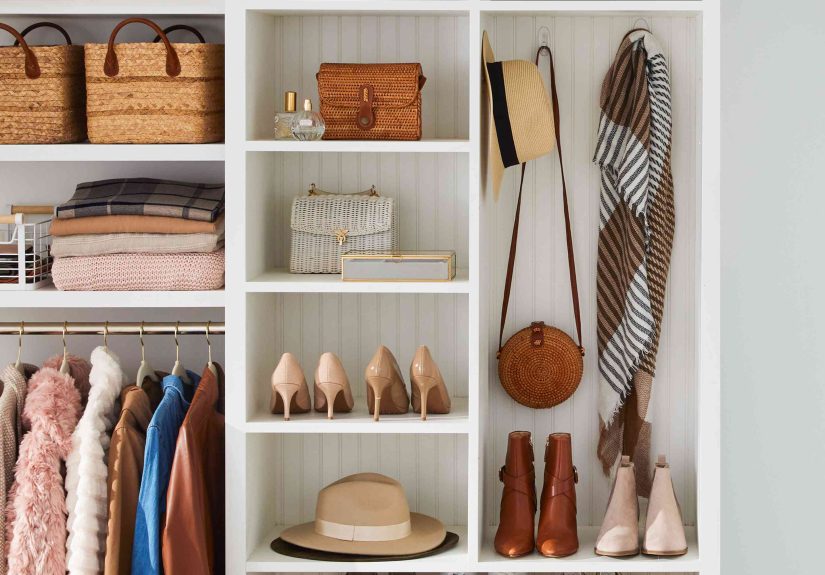
The sides of your closet are prime real estate. Install hooks, peg rails, or slim wall racks to hang bags, hats, belts, or jewelry.
Hooks are especially helpful for items you grab dailylike your go-to tote or favorite hoodieso they don’t end up thrown on the floor or bed.
Make the Doors Work Harder
8. Use over-the-door organizers for shoes and accessories
Over-the-door shoe organizers are classics for a reason. They instantly add dozens of pockets for shoes, socks, accessories, or even
small folded tees. If you don’t own many shoes, use those pockets for scarves, hair tools, or rolled-up workout tops.
9. Hang a shallow rack or rail on the door
If pockets aren’t your style, try a low-profile rack or rail instead. These can hold belts, ties, hats, umbrellas, or even necklaces.
Just keep depth in mind: you don’t want anything banging into your hanging clothes when the door closes.
10. Add a mirror to visually “expand” the space
A mirror on the inside or outside of the closet door doesn’t technically add storage, but it makes the space feel bigger and more intentional.
It also turns your closet into a mini dressing area, which encourages you to keep it organized because you see it more often.
Upgrade Your Hangers and Hardware
11. Swap bulky hangers for slim, matching ones
Upgrading hangers might be the easiest small closet organization idea with the biggest payoff. Slim velvet or thin plastic hangers take up less
space and keep clothing from slipping off. Using matching hangers also creates a visually calm, boutique-like look, which makes the closet feel
more spacious and organized.
12. Use specialty hangers for pants, skirts, and accessories
Multi-tier pants hangers, skirt hangers with clips, and cascading hangers multiply your storage vertically. Use them for jeans, trousers,
skirts, and even camisoles. A single hanger that holds five pairs of pants frees up a surprising amount of rod space.
13. Try S-hooks for jeans, bags, and hats
S-hooks can hang from your closet rod or a tension rod to hold jeans by the belt loops, bags by their straps, or hats by their bands.
This keeps bulky items from swallowing shelf space and makes them very easy to grab and put away.
Contain the Chaos with Bins, Baskets, and Dividers
14. Use shelf dividers to keep stacks from toppling
Shelf dividers act like bookends for clothing. They keep piles of sweaters, tees, or jeans from spreading out and collapsing.
This not only looks neater but also lets you store more small stacks side by side, which is perfect for narrow shelves.
15. Add fabric bins or baskets on shelves
Soft bins and baskets are ideal for corralling loose items like scarves, belts, workout gear, or pajamas. Choose bins that fit the full depth
and width of your shelves to avoid wasted space. Use a consistent style or color palette so the closet feels cohesive rather than cluttered.
16. Label everything (yes, really)
Labels are the secret sauce of long-term organization. Clip-on tags, adhesive labels, or a label-maker all work. When shelves and bins clearly
say “Sweaters,” “Athletic Wear,” or “Winter Accessories,” you and anyone else in the household can put things back where they belongno guessing.
17. Use under-shelf baskets for bonus storage
Under-shelf wire baskets slide onto existing shelves and create an extra mini-shelf underneath. They’re great for smaller items like clutches,
beanies, or swimwear. This trick is especially useful if your shelves are tall but you only have short stacks of clothes.
Rethink the Floor and Lower Half of the Closet
18. Add a low dresser or drawer unit
If your closet floor is just holding a random heap of shoes, consider placing a small dresser, cube storage, or drawer unit inside.
This gives you enclosed space for socks, underwear, tees, or gym clothes, freeing up your bedroom furniture and consolidating clothing storage.
19. Use stackable shoe racks or cubbies wisely
A simple shoe rack instantly cleans up the floor and keeps pairs together. If you use cubbies, avoid overly tiny ones that only fit certain
stylesflexible racks or adjustable shelves give you more options and prevent wasted space with boots or chunky sneakers.
20. Store off-season items in labeled boxes on the floor or top shelf
To maximize closet storage, rotate by season. Place off-season clothes in breathable bins or boxes and store them on the top shelf or along the floor.
Label each box by season and category, like “Winter Sweaters” or “Summer Dresses,” so swapping things out is quick and painless.
Smart Space-Saving Strategies
21. Try vacuum storage bags for bulky items
Puffy coats, extra duvets, and ski gear can devour small-closet space. Use vacuum storage bags to compress these bulky items and store them on
the top shelf or under the bed. Just avoid storing delicate fabrics this way for long periods, as compression can sometimes affect their shape.
22. Curate a smaller, more intentional wardrobe
Organization isn’t just about adding storageit’s also about owning less. Capsule wardrobe ideas and methods like Project 333 (wearing only a
limited number of pieces for a set period) can help you discover how little you actually need. A smaller, curated wardrobe automatically makes
your closet feel larger and easier to manage.
23. Keep a permanent “donate” bin nearby
Clutter builds up when there’s nowhere for “I’m over this” items to go. Keep a small bin or bag either on the closet floor or just outside the closet.
When something no longer fits, feels uncomfortable, or doesn’t suit your style, drop it in. When the bin is full, it’s time for a donation run.
24. Practice micro-organizing in 10-minute bursts
Instead of waiting for a full weekend overhaul, work on your closet in tiny chunks. Spend 10 minutes organizing a single shelf, bin, or rod section.
These small wins build on each other and keep your closet from sliding back into chaos.
Make Your Small Closet Pleasant to Use
25. Improve lighting so you can actually see things
A dim closet feels smaller and messier. Add battery-operated puck lights, LED strips, or motion-sensor lights to brighten shelves and corners.
When you can see what you own, you’re less likely to forget about items or buy duplicates.
26. Keep visually heavy items out of the bedroom closet
Some items technically fit but still make the closet feel crampedlike bulky sports gear, stacks of spare pillows, or cleaning tools.
If possible, store these elsewhere (entry closet, storage bench, or garage) so your small closet can focus on clothes and accessories.
The result is a cleaner look and smoother daily routine.
27. Style the space like a mini boutique
Once the hard work is done, add a little style: a pretty storage box, matching hangers, a small framed print above the top shelf,
or color-coordinated clothing sections. When your small closet feels special and intentional, you’re much more motivated to keep it organizedand
that’s the real secret to maximizing storage over the long term.
Real-Life Experiences: What Actually Works in a Small Closet
Theory is nice, but lived-in closets tell the real story. Here are some practical, experience-based observations that often separate
the “Pinterest-perfect” ideas from what truly works in a small space.
First, decluttering once is not enough. Many people do one huge closet clean-out, feel amazing, and then watch things slowly drift back to chaos.
The game-changer tends to be building small habits: a five-minute tidy at the end of laundry day, regularly checking your “donate” bin,
and reassessing seasonally. Those mini resets prevent the big, overwhelming projects from piling up.
Second, most people underestimate how powerful matching hangers and consistent containers can be. It may sound superficial, but when your hangers
match and your bins look intentional, your brain reads “order” instead of “clutter.” This visual calm makes you more likely to hang things back up
correctly instead of tossing them wherever there’s space.
Another lesson from real closets: overcomplicating systems backfires. Tiny compartments for every category, super-specific labels, or
elaborate folding techniques can be hard to maintain. Simple, broad categorieslike “jeans,” “sweaters,” “workout gear,” “office outfits”tend to
work better for busy households. The easier the system is to use, the more likely everyone is to stick with it.
People with very small closets also often find that a partial wardrobe shift out of the bedroom helps. That might mean keeping formalwear in a spare-room
closet, heavy coats in an entry closet, or rarely used items in under-bed storage. This doesn’t require a ton of extra furniturejust a willingness to
divide your belongings based on how frequently you use them. Your bedroom closet becomes “daily life headquarters” instead of “storage for everything.”
There’s also the emotional side. Letting go of clothes can feel hard because items are tied to memories, money spent, or “someday” dreams.
A practical way to get unstuck is to use a “maybe” box: move questionable items out of your main closet and revisit them in a few months.
If you didn’t miss them, it’s much easier to donate them without guilt. This approach keeps your closet lean while giving you some emotional breathing room.
People who successfully maintain an organized small closet tend to think of it as a working tool, not a static space. They adjust shelves,
move hooks, add or remove bins, and tweak categories as their lives change. New job? Shift more space to workwear. New baby? Make room for
quick-grab outfits and easy-to-reach storage. The closet isn’t “done”; it evolves as you do.
Finally, the experience many share is that a small closet can actually be an asset. With limited space, you’re more intentional about what you own.
You see everything you have, which makes getting dressed simpler and faster. When every inch is used with purposefrom the back of the door to the top shelf
your small closet can feel surprisingly spacious and luxurious, even if it technically measures just a few feet wide.
In the end, maximizing a small closet isn’t about having the fanciest built-ins or the most storage products.
It’s about knowing what you own, keeping only what you truly use and love, and creating simple systems that match your real life.
Do that, and even the tiniest closet can pull off some seriously big storage.