Table of Contents >> Show >> Hide
- Before You Start: Understand Two-Party Checks
- Method 1: Cash or Deposit the Check Together at a Bank Branch
- Method 2: Deposit to a Joint Account or Use Mobile/ATM Deposit
- Method 3: Use Alternatives When One Person Isn’t Available
- Common Mistakes to Avoid With Two-Party Checks
- Real-Life Experiences and Practical Tips
- Final Thoughts
Getting a check made out to two people sounds great in theoryuntil you’re both standing at the bank counter, the line is snaking out the door, and the teller is squinting at the tiny “and” or “or” between your names. Suddenly, free money feels like a pop quiz on banking rules.
The good news: once you understand how two-party checks work, cashing or depositing them is usually straightforward. The even better news: you don’t need a law degree or a magnifying glass. You just need to know what that one little word on the “Pay to the order of” line means, what your bank’s policy is, and which option fits your situation.
In this guide, we’ll walk through three practical ways to cash or deposit a check made out to two people, plus real-life tips so you can avoid delays, awkward conversations at the teller window, and unnecessary fees.
Before You Start: Understand Two-Party Checks
What the wording on the check actually means
On a check made out to two people, the key is how the names are connected:
- “Name A and Name B” – In many cases, this means both people must endorse the check. Your bank may also require both of you to be present with ID when you cash or deposit it.
- “Name A or Name B” – Often, this means either person can endorse and handle the check alone. Some banks still prefer both signatures, but generally this is the more flexible format.
- Names with no “and” or “or” – If the line just lists “Name A Name B” or uses a comma, many banks treat it like “and,” meaning they may require both signatures. When in doubt, they default to the stricter option to reduce fraud.
Federal agencies like the Consumer Financial Protection Bureau and the Office of the Comptroller of the Currency note that banks generally can require both payees to sign if the check is written to two people together (for example, “Pat and Chris Doe”), while checks made out to “Pat or Chris Doe” can usually be handled by one of them alone. However, banks and credit unions have leeway to set their own policies, so the final word is always your bank’s rules, not just the grammar on the check.
Why banks are strict about two-party checks
Two-party checks are riskier for banks because there are more opportunities for disputes and fraud. Think about:
- Divorce or separation – One spouse might try to cash the check without the other’s knowledge.
- Roommates or business partners – One person might claim they never agreed to cash it or didn’t get their share.
- Tax refunds and insurance payouts – These often involve large amounts and must follow stricter rules.
To protect themselves and you, banks often require everyone named on the check to sign and show ID, especially for government checks, insurance settlements, or tax refunds.
Step zero: call your bank first
Before you do anything fancy, take a minute to:
- Look at the payee line for “and” or “or.”
- Check whether you share a joint account.
- Call or check your bank’s website for its policy on two-party checks.
A two-minute phone call can save you a trip and prevent the teller from delivering the dreaded line: “Sorry, we can’t accept this check like that.”
Method 1: Cash or Deposit the Check Together at a Bank Branch
This is the most straightforward and widely accepted way to handle a two-party checkespecially when the check says “and.”
Step 1: Make sure both payees are available
For checks written to “Name A and Name B,” many banks require:
- Both people to be physically present at the branch.
- Both to sign (endorse) the back of the check.
- Valid government-issued photo ID for each person, like a driver’s license or passport.
Some major U.S. banks go a step further for tax refund checks and require that both payees are also joint owners of the account where the check is being deposited. If that’s your situation, definitely confirm your bank’s policy ahead of time.
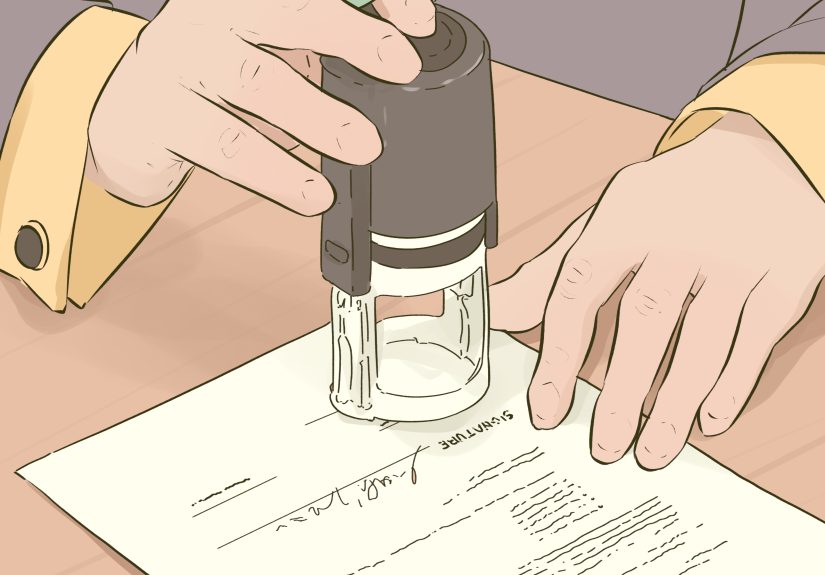
Step 2: Endorse the check correctly
On the back of the check, you’ll see an area labeled “Endorse here” or a box near the top. Generally:
- Both payees sign their names exactly as they appear on the front of the check.
- If a name is misspelled, the person usually signs once with the incorrect spelling and once with the correct spelling right below it, unless the bank instructs otherwise.
Try to keep signatures inside the endorsement area. Writing into other parts of the check (like the routing number line) can cause delays or rejections.
Step 3: Decide whether to cash or deposit
At the teller window, you’ll typically have three options:
- Deposit into a joint account held by both of you.
- Deposit into one person’s account if the bank allows it and everyone agrees.
- Cash the check and walk out with physical cash, which may be subject to holds or limitsespecially for large amounts.
The bank may place a hold on some or all of the funds until the check clears, especially if:
- The check is large.
- The check is drawn on another bank.
- Your account is new or has limited history.
Asking, “When will these funds be available?” is completely normal. In fact, it’s smart.
When Method 1 works best
This method is ideal when:
- The check uses “and” between the names.
- Both payees can visit a branch together.
- You want to avoid any risk of the check being rejected or held longer than necessary.
Method 2: Deposit to a Joint Account or Use Mobile/ATM Deposit
If you both own a joint bank account, you may not need a long branch visitespecially if the check isn’t a high-risk type like a large insurance settlement or tax refund.
Option A: Deposit into a joint account
If both names on the check match the names on your joint checking account:
- Endorse the check according to your bank’s rules (both signatures for “and,” one or both for “or”).
- Write the joint account number on the back if your bank recommends it.
- Deposit at the branch, ATM, or sometimes through mobile deposit if allowed.
Many banks treat two-party checks made out to married couples or co-owners as less risky when they’re going into a properly titled joint account. That said, some institutions still require both signatures or even both people present, depending on the type of check.
Option B: Use mobile check deposit (if your bank allows it)
Mobile check deposit can be incredibly convenientbut it’s not always allowed for two-party checks. Policies vary a lot.
If your bank does allow mobile deposit of a check made out to two people, the general process looks like this:
- Confirm in your bank’s app or FAQs that two-party checks are eligible for mobile deposit.
- Endorse the check correctly. Some banks require both names plus the phrase “For mobile deposit only.”
- Open your bank’s mobile app and choose “Deposit checks” or similar.
- Take clear photos of the front and back, following on-screen prompts.
- Submit the deposit and keep the paper check for a few days in case there are issues.
If the app rejects the check image or flags the deposit, the bank may ask you to bring the check to a branch instead. Don’t panic; that doesn’t necessarily mean anything is wrong with the check itselfit can just be a policy limitation for multiple payees.
Option C: Deposit at an ATM
ATMs at your bank’s own locations sometimes accept two-party checks for deposit. The steps are similar to branch deposit:
- Endorse the check as required.
- Insert the check when prompted.
- Confirm the amount and account.
Again, availability and rules vary. If the check is large or looks manually altered, the ATM deposit might get held or rejected, and a banker may need to review it.
When Method 2 works best
This method is ideal when:
- You and the other payee share a joint account.
- Your bank allows mobile or ATM deposits for two-party checks.
- Both of you have tight schedules and want to avoid standing in line at the branch together.
Method 3: Use Alternatives When One Person Isn’t Available
Sometimes, real life gets in the way. Maybe one person moved, works out of town, or just can’t get to the bank during operating hours. You still have optionsbut they’ll depend heavily on the check wording and your bank’s risk tolerance.
Option A: Cash or deposit the check if it says “or”
If the check is written to “Name A or Name B,” many banks allow:
- Either payee to sign the back alone.
- One person to deposit the check into their own account or cash it, as long as they show proper ID.
Even then, the bank may:
- Ask for both signatures anyway, especially on higher amounts.
- Refuse to accept the check if something looks off.
- Place an extended hold while the check clears.
The safest move is to ask your bank, “The check is written to ‘Name A or Name B.’ Can I deposit this with just my endorsement?”
Option B: Ask the issuer to reissue the check
If the other person cannot or will not go to the bank, and the bank refuses to cash or deposit the check with just one signature, a clean workaround is:
- Contact the issuer (employer, insurance company, tax preparer, etc.).
- Explain that both payees cannot endorse the check together.
- Ask if they can void the original and issue two separate checks or a new check payable to just one person.
It can take time, but issuers are used to these requestsespecially for refunds, settlements, or payouts where paperwork has to match reality.
Option C: Sign the check over (if the bank allows it)
In some cases, both payees can endorse the check and then sign it over to a single person or entity (this is called a third-party check). Not all banks accept this, and two-party checks make it more complex, but where it is allowed, the basic idea is:
- Both payees sign the back in the endorsement area.
- Below the signatures, one of them writes “Pay to the order of [Recipient’s Name].”
- The recipient signs under that line and deposits it at their bankif their bank accepts third-party checks.
This option is highly policy-dependent. Many banks decline third-party checks altogether because of fraud risk, so treat this as a “maybe” solution, not something you can count on.
Option D: Use a check-cashing store (with caution)
Some check-cashing services or retailers may be more flexible about two-party checksespecially if both people are present with IDs. But flexibility comes at a price:
- Hefty percentage-based fees.
- Flat service fees stacked on top.
- Possible limits based on check type and amount.
Using a check-cashing store can make sense if you need the money urgently and cannot meet your bank’s requirements. Just go in knowing you’re trading convenience for cost.
Common Mistakes to Avoid With Two-Party Checks
- Signing in the wrong order or place. Stick to the endorsement box and sign exactly as the names appear.
- Trying to scratch out or change names. Altering the payee line can invalidate the check and raise fraud concerns.
- Depositing without all required signatures. The check might be returned, causing delays and sometimes fees.
- Ignoring bank holds. Just because the check shows as “pending” doesn’t mean the money is fully yours yet. Spend only once the funds are clear.
Real-Life Experiences and Practical Tips
Rules and policies are helpful, but nothing drives the lesson home like hearing how things play out in real life. Here are a few common scenarios people run into with checks made out to two peopleand what you can learn from them.
Newlyweds and the wedding gift check
Imagine you’ve just gotten married, and a generous relative writes a check to “Alex and Jordan Smith.” It’s sweet, it’s thoughtfuland it’s sitting on your counter for weeks because you and your spouse can’t find a time to go to the bank together.
When couples finally make the trip, they’re often surprised to learn:
- The bank requires both signatures on the back of the check.
- Some banks want the funds to go into a joint account in both names.
The takeaway? If you’re planning a wedding, it’s worth opening a joint account beforehand and knowing your bank’s two-party rules. That way, you can deposit checks quicklysometimes even via mobile depositwithout scheduling a “bank date.”
Roommates splitting a security deposit refund
Another common story: two roommates move out of an apartment, and the landlord returns the security deposit with a check made out to both of them. One roommate has already moved to another city. The other is stuck holding the check, wondering how to get their money.
Here’s what typically happens:
- The bank sees “and” between the names and insists both payees must sign.
- The roommate in town has to mail the check to the one who moved or arrange a visit.
- If one roommate can’t be reached, the best option is often asking the landlord to void the original check and reissue separate checks.
This scenario is a great reminder to talk with landlords ahead of time. If you know you’ll be moving to different places, you can ask for separate refund checks from the start or at least agree on who will handle the refund and how you’ll split it.
Insurance claim checks with lienholders
Insurance checksfor example, after a car accident or home damageare often issued to two parties: you and your lender, you and a repair shop, or you and another person involved in the claim. These checks tend to come with tight legal strings.
People often find out:
- The lender or repair shop must endorse the check before it can be cashed or deposited.
- The bank might refuse to cash it altogether and instead require it to go directly toward repairs or loan balances.
That can be frustrating when you just want money in your account, but it’s part of the agreement you signed when you took out the loan or policy. A good practice is to call both the insurer and your bank as soon as you know a claim has been approved and ask exactly how the check needs to be handled.
Long-distance co-owners and timing issues
Business partners or co-owners of rental property frequently deal with two-party checks. One partner might live out of state, yet both are named as payees. Mailing the check back and forth feels risky and slow.
In these cases, people often learn:
- Establishing a joint business account in the names of both payees makes handling these checks far easier.
- Some banks will accept mailed-in endorsements if they can verify IDs and signatures in advance, but this is strictly by policy and not guaranteed.
The key lesson from these stories: if you know you’ll regularly receive checks made out to two people or entities, it’s worth investing a little time upfront in setting up the right account structure and choosing a bank whose policies work for your situation.
Practical tips from these experiences
- Plan ahead. If you expect a two-party checktax refund, settlement, insurance paymentask the issuer how it will be titled and whether you have options.
- Coordinate with the other payee. Decide in advance how and where you’ll cash or deposit the check and how you’ll split the funds.
- Document agreements in writing. For roommates, business partners, or ex-spouses, a simple written agreement about how the money will be divided can reduce conflict.
- Choose your bank strategically. If two-party checks are part of your regular life, consider a bank known for clear, customer-friendly policies around them.
These real-world experiences show that the rules aren’t just technical fine printthey shape how smoothly (or painfully) the process goes. A little preparation makes the difference between a five-minute deposit and a long, stressful back-and-forth.
Final Thoughts
Cashing a check made out to two people doesn’t have to be confusing or intimidating. Once you know what “and” versus “or” means, understand your bank’s rules, and choose the method that fits your situation, the process becomes pretty routine.
In short:
- Method 1: Visit the branch together, both endorse, and present IDsespecially for “and” checks.
- Method 2: Use a joint account, ATM, or mobile deposit if your bank allows two-party checks through those channels.
- Method 3: Explore alternatives like reissuing the check, using “or” flexibility, or carefully signing it overalways within your bank’s policies.
When in doubt, ask your bank directly. Policies can change, and each institution balances convenience and fraud prevention differently. The more you understand the rules, the more confidentlyand quicklyyou can turn that two-party check into usable money.