Table of Contents >> Show >> Hide
- Before You Start: The 60-Second Stain Triage
- Way #1: The “Blot + Micro-Soap” Spot Clean (Best All-Purpose Fix)
- Way #2: The “Absorb First” Powder Lift (Best for Grease, Oil, and Makeup)
- Way #3: The Targeted “Solvent Swap” (Best for Ink, Blood, Wine, and Dye Stains)
- Mini “No-Wash Stain Kit” You Can Actually Carry
- FAQs: Fast Answers for Real Life
- Conclusion: Clean the Spot, Save the Outfit
- Extra: of “Been There, Spilled That” Experiences (So You’re Not Alone)
Spilled coffee five minutes before you’re supposed to look like a functional adult? Dropped ketchup on your favorite shirt while insisting, “I’m being careful”? Welcome to the club none of us applied to join.
The good news: you don’t always need a full wash cycle to rescue your clothes. With the right spot-cleaning approach, you can lift or fade many fresh stains fastat home, in a restroom, in a hotel, or in the backseat of a car that suddenly feels like a mobile panic room.
This guide breaks down three practical ways to remove stains from clothes without washing the whole garment, plus how to pick the right method based on the stain type (oil, protein, tannin, dye), fabric, and how much time you have.
Before You Start: The 60-Second Stain Triage
1) Blot, don’t rub (your shirt didn’t sign up for a massage)
Rubbing pushes stain particles deeper into fibers and spreads the mess. Instead, press (blot) with a clean napkin, paper towel, or cloth. Work from the outside edge toward the center to avoid a bigger “stain halo.”
2) Check the fabric and color
Delicates (silk, wool, acetate, rayon, suede/leather) can react badly to aggressive cleaners. If the tag says “dry clean,” you can still do gentle blotting, but skip heavy-duty chemistry and avoid soaking.
3) Identify the stain family (so you don’t fight grease with the wrong weapon)
- Oil/grease: salad dressing, butter, makeup, motor oil
- Protein: blood, sweat, dairy, egg
- Tannin: coffee, tea, wine, fruit juice
- Dye/pigment: ink, marker, lipstick
4) Do a quick spot test
Put a tiny bit of your cleaner on an inside seam or hem, wait a minute, and blot. If dye transfers or the fabric looks weird, pivot to the gentlest option.
Way #1: The “Blot + Micro-Soap” Spot Clean (Best All-Purpose Fix)
If you only learn one method for cleaning a stain without washing, learn this one. It’s the “Swiss Army knife” of stain removalespecially for fresh food, drink, light makeup, and everyday grime.
What you need
- Clean napkins or a white cloth (white helps prevent dye transfer)
- Cool water (or lukewarm for oily stainssee note below)
- A drop of dish soap (grease-cutting) or a tiny dab of liquid laundry detergent
- Optional: disposable wipe (unscented is best), cotton swab
Step-by-step
- Blot immediately. Press down, lift, move to a clean spot, repeat.
- Support the stain. Slide a second napkin or towel underneath the stained area. This keeps the stain from bleeding through to the other side.
- Mix a gentle solution. Add one small drop of dish soap to a few tablespoons of water. More soap isn’t betterit’s just harder to rinse out.
- Dab, don’t drench. Use a cloth dampened with the solution and dab from the outside edge inward.
- Blot with clean water. Switch to a cloth dampened with plain water to remove soap residue.
- Press-dry. Blot with a dry towel and let the area air-dry. If you can, keep the fabric flat so it dries evenly.
When to use cool vs. warm water
Cool water is usually the safest default, especially when you’re not sure what the stain is. Warm water can help with oily stains, but hot water can set protein stains (like blood or dairy) and make them harder to remove.
Real-life examples
- Coffee on a cotton tee: Blot, then dab with diluted dish soap. Finish with a plain-water blot to avoid a sticky ring.
- Chocolate smear on a hoodie: Scrape off excess gently with a spoon edge, then spot clean with micro-soap solution.
- Foundation on a collar: Use dish soap solution and light dabbing. Makeup is often oil-based, so dish soap is your friend.
Pro tips (because stains don’t play fair)
- Feather your edges: Slightly dampen around the stain boundary so you don’t create a hard water ring.
- Go slow: Multiple gentle passes beat one aggressive scrub.
- Air-dry before judging: A damp spot can look like a “ghost stain.” Let it dry completely and re-check.
Way #2: The “Absorb First” Powder Lift (Best for Grease, Oil, and Makeup)
Grease stains are sneaky: they don’t always look dramatic at first, but they love to settle in and become a permanent “I had pizza once” memory. The trick is to pull oil up and out before you add liquid.
What you need
- Absorbent powder: cornstarch, baking soda, baby powder, or even chalk (white)
- A soft brush or an old toothbrush
- Dish soap + a little water (for the follow-up)
Step-by-step
- Blot the excess. If there’s a slick or blob, dab it up first.
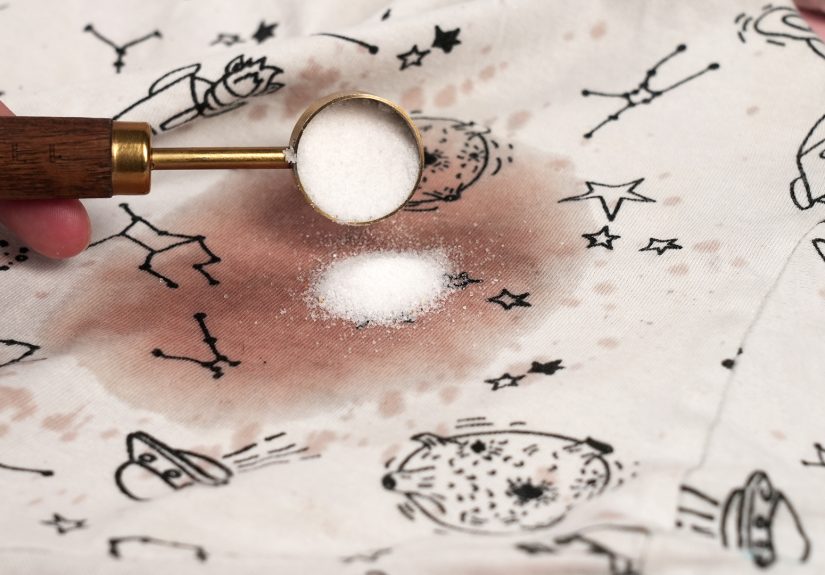
- Cover with powder. Sprinkle enough to fully coat the stain.
- Wait 10–20 minutes. Let the powder absorb oil like it’s doing overtime.
- Brush it off. Use gentle strokes. Don’t grind it in.
- Finish with micro-soap. Dab with a diluted dish soap solution, then rinse-blot with plain water.
- Air-dry. Reapply powder if the stain still looks shiny.
Real-life examples
- Salad dressing on a blouse: Powder first, then micro-soap. If you jump straight to water, oil can spread.
- Chapstick or lip balm on a sweatshirt: Powder lift, brush, repeat, then dish soap finish.
- Grease spot on jeans: Powder + patience, then a little dish soap dabbed in and blotted out.
Common mistakes to avoid
- Using too much water early: Water can spread oil. Absorb first.
- Skipping the rinse-blot: Leftover soap can attract dirt, turning a tiny stain into a “why is that spot darker?” situation later.
Way #3: The Targeted “Solvent Swap” (Best for Ink, Blood, Wine, and Dye Stains)
Some stains don’t respond well to soap-and-water alone. Ink is a classic example: it’s designed to stick. For these, you use a targeted solventcarefullyand blot the stain out rather than scrubbing it around.
Pick your “target tool”
- Ink/marker/lipstick: rubbing alcohol or alcohol-based hand sanitizer (test first)
- Blood/some protein stains: cold water first; hydrogen peroxide can help on colorfast fabrics
- Wine/coffee/tea/tomato: diluted white vinegar or a baking soda paste can help lift tannins and pigment
Ink removal (the safest, most repeatable version)
- Place a paper towel underneath the stain (very important).
- Apply rubbing alcohol to the back side of the fabric or onto a cotton swab/clothdon’t pour like you’re watering a plant.
- Blot as ink transfers. Replace the towel underneath as it absorbs ink.
- Rinse-blot with cool water, then finish with micro-soap if needed.
- Air-dry and re-check. Repeat if the stain is fading but still visible.
Blood stain quick fix (when washing isn’t possible yet)
- Use cold water. Blot with a cloth dampened in cold water.
- If colorfast, dab hydrogen peroxide on the stain, wait a couple minutes, then blot from the edges inward.
- Rinse-blot thoroughly with cold water to remove residue.
- Air-dry. Don’t add heat until you’re sure it’s gone.
Note: Hydrogen peroxide can lighten some dyes. Spot test first, especially on dark or bright colors.
Wine/coffee/tomato “tannin/pigment” approach
- Blot immediately. Don’t let it sit and think about life choices.
- Dab with diluted vinegar (mix roughly 1 part vinegar to 2–3 parts water) and blot.
- Optional paste: For stubborn spots, apply a light baking soda paste (baking soda + a little water), wait 10 minutes, then blot off and rinse-blot with water.
- Finish with micro-soap if there’s any oily component (like creamy coffee).
When to stop and call in reinforcements
- Dry-clean-only silk/wool: Blot and use minimal water; consider professional cleaning for stubborn stains.
- Leather/suede: Avoid water soaking; use specialty cleaners.
- Color bleeding: If dye starts transferring during blotting, stop and switch to the gentlest approach.
Mini “No-Wash Stain Kit” You Can Actually Carry
If stains keep finding you (and they will), keep a tiny kit handy:
- Travel-size dish soap (or detergent sheet)
- Small zip bag with a few paper towels
- Alcohol wipes or a small hand sanitizer
- A stain-remover pen (good for emergencies, not miracles)
- Mini pack of baking soda (or a little cornstarch in a container)
FAQs: Fast Answers for Real Life
Can I remove a stain without “washing” if I use water?
Yes. “Without washing” usually means you’re not laundering the entire garment in a machine. Spot-cleaning still uses small amounts of water and cleanerjust on the affected area.
Why does the stain come back after it dries?
Two common reasons: (1) residue (soap, sanitizer gel, powder) wasn’t fully removed, or (2) the stain soaked deeper and is wicking back to the surface. Rinse-blot and repeat gently.
What’s the #1 mistake people make?
Scrubbing. It feels productive, but it usually makes things worse. Blotting is boringand effective.
Conclusion: Clean the Spot, Save the Outfit
Stains are rude. But you’re allowed to be prepared.
If you remember just three things, make them these:
- Blot first. Always.
- Match the method to the stain. Soap for general mess, powder for grease, targeted solvents for ink/blood/tannins.
- Rinse-blot and air-dry. Residue and heat are the enemies of a clean finish.
With these three ways to clean a stain out of clothes without washing, you’ll handle most “oops” moments like a calm, competent personeven if you’re internally screaming.
Extra: of “Been There, Spilled That” Experiences (So You’re Not Alone)
Ask a group of people about stain emergencies and you’ll hear the same greatest hits: coffee on a white shirt five minutes before a meeting, ketchup landing perfectly on the one part of your outfit everyone can see, and an ink pen that chose chaos inside a pocket. What’s funny is that most “I ruined it” moments aren’t actually ruinedthey’re just untreated and panicked.
A common experience: someone runs straight for the sink and blasts the stain with hot water. Sometimes that helps, sometimes it locks the problem inespecially with protein stains like blood or dairy. Another classic is the aggressive scrub. It feels like you’re “working on it,” but what you’re often doing is pushing the stain deeper and widening the damage. That’s why blotting is the unsung hero of no-wash stain removal. It’s not dramatic, but it’s effective.
Grease stains create their own special heartbreak because they can look fine when the fabric is damp, then reappear later like a villain in a sequel nobody asked for. People often learnafter one too many pizza incidentsthat oil needs a different strategy. The powder method is the quiet lifesaver here. There’s something oddly satisfying about watching cornstarch or baking soda do its job, then brushing it away and realizing the stain is already lighter before you even touch soap.
Travel adds another layer. Hotel laundry can be expensive, laundromats aren’t always nearby, and sometimes you just need the shirt to be “presentable enough” for dinner. In those situations, a tiny stain kit can feel like a superpower: a couple paper towels, a dab of dish soap, a small hand sanitizer, and you’re not at the mercy of the nearest washing machine. People also discover that disposable wipes can help in a pinchespecially for surface stainsif they’re used gently and followed by blotting dry.
And then there’s the social side: you notice a stain and instantly assume everyone else can see it from space. In reality, quick spot cleaning usually makes it fade enough that no one will noticeespecially if you let it air-dry and avoid leaving a wet ring. The best “experience-based” lesson is simple: acting fast matters more than having fancy products. A calm blot-and-treat approach beats a frantic scrub every time.