Table of Contents >> Show >> Hide
- Why grind size matters (aka: why your coffee sometimes tastes like regret)
- Quick grind size cheat sheet (what you’re aiming for)
- Method 1: Use a blender (fastest, but watch the fines)
- Method 2: Mortar and pestle (best control, best “I meant to do this” vibe)
- Method 3: Rolling pin (or heavy pan) + bag (lowest tech, highest satisfaction)
- How to brew better coffee when your grind is uneven
- When it’s worth buying a grinder (and what to get)
- Final sip
- Real-Life Coffee Emergencies: What Actually Works (500+ words of experience-style tips)
You’ve got beautiful whole coffee beans. You’ve got the urge to caffeinate. And you’ve got… no grinder.
Maybe it died, maybe you’re traveling, maybe it’s buried in a moving box labeled “misc.” (which is code for
“we’ll never see this again”). Good news: you can still make a genuinely tasty cupif you accept one truth:
your goal isn’t “perfect,” it’s “pretty darn good without turning your kitchen into a crime scene.”
This guide walks you through three practical, tested-in-real-kitchens methods for grinding coffee beans without a grinder:
a blender, a mortar and pestle, and a rolling pin (or heavy pan) in a bag.
Along the way, you’ll learn what grind size you’re aiming for, how to avoid bitter “mud,” and how to get the best flavor
even if your grounds look like they came from three different universes.
Why grind size matters (aka: why your coffee sometimes tastes like regret)
Coffee flavor comes from extraction: hot water dissolves flavor compounds from the grounds. Grind too fine and water
extracts too much too fasthello bitterness. Grind too coarse and extraction is weakhello sour, watery sadness.
The tricky part when you’re grinding beans without a grinder is consistency: you’ll usually get a mix of boulders
and dust (“fines”). Those fines over-extract quickly, while bigger chunks under-extract, and your cup can taste both
bitter and thin at the same time. Fun!
Your mission: aim for the right general grind range for your brew method and reduce extremes (too many
fines, too many big chunks). Even “close enough” becomes delicious if you brew smart.
Quick grind size cheat sheet (what you’re aiming for)
If you remember nothing else, remember this: match the grind to the brew. When you’re grinding coffee beans without a grinder,
it’s easier to hit coarse and medium than truly espresso-fine.
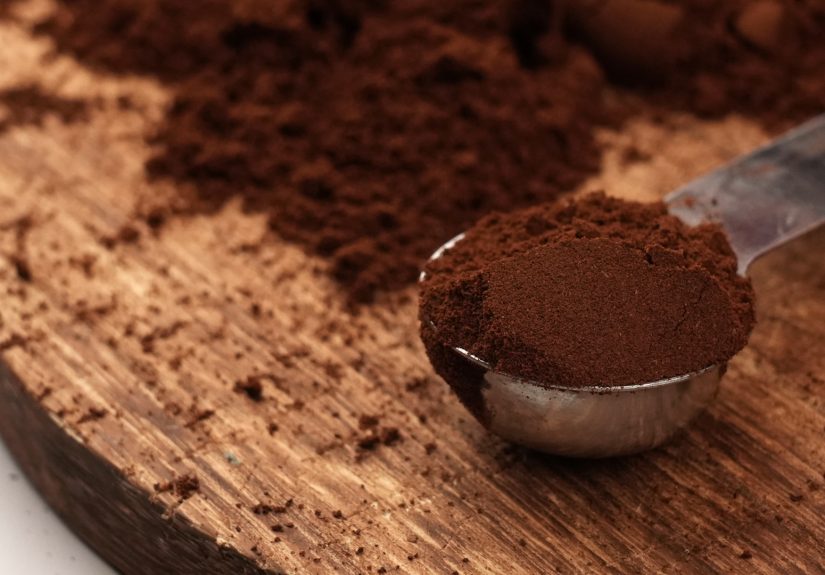
- French press / cold brew: Coarse, like chunky sea salt
- Drip coffee / pour-over: Medium, like kosher salt
- AeroPress / moka pot (varies): Medium-fine (harder without a grinder, but possible)
- Espresso: Fine, like table salt (possible with effort, but not the easiest DIY target)
Method 1: Use a blender (fastest, but watch the fines)
A blender is the most common “coffee emergency” solution because it’s quick and requires minimal forearm involvement.
The tradeoff? Blenders tend to create a wider spread of particle sizesmeaning more finesso this method shines most for
French press, cold brew, and some drip machines.
What you’ll need
- A blender (a standard countertop blender works best)
- Whole coffee beans
- A spoon (for stirring/shaking between pulses)
- Optional: a fine mesh strainer (to reduce dust/fines)
Step-by-step: blender grinding that won’t scorch your beans
- Start small. Add about 1/4 cup of beans. Smaller batches grind more evenly.
- Use “pulse,” not “obliterate.” Pulse in short bursts (1–2 seconds) instead of running continuously.
- Shake or stir between pulses. Stop, pop the lid, and redistribute the beans so you don’t grind only the bottom layer into dust.
- Repeat until you’re close. Aim for coarse or medium, depending on your brew.
- Let the grounds settle. Wait 10–15 seconds before opening the lid so the “coffee dust cloud” doesn’t redecorate your counters.
- Optional: sift. If you see lots of powder, run the grounds through a fine mesh strainer and discard (or save) the dust. Less dust = less bitterness.
Best for
- French press: Coarse grind is forgiving, and you can steep a bit shorter if you have fines.
- Cold brew: Coarse is perfect, and long steeping can hide minor inconsistencies.
- Drip coffee: Works if you keep fines under control (paper filters help).
Common mistakes (and how to fix them)
-
Running the blender too long. Continuous blending heats beans and increases fines.
Fix: pulse only, and stop once you hit “good enough.” -
Over-fining your grounds. Too much powder makes coffee bitter.
Fix: sift, shorten brew time, or use a paper filter method. -
Static mess. Grounds stick everywhere like they pay rent.
Fix: grind only what you need immediately and let the dust settle before opening. (Some people use a tiny drop of water to reduce staticonly do this if you’re brewing right away, not storing the beans.)
Method 2: Mortar and pestle (best control, best “I meant to do this” vibe)
If you want the most control while grinding coffee beans without a grinder, the mortar and pestle is the MVP.
It’s slower, yesbut you can manage texture more precisely, and you can get closer to medium-fine if you’re patient.
Also, it makes you look like a coffee wizard preparing a potion. Win-win.
What you’ll need
- A mortar and pestle (ceramic or stone works great)
- Whole coffee beans
- Optional: a towel under the mortar (to prevent slipping)
Step-by-step: crush first, grind second
- Add a small amount. Fill the mortar no more than 1/4 full. Overfilling makes beans bounce out and ruins consistency.
- Start with firm “cracks.” Use the pestle to press and crack beans into smaller pieces.
- Switch to grinding. Once cracked, use a circular motion to grind pieces smaller.
- Check texture often. Tilt the mortar and look: are you hitting coarse, medium, or medium-fine?
- Work in batches. Repeat until you have enough grounds for your brew.
Best for
- Pour-over and drip: Easier to aim for a consistent medium grind than with a blender.
- AeroPress / moka pot: Possible to grind finer with time and effort.
- Espresso (in a pinch): You can grind quite fine, but consistency is tough and it’s a workout.
Pro tips for better results
- Go slow. Rushing creates uneven particles.
- Listen to the sound. Whole beans crack loudly; as they get smaller, the sound softens. It’s a surprisingly useful cue.
- Control the fines. If you need a coarser brew (French press), stop earlier. Don’t chase uniformity by grinding foreveryou’ll create more dust.
Method 3: Rolling pin (or heavy pan) + bag (lowest tech, highest satisfaction)
This is the “I refuse to let a missing appliance stand between me and caffeine” method. It’s also the simplest:
contain beans in a bag, then crush/roll them. You’ll typically end up with a coarse, rustic grindperfect for
French press and cold brew, and acceptable for some drip setups if you’re careful.
What you’ll need
- A sturdy zip-top bag (freezer bags are tougher)
- A rolling pin or a heavy pan (cast iron is the heavyweight champion)
- Optional: a kitchen towel (to keep the bag from sliding and add protection)
Step-by-step: crush, then roll for a more even grind
- Measure your beans. Add enough for one brew batch. (Smaller batches are easier to control.)
- Seal the bag tightly. Press out extra air so beans don’t bounce around like popcorn.
- Start by cracking. Use the rolling pin/pan to press down firmly and crack beans.
- Then roll. Roll over the cracked beans to break pieces down more evenly.
- Check consistency. Pause, look, and keep going until you’re in the coarse-to-medium range you need.
Best for
- French press: Coarse grounds + immersion brewing = forgiving and flavorful.
- Cold brew: Coarse is ideal, and long steeping smooths edges.
- Camping or travel: As long as you have a bag and something heavy, you’re in business.
Make it taste better
- Use a slightly lower water temp (or shorter steep) if your grind includes lots of dust.
- Strain well if you’re improvising a brewpaper filters help catch fines.
- Accept the vibe. This method makes coffee that feels a little wild in the best way.
How to brew better coffee when your grind is uneven
When you grind coffee beans without a grinder, you’re managing two things: extraction and mess. Here are practical ways
to make an uneven grind taste smoother:
1) Adjust brew time before you blame the beans
- Tastes bitter? You likely have too many fines or brewed too long. Shorten steep time, or use a paper filter method.
- Tastes sour/thin? Your grind may be too coarse. Brew longer, use hotter water, or grind a bit more next time.
2) Choose a forgiving brew method
If your grind is inconsistent, immersion methods (French press, AeroPress, cold brew) often taste better than
finicky pour-overs. Paper filters can help too, because they trap fines that otherwise sneak into your cup.
3) Don’t store “DIY-ground” coffee for later
Ground coffee goes stale faster than whole beans. If you’ve improvised a grind, brew it soon and store the rest as whole beans
in an airtight container away from light and heat.
When it’s worth buying a grinder (and what to get)
If you’re doing this more than occasionally, a grinder is the upgrade that changes everything. Consistent grounds mean
more even extraction, clearer flavor, and fewer “why does this taste burnt and watery at the same time?” moments.
If you’re shopping, look for a burr grinder (manual or electric) rather than a blade grinder, because burrs
produce more uniform particles and give you control over grind size.
But for today? Your coffee doesn’t have to wait for payday. You can still make a solid cup with what you’ve got,
especially if you keep your expectations realistic: espresso-level precision is hard without a true grinder,
but great French press and drip-style coffee are totally within reach.
Final sip
Grinding coffee beans without a grinder is part kitchen hack, part survival skill, and part “I’m not letting a missing
appliance ruin my morning.” Pick your method based on what you have: use a blender for speed, a
mortar and pestle for control, or a rolling pin and bag for the simplest no-frills option.
Then brew smart, taste, adjust, and enjoy the fact that you just outwitted your own kitchen.
Real-Life Coffee Emergencies: What Actually Works (500+ words of experience-style tips)
Let’s talk about the scenarios that turn normal people into improvisational coffee engineers.
Not theoretical “what ifs,” but the classic moments when you’re standing there holding whole beans like they’re
precious gems, wondering how you got here.
The hotel-room blender situation
You’re traveling. The hotel has a tiny kitchenette. There’s a blender that looks like it’s made for a single smoothie
and a single regret. But you also have a bag of great beans because you are an optimist who believes in morning routines.
This is where the blender method shinesif you treat it gently. Small batches are everything. Pour in just what you need,
pulse like you’re defusing a bomb (short bursts), and shake the blender jar between pulses so you don’t grind the bottom layer
into coffee dust while the top beans remain emotionally unavailable.
The key hotel move: once you’ve got “mostly medium” grounds, let them settle before you open the lid. Otherwise, the grounds
cling to every surface like they’re trying to become interior design. If you brought paper filters or you’re using a drip setup,
you’ll be surprised how good it can taste. If not, an immersion-style hack (like steeping in a mug and filtering through a clean cloth)
still works when you keep the fines under control.
The “I have a mortar and pestle because I’m fancy” moment
Mortar-and-pestle grinding is slower, but it has a weirdly calming rhythm: crack, grind, check, repeat. It’s the method that
makes you feel like you’re doing coffee “the artisanal way,” even if the real reason is your grinder gave up on life.
What works best here is batching: don’t dump in a whole brew’s worth of beans at once. Add a small handful, crack them first,
then grind. This two-phase approach (crush then grind) gives you more uniform results and fewer runaway bean projectiles.
This method is also the one most likely to rescue you if you’re trying to go a little finersay for AeroPress or moka pot.
Will it be espresso-perfect? Probably not. But it’s often “pleasantly strong and surprisingly smooth,” which is exactly what you
want when you’re improvising.
The “rolling pin + bag + determination” crisis
This one happens during moves, power outages, camping trips, and any time you’re staying somewhere that has three decorative bowls
and zero functional tools. The bag-and-rolling-pin method is pure practicality. The real trick is to do it in two stages:
first, press down firmly to crack the beans (don’t just roll immediatelywhole beans love to escape).
Then roll to even things out. If you’re using a heavy pan instead of a rolling pin, press-and-rock motions help break larger chunks.
The result is usually coarse and a bit unevenso pair it with a forgiving brew method. French press is ideal here. If you don’t have one,
a jar steep plus a careful pour-through a strainer (or even a paper towel in a pinch) can still deliver a respectable cup.
And yes, it’s louder than you want it to be. Consider it your morning announcement: “Coffee is happening.”
The universal “make it taste better” lesson
In every one of these situations, the difference between “meh” and “wow, that’s actually good” comes down to two habits:
taste and adjust. If the cup is bitter, shorten brew time or filter out more fines next time. If it’s sour and thin,
grind a bit more or steep longer. Improvised grinding is messy, but it’s also flexibleyour second cup is almost always better
than your first, because you’ve learned what your makeshift setup tends to produce.
And honestly? There’s something satisfying about it. Anyone can press a button on a grinder. But turning a rolling pin into a coffee tool
and still ending up with a delicious mug? That’s the kind of kitchen confidence you feel all day.