Table of Contents >> Show >> Hide
- Why Chair Height Matters Before You Change Anything
- Way 1: Add Chair Risers or Leg Extenders
- Way 2: Install Longer Feet, Adjustable Glides, or Replacement Legs
- Way 3: Raise the Seat With a Thicker Cushion or Rebuilt Upholstery
- How to Choose the Best Method for Your Dining Chairs
- Mistakes to Avoid When Making Dining Chairs Taller
- Final Thoughts
- Experience-Based Notes: What Usually Happens in Real Homes
If your dining chairs feel a little too low, you are not imagining things. A chair that sits too far below the table can make dinner feel awkward, cramped, and weirdly athletic. Suddenly your elbows are floating, your knees are negotiating with the apron under the table, and your spaghetti dinner starts to feel like an upper-body workout. The good news is that you usually do not need to replace the whole dining set. In many cases, you can make dining chairs taller with a smart DIY fix.
The trick is choosing the right method for the chair you already own. Some chairs need extra height at the legs. Others need more lift at the seat. And some need a more polished, semi-permanent solution that looks like it came with the furniture instead of wandering in from the hardware aisle. This guide breaks down three practical ways to increase the height of dining chairs, when each method works best, what to measure first, and how to avoid turning a simple fix into a wobbly regret.
Why Chair Height Matters Before You Change Anything
Before you start shopping for risers, replacement feet, or new foam, measure the setup you already have. Most standard dining tables are around 28 to 30 inches high, while many dining chairs land around 17 to 19 inches from the floor to the seat. In general, a comfortable dining setup leaves about 10 to 12 inches between the top of the seat and the underside of the table. That gap gives most adults enough room for legs, movement, and a normal human posture.
Here is the part people skip: measure to the underside of the table, not just the tabletop edge. If your table has an apron, stretcher, or decorative frame underneath, that lower structure is what your knees care about. Also measure the chair seat in its real-life condition. If the seat is upholstered and compresses a lot when someone sits down, your actual sitting height may be lower than it looks.
As a quick rule, if your chair only feels slightly low, you may need just 1 inch of extra height. If it feels noticeably off, 1.5 to 2 inches is often enough. Anything beyond that deserves extra caution because the taller the adjustment, the more important stability becomes. In other words, yes, you want a taller chair, but not one that feels like it is auditioning for a circus act.
Way 1: Add Chair Risers or Leg Extenders
Best for quick, affordable height changes
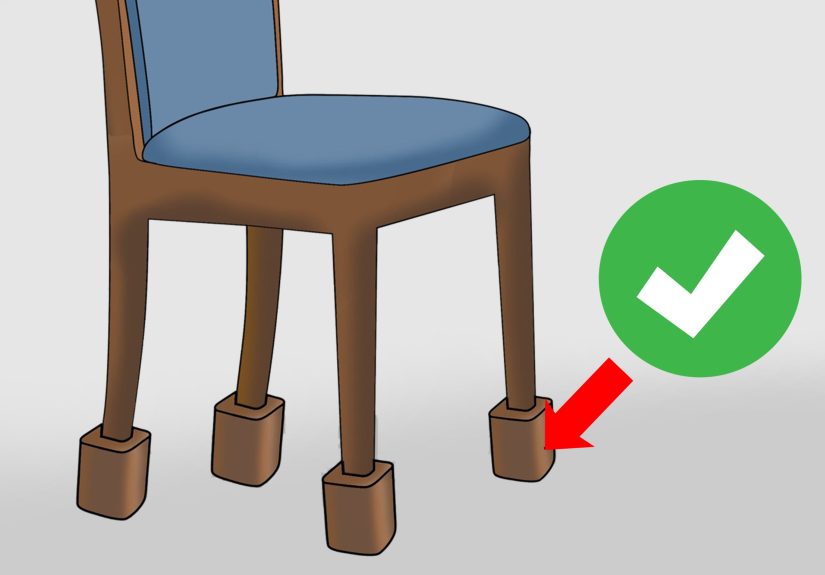
If you want the fastest way to make dining chairs taller, chair risers or leg extenders are usually the simplest solution. These products sit under the chair legs or attach around them to add instant height. They are especially useful when your chair is structurally sound, the legs are even, and you only need a modest lift.
This method works best for straight, sturdy chair legs with a consistent footprint. Some risers are cup-style and cradle the leg. Others clamp on. Some are adjustable, while others add a fixed amount of height. Many also include felt or protective bottoms to reduce scratching on hardwood, tile, or laminate floors.
How to do it right
Start by measuring each chair leg. Not all legs are perfectly round, and not all chairs are built like polite little rectangles. Some taper, some angle, and some flare outward near the floor. Choose risers designed for the exact shape and size range of your chair legs. If the fit is sloppy, the chair can rock or slide.
Next, keep the height increase realistic. A 1-inch lift is usually easy to manage. A 2-inch lift can still work well on sturdy chairs. Once you push higher than that, stability becomes a much bigger issue, especially on lightweight or narrow dining chairs that get scooted in and out constantly.
Also, test all four points of contact after installation. Place the chair on a flat surface, sit in it, lean back gently, and slide it in and out from the table. If there is any twist, wobble, or uneven pressure, stop and adjust before declaring victory.
Pros
- Fast and beginner-friendly
- Usually inexpensive
- No upholstery work required
- Can protect floors when chosen carefully
Cons
- Can look obvious on formal dining chairs
- Not ideal for sharply angled or decorative legs
- Poor fit can create wobble
- Large height increases may feel unstable
Good example: A breakfast nook chair that is just one inch too low for a 30-inch table is often a perfect candidate for discreet risers. Bad example: A narrow antique chair with curved front legs and lots of drama. That chair does not want a plastic elevator. That chair wants respect.
Way 2: Install Longer Feet, Adjustable Glides, or Replacement Legs
Best for a cleaner, more built-in look
If you want the chair to look intentionally taller, replacing the hardware at the bottom of the legs can be a smarter choice than using separate risers. Depending on the chair, this can mean threaded leveling glides, adjustable feet, screw-in furniture glides, or even full replacement legs for wood-frame chairs.
This is often the best option when you want a modest increase in height without making the chair look patched together. Adjustable glides are especially helpful when the floor is uneven and one chair always seems to have a dramatic opinion about gravity. They can add a small amount of lift while also improving stability.
What this method includes
Threaded leveling glides: These screw into the bottom of chair or table legs and allow small height adjustments. They are great for fine-tuning, usually in the subtle range rather than making a dramatic jump.
Furniture feet or screw-in glides: These can provide a bit more lift and are often available in materials designed to protect floors.
Replacement legs: On some chairs, especially simple wood dining chairs, replacing the entire leg or lower leg component can raise height and refresh the look at the same time. This is a more advanced fix, but it can look far more natural than an add-on product.
Why people like this approach
It tends to look cleaner. Instead of placing something under the chair, you are integrating the height increase into the chair itself. That makes it a solid choice for more visible dining rooms, formal spaces, or anyone who hates seeing a quick fix every time they walk by.
It is also easier to fine-tune. If you only need a half inch to an inch, adjustable glides can solve the problem without changing the chair’s whole personality. For a custom dining setup, that small correction can make a big difference.
Watch-outs
This method requires more care with installation. You need to match thread size, leg shape, mounting style, and load support. If the chair has thin legs or delicate joinery, drilling or swapping hardware carelessly can weaken the piece. For heirloom or vintage chairs, it is smart to test on one chair first before committing to the whole set.
Good example: Solid wood dining chairs that are sturdy but just a bit low. Less ideal: Chairs with hollow metal tubing, ornate carved feet, or fragile joints that do not want extra drilling.
Way 3: Raise the Seat With a Thicker Cushion or Rebuilt Upholstery
Best for comfort upgrades and subtle height gains
Sometimes the easiest way to increase dining chair height is not at the legs at all. It is at the seat. If your chair has a removable upholstered seat, adding thicker foam, batting, or a supportive chair pad can raise sitting height while making the chair more comfortable. This is especially useful if the chair frame already fits the table fairly well but the seat cushion has flattened over time.
This is also the friendliest method for people who want a softer, more design-focused solution. A well-made seat pad or reupholstered cushion can look intentional, feel better, and add enough lift to improve posture during meals.
Two ways to do it
Option 1: Add a quality seat cushion. A dining chair pad with dense foam can add around 1 to 2 inches of sitting height. Look for one with ties, grippy backing, or a fitted shape so it does not slide around every time someone reaches for the salad.
Option 2: Rebuild the chair seat. If the chair has a removable seat panel, you can take off the old fabric, replace worn padding, and rebuild the seat with new high-density foam and batting. This creates a cleaner result than a loose cushion and can revive an older chair at the same time.
Why foam quality matters
Not all height is equal. A thick cushion that compresses like a marshmallow on vacation may look tall but sit low. Dense, supportive foam tends to hold its shape better, which means the height gain is more meaningful in daily use. If comfort and durability matter, a firmer seat often performs better than a fluffy one.
Pros
- Adds comfort as well as height
- Great for chairs with flattened seats
- Can improve the look of dated chairs
- Useful for renters because it can be reversible
Cons
- Too-soft cushions can compress too much
- Loose pads can shift during use
- May not be enough if the chair is much too low
- DIY reupholstery takes more time than buying risers
Good example: Upholstered dining chairs that feel slightly low and tired. Less ideal: Hard ladder-back chairs with no easy way to secure a cushion and a household that treats chairs like race cars.
How to Choose the Best Method for Your Dining Chairs
If you need a simple shortcut, use this thinking:
- Choose risers or leg extenders if you want the fastest, cheapest fix and your chairs have straightforward legs.
- Choose glides, feet, or replacement legs if you want a cleaner, more permanent-looking result.
- Choose thicker cushions or rebuilt upholstery if the seat itself is the weak point and you want more comfort too.
In some homes, the best answer is actually a combination. For example, a chair might need a half-inch of added hardware plus a firmer seat. That layered approach can work beautifully because it avoids overdoing any one fix. Instead of one dramatic change, you make two subtle ones. The result feels more natural and usually looks better too.
Mistakes to Avoid When Making Dining Chairs Taller
- Ignoring table apron clearance: The tabletop may seem high enough, but the underside frame may still crowd knees.
- Adding too much height at once: A giant lift can make the chair unstable and awkward to slide.
- Using the wrong leg fit: Risers and caps that do not match the leg shape will wobble or slip.
- Forgetting floor protection: Hard plastic on hardwood is a recipe for scratches and regret.
- Choosing soft, unsupportive cushions: If the foam collapses, your “taller” chair becomes a psychological exercise.
- Skipping a sit test: Always test one chair first before upgrading the whole set.
Final Thoughts
Learning how to increase the height of dining chairs is really about matching the fix to the furniture. There is no one-size-fits-all answer, because chairs vary in shape, construction, and style. But in most cases, you can solve the problem with one of three smart approaches: raise the legs, adjust the hardware, or rebuild the seat.
If you want the fastest result, go with chair risers or leg extenders. If you want a more refined look, consider adjustable glides or replacement feet. If comfort is the bigger issue, rebuild the seat or add a dense cushion. Measure first, test one chair before doing the full set, and keep the lift modest enough to stay stable. That way, your dining chairs will sit higher, feel better, and stop making every meal feel like it was designed for giants.
Experience-Based Notes: What Usually Happens in Real Homes
In real homes, the biggest surprise is how small a height difference can feel huge at the table. A chair that is only one inch too low may not look wrong when it is pushed in, but once someone sits down, the whole posture changes. People lean forward more, rest their forearms awkwardly, and shift around during the meal. Homeowners often assume they need entirely new dining chairs, but once they test a single chair with a temporary lift, they realize the problem was not the style at all. It was the seat height.
One common experience happens in breakfast nooks. A family upgrades the table, keeps the old chairs, and then wonders why the new setup feels slightly off. The chairs are still usable, but not comfortable for long dinners, homework sessions, or weekend coffee. In those spaces, low-profile risers often solve the issue quickly because the chairs are used heavily and need to move easily. The lesson people usually learn is that convenience matters. If a fix makes the chair annoying to slide or visibly unstable, nobody in the house will love it for long.
Another very typical story involves older wood dining chairs that have “good bones” but tired seats. The frame is sturdy, the proportions are classic, and nobody wants to replace them. What changed over time was the upholstery. The foam compressed, the batting flattened, and the chairs slowly lost effective seat height. Once the seat is rebuilt with firmer foam, the chair can feel newer, taller, and more supportive all at once. This tends to be the most satisfying fix because it improves both comfort and appearance. It is also the one that surprises people the most. They expect cosmetic change and get ergonomic change too.
There is also the design-conscious homeowner experience. This is the person who cannot unsee a clunky workaround. They try generic risers, step back, and immediately decide the chairs now look like they borrowed orthopedic shoes. For them, replacement feet, glides, or a carefully upholstered seat are usually better long-term answers. The chair still looks like itself, just better proportioned for the table. That matters in open-plan homes where the dining room is visible from the kitchen and living area.
One more pattern shows up in homes with kids, older adults, or anyone who lingers at the table for a long time. Stability becomes the deciding factor. A chair can be technically taller and still feel worse if it rocks, shifts, or slides too easily. In these cases, the best results usually come from subtle changes rather than dramatic lifts. A half-inch hardware adjustment plus a firmer cushion often performs better than a two-inch add-on under each leg. It is not as flashy, but it feels secure, and secure furniture always wins. In everyday life, that is what people end up appreciating most: not the cleverness of the fix, but the fact that dinner finally feels comfortable again.