Table of Contents >> Show >> Hide
Hanukkah is the holiday that proves two things can be true at once:
(1) you can be spiritually inspired by candlelight, and
(2) you can absolutely build an entire celebration around crispy things fried in oil.
If you’ve ever wondered why the Festival of Lights also feels like the Festival of “Who’s doing dishes tonight?”welcome.
This guide is your delicious, no-stress map to traditional Hanukkah foods, with easy, home-cook-friendly recipe directions
(not a novel-length grandma memoirunless you count the part where we all argue about applesauce vs. sour cream).
You’ll get classics like latkes and sufganiyot, plus traditional dishes from Ashkenazi, Sephardic, and Mizrahi communities
so your table can travel farther than your winter coat ever will.
Why Hanukkah Foods Are So Fried (And Sometimes So Cheesy)
Many Hanukkah recipes lean hard into oil because the holiday commemorates the Temple rededication and the famous oil miracle
so frying is basically culinary symbolism you can snack on.
But it’s not only about oil: in some traditions, dairy foods show up to honor the story of Judith (Yehudit),
whose bravery is remembered with cheese-leaning dishes (yes, history can be delicious).
And then there’s the diaspora factor: Jews around the world adapted Hanukkah cooking to local ingredients, from leek fritters to syrupy dough puffs.
How to Use This List
- Pick 2–3 “anchors” (latkes + brisket + a dessert) and add easy sides.
- Build across eight nights: repeat the classics, rotate the supporting cast.
- Keep it doable: many of these can be prepped ahead and fried/baked right before serving.
30 Traditional Hanukkah Foods and Easy Recipe Directions
Fried & Golden: The Oil-Loving Icons
- Classic Potato Latkes
How to make: Grate potatoes and onion; squeeze out moisture like you’re wringing out winter gloom.
Mix with egg, a little flour or matzo meal, salt, pepper. Fry spoonfuls in hot oil until deeply golden; drain and salt. - Applesauce (Classic Latke Sidekick)
How to make: Simmer chopped apples with a splash of water, lemon, and cinnamon until soft.
Mash chunky or blend smooth. Serve warm or chilled. - Sour Cream or Labneh Topping
How to make: For a quick upgrade, stir sour cream (or labneh) with lemon zest, salt, and chopped chives.
Dollop generouslythis is not the time for minimalism. - Sufganiyot (Jelly Doughnuts)
How to make: Make a simple yeasted dough; let rise until puffy.
Fry rounds until golden, then fill with jam using a piping bag and dust with powdered sugar. - Mini Sufganiyot “Donut Holes”
How to make: Use the same dough as sufganiyot but fry tablespoon-sized pieces.
Roll in sugar and serve with jam for dipping (less filling drama, more snacking efficiency). - Bimuelos / Buñuelos (Sephardic Fried Dough with Syrup)
How to make: Mix a soft dough (often flour + water + leavening), shape small rounds or puffs, fry until crisp.
Finish with honey or citrusy syrup and sesame if you like. - Keftes de Prasa (Sephardic Leek Fritters)
How to make: Cook leeks until very tender; squeeze dry.
Mix with egg, breadcrumbs or matzo meal, salt, pepper (some add herbs).
Form patties and fry until browned on both sides. - Falafel (A Crowd-Pleasing Fried Option)
How to make: Soak dried chickpeas overnight; blend with onion, garlic, parsley, cumin, salt.
Shape into balls/patties; fry until crisp. Serve with tahini and salad. - Fried Cauliflower “Bites” (Modern-Classic Hanukkah Party Food)
How to make: Dip florets in seasoned batter or egg + crumbs; fry until crisp.
Toss with lemon and salt. Serve with a garlicky dip. - Chickpea Fries (Panisse-Style)
How to make: Cook chickpea flour with water, olive oil, and salt into a thick polenta-like paste.
Chill, slice into sticks, then fry until crisp. Sprinkle with salt and paprika.
Dairy & Comfort: Judith-Approved (And Kid-Approved)
- Cheese Latkes (Ricotta or Farmer Cheese)
How to make: Stir ricotta or farmer cheese with egg, a little flour, sugar (optional), and salt.
Fry small pancakes until browned. Serve with jam, honey, or applesauce. - Cheese Blintzes
How to make: Make thin crepes; fill with sweetened farmer cheese/ricotta + lemon zest.
Fold, then pan-fry in butter or oil until golden. Top with berries or preserves. - Kugel (Noodle Kugel, Sweet or Savory)
How to make: Toss cooked noodles with eggs, dairy (cottage cheese/sour cream), and flavorings.
Sweet version: cinnamon, vanilla, raisins. Savory: onions, pepper. Bake until set and bronzed. - Potato Kugel
How to make: Grate potatoes and onion; squeeze dry.
Mix with eggs, oil, salt, pepper, a little flour or matzo meal.
Bake in a preheated, oiled pan until crisp on top and tender inside. - Matzo Ball Soup (Because Winter)
How to make: Mix matzo meal, eggs, oil, and seltzer/water; chill.
Form balls; simmer in broth until fluffy. Add carrots and dill if you want maximum comfort. - Israeli Salad (Cucumber-Tomato Salad)
How to make: Dice cucumbers and tomatoes; add parsley, lemon juice, olive oil, salt.
Serve as a bright counterpoint to fried foods (your palate will send a thank-you note). - Shakshuka (Eggs in Spiced Tomato Sauce)
How to make: Simmer tomatoes with peppers, garlic, paprika, and cumin.
Make wells, crack in eggs, cover until set. Serve with bread for dipping. - Spinach & Feta Bourekas (Sephardic/Mizrahi-Style Pastries)
How to make: Fill puff pastry with spinach, feta, and onion; fold into triangles.
Brush with egg, sprinkle sesame, bake until puffed and golden.
Mains & Savory Staples: Feed the Whole Crew
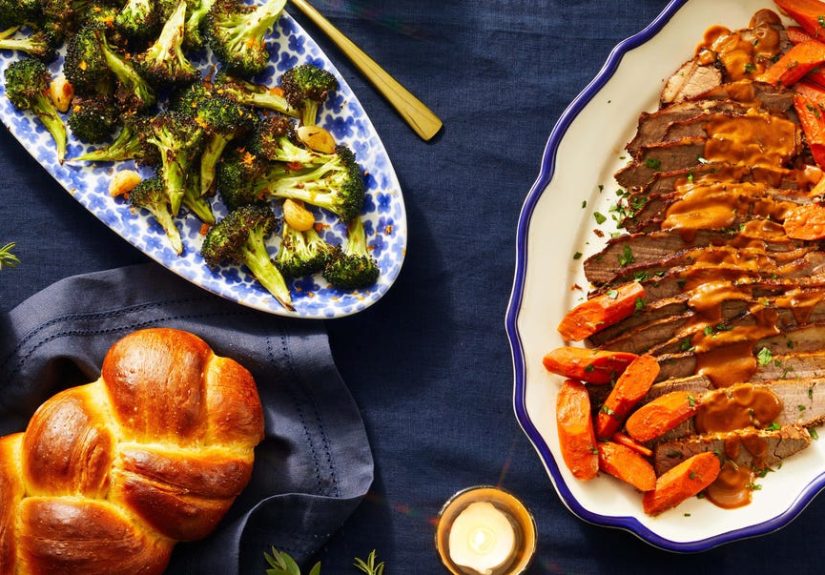
- Classic Braised Brisket
How to make: Season brisket; sear.
Braise low and slow with onions, garlic, tomato or broth, and a little sweetness (carrot or a spoon of something jammy).
Slice against the grain; serve with pan gravy. - Roast Chicken with Garlic & Lemon
How to make: Salt the chicken well; stuff with lemon and garlic.
Roast until skin is crisp and juices run clear. Pair with roasted vegetables for easy holiday magic. - Stuffed Cabbage (Holishkes)
How to make: Soften cabbage leaves; fill with a beef-and-rice mixture.
Simmer in sweet-and-sour tomato sauce until tender. It’s cozy, nostalgic, and absolutely worth it. - Chopped Liver (Classic Appetizer)
How to make: Sauté onions; cook chicken livers until just done.
Chop or pulse with hard-boiled eggs, schmaltz or oil, salt, pepper. Serve with crackers or rye bread. - Smoked Fish Board (Lox & Friends)
How to make: Arrange lox, sliced onions, tomatoes, cucumbers, capers, and cream cheese.
Add bagels or challah slices. Zero cooking, maximum “host who has it together” energy. - Pickles (Half-Sours or Dill)
How to make: Quick version: soak cucumbers in a salty garlic-dill brine for a day or two in the fridge.
The crunch cuts through rich foods like a tiny green reset button. - Tzimmes (Sweet Carrot Stew)
How to make: Simmer carrots (and sometimes sweet potato) with dried fruit, a little honey, and warming spice.
Cook until glossy and tender. Sweet-savory holiday side perfection. - Kasha Varnishkes (Buckwheat & Bowties)
How to make: Toast buckwheat groats; cook until tender.
Toss with sautéed onions and bowtie noodles. Season with salt and pepper; add mushrooms if you’re feeling fancy. - Roasted Brussels Sprouts with Pomegranate
How to make: Roast sprouts until crisp-edged.
Finish with pomegranate arils and a quick lemon-olive oil drizzle for a bright, festive look.
Sweets & Treats: Because Eight Nights Is a Long Time
- Rugelach
How to make: Roll a cream-cheese-style dough; spread with cinnamon-sugar and nuts (or chocolate).
Slice into crescents, bake until golden. Warning: they mysteriously vanish. - Coconut Macaroons
How to make: Mix shredded coconut with egg whites, sugar, vanilla, and a pinch of salt.
Scoop and bake until toasted at the edges. Dip bottoms in melted chocolate if you want applause. - Olive Oil Cake
How to make: Whisk eggs and sugar; add olive oil, citrus zest, and flour with leavening.
Bake until tender and fragrant. It’s a sweet nod to the oil themewithout another frying pan to scrub.
Make It Feel “Traditional” Even If You’re Busy
- Choose one true classic: potato latkes or sufganiyot anchors the whole meal.
- Add one family story dish: brisket, kugel, or blintzeswhatever says “this is our Hanukkah.”
- Balance the plate: a bright salad + something pickly keeps everything lively.
- Don’t over-fry: do a fried item, then bake/roast the rest. Your kitchen (and smoke alarm) will be grateful.
Hanukkah Table Stories & Hosting Experiences (Because Food = Memories)
If you’ve ever hosted (or even just hovered in the kitchen) during Hanukkah, you know the holiday has a soundtrack:
the sizzle of oil, the clink of plates, the “Is this batch done yet?” chorus, and at least one person who treats the latke tray
like it’s a limited-edition sneaker drop.
What makes traditional Hanukkah foods special isn’t only the symbolismit’s the way the cooking turns into an event.
Latkes, especially, are less of a recipe and more of a social arrangement: someone grates, someone fries, someone “taste-tests”
(for quality assurance, obviously), and someone negotiates how many can be eaten before dinner “officially starts.”
One of the most relatable Hanukkah experiences is the great topping debate. Applesauce fans talk like they’re defending a thesis.
Sour cream people act like they discovered dairy. Then there’s the neutral party who uses both and calls it diplomacy.
The fun part is that the argument is never really about toppingsit’s about tradition.
People remember how latkes showed up on their childhood table: crispy-lacy edges, or thick and tender, or made with sweet potato
because an aunt tried a “health kick” in 2009 and nobody let her forget it.
Food becomes a time machine, and Hanukkah gives you eight nights to press play.
Hosting also has its little rituals. Some households plan an “all-fried” night, then follow with a calmer dinner of brisket,
roasted vegetables, and saladbecause even holiday joy appreciates variety.
Others pace themselves: one or two latkes per night, like a reasonable adult… right up until the night someone makes sufganiyot,
and suddenly everyone becomes a dessert-first philosopher.
If you’re cooking for a mix of ages, it’s common to set up a “build-your-own” stationlatkes with toppings, falafel with tahini,
salad on the sideso everyone feels included and the host isn’t performing short-order cooking as an extreme sport.
Another classic experience: the kitchen smelling like celebration. Fried foods do that. They announce the holiday before anyone lights a candle.
A smart trick many people learn over time is to keep things warm in the oven, fry in smaller batches, and accept that the first batch will be eaten
immediately by whoever happens to “walk by.” (Science calls this “evaporation.”)
It’s also normal to lean on make-ahead helpers: applesauce done the day before, brisket made early and reheated,
dough prepped in advance so the frying feels less like a marathon.
The goal isn’t perfectionit’s togetherness, plus something crispy.
And when the meal finally lands on the table, Hanukkah foods have a way of creating conversation.
Someone asks where keftes de prasa came from, someone shares a story about a grandparent’s kugel,
and someone else admits they didn’t grow up with latkes at allopening the door to learning how broad Jewish holiday food traditions really are.
That’s the best “recipe” of the season: a table where classics show up, new dishes get welcomed,
and everybody leaves with a little more warmth than they arrived with (from the candles, the company, and yes, the oil).
Conclusion
Hanukkah doesn’t ask you to be a professional chefit asks you to show up, light the candles, and share something delicious.
Whether you’re frying classic latkes, baking an olive oil cake, or bringing Sephardic leek fritters into the mix,
these Hanukkah recipes make it easy to honor tradition while keeping your table lively, welcoming, and very well-fed.
Pick a few favorites, rotate through the eight nights, and remember: the true miracle is how fast the last latke disappears.