Table of Contents >> Show >> Hide
If your home air had a group chat, it would be 40% “I’m fine,” 40% “Who burned toast,” and 20% “Surprisepollen!”
In 2025, air purifiers aren’t just for allergy seasonthey’re the quiet, boxy sidekicks that help when wildfire smoke drifts in,
when pets do what pets do, and when your kitchen decides to cosplay as a barbecue pit.
The trick is buying an air purifier that actually moves enough clean air for your room (instead of one that looks cute and
mostly rearranges your problems). This guide focuses on performance-first picksstrong Clean Air Delivery Rate (CADR),
sensible room sizing, reasonable filter upkeep, and features that help in real life (not just on the product page).
Quick Comparison: The 4 Best Picks
| Air Purifier | Best For | Room Size Sweet Spot | Highlights | Watch-Out |
|---|---|---|---|---|
| Coway Airmega AP-1512HH “Mighty” | Best all-around balance | Bedrooms, offices, living rooms (small–medium) | Strong CADR, auto mode, good value | Has optional ion feature on some versions (not everyone wants that) |
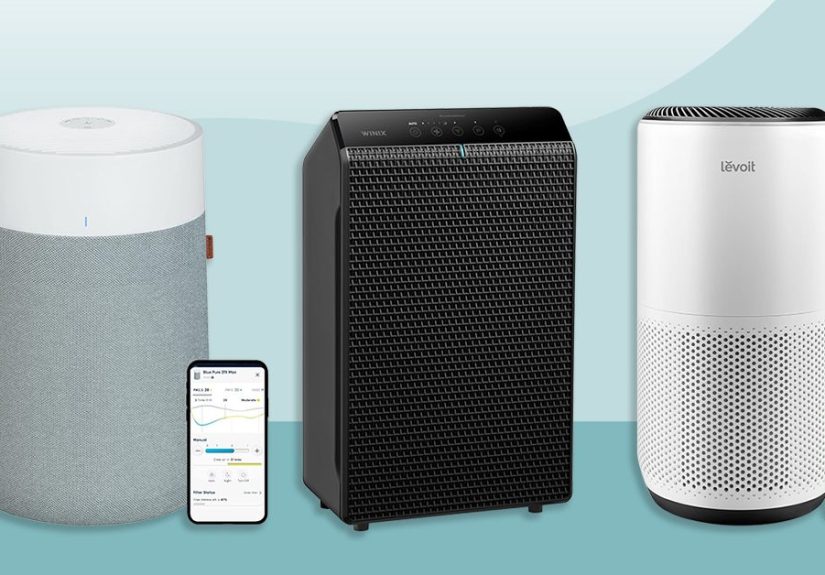
| Blueair Blue Pure 211i Max | Large rooms + fast cleanup | Big living rooms, open-plan spaces | High CADR, simple controls, sturdy build | Big footprint (it’s not subtle) |
| Levoit Core 400S | Smart features + strong performance | Medium–large rooms | App control, auto sensing, strong third-party ratings | Coverage claims vary by “air changes per hour” mathknow what you’re buying |
| Blueair Blue Pure 511 | Budget/small-room helper | Nursery, dorm, small bedroom | Compact, straightforward, good small-room CADR | No fancy modes (but that’s kind of the charm) |
How We Chose (and How to Choose Without Regret)
1) CADR: The “How Fast Can You Fix This Room?” Number
CADR (Clean Air Delivery Rate) is the closest thing to a speedometer for particle cleaning. Higher CADR generally means
faster particle removaldust, pollen, smokeassuming you’re using it in an appropriately sized space.
A practical rule of thumb: pick a smoke CADR around two-thirds of your room’s square footage for everyday use.
If you’re specifically dealing with wildfire smoke, many experts recommend going higher.
2) Room Size Math Without Tears
Here’s the simplest approach:
- Step 1: Measure your room (length × width = square feet).
- Step 2: Choose a purifier with smoke CADR that matches your goal:
- General daily use: CADR ≈ 2/3 of room area (good baseline).
- Smoke-prone days: Higher is better, especially if you can’t ventilate.
- Step 3: When in doubt, size up or use two units (one purifier can’t be in two rooms at oncesadly).
Example: a 12×15 bedroom is 180 sq ft. A baseline smoke CADR target would be about 120. If you’re battling smoke or want
faster cycling, bump the CADR up.
3) HEPA (and “HEPA-ish”): What Matters in 2025
For particles (dust, pollen, smoke, PM2.5), look for a true high-efficiency mechanical filtercommonly “HEPA.”
HEPA is widely defined as capturing at least 99.97% of 0.3-micron particles under a standard definition.
But here’s the important part: real-world performance comes from CADR + fit-for-room sizing, not just a label.
For odors and some gases (like cooking smells), you want activated carbon or other adsorbent media.
Tiny carbon sheets can help a little; thicker carbon beds typically help more (and weigh more).
4) Noise, Energy, and Filter Costs: The “Will You Actually Use It?” Factors
The best purifier is the one you’ll run consistently. That means:
- Noise: Bedrooms want a steady, low sound profile. “Whisper-quiet” is marketing; check dB ranges and reviews.
- Energy use: Look for energy-efficient models if you plan to run it daily.
- Filter replacement: Budget for filters like you budget for coffeeongoing, non-optional, and emotionally important.
5) Skip Ozone “Miracles”
If you see “ozone,” “activated oxygen,” or similar claims, be cautious. Ozone can irritate lungs, and devices marketed as
air cleaners may not be effective at safe ozone levels. A solid fan + filter setup is the boring hero you want.
Boring is good. Boring is breathable.
The 4 Best Air Purifiers in 2025
1) Coway Airmega AP-1512HH “Mighty” (Best All-Around)
The Coway “Mighty” earns its reputation the way all great home appliances do: by quietly doing the job while you forget it exists.
It’s strong enough for small-to-medium rooms, has helpful automation, and typically hits that sweet spot of price vs. performance.
- Best for: Bedrooms, home offices, apartments, everyday allergies, and routine cooking aftermath.
- Why it’s great: Strong particle performance for the size, auto mode, and an easy-to-live-with design.
- Good to know: Some versions include an optional ion feature. If you prefer “just filtration,” look for a model where that feature can be disabled or choose a unit without it.
Practical take: If you want one purifier that covers the basics welland you don’t want to overthink itthis is a very safe bet.
2) Blueair Blue Pure 211i Max (Best for Large Rooms)
If your space is bigopen concept living room, combined kitchen/living area, or a “my dining room is also my home gym”
situationyour purifier needs airflow. The 211i Max is built for that job, pushing a lot of clean air and cycling a larger
room more quickly than smaller towers can manage.
- Best for: Large rooms, faster cleanup after smoke events, households with multiple people/pets.
- Why it’s great: High CADR and strong performance scaling for bigger spaces.
- Good to know: It’s physically larger. It will not disappear into your decor. It will, however, make the air feel noticeably fresher.
Practical take: If your current purifier feels like it’s “trying its best” while your room stays hazy,
this is the upgrade that stops the struggle.
3) Levoit Core 400S (Best Smart Performer)
The Levoit Core 400S is popular for a reason: it combines strong cleaning power with genuinely useful smart features.
Auto sensing can ramp up when PM2.5 spikes (hello, searing steak) and calm down when the air clearssaving noise and energy.
App controls can be a convenience multiplier if you like schedules, reminders, and data.
- Best for: People who want “set it and forget it,” smart control, and strong performance in medium–large rooms.
- Why it’s great: Strong CADR scores, Energy Star recognition, and features that help you keep it running consistently.
- Good to know: Coverage numbers vary wildly depending on how brands define “coverage.” Focus on CADR and your room’s size, not the biggest square-foot claim on the box.
Practical take: If you love convenience, routines, and your phone telling you when it’s filter time
(because your brain is busy), the 400S fits.
4) Blueair Blue Pure 511 (Best for Small Rooms and Budgets)
Not every room needs a high-powered air-cleaning jet engine. Small bedrooms, nurseries, dorms, and desk-side setups do great
with a compact purifierespecially if the goal is steady day-to-day particle reduction. The Blue Pure 511 is a straightforward,
small-space helper that doesn’t try to be complicated.
- Best for: Small rooms, tight budgets, and “I just want cleaner air while I sleep” simplicity.
- Why it’s great: Compact, easy to operate, and appropriately sized CADR for smaller spaces.
- Good to know: Small purifier = small room. If you put it in a big living room, it won’t magically become “the 711.”
Practical take: This is a solid choice when you want a dedicated purifier per bedroom (which is often smarter than one monster unit for the whole home).
How to Get Better Results (Without Buying Anything Else)
- Place it where air flows: Give it a little breathing roomdon’t jam it behind a curtain like it’s in time-out.
- Run it longer than you think: Air cleaning is more “slow simmer” than “microwave.” Continuous use beats occasional blasting.
- Close windows on bad-air days: If outdoor air is smoky or high-pollen, you’re otherwise refilling the problem.
- Use multiple units for multiple rooms: Bedrooms benefit most because you spend the most uninterrupted hours there.
- Vacuum pre-filters: If your unit has a pre-filter, keeping it clean helps airflow and can extend main filter life.
FAQ
Do air purifiers help with wildfire smoke?
Yeshigh-CADR purifiers can reduce fine particles (PM2.5) in a room, which is a big part of smoke. For smoke-heavy periods,
prioritize higher smoke CADR and run the unit consistently with doors/windows closed.
Do they remove odors and VOCs?
They can help with odors if they have meaningful activated carbon (or similar media). Particle filters handle particles;
odors and some gases need adsorbents. If “odor control” is your main goal, look for thicker carbon and expect filters to load faster.
How often do I need to change filters?
It depends on your air (pets, smoke, construction dust, cooking). Many manufacturers suggest 6–12 months for main filters,
but your nose, your unit’s indicator, and visible filter darkening are all useful reality checks.
Should I buy one big purifier or multiple smaller ones?
If your home has separate rooms, multiple units often work better. Air doesn’t teleport through closed doors, unfortunately.
A dedicated bedroom purifier is usually the highest “quality of life per dollar” move.
Bonus: Real-World Experiences (About )
Most people don’t notice an air purifier the moment they plug it inbecause clean air is famously invisible and refuses to
perform for applause. The first “aha” moment tends to happen in the most unglamorous ways: you wake up less stuffy, you stop
sneezing like you’re auditioning for a cartoon, or you realize your bedroom smells more neutral instead of like “yesterday’s dinner,
but in lingering form.”
In everyday homes, the biggest difference often shows up overnight. A purifier running in a bedroom on a lower, steady fan speed
can make the room feel less dusty and easier to breathe inespecially during allergy seasons when pollen is basically trying
to move in permanently. People who are sensitive to noise sometimes treat the gentle fan sound as white noise; others prefer
the quietest sleep modes so they don’t feel like they’re camping next to a tiny wind turbine. Either way, the pattern is similar:
consistency beats intensity. Running a purifier daily at a comfortable setting usually feels better than turning it on only when
the air seems “bad.”
Kitchens are where air purifiers earn their keep in dramatic fashion. The moment you sear meat, burn toast, fry something,
or “accidentally” create a smoke signal to neighboring counties, a purifier with auto sensing tends to ramp up quickly.
It’s a surprisingly satisfying feedback loop: you do something chaotic, the machine goes “I got you,” and the air clears faster.
Homes that cook often also learn a practical truth: carbon filtration matters for smells. A purifier can reduce the lingering
odor timeline, but if the carbon is minimal, you’ll still want ventilation (range hood, cracked window when outdoor air is good,
or both).
Pet households get their own storyline. A purifier won’t stop shedding (if only), but it can help reduce the floating “fur confetti”
and dander that hangs in the air. Many pet owners notice that filters load fastermeaning replacement schedules become more frequent
and that pre-filters are worth maintaining. There’s also a weirdly satisfying moment the first time you check a filter after a few
months and realize: “So THAT’S what was in my air.” It’s gross, but also validating. Like cleaning behind the fridge.
During smoke events or high pollution days, the experience is less subtle. People often describe a “less scratchy” feeling in the
throat and fewer irritated eyes when a strong purifier runs continuously in a closed room. The key is sizing: a small unit in a large
space can feel like it’s working hard while the room stays murky. Bigger rooms usually need higher CADR or multiple units placed where
air actually circulates. The best real-world setup is rarely complicatedit’s simply the right tool matched to the room, used consistently,
with filters replaced before they’re completely exhausted.
Conclusion
The best air purifier in 2025 isn’t the one with the most buzzwordsit’s the one that delivers enough clean air for your room,
day after day, without annoying you into turning it off. Choose based on CADR and room size first, then layer in noise, filter costs,
and features you’ll genuinely use. If you want a reliable all-around pick, go with the Coway “Mighty.” If you need big-room power,
the Blueair 211i Max is a standout. If you want smart convenience and strong performance, the Levoit Core 400S fits the bill.
And for small rooms or tight budgets, the Blueair 511 is a simple win.