Table of Contents >> Show >> Hide
- How to Choose Exterior House Colors That Actually Work
- 1) Start with the “three-color rule” (and don’t overcomplicate it)
- 2) Let the “fixed elements” boss you aroundin a helpful way
- 3) Remember: outside light is a liar (test in real conditions)
- 4) Use your front door for personality (it’s the jewelry)
- 5) Pick sheen like a pro, not like a stressed-out shopper
- 6) Avoid the most common curb-appeal mistakes
- The 42 Exterior Color Schemes
- Classic American Styles
- Colonial: Crisp & Classic
- Cape Cod: Soft & Coastal
- Georgian (Brick): Polished Heritage
- Federal: Elegant & Understated
- Greek Revival: High-Contrast “Museum Beautiful”
- American Foursquare: Grounded & Handsome
- Ranch: Warm Neutral + Pop
- Split-Level: Balanced & Modernized
- Shingle Style: Quiet Luxury
- Prairie: Earthy & Architectural
- Farmhouse: Clean, Not Clinical
- Modern Farmhouse: Moody Contrast
- Arts & Crafts, Cottage, and Historic Detail
- Craftsman: Nature-Forward
- Bungalow: Blue + Sunny Door
- Victorian: Jewel-Tone Drama (Done Right)
- Queen Anne: Confident Polychrome
- Gothic Revival: Moody & Refined
- Stick Style: Two-Tone with Precision
- Cottage: Storybook Soft
- Storybook (English-Inspired): Warm & Whimsical
- Mountain Chalet: Alpine Contrast
- Scandinavian Cottage: Minimal + Warm
- European and Mediterranean-Inspired Styles
- Tudor Revival: Classic Cream + Cocoa
- English Cottage: Garden-Friendly Greens
- French Country: Limestone + Slate
- Italianate: Sunbaked Elegance
- Spanish Colonial Revival: White Stucco + Terracotta
- Mediterranean: Sandy Neutrals + Cobalt Punch
- Mission Style: Calm, Earthy, and Architectural
- Southwest/Adobe: Desert Tones with a Turquoise Door
- Coastal New England: Nautical Contrast
- European Modern: Greige + Black + Oak
- Midcentury, Contemporary, and Modern Homes
- Contemporary: All-Black (The Bold Classic)
- Modern Minimalist: White + Black Window Frames
- Midcentury Modern: Warm Neutral + “Pop” Door
- Midcentury Brick: Calm + Cool Accent
- Desert Modern: Sun-Ready Soft White
- Industrial Modern: Charcoal + Metal
- Contemporary Coastal: Sea-Glass Softness
- Urban Rowhouse: Sophisticated Navy
- Art Deco-Inspired: Pastel Base + Glossy Door
- “Works on Almost Anything”: Warm Greige + Surprise Door
- Quick Matching Guide: Roof, Brick, and Stone
- Field Notes: of Real-World Experience from Exterior Paint Projects
- Experience #1: The sun changes everythingespecially whites
- Experience #2: Body colors look stronger on a whole house than on a tiny chip
- Experience #3: Trim isn’t just decorationit’s shape definition
- Experience #4: The front door is the easiest place to be brave
- Experience #5: Good prep beats “perfect color” every time
- Experience #6: Your landscape is part of the palette (whether you planned it or not)
- Final Thoughts
Picking exterior paint colors is basically like naming a baby: everyone has an opinion, it’s hard to commit,
and once it’s done you’re stuck waving at it for the next 7–12 years. The good news? A great exterior color
scheme isn’t magicit’s a recipe: a main “body” color, a trim color, and one or two accents (often the front door,
shutters, or architectural details).
Below you’ll find 42 exterior color schemes matched to popular architectural stylesfrom Colonial to Craftsman,
Tudor to Mediterranean, Midcentury to Modern Farmhouse. Each one is designed to boost curb appeal, highlight the
right details, and keep your home from looking like it lost a paintball bet.
How to Choose Exterior House Colors That Actually Work
1) Start with the “three-color rule” (and don’t overcomplicate it)
Most exteriors look best with a simple framework: Body (siding/stucco/brick), Trim
(windows, fascia, columns), and Accent (door, shutters, rails, or special details). You can add
more colors on highly detailed historic homes, but for most houses, three is the sweet spot.
2) Let the “fixed elements” boss you aroundin a helpful way
Roof shingles, stone, brick, concrete, metal railings, even a giant driveway… these are the parts you’re usually
not repainting. Your paint should harmonize with what’s already “locked in.” Think of it as styling an outfit:
you don’t buy a new shirt if you’re not changing the shoes.
3) Remember: outside light is a liar (test in real conditions)
Sunlight, shade, trees, and weather can make the same color look calm at 9 a.m. and chaotic at 4 p.m.
Paint sample patches where you can see body, trim, and accent together. Also: large areas make colors
read strongerso choose the body color a touch softer than you think you want.
4) Use your front door for personality (it’s the jewelry)
If you want to “play it safe” on siding, do itand then have fun with the door. Deep, rich hues often flatter
traditional styles; brighter, playful colors can shine on contemporary and midcentury designs. If your neighborhood
is a sea of neutral exteriors, a door color is the polite way to stand out without starting a homeowners-association
group chat.
5) Pick sheen like a pro, not like a stressed-out shopper
A lower sheen reads smoother on big surfaces (siding/stucco), while slightly higher sheen on trim and doors helps
highlight architecture and handles scuffs better. Translation: your house looks sharper, and your future self
does less touch-up crying.
6) Avoid the most common curb-appeal mistakes
Ultra-bright neons and overly intense, highly saturated colors are hard to pull off on large surfaces. Cool grays can
also look flat in certain light and landscapes; many homeowners have better luck with warmer neutrals (think greige,
taupe, and creamy whites). If you love bold color, use it in smaller doses (door, shutters, or an accent band).
The 42 Exterior Color Schemes
Each scheme below lists Body, Trim, and Accents (door/shutters/details).
Use the exact ideas, or treat them like a menu: swap undertones to match your roof, stone, and surroundings.
Classic American Styles
-
Colonial: Crisp & Classic
Body: clean white • Trim: white (same family, slightly brighter) • Accents: black shutters + red front door
Why it works: timeless contrast that makes symmetry and shutters look intentional (not “stuck on”).
-
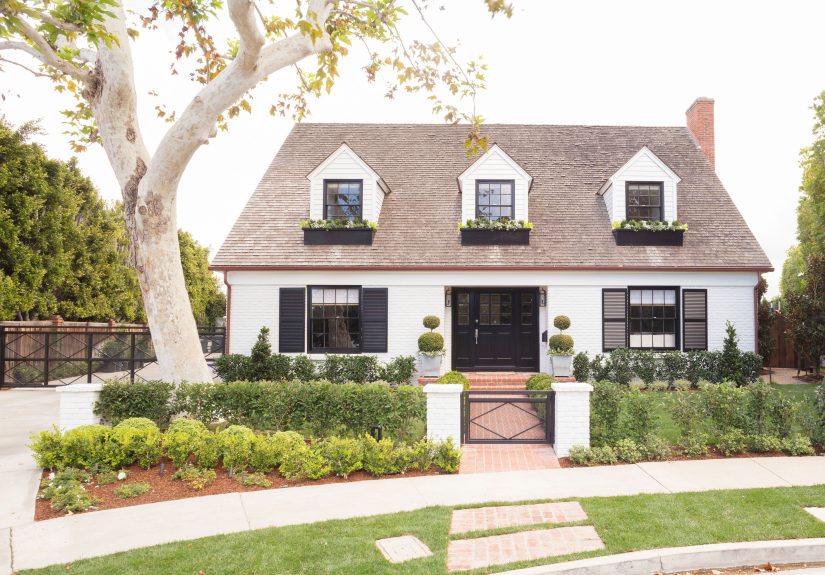
Cape Cod: Soft & Coastal
Body: weathered gray • Trim: bright white • Accents: navy door + natural cedar shingles (or cedar tone)
Why it works: the calm gray keeps it coastal, while navy adds a tailored “New England” punch.
-
Georgian (Brick): Polished Heritage
Body: deep brick red (natural brick or brick tone) • Trim: creamy off-white • Accents: glossy black door + brass hardware
Why it works: warm trim softens brick; black grounds the entry like a tuxedo lapel.
-
Federal: Elegant & Understated
Body: warm putty beige • Trim: soft white • Accents: charcoal shutters + deep blue door
Why it works: historically friendly tones with just enough contrast to show off trimwork.
-
Greek Revival: High-Contrast “Museum Beautiful”
Body: bright white • Trim: bright white (slightly higher sheen) • Accents: black or deep green door + dark lanterns
Why it works: a monochrome base highlights columns and pedimentsarchitecture becomes the star.
-
American Foursquare: Grounded & Handsome
Body: khaki green • Trim: creamy ivory • Accents: dark blue shutters + cherry-red door
Why it works: classic late-historic palette that gives big boxy forms depth and charm.
-
Ranch: Warm Neutral + Pop
Body: greige • Trim: crisp white • Accents: teal front door + black exterior lights
Why it works: the neutral elongates the profile; the door adds a friendly focal point.
-
Split-Level: Balanced & Modernized
Body: mid-tone taupe • Trim: soft white • Accents: charcoal on window sashes + natural wood door
Why it works: two neutrals reduce visual “stacking,” and wood warms up the geometry.
-
Shingle Style: Quiet Luxury
Body: driftwood gray-brown • Trim: muted off-white • Accents: sea-glass green door + dark bronze hardware
Why it works: soft contrast suits textured shingles and blends beautifully with landscape greens.
-
Prairie: Earthy & Architectural
Body: warm clay or putty • Trim: deep bronze • Accents: ochre door + stained wood beams
Why it works: horizontal lines look stronger when the palette feels “from the ground up.”
-
Farmhouse: Clean, Not Clinical
Body: creamy white • Trim: slightly brighter white • Accents: black windows + natural wood door
Why it works: warm whites feel inviting; black accents sharpen the silhouette.
-
Modern Farmhouse: Moody Contrast
Body: off-white • Trim: charcoal • Accents: muted sage door + matte black fixtures
Why it works: softer than stark black-and-white, but still crisp enough for modern lines.
Arts & Crafts, Cottage, and Historic Detail
-
Craftsman: Nature-Forward
Body: muted olive or sage • Trim: warm cream • Accents: russet/brown door + darker green brackets
Why it works: earthy, warm, and muted tones honor Craftsman materials and porch details.
-
Bungalow: Blue + Sunny Door
Body: deep blue • Trim: crisp white • Accents: mustard-yellow front door + gray roof
Why it works: bold body color looks polished with white trim; yellow adds a cheerful welcome.
-
Victorian: Jewel-Tone Drama (Done Right)
Body: forest green or deep burgundy • Trim: creamy off-white • Accents: near-black on sash + subtle gold/brass touches
Why it works: high contrast makes gingerbread trim pop and feels historically believable.
-
Queen Anne: Confident Polychrome
Body: dusty plum • Trim: warm ivory • Accents: teal on gable details + dark red door
Why it works: layered color helps ornate shapes read clearly instead of blending into chaos.
-
Gothic Revival: Moody & Refined
Body: charcoal • Trim: bone white • Accents: deep red door + black metalwork
Why it works: sharp contrast emphasizes arches and steep lines without getting cartoonish.
-
Stick Style: Two-Tone with Precision
Body: muted ochre • Trim: soft cream • Accents: deep green or black on “stick” detailing
Why it works: the architecture is literally begging for contrastso give it contrast.
-
Cottage: Storybook Soft
Body: buttercream • Trim: white • Accents: robin’s-egg blue door + warm wood shutters
Why it works: gentle colors suit smaller scale and landscaping-heavy facades.
-
Storybook (English-Inspired): Warm & Whimsical
Body: mushroom taupe • Trim: ivory • Accents: black shutters + copper-toned lighting + brick-red door
Why it works: cozy neutrals let curved rooflines and masonry details feel charming, not busy.
-
Mountain Chalet: Alpine Contrast
Body: deep espresso stain • Trim: stone gray • Accents: red door + black railings
Why it works: dark wood looks rich against cool stone; red adds classic lodge energy.
-
Scandinavian Cottage: Minimal + Warm
Body: soft white • Trim: black • Accents: natural pine door + matte black sconces
Why it works: clean contrast feels modern, while wood keeps it from turning icy.
European and Mediterranean-Inspired Styles
-
Tudor Revival: Classic Cream + Cocoa
Body: creamy stucco • Trim: chocolate-brown timbering • Accents: deep green door + dark bronze lighting
Why it works: high-contrast materials are the Tudor signaturelean into it.
-
English Cottage: Garden-Friendly Greens
Body: mossy green • Trim: soft cream • Accents: black door + warm brick steps
Why it works: looks “grown in” with landscaping and suits irregular cottage shapes.
-
French Country: Limestone + Slate
Body: warm limestone beige • Trim: muted white • Accents: slate-blue shutters + black door
Why it works: airy neutrals echo stone; slate tones add quiet sophistication.
-
Italianate: Sunbaked Elegance
Body: muted ochre • Trim: creamy ivory • Accents: dark green shutters + walnut door
Why it works: warm body color fits tall proportions; green adds classic Old World depth.
-
Spanish Colonial Revival: White Stucco + Terracotta
Body: soft white stucco • Trim: warm beige • Accents: terracotta details + dark wood door
Why it works: timeless pairing that complements clay roof tiles and wrought iron.
-
Mediterranean: Sandy Neutrals + Cobalt Punch
Body: sandy beige • Trim: bright white • Accents: cobalt-blue door + black metal lanterns
Why it works: sun-friendly neutrals keep stucco light; blue adds resort-level charm.
-
Mission Style: Calm, Earthy, and Architectural
Body: warm cream stucco • Trim: soft white • Accents: dark bronze details + olive door
Why it works: simple palette highlights arches and parapets without distraction.
-
Southwest/Adobe: Desert Tones with a Turquoise Door
Body: clay or adobe tan • Trim: warm white • Accents: turquoise door + dark brown vigas
Why it works: rooted, regional color with a classic desert “pop” that still feels authentic.
-
Coastal New England: Nautical Contrast
Body: crisp white • Trim: crisp white • Accents: navy shutters + classic red door
Why it works: iconic palette that reads clean from the street (and in fog, drizzle, and sunshine).
-
European Modern: Greige + Black + Oak
Body: soft greige • Trim: black • Accents: natural oak door + charcoal roof
Why it works: the greige keeps it warm; black outlines modern windows; oak adds boutique-hotel polish.
Midcentury, Contemporary, and Modern Homes
-
Contemporary: All-Black (The Bold Classic)
Body: inky black • Trim: same black (slightly different sheen) • Accents: natural wood door + warm brick/wood elements
Why it works: dramatic, sculptural, and surprisingly timeless when softened with warm materials.
-
Modern Minimalist: White + Black Window Frames
Body: clean bright white • Trim: black • Accents: walnut door + simple metal lighting
Why it works: crisp contrast sharpens clean lines and makes glazing look intentional and modern.
-
Midcentury Modern: Warm Neutral + “Pop” Door
Body: warm tan/putty • Trim: soft white • Accents: orange (or mustard) door + charcoal fascia
Why it works: the house stays grounded; the door supplies that iconic midcentury personality.
-
Midcentury Brick: Calm + Cool Accent
Body: natural brick (unpainted) • Trim: warm white • Accents: teal door + dark bronze lights
Why it works: brick is the “body color,” so trim and door do the styling work.
-
Desert Modern: Sun-Ready Soft White
Body: warm off-white stucco • Trim: charcoal • Accents: sage door + black steel railings
Why it works: high heat + high light demand a calm base; charcoal adds structure.
-
Industrial Modern: Charcoal + Metal
Body: deep charcoal gray • Trim: black • Accents: galvanized/steel tones + muted yellow door
Why it works: moody neutrals echo metal and concrete; yellow adds an intentional “factory chic” wink.
-
Contemporary Coastal: Sea-Glass Softness
Body: pale sea-glass green • Trim: white • Accents: sand-beige door + brushed nickel lighting
Why it works: fresh, airy, and naturalespecially with coastal landscaping and light stone.
-
Urban Rowhouse: Sophisticated Navy
Body: deep navy • Trim: bright white • Accents: black door + brass numbers/fixtures
Why it works: navy reads upscale and hides grime better than lighter colors (hello, city life).
-
Art Deco-Inspired: Pastel Base + Glossy Door
Body: pale blush or warm cream • Trim: white • Accents: glossy teal door + black geometric railings
Why it works: the palette nods to vintage glamour without looking like a themed restaurant.
-
“Works on Almost Anything”: Warm Greige + Surprise Door
Body: warm greige • Trim: creamy white • Accents: deep green shutters + chartreuse (or citron) door
Why it works: safe base, tasteful contrast, and a door color that says, “Yes, I’m fun. Responsibly.”
Quick Matching Guide: Roof, Brick, and Stone
If you have a warm roof (brown, bronze, warm gray)
Lean into warm undertones: creamy whites, taupes, khakis, olive greens, and warm charcoals.
Cool grays can fight warm roofs and make the whole house look slightly “off,” like socks with sandals.
If you have a cool roof (blue-gray, true charcoal, black)
You get more flexibility: crisp whites, slate blues, blue-grays, and inky tones can look sleek and intentional.
Add warmth with wood doors, copper lighting, or tan stone accents.
If you have brick or stone you’re not painting
Treat it as part of your “body color.” Pull a subtle tone from the masonry for siding (a warm beige from tan stone,
a soft gray from cool stone, a muted clay from brick), then use trim to create clean definition.
Field Notes: of Real-World Experience from Exterior Paint Projects
Homeowners (and seasoned painters) tend to learn the same lessons the hard wayusually while standing in the driveway
squinting at a sample board and whispering, “Why is this beige… pink?” Here are the most common, genuinely useful
“experience-based” takeaways people report after choosing exterior house colors.
Experience #1: The sun changes everythingespecially whites
A white that looks creamy and calm in the store can turn blinding outdoors at noon. Conversely, a “clean” white can
look chilly and blue in shade or on the north side of a house. That’s why people who are happiest long-term usually
test multiple whites outside, then pick the one that stays pleasant in both sun and shade. Many end up choosing warm,
inviting whites because they feel fresh without being harsh.
Experience #2: Body colors look stronger on a whole house than on a tiny chip
Big surfaces amplify color. A mid-tone that seems “perfectly subtle” on a swatch can look noticeably bolder across
an entire facade. The most satisfied projects usually pick a body color that’s one step softer than the initial
impulsethen rely on trim and accents to add crispness and depth.
Experience #3: Trim isn’t just decorationit’s shape definition
People often underestimate how much trim color changes the perceived architecture. Light trim can make windows feel
larger and highlight details; darker trim can modernize and add drama. Homeowners who “fall back in love” with their
house often say it wasn’t the body color aloneit was choosing trim that finally made the proportions look right.
Experience #4: The front door is the easiest place to be brave
A lot of folks want a bold exteriorbut they also want resale-friendly and neighbor-friendly. The compromise that
works again and again is a calm, classic body color with a standout door. If you get bored later, repainting a door
is faster, cheaper, and less emotionally scarring than repainting the entire house.
Experience #5: Good prep beats “perfect color” every time
The most successful exteriors aren’t just color winsthey’re durability wins. People who invest in proper scraping,
repairs, priming, and quality paint are happier longer because the finish looks smoother and holds up better. Color
is what you see first, but prep is what you live with.
Experience #6: Your landscape is part of the palette (whether you planned it or not)
Mature trees cast green reflections; red mulch can warm everything up; desert landscaping pushes palettes toward
dusty neutrals and warm whites; lush gardens love soft greens and creams. Homeowners who choose a scheme that works
with the local environment (instead of fighting it) consistently report the home looks “right” from every angleand
in every season.