Table of Contents >> Show >> Hide
- Why Multi-Purpose Rooms Make So Much Sense Right Now
- Start With the Room’s Job Description
- Zone the Room So It Feels Deliberate
- Choose Furniture That Pulls Double Duty
- Storage Is the Difference Between “Flexible” and “Messy”
- Comfort Still Counts
- Smart Layout Ideas for Popular Multi-Purpose Rooms
- Common Mistakes That Make Flex Rooms Fail
- What the Best Multi-Purpose Rooms Have in Common
- Extended Reflections: What People Learn After Actually Living in Multi-Purpose Rooms
For a long time, the so-called “extra room” had a pretty easy life. It could be a guest room that hosted your cousin twice a year, a formal dining room used mostly by holiday ham, or a bonus room where abandoned treadmills went to reflect on their choices. Not anymore. Today’s homes are expected to work harder. One room may need to act as a home office by day, a guest room by night, a workout corner before breakfast, and a reading nook whenever life feels a little too loud. That sounds chaotic on paper, but when it is planned well, a multi-purpose room can be one of the smartest spaces in the house.
The secret is not cramming as many functions as possible into one unlucky room. The secret is giving the space a clear job description, then designing it so each use feels intentional. Great flex space ideas rely on zoning, storage, lighting, and multi-functional furniture that can shift gears without making the room feel like a yard sale with overhead lighting. In other words, a successful multi-purpose room is not just “doing a lot.” It is doing a lot gracefully.
If you have ever wondered how to make a bonus room, spare bedroom, basement, or even a corner of an open floor plan work harder without losing its style, this guide will help. Here is how to make sense of multi-purpose rooms in a way that feels practical, polished, and very livable.
Why Multi-Purpose Rooms Make So Much Sense Right Now
Homes have changed because life has changed. More people work remotely, exercise at home, host family without keeping a dedicated guest suite, and want their square footage to earn its keep. That has pushed “flex space” from a nice bonus into a real design strategy. Instead of treating a room as fixed forever, homeowners are thinking in layers: What does this room need to do every day? What does it need to do occasionally? What could it become three years from now?
That shift matters because the most successful multi-purpose rooms are built around real habits, not fantasy versions of ourselves. If you say the room will be a yoga studio, podcast booth, craft room, home office, movie den, and guest suite, the room will probably rebel. If you admit that it is mainly a home office that occasionally hosts guests and stores hobby supplies, you can actually design for that. Honesty is a design tool. A rude one sometimes, but still useful.
Start With the Room’s Job Description
Pick one primary function
Every multi-purpose room needs a lead role. One function should dominate the layout, the largest furniture pieces, and the storage plan. If the room is mainly an office guest room, then the desk setup should feel permanent and comfortable, while the bed solution can be more adaptable. If the room is mostly a family lounge with a homework corner, then seating and circulation come first, while study storage can live on one wall.
Choose one or two supporting functions
Supporting functions should complement the primary use rather than compete with it. A reading nook works beautifully in a guest room. A workout corner can coexist with a basement hangout. A dining table can double as a puzzle station or occasional workstation. But when every use demands full-scale furniture, dedicated storage, and separate lighting, the room starts losing the plot.
Think in terms of frequency
Ask simple questions: What happens here daily? Weekly? A few times a year? Daily functions deserve easy access, comfortable seating, and prime real estate. Rarely used items can be folded away, stored high, or tucked into cabinets. That one inflatable mattress for the annual family invasion? It does not need center stage.
Zone the Room So It Feels Deliberate
The biggest difference between a stylish flex room and a stressful one is zoning. People often think a room needs actual walls to create separation, but visual boundaries do a lot of heavy lifting. You can make a space feel organized and purposeful by showing where one activity ends and another begins.
Use rugs to create invisible rooms
A rug under a desk tells the eye, “This is the work zone.” A separate rug under lounge seating says, “And this is where we exhale.” Even in small spaces, rugs help divide activities without blocking light or airflow. They are like polite stage managers for your furniture.
Let furniture do the dividing
The back of a sofa can define the edge of a living area. A bookcase can split a studio-style room while still offering storage. A console table behind a sectional can create a visual boundary and add a landing spot for lamps, books, or baskets. In many open layouts, furniture placement does more than walls ever could because it preserves flexibility.
Try lightweight dividers before building walls
If privacy matters, use room divider ideas that do not make the room feel boxed in. Slatted screens, open shelving, ceiling-mounted curtains, folding screens, or partial-height partitions can separate functions without killing natural light. In an office guest room, a screen behind the desk can create a cleaner Zoom background and hide the sleeping area. In a studio setup, curtains can provide privacy while staying soft and reversible.
Use lighting as a boundary marker
Lighting is one of the most overlooked zoning tools in home design. A pendant over a game table, sconces by a daybed, and a desk lamp in the office corner instantly tell the brain that each area has a purpose. When every part of the room relies on one sad overhead fixture, the whole space feels undefined. Layered lighting makes a room feel designed instead of merely occupied.
Choose Furniture That Pulls Double Duty
In a multi-purpose room, furniture should work hard enough to deserve a snack break. This is where multi-functional furniture becomes the hero of the story.
Best bets for hybrid rooms
A Murphy bed or wall bed is a classic for a reason: it gives guests a proper sleep setup without forcing the room to look like a bedroom all day. A sleeper sofa or daybed works well when lounging is the room’s main purpose. A trundle bed is especially handy in small guest rooms, kids’ rooms, or office hybrids.
Extendable dining tables, nesting side tables, drop-leaf desks, and rolling carts are also excellent flex space ideas. A secretary desk can hide visual clutter when the workday ends. Storage ottomans can hold blankets, files, toys, or exercise gear while offering extra seating. Benches with hidden storage are useful in nearly every type of bonus room design, from mudrooms to basements to play areas.
The rule is simple: if a piece takes up floor space, ask whether it can do at least two things. If the answer is no, it had better be outrageously beautiful or deeply necessary.
Storage Is the Difference Between “Flexible” and “Messy”
Nothing ruins a multi-purpose room faster than visible clutter from competing activities. Office supplies next to dumbbells, craft paper under guest pillows, board games stacked on top of tax filessuddenly the room feels less “hybrid chic” and more “garage sale hosted by stress.”
Use closed storage for the ugly stuff
Cabinets with doors, storage benches, lidded baskets, and drawer units are essential when one room serves several functions. Closed storage keeps the visual noise down and lets the room switch identities more easily. A space can go from office to guest room much faster when the printer, cables, paper, and notebooks disappear behind doors.
Go vertical
Wall-mounted shelves, tall bookcases, peg rails, and upper cabinets make the most of unused height. Vertical storage is especially helpful in small rooms where the floor needs to stay open for circulation, workouts, or fold-out furniture. The best small space storage solutions do not just store more; they preserve breathing room.
Assign storage by activity
Store items where they are used. Keep workout gear together, guest bedding together, and office tools together. When each function has its own storage zone, the room is easier to maintain and easier to reset. That reset matters. A multi-purpose room should be able to change modes quickly without requiring a full emotional recovery.
Comfort Still Counts
A room can be highly functional and still fail if it is uncomfortable. Multi-purpose rooms need to feel good during every use, not just look efficient on a floor plan.
Respect circulation
Leave enough space to walk around furniture, open drawers, pull out chairs, and unfold guest sleeping solutions. This sounds obvious, yet many layouts fall apart because a sleeper sofa cannot fully extend or a desk chair slams into a storage cabinet every time someone tries to sit down like a normal human.
Layer lighting for real life
A flexible room often needs bright task lighting, softer ambient lighting, and maybe even accent lighting for mood. Work requires clarity. Guests want calm. Reading corners need warmth. Video calls need flattering light that does not make you look like you are confessing to a crime.
Manage sound and privacy
Area rugs, curtains, upholstered furniture, and wall textiles help soften acoustics in rooms that work overtime. This matters in office guest room ideas, playroom study combos, or open-plan flex spaces where phone calls, homework, movies, and sleeping can overlap. Soft materials make shared space feel less chaotic.
Smart Layout Ideas for Popular Multi-Purpose Rooms
Home office + guest room
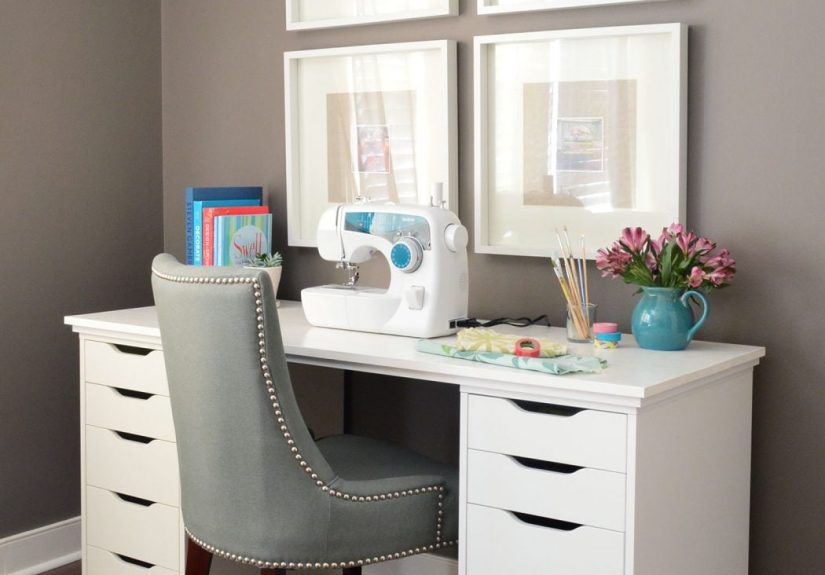
This is one of the most common hybrid setups, and it works best when the office function leads. Use a full desk, a supportive chair, and real storage for work needs. Then add a daybed, sleeper sofa, or Murphy bed for guests. Choose calm paint colors, layered lighting, and window coverings that balance privacy with daylight. Guests feel welcomed, but the room still supports daily productivity.
Living room + dining room
Use a sofa to define the lounge area and place the dining table on its own rug or beneath a pendant light. A sideboard can bridge both uses by storing serving pieces, games, and work supplies. In small homes, the dining table often becomes the hardest-working surface in the house, handling meals, homework, laptop time, and weekend puzzles without complaint.
Playroom + homework zone
Keep active storage low and durable for toys, then create a quieter study wall with desks, pinboards, and task lighting. Visual boundaries help a lot here. One side should invite movement; the other should say, “Yes, eventually we do have to finish that science worksheet.”
Basement lounge + fitness area
Basements are ideal multi-purpose rooms because they often have open square footage. Use furniture groupings to form a media or conversation area, then carve out a workout corner with rubber flooring, a mirror, and hidden storage for equipment. Warm materials, layered lighting, and good organization prevent the fitness zone from making the whole room feel like a commercial gym with throw pillows.
Common Mistakes That Make Flex Rooms Fail
The first mistake is trying to force too many equal functions into one space. The second is buying furniture before creating a plan. The third is ignoring storage, which is basically inviting clutter to become your full-time roommate. Other common errors include blocking windows, choosing oversized furniture, relying on one ceiling light, and forgetting to measure fold-out pieces in both open and closed positions.
Another mistake is designing only for the photo moment. Yes, the room should look good. But if it takes 25 minutes to convert from work mode to guest mode, or if there is nowhere to hide the daily mess, the room is not truly flexible. A good multi-purpose room should transition with minimal drama. Think “smart backstage crew,” not “Broadway set change during a thunderstorm.”
What the Best Multi-Purpose Rooms Have in Common
The best ones feel edited. They do not try to prove how clever they are. They simply work. They respect daily life, hide clutter, let furniture earn its place, and create zones that make sense. They also leave a little room for change, which may be the smartest design move of all. A nursery can become an office. A study can become a guest retreat. A bonus room can shift from playroom to teen hangout to hobby studio. Good design does not freeze a room in time; it gives the room permission to evolve.
That is why making sense of multi-purpose rooms is really about making sense of how you live. Once you know what you need, the design choices become much clearer. Use zoning to create order, choose flexible furniture, build in storage, protect comfort, and let style tie it all together. Do that, and your multi-purpose room will not feel like a compromise. It will feel like the most useful room in the house.
Extended Reflections: What People Learn After Actually Living in Multi-Purpose Rooms
Here is the part no floor plan tells you: the real test of a multi-purpose room is not the reveal day. It is six months later, when the novelty wears off and the room has to survive real schedules, real clutter, and real people dropping real socks in deeply mysterious places. That is when patterns start to show.
People often discover that convenience beats perfection. A gorgeous fold-away desk is less helpful than a regular desk with excellent storage if someone works there every day. A beautifully styled sleeper sofa is less successful than a simple daybed if guests come often and the room needs a sleep solution that does not require moving half the furniture. The lesson is that the best room is not the one with the most tricks. It is the one that fits your routine with the least friction.
Another common realization is that visual calm matters more than square footage. Even a decent-size room can feel stressful if every function is visible at once. When office cables, guest bedding, workout gear, toys, and hobby supplies all remain in view, the room feels crowded no matter how large it is. But when each category has a home, the room suddenly feels smarter, cleaner, and bigger. Order creates spaciousness in a way that square footage alone never can.
Families also learn that transitions matter. A room that changes from one use to another should do so quickly. If a parent has to relocate files, unplug lamps, move a chair, drag out bedding, and reorganize a side table every time overnight guests arrive, that “flex room” starts to feel like unpaid event production. The most loved hybrid rooms are the ones that reset in minutes. A bed folds down. A basket slides into a cabinet. A screen closes. Done.
There is also an emotional piece people do not always expect. When a room supports more than one part of life, it can make the whole home feel more generous. A compact house begins to feel less limiting because the rooms are participating more fully. A spare corner becomes useful. A basement feels welcoming instead of forgotten. A guest room stops being a museum for decorative pillows and starts becoming part of daily life. That shift can be surprisingly satisfying.
And finally, people learn that style still matters. Function may start the conversation, but beauty is what makes you want to keep using the room. Warm lighting, pleasing colors, good textiles, and furniture with a little personality help a hard-working space feel human. A multi-purpose room should not feel like a storage unit with ambitions. It should feel like a real room that just happens to be very talented.
That is the long-term wisdom of flexible design: rooms do not need to be bigger to be better. They need to be clearer, calmer, and more intentional. When a room understands its roles, supports daily routines, and can pivot without chaos, it stops feeling like a compromise and starts feeling like a quiet act of domestic genius.