Table of Contents >> Show >> Hide
- 1. The Lord of the Rings: The Two Towers Andy Serkis as Gollum
- 2. Star Wars: The Force Awakens Lupita Nyong'o as Maz Kanata
- 3. The Batman Colin Farrell as The Penguin
- 4. Darkest Hour Gary Oldman as Winston Churchill
- 5. How the Grinch Stole Christmas Jim Carrey as the Grinch
- 6. The Nutty Professor Eddie Murphy as, Well, Basically the Whole Family
- 7. Pan's Labyrinth Doug Jones as the Faun and the Pale Man
- Why These Hidden Performances Matter
- The Experience of Watching a Famous Actor Disappear Under Effects
- Conclusion
- SEO Tags
Movie stars are supposed to be easy to spot. That is the whole business model. You buy a ticket, the screen lights up, and your brain goes, “Ah yes, that is definitely the famous person from the poster.” But every now and then, Hollywood gets sneaky. A major actor disappears under prosthetics, layers of makeup, motion-capture dots, digital wizardry, or enough silicone to make a kitchen utensil jealous. The result is one of cinema’s most delightful tricks: realizing that the unforgettable creature, villain, or oddball you were watching was actually a huge star in disguise.
That is what makes movies about actors hidden under special effects so fun to revisit. These performances are not just technical flexes. They are acting challenges of the highest order. A performer has to build a character through posture, breath, voice, rhythm, and tiny facial details, even when their actual face is buried under foam latex or transformed into pixels by a visual-effects team. In other words, this is not just costume play with a larger budget. It is real craft, just with more glue.
Below are seven standout movies that secretly hid big actors under special effects, proving that sometimes the most memorable performances are the ones you almost do not recognize at all.
1. The Lord of the Rings: The Two Towers Andy Serkis as Gollum
If there were a Mount Rushmore for actors hidden under special effects, Andy Serkis would get at least two heads on it. In The Lord of the Rings: The Two Towers, Serkis helped redefine what movie performance could look like by bringing Gollum to life through voice work, physical acting, and performance capture. The character was digital, but the torment, twitchiness, and weird little bursts of tenderness were unmistakably human.
What made Gollum such a breakthrough was not just the technology. It was the fact that Serkis made the technology feel invisible. Gollum could have been a gimmick, a shiny effects showcase that aged badly the second the next software update came along. Instead, he became one of the most emotionally vivid characters in the entire trilogy. That wiry crouch, the cracked whisper, the constant tug-of-war between Smeagol and Gollum, all of it felt like a real performance rather than a digital shortcut.
Even now, Gollum remains the gold standard when people talk about actors under special effects in movies. Serkis did not just play a creature. He helped convince audiences that motion capture could carry a serious dramatic performance. That is a pretty good return for a role where the audience mostly remembers the eyes, the ribs, and one very unhealthy skincare routine.
2. Star Wars: The Force Awakens Lupita Nyong’o as Maz Kanata
Lupita Nyong’o is one of the most expressive performers of her generation, so naturally Star Wars gave her giant goggles, a fully digital body, and a tiny alien pirate frame. Maz Kanata in The Force Awakens may not dominate every scene she appears in, but she leaves an impression because Nyong’o brings warmth, wisdom, and a sly little sense of mischief to the character.
This is one of the most fascinating examples of a famous actor hidden by special effects because the performance still feels unmistakably alive. Maz is not a generic CGI helper floating through exposition. She has personality. She feels ancient, amused, a little dangerous, and emotionally tuned in to everyone around her. That only works because Nyong’o gives the digital design an inner life.
Her work as Maz also reminds us that “hidden” does not mean “erased.” Sometimes the audience does not immediately realize a major actor is involved because the physical image is so transformed, but the performance still shines through. Nyong’o’s presence is there in the voice, timing, and emotional texture. It is like hearing a familiar song played on a strange instrument. Different surface, same unmistakable artistry.
3. The Batman Colin Farrell as The Penguin
There are “good transformations,” and then there is Colin Farrell in The Batman, where many viewers looked at The Penguin and basically said, “That is a nice character actor, but where is Colin Farrell?” The answer, of course, was: under a mountain of prosthetics, padding, makeup, and pure criminal energy.
Farrell’s take on Oswald Cobblepot worked because the transformation did more than make him look different. It gave him a whole new physical vocabulary. His Penguin waddles without turning into parody. He sneers, huffs, and talks like a guy who has spent years marinating in Gotham’s cheapest rage. The face is altered, but the performance does not get lost inside the sculpting. If anything, the altered features make the characterization sharper.
This is where great movie prosthetics really earn their keep. Bad prosthetics make you think about seams and glue. Great prosthetics make you think about the character. Farrell disappears so completely that the illusion becomes half the fun. Once you know it is him, rewatching the movie feels like spotting a celebrity in a mascot costume and suddenly realizing the mascot is somehow acting better than half the cast in most crime dramas.
4. Darkest Hour Gary Oldman as Winston Churchill
Gary Oldman has built an entire career on transformation, so it almost feels rude that Darkest Hour still managed to surprise people. Playing Winston Churchill required more than a good accent and stern stares. Oldman disappeared into a carefully engineered combination of facial prosthetics, body work, and voice control that made the performance feel fully inhabited rather than impersonated.
What is especially impressive is that Churchill was such a familiar historical figure. Audiences already knew the silhouette, the expressions, the cadence, the bulldog stubbornness. There was nowhere to hide. Yet Oldman and the makeup team found the sweet spot between realism and performance, making him recognizable as Churchill without turning the role into wax-museum acting.
This is also a perfect example of how special effects can support acting rather than overwhelm it. The makeup gives Oldman the outer shell, but the performance gives that shell breath and pressure. He makes Churchill feel physically heavy and politically exhausted, but never inert. The film is full of speeches people already know, yet they land because Oldman is not reciting history. He is embodying a man cornered by it.
5. How the Grinch Stole Christmas Jim Carrey as the Grinch
Jim Carrey turning into the Grinch sounds obvious in hindsight, but the live-action How the Grinch Stole Christmas is one of the great examples of a star being buried under effects and still somehow managing to be unmistakably himself. The green fur, yellow contacts, elongated features, and elaborate makeup could have swallowed the performance whole. Instead, Carrey uses them like springboards.
His Grinch is elastic, theatrical, and gloriously mean in that cartoonish way only Carrey can deliver. He slinks, lunges, mutters, shrieks, and treats every line like it owes him money. Underneath all the technical work, the performance remains rooted in precision comic timing. That is why the role stuck. The design is memorable, sure, but the energy inside it is what made the character live.
There is also something almost heroic about a performance that survives that much makeup. The Grinch look was famously demanding, and you can feel the intensity on screen. It is a reminder that movie magic often requires an actor to do a normal workday while dressed like a haunted tennis ball. Carrey did not merely endure the transformation. He weaponized it.
6. The Nutty Professor Eddie Murphy as, Well, Basically the Whole Family
Eddie Murphy in The Nutty Professor is less a transformation and more a one-man population boom. Through extensive makeup and prosthetics, Murphy plays multiple members of the Klump family, along with Sherman Klump and Buddy Love, turning the film into a master class in character separation. You are not just watching a famous comedian wear funny makeup. You are watching him create a whole ecosystem of people.
What makes the effect so satisfying is that each character has a distinct rhythm. They do not feel like one actor doing quick costume changes. They feel like different personalities with different habits, voices, insecurities, and attitudes. Murphy turns the dinner-table scenes into technical magic tricks because the audience is constantly aware that the scene should not work, and yet it absolutely does.
This movie also deserves credit for proving that special-effects transformations do not have to lead to monsters or villains. Sometimes the hidden actor is buried under makeup so he can play your aunt, your uncle, your grandmother, and the loudest guy at the table, all before dessert. That is range. That is chaos. That is cinema.
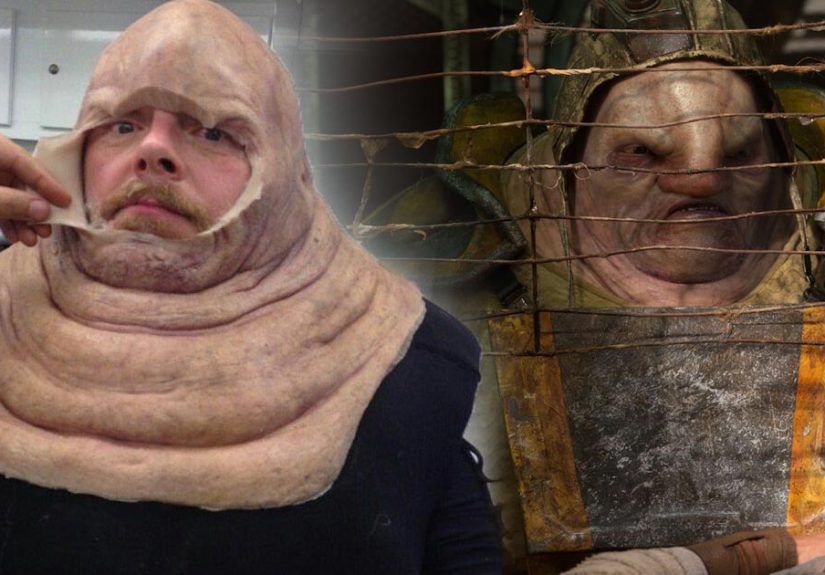
7. Pan’s Labyrinth Doug Jones as the Faun and the Pale Man
Doug Jones may be the patron saint of actors hidden under practical effects. In Pan’s Labyrinth, he plays both the Faun and the Pale Man, two of the most visually unforgettable fantasy-horror figures of the modern era. His work in the film is a reminder that special effects do not create great creature performances on their own. They still need an actor who understands movement down to the smallest twitch.
The Faun works because Jones gives the creature ambiguity. He is not cuddly, and he is not fully monstrous. He feels ancient, watchful, and slightly unsettling, like a forest decided to become a person and immediately regretted the administrative burden. The Pale Man, meanwhile, is nightmare fuel with posture. The body language does half the terrifying work before the audience even focuses on the eyes-in-the-hands detail and starts reconsidering dessert.
Jones is not always treated like a conventional marquee name, but among movie lovers he is an effects-era legend. His performances show why practical creature work still matters. You can build the greatest costume in the world, but if the actor inside moves like a bored person at a trade show, the illusion dies instantly. Jones never lets it die.
Why These Hidden Performances Matter
What links all of these movies is the same strange little miracle: the audience sees the character first and the actor second. That is rare in modern franchise filmmaking, where celebrity visibility is often part of the sales pitch. These performances go the other direction. They ask the actor to surrender vanity and trust the work. No glamorous close-ups. No “make sure my left side gets the light.” Just patience, design, and a willingness to become something unrecognizable.
That is also why these performances age so well. They reward repeat viewings. The first time, you watch the character. The second time, you start spotting the technique. By the third time, you are marveling at how much acting can survive even when the face you know has been replaced by fur, foam, digital skin, or the cheekbones of a sewer kingpin.
In a weird way, actors hidden under makeup and visual effects remind us what acting actually is. It is not just having a famous face. It is the control of voice, body, tempo, and intention. Strip away the recognizable features, and the truth becomes obvious: the real star power was never just the face. It was everything underneath it.
The Experience of Watching a Famous Actor Disappear Under Effects
One of the best parts of movie culture is that tiny shock of delayed recognition. You finish a film, scroll through the cast list, and suddenly blurt out something dramatic like, “Wait, that was who?” It is the cinematic version of finding out your quiet substitute teacher used to be in a rock band. There is an instant mix of confusion, admiration, and a little bruised pride because apparently your powers of observation are not as elite as you imagined.
That experience changes the way you watch movies. Once you realize how many major performances are hidden under special effects, you start paying attention to different things. You stop relying only on faces and begin noticing posture, breathing, speech patterns, and gesture. A bent shoulder, a clipped laugh, a pause before a line, those become clues. It is almost like film watching turns into detective work, except instead of solving crimes you are trying to identify who is under twenty pounds of makeup and a face full of tracking dots.
There is also something deeply satisfying about the teamwork involved. These performances are not victories for actors alone, and they are not victories for makeup or VFX teams alone. They are collaborations. The actor brings emotional truth. The makeup artist shapes the outer form. The hair team refines texture. The costume department adds weight and silhouette. The VFX artists sometimes finish the illusion frame by frame. When it all clicks, the audience does not see the handoff. They just believe.
That belief is powerful because it taps into one of the oldest pleasures in storytelling: transformation. Humans have always loved masks, costumes, monsters, myths, and exaggerated faces. Modern cinema simply gives that old instinct a much larger toolbox. Watching a famous actor disappear under effects feels exciting because it combines ancient theatrical magic with cutting-edge technology. It is mythmaking with better render speed.
There is a practical joy to it, too. These performances often allow actors to take risks they might not take if their own faces were front and center. Vanity loosens its grip. A glamorous star can play grotesque, ridiculous, ancient, alien, or deeply strange. A serious actor can go broad. A comedian can go eerie. A familiar screen presence can become genuinely surprising again. Sometimes the fastest route to a fresh performance is hiding the performer in plain sight.
And for audiences, that surprise can reignite the wonder of movies. In an era where trailers, casting news, behind-the-scenes features, and social media usually reveal everything long before opening night, it is refreshing when a film still has a trick up its sleeve. A hidden actor under special effects is one of those tricks. It reminds us that movies can still pull off a reveal, still create illusion, still make us lean forward and say, with great sincerity and maybe a little popcorn falling out of our mouths, “No way. That was them?”
Maybe that is why these roles stick around in pop culture memory. They are not just performances. They are discoveries. They give us the pleasure of being fooled and the even greater pleasure of learning how the trick was done. And honestly, any art form that can turn Gary Oldman into Churchill, Colin Farrell into a Gotham mobster, Jim Carrey into a green goblin of holiday resentment, and Andy Serkis into a cave-dwelling ring addict deserves a standing ovation and probably a very patient makeup chair.
Conclusion
The best movies that hide big actors under special effects do more than change appearances. They change the way audiences think about performance itself. Whether it is motion capture, prosthetics, creature makeup, or full-on digital transformation, the real magic happens when the technology disappears and the character takes over. That is why these seven films remain so fascinating. They are proof that when acting and effects work together, the result can be funny, eerie, moving, and unforgettable all at once.
So the next time a movie monster, alien sage, historical titan, or comic-book crook steals a scene, check the cast list before you congratulate the visual-effects team alone. There may be a major actor under there, sweating through layers of makeup, doing award-worthy work while looking absolutely nothing like the person on the poster. Hollywood loves a star. But sometimes it loves hiding one even more.