Table of Contents >> Show >> Hide
- Step 1: Pick a painfully specific customer problem
- Step 2: Validate demand in days, not months
- Step 3: Build a tiny plan that guides action (not a novel)
- Step 4: Choose your business structure, register, and get the right IDs
- Step 5: Set up money systems so getting paid is effortless
- Step 6: Build an MVP you can sell now (not someday)
- Step 7: Launch fast, then iterate with real feedback
- Common mistakes that slow down new businesses
- Quick FAQ: Starting your own business fast
- Conclusion: Quick doesn’t mean sloppyit means focused
- Experience Notes: What Starting “Quickly” Really Feels Like (and what helps)
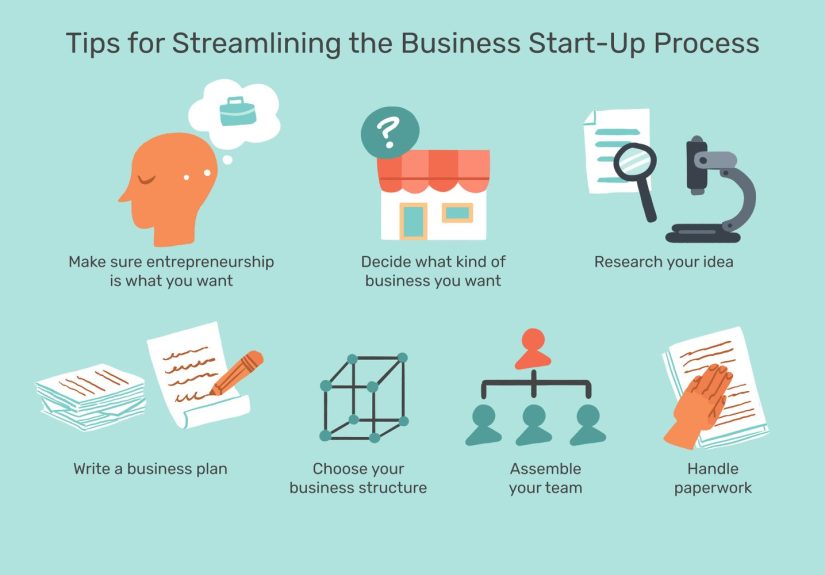
Starting your own business quickly doesn’t mean doing it recklessly. It means skipping the “someday” mindset, choosing a simple path to your first customer, and building the plane while it’s taxiing (not while it’s already in the air… that’s how you end up with a logo and zero sales).
This guide walks you through seven practical steps to start a business fast in the U.S.with smart shortcuts, real-world examples, and a focus on getting paid sooner rather than perfecting your color palette for three weeks straight. You’ll also see common pitfalls that slow people down, plus how to avoid them without turning your launch into a 47-tab browser situation.
Step 1: Pick a painfully specific customer problem
Speed comes from focus. “I want to start a business” is a vibe. “I help busy parents in Austin get dinner on the table with weekly meal-prep help” is a business.
Your first job is to choose a clear customer and a problem they’ll actually pay to solvepreferably one that already causes them headaches, lost time, or lost money.
A fast filter for a strong business idea
- Frequent: The problem happens often (weekly beats yearly).
- Costly: It costs time, money, or stress in a noticeable way.
- Urgent: They want it fixed soon, not “eventually.”
- Reachable: You can easily find and talk to these people.
Example: Instead of “I’ll start an online store,” try “I sell stain-resistant school lunch bags for parents of elementary kids.” That niche is clear, searchable, and easy to test fast.
Step 2: Validate demand in days, not months
The quickest business wins come from testing demand before building a complicated product. Think in terms of “minimum viable proof”:
can you confirm that real people want this, understand it, and will pay for it?
3 quick validation tests you can run this week
- 10-conversation sprint: Talk to 10 target customers. Ask what they do now, what they hate about it, and what they pay for today.
If they already spend money trying to solve the problem, you’re onto something. - Landing page + call-to-action: Create a simple page describing the offer, the price range, and a “Join the waitlist” or “Book a call” button.
If nobody clicks, that’s valuable informationcheaper than building the wrong thing. - Pre-sell a pilot: Offer a limited beta (like 5 spots). If people won’t commit to a pilot, they probably won’t commit later.
Example: If you want to start a home organizing service, don’t buy a van and 200 bins on Day 1. Offer a “two-hour reset” package,
take before/after photos (with permission), and use those results as your marketing engine.
A key “quick-start” mindset: treat your first version like an experiment. You’re not marrying the ideayou’re dating it. If it’s not working, you’re allowed to break up.
Step 3: Build a tiny plan that guides action (not a novel)
You don’t need a 40-page business plan to start. You do need clarity on how you’ll make money, what it costs to deliver, and what “success” looks like in the first 30–90 days.
Your goal is a simple, usable plan you can update as you learn.
Your one-page “quick-start” business plan
- Offer: What exactly are you selling?
- Customer: Who buys it, and why?
- Price: What will you charge, and what makes it worth it?
- Delivery: How will you fulfill the service/product?
- Costs: Tools, software, materials, shipping, ads, fees, insurance.
- Sales channel: Where will customers find you first?
- 30-day target: A realistic goal (example: “5 paying clients” or “20 preorders”).
Example: A tutoring business might set a 30-day target of “10 paid sessions,” choose one channel (local parent groups or school referrals),
and keep costs low using scheduling software and a simple payment link.
Step 4: Choose your business structure, register, and get the right IDs
This is where people either move fast or get stuck doom-scrolling state websites. The trick: keep it simple, follow the basics,
and don’t overcomplicate your structure before you have revenue.
Common structures (and why they matter)
- Sole proprietorship: Simple to start, often lowest friction. But personal liability can be a concern depending on your business.
- LLC: Popular for small businesses because it can separate personal and business liability in many situations (with proper setup and behavior).
- Corporation (S-Corp/C-Corp): Can be useful later for certain tax or growth situations, but usually more complex up front.
If you’re unsure, many quick-start founders begin as a sole proprietor while validating, then switch to an LLC once money is coming in and the shape of the business is clearer.
(If your business has higher risklike working in homes or selling physical productstalk to a qualified professional early.)
Your fast legal/admin checklist
- Register your business with your state if forming an LLC or corporation.
- Get an EIN (Employer Identification Number) if you need one for banking, hiring, or your entity type.
- Check licenses/permits required by your state/city/county and your industry.
- Set up state/local tax accounts if you collect sales tax or have payroll.
- Choose a business name and confirm it’s available where you’re registering and online.
Speed tip: Don’t “decide later” on basic compliance. You don’t need to memorize tax law, but you do want to avoid an expensive cleanup because you launched without the required registrations.
Step 5: Set up money systems so getting paid is effortless
A surprising number of new businesses fail at the “getting paid” part. Not because customers are mean, but because the setup is messy:
confusing invoices, unclear pricing, and no consistent process.
Quick financial setup that looks professional
- Business bank account (especially if you formed an LLC) and a separate card for expenses.
- Simple accounting from Day 1: track income, expenses, and receipts monthly.
- Pricing you can explain in one sentence (example: “$299 for a two-hour organizing session”).
- Fast payment options (online invoice, card payments, ACH) so customers can say “yes” instantly.
Example: A mobile car-detailing service can offer three packages, require a small deposit to book,
and use a text-friendly invoice link. That’s not just convenientit reduces last-minute cancellations.
Also: consider basic insurance depending on your industry. It’s not glamorous, but it’s much cheaper than “learning the hard way.”
Step 6: Build an MVP you can sell now (not someday)
Your MVP (minimum viable product) is the smallest version of your offer that still delivers real value.
It’s not “cheap” or “unfinished”it’s focused. The goal is to deliver an outcome customers care about,
while you learn what to improve next.
MVP examples by business type
- Service business: One signature package (not five), with clear deliverables and a simple booking process.
- E-commerce: A tight collection (3–10 products), not a 200-item warehouse fantasy.
- Digital product: A paid template, a mini-course, or a short guide solving one problem.
- Software: A clickable prototype or a limited feature that proves the core value.
Example: If you’re starting a bookkeeping business, your MVP could be “monthly cleanup + reconciliations for freelancers under 50 transactions/month.”
That’s specific, easy to deliver, and easy for customers to self-select into.
As you build, keep one eye on customer expectations. Marketing claims should be truthful and supportedespecially in regulated categories like health, finance, or “guaranteed results” services.
When in doubt, under-promise and over-deliver. It’s slower for your ego, faster for your referrals.
Step 7: Launch fast, then iterate with real feedback
Launching quickly is about starting the feedback loop. The business improves because customers tell you what they need,
not because you guessed correctly in isolation.
A simple launch plan that works
- Soft launch to a small group (friends-of-friends, a local community, a niche forum).
- Deliver and document results: testimonials, before/after photos, case studies.
- Track 3 metrics for 30 days: leads, conversions, and profit per sale.
- Improve one thing weekly (pricing clarity, onboarding, delivery speed, retention).
Example: A personal chef launching quickly might start with “Sunday meal prep for five households,”
then add a waitlist, then expand to a second day once capacity fills.
The fastest businesses don’t “feel ready.” They ship, learn, and refine. The goal is not to avoid mistakes.
The goal is to make small mistakes cheaplybefore you make big mistakes expensively.
Common mistakes that slow down new businesses
- Overbuilding: Creating the deluxe version before proving demand.
- Overbranding: Treating logo design like it’s the product.
- Underpricing: Charging too little, then burning out delivering too much.
- Too many offers: Customers get confused; confused customers don’t buy.
- No sales routine: If you don’t schedule time to sell, you’ll “stay busy” without growing.
Quick FAQ: Starting your own business fast
How fast can I realistically start?
Many service businesses can start in days if you have a clear offer and a way to collect payment. Product businesses vary based on sourcing and compliance,
but you can still validate demand quickly while you build.
Do I need an LLC right away?
Not always. Some people validate first, then form an LLC once revenue is consistent. But if your business has higher risk or you’re working with larger clients,
forming earlier may be worth it. Consider your situation and get qualified guidance when needed.
What’s the fastest marketing channel?
Usually the channel where your customers already hang out and trust recommendations: referrals, local groups, niche communities, targeted partnerships, or search.
Pick one primary channel for 30 days, then expand.
How do I price without guessing?
Start with your costs and capacity, then validate against what customers pay today for alternatives.
A few paid pilots teach you more than a month of “pricing theory.”
Conclusion: Quick doesn’t mean sloppyit means focused
If you want to start your own business quickly, your best strategy is to simplify:
pick one clear problem, validate demand fast, set up the basics properly, and launch an MVP that customers can buy today.
Then improve with real feedback instead of perfecting imaginary scenarios.
The shortcut is not skipping the workit’s skipping the work that doesn’t matter yet.
Your first business version is a “Version 1,” not your life’s final draft. Get it into the world, get it in front of customers, and let reality do the editing.
Experience Notes: What Starting “Quickly” Really Feels Like (and what helps)
People who start a business quickly often describe the early days as a weird mix of adrenaline and awkwardness. You’re excited because you’re building something real,
and also mildly terrified because you’re about to charge money for it. That feeling is normaland it usually shows up right when you’re doing the correct thing: selling.
A common experience is realizing that “confidence” doesn’t arrive first. Action arrives first. Confidence shows up later like a friend who’s always late but brings snacks.
Another frequent pattern: the first offer is almost never the final offer. Many founders start with a broad service (“I do social media for small businesses”) and quickly
learn that specific packages sell faster (“I create 12 short videos/month for local gyms”). The “quick” part isn’t magical talentit’s willingness to adjust.
The people who move fastest treat early feedback as data, not as a personal critique. If three customers ask the same question, they don’t argue with reality;
they update the website, clarify the offer, and keep going.
Pricing is also emotional at first. New business owners often undercharge because they’re trying to be “reasonable,” then discover that low prices attract high-maintenance work.
A typical learning moment is raising prices slightly and getting better clients. Not because money is everything, but because pricing communicates seriousness.
Another shared experience is realizing that boundaries are a business tool: having set hours, a clear scope, and a simple contract or agreement can make your work easier,
your customers happier, and your delivery faster.
On the marketing side, many quick starters expect one big post to change everything. What tends to work better is small consistency:
a few outreach messages daily, one partnership conversation weekly, and a simple habit of asking happy customers for referrals.
People also report that documenting results (before/after photos, short testimonials, mini case studies) becomes a superpower.
It’s the difference between “Trust me” and “Here’s proof,” and proof sells faster.
Finally, a very real experience: systems feel unnecessary until they’re urgent. The moment you get a few customers, you’ll wish you had a repeatable process for onboarding,
scheduling, payments, and follow-up. Quick starters often succeed because they build tiny systems earlynothing fancy, just consistent.
A checklist, a template, and a weekly review of leads and expenses can keep the business moving even when motivation gets moody.
In the early days, momentum is your best friend. Protect it by keeping your next step obvious and your workflow simple.