Table of Contents >> Show >> Hide
- Why Power Strips Get Into Trouble So Fast
- 1. Space Heaters
- 2. Refrigerators and Freezers
- 3. Microwaves
- 4. Air Fryers and Toaster Ovens
- 5. Window or Portable Air Conditioners
- 6. Electric Blankets and Heating Pads
- 7. Another Power Strip
- What Is Safe to Plug Into a Power Strip?
- How to Tell Your Setup Needs an Electrician
- Final Takeaway
- Real-World Experiences Homeowners and Electricians Keep Seeing
- SEO Tags
Power strips are the overachievers of modern life. They sit quietly behind desks, under TVs, and beside nightstands, pretending they can handle whatever chaos we throw at them. Phone charger? Sure. Laptop? No problem. Six mystery cords you forgot to label in 2022? Somehow, still yes.
But here’s the catch: a power strip is not a magical electricity buffet. It does not create extra power, upgrade your home’s wiring, or give a high-wattage appliance a free pass. It simply splits one outlet into several access points. And when people forget that, they create the perfect conditions for overheated cords, tripped breakers, damaged appliances, and, in the worst cases, house fires.
Ask a licensed electrician what gets plugged into power strips that absolutely should not, and you’ll hear the same theme over and over: anything that produces a lot of heat, uses a strong motor, or cycles on and off with a heavy electrical draw is a bad match. So before your humble power strip turns into the most dramatic object in your house, here are seven things you should never plug into one.
Why Power Strips Get Into Trouble So Fast
Most standard household power strips are designed for lower-demand electronics and light-duty devices. Think lamps, routers, phone chargers, monitors, or a TV and streaming box combo. They’re helpful for convenience, not for beating the laws of physics.
That matters because many people treat a power strip like an all-access backstage pass for every appliance in the room. It isn’t. High-wattage appliances can draw close to the limit of a typical 15-amp circuit all by themselves. Add a few more devices, and suddenly your “clever setup” is just a fancy way to say overload.
The good rule of thumb is simple: if it heats, cools, compresses, spins hard, or sounds like it means business, it probably belongs directly in a wall outlet. Electricians also warn that repeated heavy loads can wear down power strips over time, especially cheap ones, older ones, or units tucked behind furniture where heat can build up.
1. Space Heaters
This is the big one. If electricians had a greatest-hits album, “don’t plug a space heater into a power strip” would be track one.
Space heaters draw a lot of current, often close to the upper limit of what a standard household outlet circuit is meant to handle. A power strip adds more connection points, more resistance, and more opportunities for heat to build up where you do not want it. That can mean a warm plug, a scorched strip, a tripped breaker, or a genuine fire hazard.
Portable heaters are especially risky because people tend to use them in bedrooms, offices, and chilly corners where power strips are already doing overtime for lamps, chargers, and electronics. That creates a bad electrical pileup in exactly the rooms where people may be sleeping, working, or not paying attention.
What to do instead
Plug a space heater directly into a wall outlet. Give it its own outlet if possible, keep it on a flat surface, and don’t pair it with extension cords or multi-outlet adapters. Also, keep it away from curtains, bedding, and anything fluffy enough to turn a minor mistake into a full personality crisis.
2. Refrigerators and Freezers
Your refrigerator may look calm and emotionally stable, but electrically, it’s not a lightweight. It cycles on and off all day, and every time the compressor kicks in, it needs a surge of power. That startup draw is exactly why electricians prefer fridges and freezers to be plugged directly into a dedicated wall receptacle.
When a refrigerator is plugged into a power strip, you’re asking a strip designed for convenience to manage a device that works continuously and pulls serious load over time. Best-case scenario, the strip trips or wears out early. Worst-case scenario, the strip overheats or fails, and now you have a food safety issue, an appliance issue, and a “why does the kitchen smell weird?” issue.
There’s another problem people forget: refrigerators are mission-critical appliances. If a strip switch gets bumped off, if the reset trips, or if the strip simply fails, your fridge may stop running without anyone noticing until the milk starts sending warning signals.
What to do instead
Plug your refrigerator or freezer straight into a properly grounded wall outlet. If your kitchen layout makes that awkward, the solution is not “buy a beefier power strip.” The solution is “talk to an electrician.”
3. Microwaves
Microwaves are sneaky because they’re so normal. They live on the counter. They heat leftovers. They don’t look rebellious. But they can pull a substantial amount of wattage in a very short burst, especially larger models.
That sharp demand is one reason many electricians dislike seeing microwaves on power strips. Add in the fact that kitchens already contain moisture, multiple appliances, and plenty of opportunities for overloaded circuits, and you’ve got a setup that can go sideways faster than a reheated bowl of soup.
People also love to plug a microwave into the same strip as a coffee maker, toaster, or air fryer because “the counter is right there.” That is a charming way to tempt the breaker panel.
What to do instead
Give the microwave a direct wall outlet, ideally one intended for kitchen appliance use. If you regularly notice dimming lights, warm plugs, or nuisance breaker trips when the microwave runs, stop troubleshooting with optimism and start troubleshooting with an electrician.
4. Air Fryers and Toaster Ovens
These countertop favorites have one thing in common: they get hot on purpose, and very quickly. That means they use a lot of power. Air fryers may look compact and cute, but many draw wattage in the same neighborhood as other high-heat appliances. Toaster ovens are equally demanding, especially when preheating or cooking for longer stretches.
From an electrical safety standpoint, these appliances are not “small gadgets.” They are heat-producing machines. And electricians generally hate seeing heat-producing machines sharing a power strip with anything else.
The danger here is not just the total load. It’s the combination of sustained heat, kitchen moisture, crumbs, grease, and the temptation to stack multiple cooking devices in one zone. Plugging an air fryer into a strip beside a coffee maker and toaster is the countertop equivalent of booking three drummers for the same tiny apartment.
What to do instead
Plug air fryers and toaster ovens directly into a wall outlet, one high-wattage kitchen appliance per receptacle whenever possible. Rotate usage if you need to. Breakfast should be hectic because you’re late, not because the circuit is.
5. Window or Portable Air Conditioners
Air conditioners are power-hungry, especially when the compressor starts. Like refrigerators, they cycle on and off, which creates repeated heavy startup demand. That kind of load is hard on power strips and extension cords and can push a marginal setup into overheating territory.
This is one of those mistakes people make during the first hot week of summer. The room has only one convenient outlet, the AC cord is a little short, and suddenly a power strip seems like a practical hero. It is not. It is a plastic bystander about to get blamed for everything.
Window units and portable ACs are often used for long stretches, sometimes all day and all night. That extended runtime adds even more stress to a strip that was never meant to serve as an HVAC support system.
What to do instead
Plug the air conditioner directly into a wall outlet. If the manufacturer specifies a dedicated circuit or warns against extension devices, take that seriously. Product manuals are not known for being dramatic unless they have a reason.
6. Electric Blankets and Heating Pads
People don’t always think of electric blankets and heating pads as high-risk plug-ins because they seem soft, cozy, and deeply committed to your comfort. But they’re still heating devices. And heating devices and power strips do not make a great couple.
Electricians worry about these items because they can already overheat if they’re old, folded, damaged, or used incorrectly. Adding a power strip introduces another failure point. That is not ideal for something you might use while sitting still for a long time or, worse, while drifting off to sleep.
Older electric blankets are especially concerning. If the cord is worn, the controls are questionable, or the blanket has seen more winters than your current couch, a power strip only makes a bad setup worse.
What to do instead
Plug electric blankets and heating pads directly into a wall outlet, inspect cords regularly, and replace anything that looks worn or unreliable. Cozy is great. Crispy is not.
7. Another Power Strip
This move has a name: daisy-chaining. It also has a reputation: terrible.
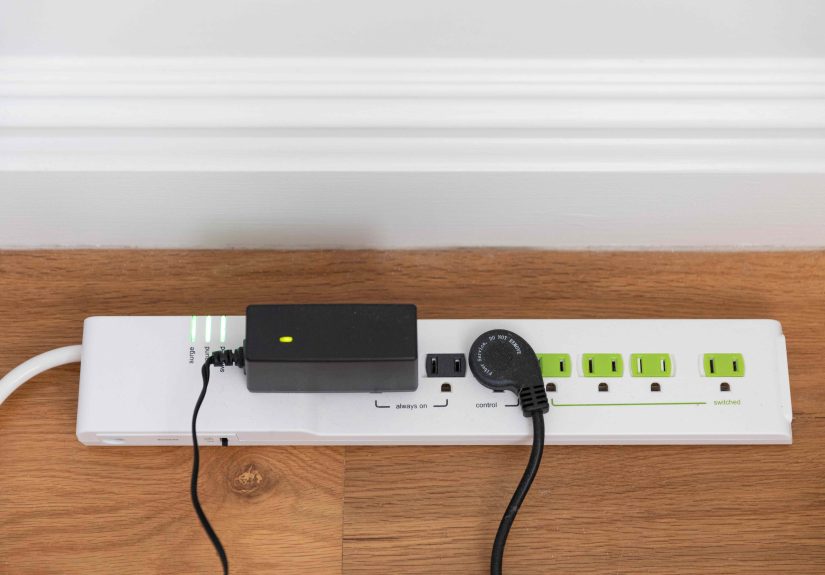
Plugging one power strip into another does not give you more safe capacity. It only gives you more places to plug in too many things. It’s like solving a storage problem by buying a second junk drawer and then congratulating yourself on the organization.
Daisy-chaining increases the chance of overloading the original outlet and can create hidden heating problems. It also makes it easier to lose track of what’s actually drawing power. Electricians and safety organizations consistently warn against this because it encourages exactly the kind of usage that starts with convenience and ends with melted plastic.
What to do instead
If you need more outlets than one wall receptacle safely provides, that’s a wiring and layout issue, not a strip shortage. Use fewer devices, spread them across different circuits, or hire an electrician to add outlets where you actually need them.
What Is Safe to Plug Into a Power Strip?
Power strips still have a place. They’re great for lower-draw electronics and accessories, especially when you use a quality, properly rated, certified strip. Good examples include:
- Phone chargers
- Lamps
- Computers and monitors
- Wi-Fi routers
- Small speakers
- TVs and streaming devices
Even then, don’t overload the strip, don’t cover it with rugs or furniture, don’t run cords where they can get pinched, and don’t assume surge protection means “safe for absolutely everything.” A surge protector protects electronics from voltage spikes. It does not turn a high-wattage appliance into a low-risk plug-in.
How to Tell Your Setup Needs an Electrician
If your house constantly relies on power strips and extension cords just to function normally, that’s usually a sign your electrical system is being asked to do modern work with yesterday’s layout. An electrician should take a look if:
- Breakers trip regularly
- Outlets feel warm
- Plugs fit loosely
- Lights dim when appliances turn on
- You’re using multiple strips in the same room every day
- Your kitchen, office, or bedroom clearly does not have enough outlets
Adding outlets or updating circuits is far less exciting than buying another power strip, but it’s also far less likely to make the fire department part of your evening plans.
Final Takeaway
If there’s one electrician-approved rule worth memorizing, it’s this: power strips are for convenience, not heavy lifting. They’re best used for low-demand electronics, not appliances that heat, cool, compress, or chew through wattage like it’s free.
So before you plug something into a strip, ask a simple question: Would this device seem reasonable plugged into a lightweight row of extra outlets, or does it sound like it needs its own lane? If it belongs in its own lane, give it the wall outlet it deserves.
Your power strip will thank you by continuing to do what it does best: quietly handling the boring stuff and staying out of the headlines.
Real-World Experiences Homeowners and Electricians Keep Seeing
Talk to enough homeowners, maintenance techs, and electricians, and you start hearing the same stories on repeat. The details change, but the plot rarely does. Somebody runs out of outlets. Somebody makes a “temporary” solution. Then that temporary solution becomes a permanent part of the room for six months, two years, or until something starts smelling hot.
One of the most common situations happens in home offices. A person starts with a laptop, a monitor, and a desk lamp on one strip. Totally reasonable. Then winter rolls in, the room gets cold, and a space heater joins the party. Nothing happens on day one, so it feels safe. Then the heater runs longer, the strip gets warmer, and eventually the breaker trips. If they’re lucky, that’s the end of the lesson. If they’re not, the plug or strip starts to discolor first, which is the electrical system’s version of waving a red flag and yelling, “Please stop doing this.”
Kitchens are another repeat offender. People love convenience, and kitchens are built for routines. That’s why so many homeowners end up plugging a microwave, air fryer, coffee maker, or toaster oven into whatever outlet is easiest to reach. The problem is that these appliances don’t sip electricity; they gulp it. A setup can seem fine for weeks, then fail the moment two heat-producing appliances run at the same time. Electricians often say the problem isn’t just one appliance. It’s the stack of habits around it.
Then there’s the refrigerator mistake, which usually comes from good intentions. Someone needs a little more cord length during a remodel, after moving, or while rearranging a garage freezer. They use a power strip or extension device “just for now.” But fridges and freezers run continuously, cycle on and off, and don’t care that your workaround was supposed to be temporary. When the strip fails, the homeowner sometimes discovers it only after a freezer full of food has thawed into a science experiment.
Electric blankets create a different kind of story. The people using them are usually trying to stay warm and comfortable, not run a small industrial machine from the bedroom. But old blankets, bent cords, and multi-outlet strips near beds are a combination electricians do not enjoy seeing. Many say the same thing: if a device creates heat and stays on for a while, remove as many weak links as possible. That means no strip, no sketchy extension cord, and no “it still works, so it must be fine” logic.
The most telling experience, though, is how often electricians walk into a home and find daisy-chained power strips behind an entertainment center, under a desk, or tucked beside a bed. Usually the homeowner says some version of, “I know this looks bad, but it’s been like that forever.” And that’s exactly the issue. Dangerous electrical setups don’t always fail immediately. Sometimes they wait until the room is hot, the circuit is busy, the equipment is older, and everyone has stopped noticing the risk.
That’s why the smartest takeaway is not fear. It’s honesty. If your house depends on power strips to run basic daily life, the strips are not the solution. They’re the symptom. The safest homes are not the ones with the most adapters. They’re the ones where the electrical system actually matches how people live.