Table of Contents >> Show >> Hide
- Why Desk Exercise Equipment Is Worth It
- How We Define the “Best” Desk Exercise Equipment
- 1. Under-Desk Walking Pad
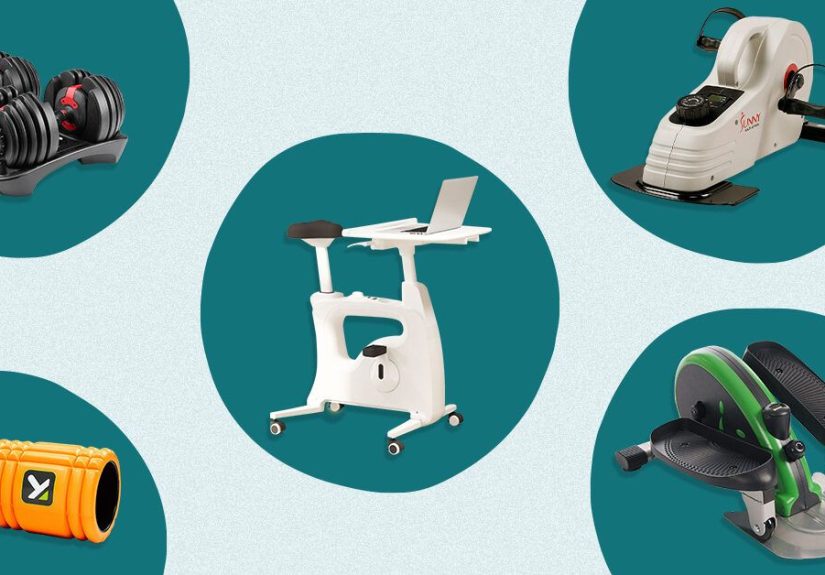
- 2. Under-Desk Bike
- 3. Under-Desk Elliptical
- 4. Mini Stair Stepper
- 5. Resistance Bands
- 6. Adjustable Dumbbells
- 7. Foam Roller
- 8. Massage Ball or Mobility Ball
- How to Choose the Right Equipment for Your Work Style
- Real-World Experiences: What It Actually Feels Like to Use Desk Exercise Equipment
- Conclusion
If your workday looks like a thrilling action movie called Typing: The Sequel, you are not alone. Millions of people spend long hours parked at a desk, which is great for email volume and not-so-great for stiff hips, moody shoulders, sleepy glutes, and the mysterious sensation that your body has turned into a receipt. The good news is that you do not need to build a garage gym next to your keyboard to move more. You just need the right desk exercise equipment.
The best desk exercise equipment does not try to turn your office into a boot camp. It simply helps you move more often, feel less creaky, and make activity easier to fit into a busy day. That is the real magic. When movement becomes convenient, it stops feeling like a heroic event and starts acting like a normal part of life.
After reviewing the most common recommendations across major U.S. health and fitness publications, one thing becomes clear: the smartest desk-friendly gear is compact, quiet, easy to use, and realistic for regular people with regular schedules. In other words, it should not require a PhD in assembly, the floor plan of a loft, or the patience of a saint.
Why Desk Exercise Equipment Is Worth It
Desk exercise equipment is not about replacing your full workout routine. It is about closing the huge gap between “I exercised this morning” and “I sat like a decorative rock for the next nine hours.” That gap matters. Small bursts of movement during the day can support energy, circulation, focus, and comfort. They can also make it easier to stay consistent with your overall fitness goals because you are no longer treating movement as an all-or-nothing event.
That is why the best equipment for a desk setup usually falls into two categories. First, there is active cardio gear that lets you move while reading, typing, or taking calls. Second, there is compact strength and recovery gear that helps you add resistance training, posture work, and mobility without taking over your office.
How We Define the “Best” Desk Exercise Equipment
For this article, “best” does not mean flashiest or most expensive. It means most useful for real-world desk life. The winning picks share a few qualities:
- Small footprint: It should fit in a home office, bedroom office, or that awkward corner where your desk lives.
- Quiet operation: If it sounds like a lawnmower, it is not desk equipment. It is a workplace enemy.
- Beginner-friendly design: The easier it is to start, the more likely you are to keep using it.
- Versatility: The best gear supports more than one goal, whether that is cardio, strength, mobility, or recovery.
- Comfort and consistency: Great equipment should help you move often, not punish you for trying.
1. Under-Desk Walking Pad
Why it is one of the best
If desk exercise equipment had a celebrity tier, the under-desk walking pad would be on the red carpet. It is popular for a reason: walking is familiar, practical, and easy to sprinkle throughout the workday. A good walking pad lets you answer emails, listen in on meetings, or brainstorm while getting gentle movement instead of collecting hours of uninterrupted sitting.
What makes it great
Walking pads are especially useful for people who want low-intensity movement that feels natural. They are also ideal for building a routine because walking does not require much mental effort. Once you find your pace, it becomes background activity in the best possible way.
What to look for
Prioritize a stable deck, quiet motor, easy speed controls, decent weight capacity, and a compact frame that fits under your desk when not in use. If you are taller, belt size matters more than you might think. A too-short deck can turn your stride into a weird little shuffle, which is not the vibe.
2. Under-Desk Bike
Why it earns a spot
An under-desk bike is one of the most approachable ways to stay active while seated. It is low-impact, generally quiet, and often more office-friendly than a walking pad if you need steadier upper-body control during computer work. It is a particularly smart choice for beginners, older adults, or anyone who wants movement without the bounce of walking.
Best use case
This is perfect for light pedaling during calls, admin tasks, or reading. It works well when your goal is to break up sitting and keep your legs engaged without turning your workday into a sweat festival.
What to look for
Look for smooth resistance, strong pedal straps, a low profile that fits under your desk, and enough stability that the unit does not skitter around like it is trying to escape accountability.
3. Under-Desk Elliptical
Why it stands out
Under-desk ellipticals are often recommended for people who want a seated cardio option with a smooth, gliding motion. Compared with a mini bike, many users find the movement gentler on the joints and easier to sustain for longer stretches. It is a strong fit for anyone who wants quiet activity while working but does not love the circular pedaling feel of a bike.
Who should consider it
If you want low-impact movement and tend to work in focused blocks, an under-desk elliptical can be a fantastic companion. It encourages steady motion and often feels less fussy than other cardio machines.
Watch for this
Pay attention to desk height and knee clearance. A machine can be “under-desk” in theory and “headbutt-your-desktop” in practice. Portability also matters if you plan to move it between rooms.
4. Mini Stair Stepper
Why it deserves more love
The mini stair stepper is the overachiever of compact office fitness gear. It takes up less room than a treadmill, gives your lower body a more challenging workout than casual pedaling, and can be used for short, effective movement breaks. If your day is packed, a few quick stepping sessions can wake up your legs and heart rate fast.
Best for
This is a great option for people who want more intensity in smaller time blocks. It is also useful if you prefer “movement snacks” throughout the day rather than one long active workstation session.
The trade-off
Mini steppers are usually better for breaks than for typing while moving. Translation: excellent for a 10-minute reset, less excellent if you are trying to write a spreadsheet formula without accidentally inventing new math.
5. Resistance Bands
Why they are an office MVP
Resistance bands are one of the most underrated pieces of desk exercise equipment. They are cheap, light, portable, and shockingly versatile. With a few bands, you can do rows, presses, pull-aparts, curls, lateral walks, glute work, and posture-friendly upper-back exercises without dedicating half your office to iron plates.
Why they matter for desk workers
Desk life tends to create a very specific physical personality: tight hips, rounded shoulders, sleepy glutes, and a neck that feels personally offended by your monitor. Resistance bands are brilliant because they help strengthen the exact muscles that sitting tends to ignore.
What to buy
A small set with different resistance levels is usually smarter than buying one ultra-heavy band and pretending ambition counts as program design. Loop bands and long bands each have their place, and having both gives you more options.
6. Adjustable Dumbbells
Why they make the list
If you want real strength training in a small space, adjustable dumbbells are one of the best investments you can make. They are not technically “under-desk” equipment, but they are absolutely desk-friendly for anyone working from home. A pair stored beside your desk makes it easy to squeeze in goblet squats, rows, overhead presses, deadlifts, and lunges between meetings.
Why they work so well
Unlike cardio-only options, dumbbells help you cover the strength side of the equation. That matters because the best desk exercise setup should not just help you move more. It should also help you stay stronger.
Smart buying advice
Choose a set with quick weight changes, a secure locking system, and a range that matches your current level. The best adjustable dumbbells save space without making every transition feel like you are solving a hardware puzzle under pressure.
7. Foam Roller
Why recovery gear belongs in this conversation
Not all desk exercise equipment needs to burn calories or spike your heart rate. Some of the best tools simply help your body feel human again. A foam roller belongs in that category. It is excellent for loosening up the upper back, hips, glutes, calves, and other areas that get cranky after hours of sitting.
Best role in your setup
Think of a foam roller as your reset button. Use it before work, after work, or during a midday break when your posture has started to resemble a question mark. It pairs beautifully with strength and cardio gear because it helps you stay more mobile and comfortable overall.
What to know
You do not need the most aggressive roller on earth. Unless your dream is to be gently assaulted by textured plastic, a medium-density roller is usually the sweet spot for office workers.
8. Massage Ball or Mobility Ball
Why this small tool can make a big difference
A massage ball is basically a pocket-sized problem solver. It is ideal for targeting the spots a foam roller cannot reach as precisely, such as the shoulders, chest, feet, glutes, and the muscles around the shoulder blades. For desk workers with stubborn knots, this little tool can feel absurdly useful.
Best for
If you carry tension in your upper back, neck, or feet, a massage ball is one of the easiest ways to add a little recovery work to your day. It is cheap, tiny, and effective. Honestly, it is the overqualified intern of the fitness world.
How to use it wisely
Gentle pressure works better than trying to grind yourself into the wall like you are tenderizing steak. A minute or two per tight area is often enough.
How to Choose the Right Equipment for Your Work Style
The best desk exercise equipment for you depends on how you actually work, not on what looks impressive online.
- If you type all day: an under-desk bike or elliptical may be easier than a walking pad.
- If you take lots of calls: a walking pad can be excellent for audio meetings and brainstorming sessions.
- If you want short, challenging breaks: a mini stepper and resistance bands are a great combo.
- If your body feels stiff more than weak: start with a foam roller, massage ball, and bands.
- If you want a more complete fitness setup: combine one cardio tool with one strength tool and one recovery tool.
A simple and realistic starter setup might be a walking pad, a set of resistance bands, and a foam roller. That trio covers movement, strength support, and recovery without requiring a dedicated gym room or a suspiciously wealthy zip code.
Real-World Experiences: What It Actually Feels Like to Use Desk Exercise Equipment
On paper, desk exercise equipment sounds wonderfully efficient. In real life, the experience is a little messier, a little funnier, and honestly more encouraging. The first thing most people notice is not dramatic weight loss or instant athletic glory. It is that they feel less stuck. Their hips do not feel quite as frozen by noon. Their back is less grumpy by late afternoon. Their energy dips are not as dramatic. And they no longer stand up from the chair looking like a folding lawn chair trying to gain consciousness.
The walking pad experience is especially interesting because it changes the rhythm of the day. At first, many people feel weird trying to walk and work at the same time. There is usually a learning curve. You start too fast, your typing gets a little chaotic, and for a brief moment your email style becomes “sent from a gentle earthquake.” But once you find a slower speed, it starts to feel surprisingly natural. Walking during calls becomes easy. Reading gets easier too. For many users, it turns dead time into active time without feeling like a workout in the traditional sense.
Under-desk bikes and ellipticals tend to feel even more approachable. They are subtle. You can pedal while seated and still look like a productive adult instead of a determined penguin. People often like them because they do not demand much coordination. The movement is quiet, steady, and less disruptive than walking. That makes them great for long work sessions, especially when you want to move but still need your hands and eyes fully focused on the screen.
Resistance bands and adjustable dumbbells create a different kind of experience. They make you more aware of how many tiny windows for strength training actually exist in a normal day. A set of rows between meetings. A few goblet squats before lunch. Some shoulder work in the afternoon when posture starts to collapse. These mini sessions may look unimpressive compared with a full gym workout, but they add up. More importantly, they make exercise feel less distant and less ceremonial.
Recovery tools also become more valuable over time. Foam rollers and massage balls are rarely the exciting purchase. No one dramatically announces, “Guess what, I bought a cylinder.” But after a few weeks, these tools often become the ones people use most consistently. A quick upper-back roll before work, a glute release after sitting too long, a few minutes with a massage ball on tight shoulders after back-to-back meetings; these small habits can make the workday feel far more manageable.
The biggest surprise, though, is psychological. Desk exercise equipment can quietly change how you think about movement. Instead of waiting for the perfect time to work out, you start seeing activity as something you can do in pieces. That mindset is powerful. It lowers the barrier, reduces guilt, and makes fitness feel less like a dramatic lifestyle overhaul and more like a series of doable choices. And frankly, that is usually what leads to consistency.
Conclusion
The best desk exercise equipment is not the machine with the flashiest app or the biggest promise. It is the one you will actually use while living your normal life. For some people, that will be a walking pad that turns meetings into step count gold. For others, it will be an under-desk bike, a pack of resistance bands, or a foam roller that rescues their upper back from the consequences of modern employment.
If you want the smartest approach, think in layers: one tool for movement, one for strength, and one for recovery. That combination gives you a more balanced setup and makes your workspace feel a little less like a place where your hamstrings go to retire.