Table of Contents >> Show >> Hide
- How to Pick the Right Rice Substitute (Without a Midweek Meltdown)
- 1. Quinoa: The “I Meal-Prepped” Flex
- 2. Cauliflower Rice: Low-Carb, High-Confidence Energy
- 3. Farro: Chewy, Nutty, and Weirdly Addictive
- 4. Barley: The Cozy Bowl Champion
- 5. Bulgur: The Weeknight Shortcut You’ll Brag About
- 6. Millet: Mild, Fluffy, and Seriously Underrated
- 7. Couscous: The Five-Minute Miracle (Technically Pasta)
- 8. Lentils: Protein-Packed and Shockingly “Rice-Like”
- Honorable Mentions (Because Your Pantry Deserves Options)
- Real-Life Rice-Swap Experiences (The Fun Part)
- Conclusion: Make Rice the Backup Singer, Not the Whole Band
Rice is amazing. It’s cozy, dependable, and it shows up to dinner like that friend who’s always down for anything.
But sometimes you want a different vibe: more protein, more fiber, fewer carbs, a new texture, or just the thrill of
not eating the exact same bowl three nights in a row.
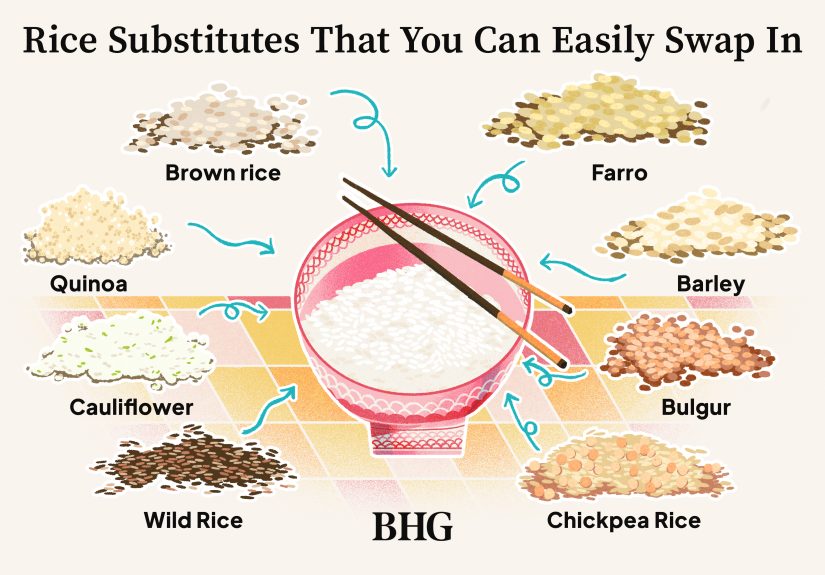
Enter: rice alternativesthe grains, veggies, and legumes that can slide into your favorite recipes
without making your meal feel like a “substitution.” (You know the kind: sad, watery, and vaguely apologetic.)
These swaps are legit delicious, easy to cook, and surprisingly good at soaking up sauces like they were born for it.
How to Pick the Right Rice Substitute (Without a Midweek Meltdown)
Before you fling quinoa into a sushi roll and blame the internet, match your rice substitute to your goal:
- Trying to cut carbs? Go veggie-forward (hello, cauliflower rice) or lean on legumes.
- Want more protein? Quinoa and lentils do the heavy lifting.
- Craving that chewy “restaurant bowl” texture? Farro and barley are your people.
- Need fast? Couscous and bulgur are basically the sprinters of the pantry.
- Eating gluten-free? Choose quinoa, cauliflower rice, millet, or lentils (and verify labels).
One more thing: any swap gets better with the same three upgradessalt your cooking liquid, add aromatics
(garlic, onion, bay leaf), and finish with acid (lemon, vinegar). That’s not “being fancy.” That’s just good decision-making.
1. Quinoa: The “I Meal-Prepped” Flex
Quinoa is a superstar healthy rice substitute because it cooks fast, tastes nutty, and comes with a
satisfying pop-chew texture. It’s also naturally gluten-free and packs more protein than most grains, which makes it
perfect for bowls that need to keep you full past 9:30 p.m.
Best ways to use it
- Burrito bowls, taco bowls, and “fridge-cleanout” bowls
- Stir-fries (especially if you crisp it a little in a skillet)
- Chilled salads with herbs, cucumber, feta, or chickpeas
How to swap it for rice
Use it anywhere you’d use rice, but expect a lighter, fluffier result. For extra flavor, cook quinoa in broth and
toss it with a spoon of salsa verde, pesto, or a lemony vinaigrette.
2. Cauliflower Rice: Low-Carb, High-Confidence Energy
If you want a low-carb rice alternative that still gives you that “pile of grains under the stir-fry”
feeling, cauliflower rice is the move. It’s basically cauliflower chopped into rice-size bits, cooked quickly so it stays
tendernot soggy. (Soggy cauliflower rice is just soup in disguise.)
Best ways to use it
- Fried “rice” with eggs, scallions, and whatever leftover veggies are judging you
- As a base for curries and saucy braises
- As a quick side with garlic, lemon zest, and herbs
Pro tip
Cook it hot and fast, and don’t overcrowd the pan. Moisture is the enemy of crisp edges. If you’re using frozen cauliflower rice,
sauté a little longer to evaporate extra water.
3. Farro: Chewy, Nutty, and Weirdly Addictive
Farro brings that hearty, slightly chewy bite that makes restaurant grain bowls feel “expensive.” It’s an ancient wheat,
so it’s not gluten-free, but it’s a fantastic rice alternative when you want a sturdier
base that won’t turn mushy under dressings or sauces.
Best ways to use it
- Mediterranean bowls with roasted veggies, olives, and feta
- Soups and stews (it holds its shape beautifully)
- “Warm salads” with arugula, roasted squash, and a tangy vinaigrette
How to make it taste like you know what you’re doing
Toast it briefly in oil before simmering. That tiny step deepens the nutty flavor and makes your kitchen smell like
a cooking showminus the dramatic background music.
4. Barley: The Cozy Bowl Champion
Barley is a classic whole grain with a pleasantly chewy texture and a talent for turning soups into actual meals.
It’s also known for soluble fiber (including beta-glucan), which is one reason it often shows up in heart-healthy eating
conversations. Translation: barley is wholesome, but it’s also deliciousno virtue signaling required.
Best ways to use it
- Soups (chicken-barley, mushroom-barley, vegetable-barleybarley does not discriminate)
- “Risotto-style” bowls (barley gets creamy but keeps a bite)
- Grain salads with dried fruit, nuts, and herbs
Swap strategy
If your recipe depends on fluffy, separate grains (like sushi), barley isn’t your best pick. But for anything brothy,
saucy, or stew-adjacent, it’s a top-tier substitute for rice.
5. Bulgur: The Weeknight Shortcut You’ll Brag About
Bulgur is cracked wheat that’s been partially cooked, which is why it’s so fast. It’s a staple in Middle Eastern and
Mediterranean cooking and a great option when you want a quick rice substitute that feels fresh and light.
Also: it’s not gluten-free.
Best ways to use it
- Tabbouleh-style salads loaded with parsley, lemon, and tomatoes
- As a base for grilled chicken, salmon, or roasted chickpeas
- Stuffed peppers and stuffed zucchini (hello, meal prep)
Why it works
The texture is tender but not mushy, and it plays extremely well with bold flavorsthink cumin, sumac, garlic, and lemon.
6. Millet: Mild, Fluffy, and Seriously Underrated
Millet is a naturally gluten-free grain alternative that cooks into a fluffy, gentle basekind of like
rice’s quieter, artsy cousin. It’s mild enough to take on whatever seasoning you throw at it, and it can swing savory or
slightly creamy depending on how much liquid you use.
Best ways to use it
- As a base for spicy stews and saucy beans
- In bowls with roasted vegetables, tahini, and herbs
- As a breakfast “grain bowl” with cinnamon, fruit, and nuts
Texture hack
Toast millet in a dry pan or a little oil before simmering. It adds a nuttier flavor and helps keep the grains distinct.
7. Couscous: The Five-Minute Miracle (Technically Pasta)
Couscous is often mistaken for a grain, but it’s actually tiny pasta made from semolina. The upside? It’s ridiculously fast,
which makes it an easy rice substitute on busy nights. The downside? Traditional couscous contains gluten
(though gluten-free versions existcheck labels).
Best ways to use it
- As a side for grilled meats, roasted vegetables, or sheet-pan dinners
- In bright salads with lemon, cucumber, herbs, and chickpeas
- As a “sauce catcher” under stews and tagines
Make it taste better than plain rice
Bloom spices in oil first (paprika, cumin, turmeric), then hydrate couscous with hot broth. Finish with lemon and herbs.
Your future self will be impressed.
8. Lentils: Protein-Packed and Shockingly “Rice-Like”
Lentils aren’t a grainthey’re a legumebut they can absolutely take rice’s job in bowls and sides. If your goal is a
healthy rice swap that’s hearty and satisfying, lentils are a power move. Different types behave differently:
brown and green lentils hold shape; red lentils break down and go creamy.
Best ways to use them
- As the base of grain-free bowls with roasted veggies and a punchy sauce
- In “lentil fried rice” vibes (best with firmer lentils)
- As a filling for stuffed peppers or lettuce wraps
Swap strategy
For recipes where rice is mostly a neutral base, lentils work beautifullyespecially with spices, aromatics, and a bright finish
like lemon juice or vinegar.
Honorable Mentions (Because Your Pantry Deserves Options)
If you want to keep exploring rice alternatives, put these on your “next grocery trip” list: buckwheat groats (kasha) for a toasty,
savory base; wheat berries for ultra-chewy salads; and polenta for creamy comfort that still plays nicely with saucy mains.
Real-Life Rice-Swap Experiences (The Fun Part)
I learned the hard way that swapping rice is less about “health goals” and more about “what texture won’t ruin my mood at 7 p.m.”
The first time I tried cauliflower rice, I treated it like regular ricecovered it, steamed it, walked away, came back proud…
and discovered a pan full of watery confetti. Lesson one: cauliflower is a vegetable, not a tiny grain soldier. Cook it uncovered,
hot and fast, and let moisture escape like it’s trying to avoid responsibility.
Quinoa was my next experiment, mostly because it makes meal prep feel official. I packed quinoa bowls with roasted chicken, salsa,
and avocado and told myself I had “a system.” What I actually had was three days of lunches that stayed delicious because quinoa holds up.
The trick is rinsing itskip that, and you’ll get a faint bitterness that tastes like regret. Once I started cooking it in broth and
finishing with lime, quinoa stopped being “healthy food” and started being “why didn’t I do this sooner?”
Farro was my gateway grain. It’s chewy in a way that makes you slow down and actually chew your food (wild concept). I made a farro salad
with roasted tomatoes, arugula, lemon, and shaved Parmesan, and it stayed good in the fridge for days. That’s when I realized farro is
basically designed for leftovers. It doesn’t go limp. It doesn’t get sad. It just sits there, absorbing flavor like a sponge with a
college degree. The only time it betrayed me was when I tried to use it in a dish that needed fluffy grainsfarro politely refused and
turned the whole thing into “chewy stew.” Not bad, just… different.
Barley became my winter personality. Once you put barley in soup, the soup becomes a meal with a backbone. I’ve tossed it into chicken soup,
mushroom soup, and “clean out the crisper drawer” soup, and it always works. The only warning: barley thickens things. If you love leftovers,
you may wake up to a container that’s more “hearty porridge” than soup. The fix is easyadd broth when reheating and pretend you planned it.
Bulgur and couscous are my “I forgot I’m hungry” saviors. Bulgur is great when you want something light but still satisfyingespecially with
lemon, parsley, and cucumbers. Couscous is what I make when the main dish is done and I realize I have exactly six minutes to invent a side.
I’ll pour boiling broth over it, cover, fluff, and then throw in olives, chopped herbs, and a drizzle of olive oil. It tastes like effort.
It is not effort. That’s the best kind of cooking.
Millet took longer to appreciate because it’s subtle. But once I started toasting it first and pairing it with bold flavorsthink roasted
squash, cumin, tahini, and a squeeze of lemonit became a regular. And lentils? Lentils are the “main character” swap. When I use lentils
under a saucy curry or roasted veggies, I don’t miss rice at all. I just feel like I made a dinner that can carry me through tomorrow.
Conclusion: Make Rice the Backup Singer, Not the Whole Band
The best rice alternatives aren’t about restrictionthey’re about variety. Keep a few options in rotation:
quinoa for protein-forward bowls, cauliflower rice for low-carb nights, farro and barley for chewy comfort, bulgur and couscous for speed,
millet for gluten-free flexibility, and lentils for hearty, satisfying meals.
Try one swap this week. If it flops, blame the technique (not your cooking spirit), adjust, and try again. Your dinner routine will get
less boringwithout you having to learn a single dance for TikTok.