Table of Contents >> Show >> Hide
- Why Vertical Herb Gardens Work So Well
- Five Rules Before You Build Anything
- 9 DIY Vertical Gardens for Better Herbs
- 1. Hanging Shelf Garden with Terra-Cotta Pots
- 2. Repurposed Spice Rack Herb Wall
- 3. Canvas Shoe Organizer Living Herb Wall
- 4. Rain Gutter Ladder Planter
- 5. Wall-Mounted Pipe or PVC Herb Garden
- 6. Wooden Pallet Pocket Planter
- 7. Herb Spiral for a Small Yard
- 8. Leaning Trellis with Hanging Buckets
- 9. Stacked Herb Tower or Tiered Planter
- How to Choose the Right Herbs for Vertical Setups
- Common Mistakes That Ruin Otherwise Great Vertical Herb Gardens
- Final Thoughts
- Extra Experience: What Growing Herbs Vertically Actually Teaches You
- SEO Tags
If your dream herb garden is bigger than your balcony, windowsill, patio, or general tolerance for clutter, vertical gardening is the clever little loophole you’ve been waiting for. Instead of spreading out, you grow up. That means more basil, more thyme, more mint, and far fewer sad little nursery pots scattered around like a plant-based yard sale.
Vertical herb gardens are more than a cute Pinterest flex. They solve real problems. They save floor space, make harvesting easier, improve airflow around plants, and let you place herbs where the light actually is instead of where your patio furniture says they should be. For apartment dwellers, small-yard gardeners, and anyone who wants fresh herbs within arm’s reach of the kitchen, they’re a practical win.
Better yet, you do not need a fancy system with a pump, app, and mood lighting. A smart DIY vertical garden can be made from simple shelves, wall pockets, buckets, gutters, recycled containers, or stacked planters. The magic is not in the price tag. It is in matching the structure to the herbs, the light, and your willingness to water regularly when summer decides to become a toaster oven.
Why Vertical Herb Gardens Work So Well
Most culinary herbs are surprisingly cooperative in containers. Basil, parsley, oregano, chives, thyme, sage, cilantro, and rosemary are all popular choices because they produce well in pots and stay useful even when the growing space is modest. Many herbs also prefer excellent drainage and do not want to sit in soggy soil, which makes container growing a natural fit.
The trick is remembering that herbs may be low-drama, but they are not no-drama. Most want plenty of sun, usually at least four to six hours a day, and many perform even better with six or more. Containers dry out faster than garden beds, especially when mounted on walls, hung in the air, or painted dark colors that soak up heat. So a vertical herb garden is a brilliant space-saving idea, but it is also a commitment to checking moisture before your basil starts acting like it has seen things.
Choose a design with good drainage, use a quality potting mix instead of heavy garden soil, and group herbs with similar water needs together. Mediterranean herbs such as rosemary, thyme, oregano, and sage like leaner, well-drained conditions. Parsley, cilantro, basil, and chives usually appreciate a bit more moisture. Mint is the rebel of the family. It is delicious, cheerful, and entirely capable of trying to annex the whole planting if you let it. Keep it in its own container unless chaos is your brand.
Five Rules Before You Build Anything
1. Start with sunlight, not aesthetics
A gorgeous vertical herb wall in deep shade is not a garden. It is décor with ambitions. Watch your space for a few days and note where the strongest light lands. A south- or southwest-facing area is usually the sweet spot for many herbs, whether outdoors or indoors near a bright window.
2. Drainage is non-negotiable
Every pocket, pot, can, jar sleeve, trough, or bucket needs a way for excess water to escape. Herbs hate wet feet. Add drainage holes where needed and make sure runoff will not ruin your wall, floor, or relationship with the downstairs neighbor.
3. Think about root space
Not every herb wants the same depth. Thyme and oregano are comfortable in shallower containers, while parsley, dill, and cilantro tend to do better with a bit more room. Basil also appreciates a container that does not feel like an airline seat.
4. Keep heavy structures safe
Watered soil is much heavier than it looks. Wall-mounted systems need solid anchors, sturdy hardware, and realistic expectations. Your herb garden should smell like rosemary, not drywall failure.
5. Put the harvest where you will actually use it
The best herb garden is the one you snip from often. Build it near the kitchen door, on a sunny deck, beside the grill, or in a bright indoor spot where you cook. Convenience turns herbs from “nice idea” into “why is everything I eat suddenly better?”
9 DIY Vertical Gardens for Better Herbs
1. Hanging Shelf Garden with Terra-Cotta Pots
This classic DIY design uses wood shelves with circular cutouts that hold terra-cotta pots, suspended with rope for a clean, stacked look. It works beautifully on porches, balconies, and sunny corners because each herb gets its own container. That makes watering easier and stops one thirsty plant from dragging down the whole system.
Best herbs for this setup: basil, parsley, chives, oregano, and thyme.
Why it works: the individual pots provide proper root space, good drainage, and easy swapping. When cilantro bolts or basil gets dramatic, you can replace a single pot instead of rebuilding the entire project.
DIY tip: use saucers only if you are gardening indoors and can empty them regularly. Outdoors, skip them so water drains freely.
2. Repurposed Spice Rack Herb Wall
A wall-mounted spice rack turned herb station is one of the smartest small-space ideas around. Wire or wood racks can hold compact pots in neat rows, and the narrow profile fits where larger planters cannot. It feels almost suspiciously efficient, like your kitchen got promoted.
Best herbs: thyme, oregano, chives, dwarf basil, and compact parsley varieties.
Why it works: it is ideal for lightweight plants and easy to mount near a door or outdoor cooking area. You also get strong visual organization, which is helpful if you have ever harvested oregano while fully believing it was marjoram.
DIY tip: label pots clearly and leave enough space between shelves for airflow and trimming.
3. Canvas Shoe Organizer Living Herb Wall
This is the vertical herb garden that always makes people say, “Wait, that’s a shoe organizer?” Yes. Yes, it is. A sturdy canvas organizer with pockets can become a hanging herb wall for shallow-rooted plants. It is inexpensive, renter-friendly, and surprisingly charming.
Best herbs: thyme, oregano, chives, leaf lettuce mixed with herbs, and small mint varieties in isolated pockets.
Why it works: the many compartments let you grow a broad mix in a tiny footprint. It is especially useful for fences or railings that need greenery without bulky shelves.
DIY tip: reinforce drainage by poking small holes in each pocket liner and hang it where runoff will not stain the wall. Water gently to prevent the top pockets from flooding the lower ones.
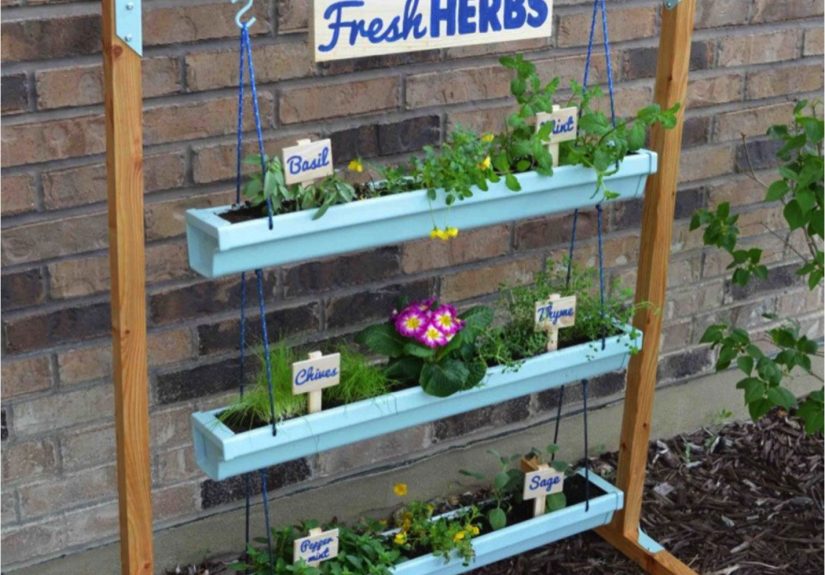
4. Rain Gutter Ladder Planter
Mounted gutters or hanging gutter sections create long, slim planting channels that look modern and use vertical space brilliantly. A freestanding ladder frame makes this even better because it does not require drilling into a wall.
Best herbs: cilantro, chives, thyme, oregano, and baby parsley.
Why it works: it is inexpensive, customizable, and great for patios with strong light. The horizontal trough shape also makes sowing from seed easy for fast crops.
DIY tip: do not treat gutters like deep containers. Choose herbs that can handle shallower root zones, and make sure both ends drain properly. This design is better for smaller herbs than for monster basil plants with main-character energy.
5. Wall-Mounted Pipe or PVC Herb Garden
A pipe-style herb garden uses sections of PVC or metal pipe mounted horizontally, with planting holes cut along the top. It has a sleek, almost industrial look that works well in modern kitchens, patios, and compact yards.
Best herbs: basil, parsley, oregano, thyme, and trailing herbs for edge spill.
Why it works: it maximizes wall space while keeping herbs at a comfortable harvesting height. It can also be adapted for windows, fences, or sunny exterior walls.
DIY tip: drill generous drainage holes along the bottom and avoid overcrowding. Pipe planters look tidy when planted sparsely enough for each herb to breathe and fill in naturally.
6. Wooden Pallet Pocket Planter
The humble pallet is still a favorite for vertical gardening because it is affordable, rustic, and easy to customize. Add landscape fabric or planter pockets, secure it upright, and you have a layered herb display with cottage-garden charm.
Best herbs: oregano, thyme, sage, rosemary, and trailing nasturtiums mixed with herbs for color.
Why it works: it offers multiple planting zones and looks fuller faster than many other DIY systems. It is especially appealing if you want your herb garden to be useful and photogenic, which is a reasonable standard.
DIY tip: verify that the pallet is safe for garden use and not chemically treated. Sand rough edges and anchor it securely before planting.
7. Herb Spiral for a Small Yard
An herb spiral is technically more three-dimensional than vertical, but it absolutely earns a place on this list. Built from brick, stone, or salvaged materials, it rises in a coil, creating different light, moisture, and drainage zones in one compact footprint.
Best herbs: rosemary and thyme near the top, parsley and chives mid-level, mint or moisture lovers lower down in contained sections.
Why it works: the top drains faster and gets more sun, while the lower levels stay slightly cooler and moister. That means one structure can support herbs with different preferences without endless compromise.
DIY tip: build it where it will stay. Once filled with soil and planted, it is not the kind of project you casually move on a Saturday afternoon.
8. Leaning Trellis with Hanging Buckets
This setup uses a decorative trellis, ladder, or leaning frame with colorful buckets or pots clipped to the rungs. It is cheerful, flexible, and ideal for gardeners who want a vertical system without committing to permanent wall hardware.
Best herbs: basil, dill, parsley, cilantro, and lemon balm in separate containers.
Why it works: each container is removable, easy to refresh, and simple to rotate if one side gets better light. It is also the kind of project that looks custom even when assembled from budget materials.
DIY tip: choose buckets with drainage holes and keep the largest pots on the lower rungs for stability.
9. Stacked Herb Tower or Tiered Planter
A stacked planter or herb tower uses nesting pots, stackable planters, or a tiered stand to create height without wall mounting. This is the “I want vertical gardening, but I also want to move it when guests come over” option.
Best herbs: basil, chives, parsley, thyme, oregano, and sage.
Why it works: it creates a lot of growing room in a tight footprint, and the tiered arrangement makes it easy to group herbs by use. Pizza herbs in one layer, tea herbs in another, emergency garnish herbs everywhere else.
DIY tip: plant sun-lovers at the top and more moisture-tolerant herbs on lower levels, where runoff and shade are slightly greater.
How to Choose the Right Herbs for Vertical Setups
If you want the easiest wins, start with basil, thyme, oregano, chives, and parsley. They are practical, familiar, and genuinely useful in everyday cooking. Rosemary and sage are excellent too, especially in sunny, well-drained planters. Mint should be grown in its own dedicated container unless you enjoy horticultural domination. Dill and cilantro can work, but they appreciate a bit more depth and regular moisture, so place them in the roomiest containers in your system.
A good rule is simple: match shallow containers to compact or shallow-rooted herbs, and reserve deeper pots for parsley, basil, dill, or mixed plantings. Also think about harvest habits. If you cook pasta often, give basil prime real estate. If you roast vegetables every week, thyme and rosemary deserve top billing. Build around what you actually use, not what looks romantic in a seed catalog written by someone clearly unburdened by weather.
Common Mistakes That Ruin Otherwise Great Vertical Herb Gardens
Using garden soil in containers: It compacts, drains poorly, and turns containers into stubborn bricks. Use potting mix instead.
Overcrowding: Tiny herbs do not stay tiny. Give them room, or airflow drops and harvesting becomes a game of herbal hide-and-seek.
Ignoring heat: Walls, railings, and balconies can reflect serious heat. Check moisture often, especially in midsummer.
Mixing incompatible herbs: Rosemary and thyme usually want drier conditions than basil or parsley. Group similar water needs together.
Forgetting maintenance access: If you cannot reach the top row to prune, water, or harvest, the design is working against you.
Final Thoughts
The best DIY vertical herb garden is not the fanciest one. It is the one that fits your space, gets enough sun, drains well, and makes you want to use fresh herbs all the time. Whether you build a hanging shelf, a gutter frame, a pallet planter, or a stacked tower, the real goal is not just saving space. It is creating a garden that feels easy to live with.
Once that happens, little things change. Pasta gets better. Eggs get better. Sandwiches get suspiciously good. You start trimming basil with the confidence of a person who suddenly owns a sun hat. And the whole project begins to feel less like a DIY experiment and more like the smartest square footage you ever used.
Extra Experience: What Growing Herbs Vertically Actually Teaches You
There is a special kind of optimism that appears the day a vertical herb garden is finished. Everything is freshly planted, the labels are straight, the soil is rich, and every tiny basil plant looks like it is about to star in a lifestyle magazine. Then real life begins. The sun shifts. One pocket dries out faster than the others. Mint behaves like a tiny green empire. A storm tips one container sideways. And that is where the actual experience of vertical herb gardening gets interesting.
The first lesson most gardeners learn is that vertical systems are more personal than standard beds. Because the plants are lifted to eye level, you notice them more. You see new growth sooner. You spot yellow leaves faster. You catch the first signs of stress before a plant fully gives up and starts sending passive-aggressive signals through limp stems. This closeness makes vertical herb gardening feel intimate in a way large garden plots sometimes do not. You do not just grow herbs. You end up checking on them while carrying coffee, while talking on the phone, and while pretending you stepped outside for “fresh air” and not because you wanted to inspect the thyme again.
Another experience that sneaks up on people is how much easier harvesting becomes when herbs are raised up. There is no crouching, no muddy knees, and no rummaging through a dense bed hoping the parsley is still alive under the oregano. A quick snip before dinner becomes effortless. That matters more than it sounds. Convenience increases use, and use increases pruning, and pruning often makes herbs fuller and more productive. In other words, your laziness can become a gardening advantage if the setup is smart enough.
Vertical gardening also teaches respect for microclimates. The top tier is often hotter, brighter, and drier. The bottom level may stay cooler and hold moisture longer. That difference can be frustrating at first, but then it becomes useful. Suddenly you understand why rosemary is thriving above while parsley is happier below. You stop treating the whole structure like one uniform box and start planting it like a layered ecosystem. That is when the garden gets better, not because you bought more supplies, but because you paid attention.
Then there is the emotional side. Herb gardens are practical, but they are also deeply satisfying. They smell good. They respond quickly. They reward small effort with instant flavor. A handful of chives on scrambled eggs may not solve every problem in life, but it can absolutely improve a Tuesday. Vertical herb gardens amplify that feeling because they turn unused walls, rails, and corners into something alive and useful. A blank fence becomes a pantry. A balcony becomes a kitchen garden. A cramped space starts feeling generous.
Of course, the experience is not all fragrant triumph. There will be mistakes. You will overwater something. You will underwater something else. You may confidently plant dill in a container that is too small and then act surprised when it gets floppy. You might place mint beside calmer herbs and later realize you have essentially invited a very charming bully to dinner. But these are productive mistakes. Herbs grow fast enough to teach quickly, and most are forgiving enough to let you try again.
Over time, a vertical herb garden becomes less of a project and more of a routine companion. You learn which plants race ahead, which ones need frequent trimming, and which container always dries out first after a hot afternoon. That accumulated experience is the real secret behind “better herbs.” Not a trend. Not a product. Not a perfect design. Just repeated, practical contact with the plants themselves. And once that rhythm clicks, the garden stops being a decoration with edible ambitions. It becomes part of how the home works.