Table of Contents >> Show >> Hide
- What Is the Wassily Chair (and Why Does It Look Like a Skeleton With Great Posture)?
- The Bauhaus Context: Why the 1920s Were Ready for a Chair Like This
- Marcel Breuer’s Lightbulb Moment: A Bicycle, a Handlebar, and a Big Idea
- Model B3: The Chair’s First Identity (Before “Wassily” Got All the Attention)
- So Why Is It Called the Wassily Chair?
- Manufacturing and Reissues: How an Avant-Garde Chair Became a Global Product
- Why the Wassily Chair Became a Modernist Icon
- How to Recognize a Wassily Chair (Without Becoming the “Actually…” Person at Parties)
- Design Legacy: The Wassily Chair’s Influence on Modern Interiors
- Conclusion: A 1920s Chair That Still Looks Like Tomorrow
- Living With the Wassily Chair: Real-World Experiences, Room Stories, and What People Notice
The Wassily Chair looks like it came from the future, then politely reminds you it’s been here since the 1920s.
All chrome confidence and sling-seat swagger, it’s the rare design object that can live in a museum, a movie set,
and your living roomsometimes all in the same week.
But the chair’s real story isn’t just “tubular steel + cool vibes.” It’s a tale of Bauhaus ambition, industrial
breakthroughs, a painter’s famous name showing up fashionably late, and a global re-launch that turned a
workshop experiment into a forever icon.
What Is the Wassily Chair (and Why Does It Look Like a Skeleton With Great Posture)?
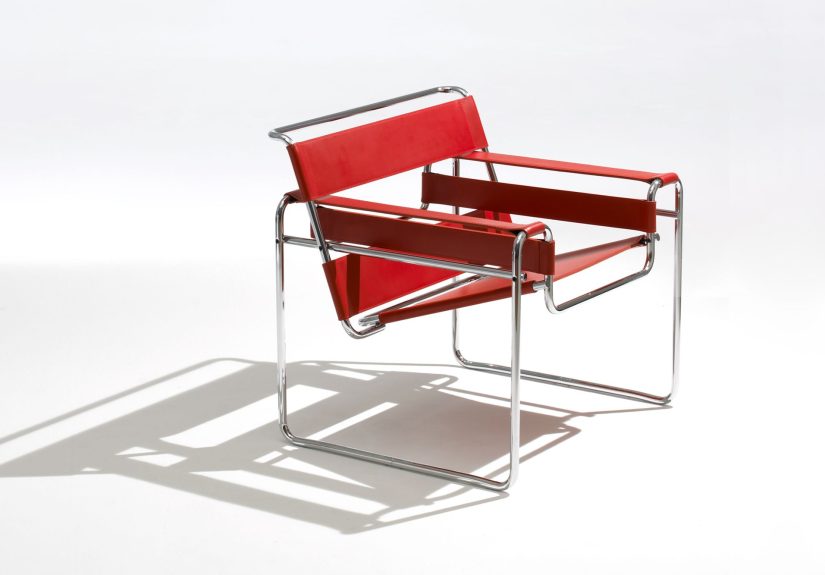
The Wassily Chair is a modernist armchair made from bent tubular steel with taut straps (often leather or sturdy
fabric) forming the seat, back, and armrests. It’s also known by its earlier, less dramatic stage name:
Model B3 (or “Club Chair, Model B3”), designed by architect and designer Marcel Breuer
in the mid-1920s while working at the Bauhaus.
Its visual punch comes from what it removes: bulky upholstery, carved ornament, and the idea that a chair must
look “cozy” to be comfortable. Instead, it reduces the club chair to an outlinelike someone traced a classic
armchair with a shiny metal marker, then stretched sleek bands across the frame and called it a day. A very
productive day.
If modernism had a business card, “form follows function” would be on it. The Wassily Chair is that motto, but
seated.
The Bauhaus Context: Why the 1920s Were Ready for a Chair Like This
The Bauhaus wasn’t trying to make furniture that merely looked new. It was trying to build a new relationship
between art, craft, and industrywhere everyday objects could be beautiful, rational, and (in theory)
mass-producible. That mattered in the 1920s, an era juggling rapid industrial change, new materials, and a hunger
for designs that felt honest rather than decorative.
Breuer fit that agenda perfectly. Trained in woodworking, he didn’t treat furniture as “mini architecture”he
treated it as real engineering: materials, joints, manufacturing methods, and what happens when a human body
actually sits down.
This is the moment when the living room stops being a Victorian endurance test and starts becoming a place where
modern life could look modern. Enter tubular steel, stage left, shining like it owns the place.
Marcel Breuer’s Lightbulb Moment: A Bicycle, a Handlebar, and a Big Idea
One of the most repeated origin stories is also one of the best: Breuer, impressed by the strength and lightness
of a bicycle’s tubular steel frame (and especially its handlebars), began imagining furniture built the same way.
The logic was simple and radical: if a thin tube can carry you over cobblestones at speed, it can probably handle
a book club.
But turning that idea into a chair required more than inspirationit required the right industrial conditions.
Tubular steel needs to bend cleanly without collapsing, which became far more feasible as manufacturing improved.
Once that door opened, Breuer sprinted through it carrying a tape measure and a modernist manifesto.
From Wood to Steel: Why This Was a Design Breakthrough
Traditional armchairs relied on bulky frames and upholstery to create comfort. Breuer’s approach flipped the
script: the steel frame became a minimal structure, and the seat became suspended bandssupportive like a hammock,
but disciplined like a geometry teacher.
The result wasn’t just a new look. It was a new systemone that hinted furniture could be produced with industrial
techniques, not only artisanal carpentry. That shift is a huge part of why the Wassily Chair reads as “modern”
even a century later.
Model B3: The Chair’s First Identity (Before “Wassily” Got All the Attention)
In the 1920s, the chair wasn’t marketed as “Wassily.” It was Model B3a Bauhaus-era design
associated with Breuer’s experiments in tubular steel furniture. Early versions used durable woven material for
the straps, including a waxed, high-strength fabric often discussed under the name Eisengarn
(“iron yarn”), which had roots before the Bauhaus but gained new applications through Bauhaus textile innovation.
In other words: the chair wasn’t born fully dressed in black leather with a celebrity name. It started as a
workshop-driven prototypepractical, experimental, and frankly a little brave. (Imagine seeing this in 1926 when
most chairs still looked like they belonged in a period drama.)
“Club Chair,” But Make It Radical
Museums often describe the B3 as a stripped-down answer to the traditional club chair. That’s exactly right.
Breuer took the idea of a lounge chair and removed everything that wasn’t structurally necessary. You still get
arms, back support, and a generous seatbut in a language of lines and planes instead of padding and fluff.
The chair’s “comfort equation” is clever: the straps distribute weight and give slightly, while the rigid frame
keeps posture upright. It’s not a sink-in-and-disappear recliner. It’s more like: “Yes, you may loungebut with
intention.”
So Why Is It Called the Wassily Chair?
Here’s the plot twist: the chair wasn’t designed for Wassily Kandinsky. Kandinsky, a painter and fellow
Bauhaus figure, admired the chair, and Breuer reportedly made a version for him. That connection became part of
the chair’s mythologybut the name “Wassily” didn’t become common until decades later, when the chair was
reintroduced and marketed with that story attached.
This is a classic design-world phenomenon: an object is born with a practical name (Model B3), lives a complex
life, then gets rebranded with a name that sounds like it belongs on a gallery wallwhich, to be fair, it often
does.
Myth vs. Reality: The Kandinsky Connection
The Kandinsky story isn’t fakeit’s just often oversimplified. The chair is associated with him because of his
admiration and the anecdotal gifted chair. But the design itself comes from Breuer’s experiments with material,
industry, and modernist form, not from a special commission for the painter’s living quarters.
Still, the nickname stuck because it captures something true: the Wassily Chair sits right at the intersection of
fine art and industrial designexactly where the Bauhaus wanted the world to go.
Manufacturing and Reissues: How an Avant-Garde Chair Became a Global Product
Like many Bauhaus-era designs, the B3’s journey from workshop innovation to widely recognized icon wasn’t linear.
Early manufacturing involved European firms associated with tubular steel furniture production. Over time, the
chair moved through different producers and periods of availability, shaped by economics, war, and changing tastes.
After World War II, modernism gained broader traction, especially as Bauhaus ideas migrated and influenced design
education and practice internationallyincluding in the United States. The chair’s later reissues helped cement its
“classic” status, bringing it to new audiences who were ready for modern design as lifestyle, not just ideology.
The 1960s and the American Modernism Boom
By the mid-20th century, modernist furniture wasn’t just for architects and design professors. It was for people
who wanted their homes to look like the futureclean lines, open plans, and chairs that didn’t resemble antique
inheritance paperwork.
The Wassily Chair benefited from this moment. Reintroduced through prominent modern furniture channels, it became
the kind of object that signals taste instantly. Even people who can’t name Marcel Breuer often recognize the
chair’s silhouette. That’s icon status: the outline alone does the talking.
Materials Shift: Canvas, Eisengarn, and Leather
You’ll see the Wassily Chair today in variations that typically revolve around the strap materialcanvas-like
textiles or belting leatherpaired with a polished tubular steel frame. Early narratives emphasize fabric straps
(including Eisengarn in some versions), while later popular editions often highlight black leather for a sharper,
more “executive modernism” vibe. The chair’s design is consistent enough that these material changes feel like
wardrobe swaps rather than identity crises.
Why the Wassily Chair Became a Modernist Icon
Plenty of chairs are beautiful. Fewer chairs change what furniture can be. The Wassily Chair matters because it:
- Introduced a new structural language: tubular steel as a primary furniture frame material.
- Translated a classic form (the club chair) into modern geometry without losing function.
- Reflected industrial thinking: materials, manufacturing, and repeatable construction.
- Embodied Bauhaus philosophy: an object that sits between art and industry.
It also has a rare talent: it photographs incredibly well. Put it in a room and it reads as sculpture. Put a
person in it and it reads as design history performing its original job description.
Museum Status: When Furniture Crosses Over Into Cultural Artifact
The Wassily Chair appears in major museum collections and design histories because it represents a turning point.
It isn’t just “a chair from the 1920s.” It’s a chair that helped define what modern furniture could look like,
how it could be made, and what values it could express.
In a way, the chair became a visual shorthand for modernism itself: clarity, efficiency, and confidence that the
present (and future) deserve their own aesthetics.
How to Recognize a Wassily Chair (Without Becoming the “Actually…” Person at Parties)
The Wassily Chair is widely reproduced, and many “inspired-by” versions exist. If you’re trying to identify a
true Wassily-style chair versus a generic tubular sling chair, look for these design signatures:
- Continuous tubular steel frame with clean bends and a clear, architectural outline.
- Distinct strap layout: bands for seat, back, and armrests that read as separate planes.
- Proportions that feel balancedopen, but not spindly; structured, but not boxy.
- Finish and detailing that look intentional, not improvised.
Authenticity checks for specific editions can involve maker marks, labels, and construction details, but those vary
by manufacturer and era. If you’re shopping secondhand, prioritize what you can verify: provenance, labeling,
build quality, and whether the piece matches known production characteristics for the period.
Design Legacy: The Wassily Chair’s Influence on Modern Interiors
The Wassily Chair didn’t just launch a lookit helped legitimize an entire approach to furniture. After Breuer’s
tubular steel experiments, modern seating could be lighter, more industrial, and more visually “open.” That
openness mattered: it made rooms feel larger, less cluttered, more in tune with modern architecture.
You can see its influence in later modern and midcentury furniture: exposed structure, honest materials, and seats
that behave more like engineered surfaces than stuffed cushions. Even contemporary “minimal luxe” interiors borrow
the chair’s formula: a sculptural frame + disciplined material palette = instant design credibility.
Why Designers Still Use It Today
Designers keep returning to the Wassily Chair because it solves multiple problems at once:
- It adds a focal point without adding visual heaviness.
- It works in monochrome rooms as a graphic “line drawing” in 3D.
- It bridges stylesmodern, industrial, eclectic, even traditionalbecause it’s a historical artifact with a clean form.
In other words, it’s a chair that behaves like a good blazer: it makes everything around it look more put-together.
Conclusion: A 1920s Chair That Still Looks Like Tomorrow
The Wassily Chair’s history dates back to the 1920s, but its impact didn’t stop there. Born as Marcel Breuer’s
Bauhaus-era Model B3 experiment, it became a symbol of modernism’s belief that everyday objects could be rational,
beautiful, and built for modern life. Its tubular steel framepart industrial innovation, part design manifesto
helped reframe what furniture could be.
And the name? That came later, riding the Kandinsky connection into the spotlight. But the chair’s real fame
doesn’t depend on a nickname. It depends on the fact that it still feels contemporary: clean, confident, and
unapologetically modernlike it never learned how to be outdated.
+500-word experiential add-on
Living With the Wassily Chair: Real-World Experiences, Room Stories, and What People Notice
If you’ve only seen the Wassily Chair in perfectly staged photosnext to a giant plant, a minimalist rug, and a
coffee table that looks like it was carved from a single philosophical questionyou might assume it’s a “look,
don’t touch” object. In real homes, the experience is more interesting: it’s both sculpture and seat, and it
changes the way a room behaves.
The first thing many people notice when they sit in a Wassily Chair is that it doesn’t invite you to melt. It
supports you. The straps give a little, distributing your weight in a way that feels surprisingly practical, but
the chair encourages an upright lounge rather than an all-day sprawl. Think of it as “relaxing with good posture”
(a concept that sounds fake until you try it). For reading, conversation, or sipping coffee while pretending you
understand modern art, it’s genuinely comfortable. For binge-watching a seven-season show in one weekend, it may
suggest you also purchase a sofa.
In a room, the chair has a neat optical trick: it adds presence without adding bulk. Because the frame is open,
it doesn’t visually block sightlines the way a traditional upholstered armchair does. That makes it popular in
smaller spaces, loft-style layouts, and rooms where you want a statement piece that doesn’t feel like a furniture
boulder. People often describe the effect as “airier,” even when the chair is literally made of metal.
The material choice changes the day-to-day vibe. Canvas or textile straps tend to read more casualcloser to the
Bauhaus workshop spiritwhile black leather feels sharper, more formal, and a little bit “corner office, but make
it design.” In practice, that affects how owners style it. Textile versions pair easily with warm woods, vintage
rugs, and eclectic rooms; leather versions lean into monochrome palettes, chrome accents, and crisp modern spaces.
Either way, the chair becomes a conversation starter. People who don’t know the name will still ask, “Okay, where
did you get that?”
Owning (or even borrowing) a Wassily Chair also teaches you how modernist icons collect fingerprintssometimes
literally. Polished tubular steel is gorgeous, but it’s not shy about showing smudges. Many owners keep a soft
cloth nearby, the same way some people keep a lint roller for black pants. Leather straps develop character over
time, while fabric straps can show wear differently depending on weave and tension. The chair’s honesty about
materials is part of its charm: it’s not pretending to be something else. It’s steel and straps, and it’s proud
of it.
And then there’s the emotional experience of living with a “design history object.” The Wassily Chair has that
rare ability to make everyday life feel slightly curated. You don’t need to change who you arejust place a
Wassily Chair in the corner, and suddenly your keys on the table look intentional. It’s a funny kind of design
alchemy: a 1920s modernist chair quietly convincing your home to act like it belongs in a magazine.
Ultimately, the best “experience” takeaway is simple: the Wassily Chair isn’t only a museum icon. It’s also a
piece that can be lived withespecially if you appreciate objects that do double duty as functional furniture and
instant storytelling. It’s the chair equivalent of a classic film: made long ago, still looks sharp, and somehow
feels like it predicted the future.