Table of Contents >> Show >> Hide
- Meet the Four: A Quick Lineup Overview
- Why These Four Laptops Made Sense for CES 2022
- 1) Acer Chromebook Spin 513: The “I Want a Chromebook That Feels Grown-Up” Option
- 2) Acer Chromebook 315: The Big Screen “Family Command Center” Chromebook
- 3) Acer Chromebook 314: The Smaller, Student-Friendly “Gets It Done” Chromebook
- 4) Aspire Vero National Geographic Edition: Sustainability With a Side of Practical Design
- ChromeOS vs. Windows: Why Acer Split the Strategy
- Which One Should You Choose?
- Conclusion: Acer’s CES 2022 Play Was Practicaland That’s the Point
- Real-World Experiences & What Using These Feels Like (Based on Reviews & Hands-On Coverage)
CES is the one week a year when tech companies politely try to out-flex each other with “innovation,” “vision,” and an
unreasonable number of product names that sound like they were generated by a caffeinated spreadsheet. At CES 2022,
Acer showed up with a refreshingly practical strategy: four laptops aimed at real people doing real thingsschoolwork,
hybrid work, video calls, streaming, and (let’s be honest) opening 37 tabs to “research” something and never returning.
The headline here isn’t “most powerful” or “thinnest at any cost.” It’s value, usability, andsurprisinglysustainability.
Acer introduced three new Chromebooks designed to be affordable and low-maintenance, plus a special eco-focused Windows laptop
built to make your inner environmentalist and your inner spreadsheet goblin equally satisfied.
Meet the Four: A Quick Lineup Overview
Acer’s CES 2022 “four-laptop” moment centers on:
- Chromebook Spin 513 a premium-ish 2-in-1 Chromebook with a taller 3:2 display and a MediaTek chip aimed at smoother multitasking.
- Chromebook 315 a big-screen Chromebook with a numeric keypad and video-call-friendly features for families and hybrid workers.
- Chromebook 314 a more compact, student-friendly Chromebook that focuses on remote learning and everyday reliability.
- Aspire Vero National Geographic Edition a sustainability-forward Windows laptop designed to be more upgradeable and lower-impact.
That’s a nicely balanced spread: one flexible convertible, two budget clamshells with different screen sizes, and one “Earth-first” notebook that still
plans on getting work done.
Why These Four Laptops Made Sense for CES 2022
CES 2022 happened during a period when the world was still deep in the “hybrid everything” era: hybrid work, hybrid school,
hybrid social life (yes, a group chat counts), and hybrid patience for devices that take five minutes to boot.
Acer’s choices reflect three big realities:
- People needed dependable laptops for school and workespecially devices that are easy to manage, update, and secure.
- Video calls became non-optional, which made webcams, microphones, and audio quality suddenly important to everyone.
- Sustainability stopped being a niche bonus and started becoming a mainstream purchase factorespecially when paired with practical design.
The Chromebook trio leans into “simple, secure, affordable,” while the Vero NatGeo edition leans into “buy less, keep longer,
and please don’t wrap me in unnecessary plastic.”
1) Acer Chromebook Spin 513: The “I Want a Chromebook That Feels Grown-Up” Option
If you’ve ever loved the idea of a Chromebook but worried it might feel like a “starter laptop,” the Spin 513 is Acer’s answer:
it’s a 2-in-1 convertible with a sharper, taller display and a chip choice that’s different from the usual Intel parade.
What’s new and notable
- 13.5-inch 3:2 display with 2K-ish resolution (2256 × 1504), which is excellent for documents, web pages, and vertical scrolling.
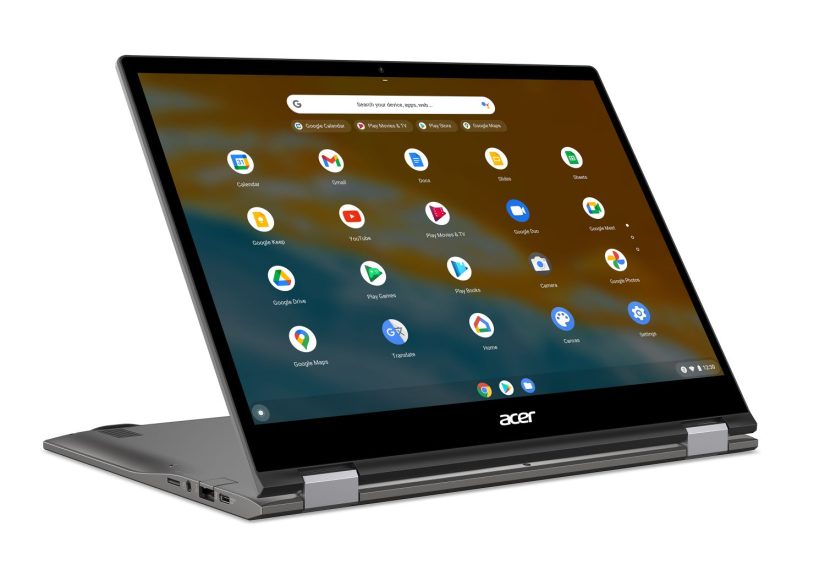
- Convertible design (laptop, tent, stand, tablet modes) for tight spaces and casual viewing.
- MediaTek Kompanio 1380 (octa-core) aimed at smoother multitasking in ChromeOS.
- Battery estimate around 10 hours (manufacturer-rated; real life varies based on brightness, tabs, and your addiction to video calls).
- Starting price around $599.99 at launch.
Who it’s for
The Spin 513 is best for students, remote workers, and “I live in my browser” people who want a nicer screen and convertible flexibility without
paying premium ultrabook prices. The 3:2 aspect ratio is the quiet hero here: it gives you more vertical space for Google Docs, spreadsheets,
and websitesmeaning less scrolling and fewer “where did that paragraph go?” moments.
The trade-offs (because physics and budgets are undefeated)
ChromeOS tends to run well on modest hardware, but it’s still not magic. If your “everyday use” includes heavy creative apps, big local files,
or anything that resembles workstation behavior, you’ll want to be realistic. The Spin 513 is designed to feel premium in daily tasks,
not to replace a high-end creator laptop.
2) Acer Chromebook 315: The Big Screen “Family Command Center” Chromebook
The Chromebook 315 is the “bigger is better” member of the trio. With a 15.6-inch display, it’s built for people who want more room for multitasking,
shared use around the house, or just a more comfortable screen for Zoom calls and streaming.
What stands out
- 15.6-inch Full HD anti-glare display, with touchscreen options depending on configuration.
- Numeric keypada surprisingly big deal for budgeting, homework, data entry, and anyone who speaks fluent Excel.
- Intel Celeron/Pentium options designed for everyday Chromebook performance.
- Video call upgrades, including a wide field-of-view HDR webcam and improved audio/mic support (great for “everyone squeeze in!” family calls).
- Eco-friendly OceanGlass touchpad made from recycled ocean-bound plastic into a glass-like texture.
- Budget pricing around $299.99 at launch.
Why it matters
In a hybrid world, screen size affects everything: side-by-side windows, readable text, and how quickly your eyes get tired.
A larger Chromebook also makes ChromeOS feel more “desktop-like,” which is exactly what many families and home-office setups need.
Add the number pad and this becomes a legit “house laptop” that can handle bills, school portals, and streaming without drama.
3) Acer Chromebook 314: The Smaller, Student-Friendly “Gets It Done” Chromebook
If the 315 is the family TV of Chromebooks, the 314 is the dependable notebook: simpler, smaller, and tailored to schoolwork and remote learning.
It’s the kind of device that thrives on being tossed in a backpack and used all day without needing a tech support hotline.
Key features
- 14-inch Full HD IPS anti-glare display (touch support depending on configuration).
- Up to ~10 hours of battery life (claimed), aimed at covering a full school day.
- Remote-learning friendly setup with dual microphones and webcam tech designed to reduce distracting lighting noise.
- Wi-Fi 6 support for more stable connections in crowded home networks.
- OceanGlass touchpad as part of Acer’s sustainability-minded component choices.
- Price around $299.99 at launch.
Why it’s smart
Chromebooks often win because they’re low friction: quick startup, automatic updates, strong built-in security, and easy access to Google Workspace and
Google Play apps. The 314 leans into that advantage and adds the features that matter most for remote school and lightweight productivity.
It’s not trying to be flashyit’s trying to be reliable, and that’s a genuinely underrated superpower.
4) Aspire Vero National Geographic Edition: Sustainability With a Side of Practical Design
The Aspire Vero National Geographic Edition is the outlier in the best way. While the Chromebooks focus on affordability and simplicity,
this Windows laptop focuses on sustainabilityand does it with more than just marketing vibes.
The sustainability angle (that actually shows up in the product)
- Chassis materials include post-consumer recycled (PCR) plastic, with recycled content also used in key components like keycaps.
- Designed to be easier to upgrade/repair, encouraging longer device lifespans instead of “replace it every time something feels slow.”
- Packaging designed for reuseincluding elements meant to be repurposed rather than trashed immediately.
- National Geographic collaboration, where purchases support related initiatives via the National Geographic Society.
But is it still a real laptop?
Yes. Acer positioned it as a productivity-ready Windows 11 notebook with an Intel Core processor and integrated graphics for everyday work.
It’s not a gaming rig, and it isn’t pretending to be. Think writing, browsing, video calls, office work, and daily productivityplus the confidence
that the laptop’s “eco story” isn’t just a green sticker slapped on the lid.
Availability reality check
This is where the NatGeo edition becomes a little mythical depending on where you live. At announcement, availability was discussed for select regions
(with France and China specifically called out in coverage), and some reporting noted it wasn’t planned for North America at the time.
Translation: if you wanted one in the U.S., you might have needed patienceor a passport, which feels like a dramatic accessory for laptop shopping.
ChromeOS vs. Windows: Why Acer Split the Strategy
Acer didn’t pick ChromeOS because it’s trendy. It picked ChromeOS because it reduces friction. Chromebooks generally boot fast, update quietly,
and keep security tight without expecting the user to become an IT professional. That’s why they’re so common in schools and increasingly common
in homes.
Windows, on the other hand, still wins when you need broad software compatibility, local file workflows, and specific applications that don’t play
nicely in a browser. The Vero NatGeo edition fits that roleespecially for people who want a longer-lived device they can upgrade.
In short: the Chromebooks are “easy mode,” and the Vero is “sustainable Windows mode.” Different missions, same goal: help people get work done without
hating their laptop.
Which One Should You Choose?
Here’s a practical cheat sheetno jargon, no judgment, and absolutely no “it depends” without receipts.
Choose the Chromebook Spin 513 if…
- You want a sharper, taller display for reading and writing.
- You like the idea of tablet/tent modes for travel or tight spaces.
- You’re okay paying more for a nicer Chromebook experience.
Choose the Chromebook 315 if…
- You want the biggest screen for the least money.
- You do numbers (budgeting, homework, data entry) and want a number pad.
- Your laptop doubles as a shared family device and video-call station.
Choose the Chromebook 314 if…
- You want a smaller, backpack-friendly daily driver.
- You’re prioritizing schoolwork, remote learning, and basic productivity.
- You want Chromebook simplicity at a budget price.
Consider the Aspire Vero NatGeo edition if…
- You want Windows compatibility and a more traditional productivity laptop.
- You care about recycled materials, repairability, and extending device lifespan.
- You can actually buy it in your region (availability matterssadly, geography still exists).
Conclusion: Acer’s CES 2022 Play Was Practicaland That’s the Point
Acer’s “four new laptops” reveal at CES 2022 wasn’t about chasing the most extreme spec sheet. It was about meeting people where they were:
living in browsers, juggling school portals, taking calls from messy kitchens, and wanting tech that doesn’t require constant babysitting.
The Chromebook trio gives buyers three clear levels of choicesmall, big, or flexiblewhile the Aspire Vero National Geographic Edition brings a
rare (and welcome) focus on sustainability that goes beyond marketing. In a show famous for shiny concept gadgets, Acer brought something even rarer:
laptops that sound like they were designed by people who have actually used laptops.
Real-World Experiences & What Using These Feels Like (Based on Reviews & Hands-On Coverage)
“Experience” is where these four devices become more than spec lists. For the Chromebooks, reviewers consistently focused on the feel of the screens,
the convenience of the form factors, and whether the performance matched the price. The Chromebook Spin 513, in particular, got attention because it
dared to go off the usual Intel script. Review coverage highlighted how the 3:2 display makes everyday work feel less crampeddocuments show more lines,
websites require less scrolling, and you can run a split-screen setup without feeling like you’re trying to read through a mail slot.
The convertible design shows up as a “small thing that becomes a big thing” in daily use. Tent mode is great for watching videos on a tray table
(or, more realistically, on a crowded desk next to coffee and chaos). Tablet mode is handy for quick reading, signing forms, or letting a kid tap
through an educational app without immediately mashing every key on the keyboard like it owes them money.
On performance, the vibe from reviews was: strong for typical Chromebook tasks, but don’t expect miracles if you push heavy workloads. One detailed
review praised the Kompanio 1380 for daily work and noted the bright 2K 3:2 screen and long battery life, while also calling out limitations like
the single configuration and eMMC storage, plus a webcam that’s fine but not cinematic. In other words: it’s a solid “real life” machine, not a
mobile production studio.
Meanwhile, the Chromebook 315’s lived experience is mostly about comfort. A 15.6-inch screen makes a surprising difference when you’re in a long
meeting or helping someone with homework. Add the numeric keypad and the device feels more like a budget desktop replacementespecially for tasks like
budgeting, spreadsheet work, or anything that involves typing numbers repeatedly without wanting to throw your keyboard into the sun. Coverage also
emphasized the video-call features: a wider field-of-view webcam, dual mics, and audio tuning that helps speech sound clearer. It’s not “broadcast gear,”
but it’s noticeably more considerate than the bare-minimum webcams we all tolerated for years.
The Chromebook 314 is the “quietly helpful” one. The experience is about portability and low hassle: a screen big enough for schoolwork, a battery claim
aimed at getting through a day, and features like dual microphones and webcam improvements meant to make remote learning less painful. It’s the sort of
laptop that doesn’t need to impress your techiest friendit needs to survive daily routines and keep working when the Wi-Fi is crowded and the tab count
is embarrassing.
Finally, the Aspire Vero National Geographic Edition is a different kind of experienceone rooted in design choices you notice over time. The “eco” angle
isn’t only about materials; it’s about encouraging longer ownership through easier upgrades and packaging that’s meant to be repurposed. For buyers who
care about sustainability, that changes the emotional arc of using the laptop: it feels less disposable. And in a world where many people replace laptops
because they feel slow or unfixable, the idea of “keep it, upgrade it, repair it” is a genuinely refreshing experiencealmost rebellious, in a very
polite, National Geographic-yellow kind of way.