Table of Contents >> Show >> Hide
- First, What “Back Pain” Are We Talking About?
- So… Does Acupuncture Work for Back Pain?
- Why Acupuncture Might Help (Without the Fairy Dust)
- What Do Major Guidelines Say?
- Is Acupuncture Safe for Back Pain?
- What a Typical Session Looks Like
- How Many Sessions Until You Know If It’s Helping?
- How to Choose an Acupuncturist (Without Falling for Vibes-Only)
- Acupuncture vs. Dry Needling: Not the Same Thing
- Does Insurance Cover Acupuncture for Back Pain?
- When Acupuncture Makes the Most Sense
- FAQ: Quick Answers People Actually Want
- Bottom Line: Acupuncture for Back PainWorth a Shot?
- Experiences With Acupuncture for Back Pain (What People Commonly Report)
- 1) The first visit feels more like an interview than a procedure
- 2) Sensations are usually mildand sometimes oddly satisfying
- 3) The early wins are often about movement, not total pain disappearance
- 4) A “course” matters more than a single session
- 5) Not everyone respondsand that’s valuable information
- 6) The “after” experience often includes calmer nervous-system vibes
- SEO Tags
Back pain has a special talent: it can show up uninvited, overstay its welcome, and then charge you rent.
If you’ve ever tried to sit down and felt like your spine filed a formal complaint, you’re not alone.
That’s why so many people ask the same question (usually while gingerly standing up): Does acupuncture actually work for back pain?
The honest answer is refreshingly un-mystical: for many peopleespecially with chronic low back painacupuncture can reduce pain and improve function,
but the average benefit is often modest, and results vary. It’s not a magic “reset button,” but it can be a useful toolparticularly when combined
with movement, strengthening, sleep, stress management, and sensible medical care.
First, What “Back Pain” Are We Talking About?
“Back pain” is a big umbrella. Under it are several different situations, and the evidence for acupuncture looks strongest for some of them.
Clinicians often sort back pain like this:
- Acute: lasts days to a few weeks (often improves on its own).
- Subacute: about 4–12 weeks.
- Chronic: lasts longer than 12 weeks.
- Non-specific low back pain: no single clear structural cause (this is very common).
- Radicular pain / sciatica: pain radiating down a leg, sometimes with numbness/tingling/weakness.
Most studies and guidelines focus on non-specific chronic low back painthe “my back hurts and I’m tired of it” category.
If you have severe symptoms (like significant leg weakness or trouble controlling bladder/bowel), that’s not a “try a few needles” situationthat’s a “call a clinician now” situation.
So… Does Acupuncture Work for Back Pain?
For chronic low back pain, a large body of research suggests acupuncture can help:
people often report lower pain and better ability to move and function. Many major U.S. medical organizations include acupuncture
among recommended non-drug optionsespecially when pain has lingered and you want to avoid relying only on medications.
What the evidence tends to show
- Pain relief and function improvement are often better than “usual care alone” (like standard medical management without acupuncture).
- When acupuncture is compared to sham acupuncture (a placebo-like version), the difference sometimes shrinks.
That doesn’t mean “it’s fake”it means back pain research is complicated, and “sham” procedures can still stimulate nerves, expectation, and the body’s pain-modulation systems. - The average effect size is usually small to moderatenot nothing, but not a miracle. Think “noticeable improvement” more than “brand-new spine.”
A notable recent example
A large randomized clinical trial published in JAMA Network Open studied older adults with chronic low back pain and found that a course of acupuncture
improved pain-related disability over time compared with usual medical care. Interestingly, extra “maintenance” sessions did not clearly add more benefit.
Translation: a well-structured initial course may be the main win for many people.
Why Acupuncture Might Help (Without the Fairy Dust)
Acupuncture comes from traditional East Asian medicine, but modern research often explains its effects in more familiar terms:
your body has built-in pain control systems, and acupuncture may nudge them in the right direction.
Possible mechanisms (in plain English)
- Changes in pain signaling: Needling can stimulate nerves and influence how pain signals travel to and are processed by the brain and spinal cord.
- Endorphins and neurotransmitters: The body may release chemicals associated with pain relief and relaxation.
- Muscle and connective tissue effects: Some people experience reduced muscle guarding and improved mobilityespecially when acupuncture is paired with movement-based rehab.
- Stress downshift: Chronic pain and stress feed each other like they’re in a group project. Many people report feeling calmer after sessions, which can indirectly help pain.
One key point: pain relief doesn’t have to be 100% “structural” to be real.
If your nervous system is “turned up,” treatments that reduce sensitivity and help you move more comfortably can still be meaningful.
What Do Major Guidelines Say?
In U.S. practice guidelines, acupuncture is often positioned as a non-drug optionespecially for chronic low back pain.
A common theme is: try conservative care first, stay active, and consider therapies that help you move and function while minimizing medication risks.
Common guideline takeaways
- For acute back pain: many people improve with time, staying active as tolerated, and simple measures. Evidence for acupuncture in acute cases is less consistent.
- For chronic low back pain: acupuncture is frequently included among recommended nonpharmacologic approachesalongside exercise, mindfulness-based strategies, and spinal manipulation, depending on the guideline.
Is Acupuncture Safe for Back Pain?
When performed by a trained, licensed professional using sterile, single-use needles, acupuncture is generally considered safe.
The most common side effects are minorthink temporary soreness, bruising, or a tiny spot of bleeding where a needle went in.
Potential side effects
- Mild soreness, achiness, or a “worked-out” feeling
- Small bruises or a tiny pinprick of bleeding
- Lightheadedness (occasionally, especially if you arrive hungry or dehydrated)
- Fatigue or deep relaxation afterward (some people feel like they just took a very responsible nap)
Serious complications are uncommon, but they’re the reason credentials and hygiene matter.
In the U.S., acupuncture needles are regulated as medical devices and are labeled for single use, which helps reduce infection risk.
Who should be extra cautious?
- People on blood thinners or with bleeding disorders (not a deal-breaker, but discuss first)
- People with immune suppression or higher infection risk
- Pregnant people (some points are avoided; always disclose pregnancy)
- Anyone with a pacemaker if electroacupuncture is proposed (ask for medical clearance)
What a Typical Session Looks Like
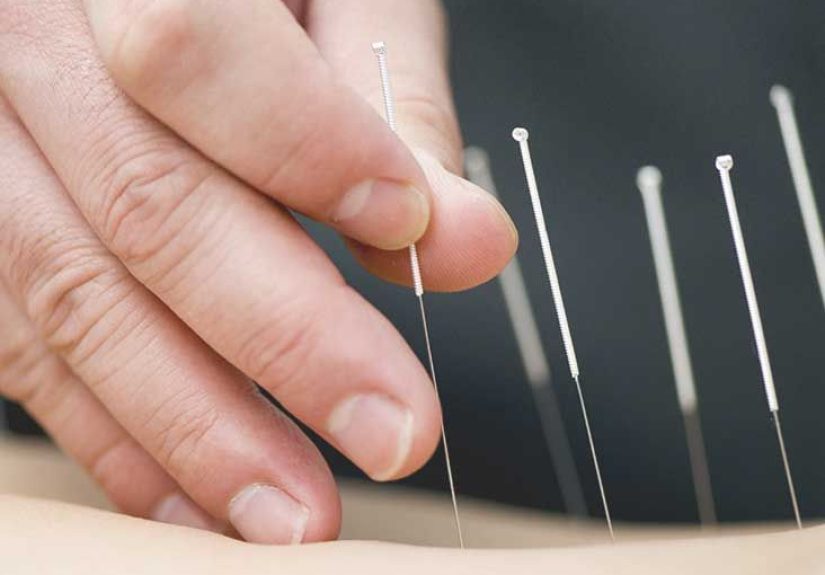
If you’re picturing medieval sewing supplies, relax: acupuncture needles are very thinhair-thin is a common description.
Many people feel little to no pain with insertion, though you might feel a brief pinch or a dull ache/tingle/pressure.
Common steps
- Intake: You’ll discuss your symptoms, triggers, sleep, stress, movement, and goals.
- Needling: Needles are placed at specific pointsoften not only in the back, sometimes in hips, legs, hands, or feet.
- Rest period: You lie still for 15–30 minutes while the needles remain in place.
- Wrap-up: Needles are removed, and you may get advice on hydration, movement, or pacing activity.
Some practitioners use electroacupuncture (a mild electrical stimulation through needles) or heat.
These are not inherently “better,” but they can be part of a structured plan depending on your symptoms and comfort.
How Many Sessions Until You Know If It’s Helping?
There’s no universal number because back pain isn’t one universal problem. Still, many research protocols and clinical plans look like this:
- Trial period: 4–6 sessions to see if you’re responding
- Typical course: 6–12 sessions over several weeks
- Reassess: if there’s no meaningful improvement, it may be time to pivot
A practical rule: if nothing changes after a reasonable trial, don’t keep paying out of hope alone.
Good practitioners want outcomes, not eternal appointments.
How to Choose an Acupuncturist (Without Falling for Vibes-Only)
Look for signals of quality
- Licensure/credentials: Many states require licensing; national certification is also common.
- Clean needle practices: sterile, single-use needles opened in front of you.
- Clear communication: they explain goals, expected timeline, and how progress will be measured.
- Comfort with medical collaboration: they’re willing to coordinate with your clinician or physical therapist.
Questions worth asking
- “How will we measure progresspain, function, sleep, activity?”
- “What’s your plan if I don’t improve after 4–6 sessions?”
- “Do you work with people who have my type of back pain (chronic, sciatica-like, post-injury, etc.)?”
Acupuncture vs. Dry Needling: Not the Same Thing
These get mixed up because both use thin needles, but they come from different traditions and training.
Acupuncture is rooted in traditional East Asian medicine and uses defined point systems.
Dry needling is often used by physical therapists and targets trigger points in muscle.
Both may help some people, but they are not interchangeable, and the evidence base and credentialing differ.
Does Insurance Cover Acupuncture for Back Pain?
Coverage varies by plan and state. A major U.S. headline: Medicare covers acupuncture for chronic low back pain under specific rules,
including a limited number of sessions within a time window, with continued coverage tied to improvement.
Private insurance coverage is more mixedsome plans cover it, some cover only when provided by specific credentialed practitioners,
and some treat it as an out-of-pocket service.
Tip: if you’re paying out of pocket, ask for a clear treatment plan and a reassessment checkpoint.
That keeps the process grounded in results, not guesswork.
When Acupuncture Makes the Most Sense
Acupuncture is often most useful when you’re aiming for a non-drug strategy to reduce symptoms enough to move better and rebuild strength.
It tends to shine as part of a broader plan rather than as a solo act.
Good-fit scenarios
- Chronic low back pain that hasn’t improved with basic self-care
- People who want to limit medication use or can’t tolerate certain meds
- Back pain paired with stress, poor sleep, and muscle tension
- As a “bridge” to help you engage in physical therapy or exercise
Situations that need medical evaluation first
- Fever, unexplained weight loss, history of cancer, or recent serious infection
- Major trauma (fall, car accident) or suspected fracture
- Progressive leg weakness, numbness in the groin area, or bowel/bladder changes
- Severe, unrelenting pain that’s rapidly worsening
FAQ: Quick Answers People Actually Want
Will I feel the needles?
Often minimally. Some people feel a brief pinch, pressure, warmth, tingling, or a dull ache. Many find it relaxing.
Can acupuncture “fix” a herniated disc?
Acupuncture isn’t typically framed as “repairing” discs. It may help manage pain, muscle guarding, and function,
which can still be a big deal while your body heals and you work on strength and movement.
Is it worth trying if I’m skeptical?
Skepticism is fineyour body doesn’t require you to believe in anything to respond to a stimulus.
The most practical approach is a time-limited trial with clear goals (pain, walking tolerance, sleep, work capacity).
Can I combine it with physical therapy or exercise?
Yesand many guidelines emphasize movement and rehabilitation. Acupuncture may help you feel better enough to do the
strengthening and mobility work that tends to improve long-term outcomes.
Bottom Line: Acupuncture for Back PainWorth a Shot?
If your back pain is chronic and non-specific, the research and U.S. guidelines suggest acupuncture can be a reasonable, generally safe option
that may reduce pain and improve functionespecially as part of a bigger plan that includes staying active and building strength.
If your pain is acute, acupuncture might still help some people, but the evidence is less consistent and many acute episodes improve with time and conservative care.
The best way to approach it is the way you’d approach any treatment you’re paying attention to:
set a goal, try it for a defined number of sessions, measure change, and keep what works.
Your back deserves a planideally one that doesn’t involve you whispering “I regret everything” every time you tie your shoes.
Experiences With Acupuncture for Back Pain (What People Commonly Report)
People’s experiences with acupuncture for back pain can be surprisingly consistent in their overall patternwhile still being very individual in the details.
Below are common themes reported in clinical settings and research-style treatment programs, written as composite examples (not a promise of results).
1) The first visit feels more like an interview than a procedure
Many patients are surprised that the first appointment includes lots of questions: where the pain sits, what makes it worse, how sleep is going,
whether stress is high, what movement feels safe, and what a “good day” would look like. The best experiences usually involve
a practitioner who asks about function (“Can you walk the dog?” “Can you sit through class/work?” “Can you lift groceries?”) instead of only pain scores.
2) Sensations are usually mildand sometimes oddly satisfying
A common report is, “I thought it would hurt, but it didn’t.” People often feel a quick pinch or a dull pressure, then a heaviness or warmth.
Some describe it as the body “letting go” for the first time in weeks. Others feel nothing at all and still notice benefits later.
It’s also normal to feel a little sore afterwardlike you did a gentle workout for muscles you forgot existed.
3) The early wins are often about movement, not total pain disappearance
When acupuncture helps, early improvements frequently show up as functional changes:
getting out of a chair with less bracing, walking a little farther, turning in bed without waking up, or sitting longer before needing to stand.
Some people say the pain is still there, but it feels “less sharp” or “less bossy”meaning it stops dominating every decision.
4) A “course” matters more than a single session
Many people hope for instant relief after one visit. Sometimes that happens, but more often the experience is gradual:
modest improvement after a couple sessions, clearer change by session four or six, and then a plateau where it becomes obvious
whether it’s worth continuing. People who report the best outcomes often pair acupuncture with basic rehab:
walking, gentle strengthening, mobility work, pacing, and better sleep routines. In other words, acupuncture can lower the volume
but you still have to retrain the band.
5) Not everyone respondsand that’s valuable information
Some people finish a reasonable trial (for example, 4–6 sessions) and notice little change. The best practitioners treat that as a data point, not a failure:
they recommend a different approach (physical therapy focus, mindfulness-based pain strategies, medication review, imaging only if clinically indicated,
or referral for a more specific diagnosis). Many patients appreciate when a provider says, “This isn’t helping enoughlet’s pivot,”
because it respects both your time and your wallet.
6) The “after” experience often includes calmer nervous-system vibes
A very common report is deep relaxation after treatment. People describe sleeping better the night of a session, feeling less tense in the shoulders and hips,
or having a quieter mind. That may not sound like “back pain treatment,” but for chronic pain, stress and sleep are major players.
Feeling calmer can change how pain is processedand can make it easier to stay active, which is a key ingredient in most long-term back pain strategies.
If you’re considering acupuncture, the most realistic mindset is: it’s a tool, not a miracle.
For many people with chronic low back pain, it’s a helpful toolespecially when it supports the bigger goal of moving more comfortably and living more normally.