Table of Contents >> Show >> Hide
- What You’ll Learn
- Who Is Adam Silverman?
- What Adam Silverman Ceramics Look Like (and Why They’re So Recognizable)
- How the Work Is Made: From Drawing to Wheel to “Gambler’s Art”
- When the Landscape Becomes the Glaze
- Art vs. Design: Heath Ceramics and the Beauty of the Everyday
- Key Projects and Exhibitions That Help Explain His Practice
- Collecting and Caring for Adam Silverman Ceramics
- Experiences Related to Adam Silverman Ceramics (Extended Section)
If you’ve ever looked at a ceramic vessel and thought, “Wow… this pot looks like it survived a volcano, got baptized by the ocean, and then decided to become furniture,” you’re already circling the Adam Silverman universe. His ceramics sit in that delicious overlap of art object and useful thingthe kind of work that can live on a pedestal, but also makes you want to set it on your dining table and introduce it to your favorite lemons.
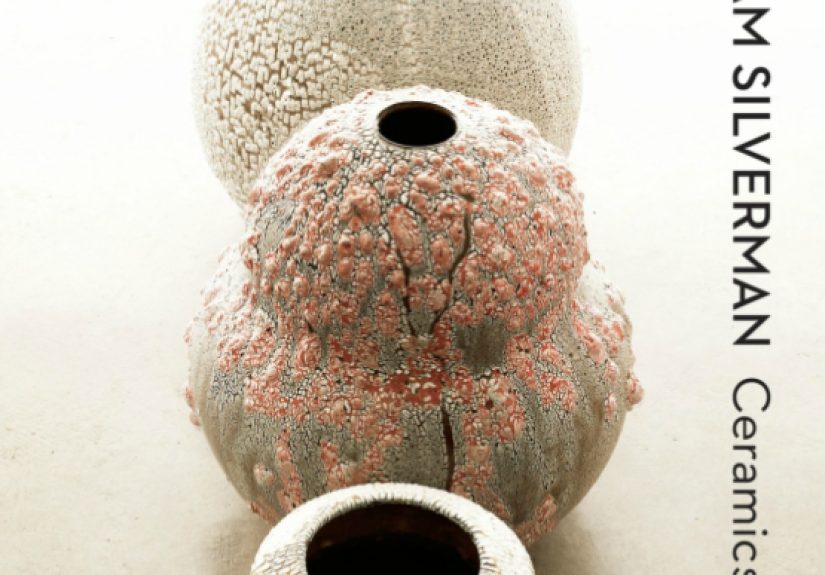
Silverman is widely known for sculptural vessels with richly layered, deeply textured glazessurfaces that feel geological, like landscapes you could hike if you were a particularly ambitious ant. But the real story isn’t just “nice glaze, bro.” It’s how his background (architecture, design culture, and years of making) shows up in the structure, the risk, and the way his work often treats place as an ingredientnot just a backdrop.
Who Is Adam Silverman?
Adam Silverman is a Los Angeles–based ceramic artist recognized for sculptural vessels and experimental glazes. He studied at the Rhode Island School of Design, earning degrees in both Fine Arts and Architecturean education that shows up in his work’s structural confidence and spatial thinking. He’s also known for a career path that doesn’t politely stay in one lane: he helped build a streetwear brand (the kind of cultural move that teaches you a lot about taste, audience, and objects people obsess over) before committing to ceramics full time.
That “multiple lives” background matters, because Silverman’s ceramics don’t behave like pottery that only wants to be pottery. His forms may nod to functional traditionsrims, feet, belliesbut they often feel like they’re also auditioning for sculpture, architecture, and installation. In other words: these aren’t bowls that want to be forgotten in a cupboard. They want a spotlight. Or at minimum, a respectful corner of your living room where they can silently judge your throw pillows.
What Adam Silverman Ceramics Look Like (and Why They’re So Recognizable)
1) Sculptural vessels with “architectural” bodies
Many of Silverman’s pieces begin with familiar pottery logicthrown components, purposeful rims, weighted bases but then get reorganized. Parts shift. Volumes stack. Openings appear where you didn’t expect them. The result is a vessel that feels designed as much as thrown: it holds space like a building holds space.
2) Surfaces that read like landscapes
The signature you hear people rave aboutoften before they even talk about shapeis the surface. His glazes can look cratered, cracked, blistered, stratified, mineral-rich, or weather-worn. Color doesn’t sit politely on top; it sinks into textures, pools in valleys, and breaks over ridges. Many pieces feel less “painted” and more “formed by conditions,” like heat, ash, chemistry, and time did the final styling pass.
3) A tension between control and surprise
Silverman has described ceramics as an art where you control a lotand relinquish a lot. That push-pull is baked into the experience of his work. You can sense intention in proportion and composition, but you can also sense the kiln’s vote. That combination is part of what makes his pieces feel alive: they look like they survived their own making.
How the Work Is Made: From Drawing to Wheel to “Gambler’s Art”
Step one: planning without over-planning
Silverman’s process often involves drawing and thinking structurally before he commits to clay. But the planning isn’t a prison. It’s more like a map with intentionally blurry edgesenough direction to build something strong, enough freedom to let the material take a turn you didn’t predict.
Step two: wheel-thrown foundations, then construction
Many works begin on the wheel. From there, forms may be built up in sections, altered, and reassembled. Working large increases the stakesbigger pieces are more likely to warp, crack, or failso the craft becomes a careful balance of engineering and patience.
Step three: glazing as a separate creative decision
One of the most revealing details about his practice is that shape and glaze aren’t always decided at the same moment. He may make a group of forms and then live with them for a while before choosing how to glaze themwhether to pour, brush, layer, or smear. That “pause” is a design move: it lets the object tell you what it wants to become.
Step four: multiple firings and the risk of loss
To achieve depth and complex surfaces, pieces may go through multiple firings. Not all survive. That risk isn’t incidental; it’s part of the character of the work. The finished pieces often feel totemic not just objects, but evidence of a process where failure is possible and survival is meaningful.
When the Landscape Becomes the Glaze
A big reason “Adam Silverman ceramics” has become such a searched phrase is that his work frequently treats place as material. He’s not only making forms in a studio; he’s building a relationship between clay, geography, and cultural context.
LACMA Seeds and Weeds: Los Angeles as raw material
In the body of work titled LACMA Seeds and Weeds, Silverman focused on the construction site connected to the Los Angeles County Museum of Art (LACMA). Over years of visits, he collected materials from the sitesubstances that could be processed into glaze ingredients or used to influence kiln conditions. The concept is both poetic and literal: the finished vessels carry the physical “memory” of a changing civic landmark.
For that project, the glaze ingredients included combinations of materials such as wood ash (from sources like lumber and debris), concrete, travertine, ceramic tiles, glass, stones, red iron oxide (from rusted metals), soda ash, clay, and even tar. Instead of pretending the city is clean and simple, the work embraces the gritty, layered reality of Los Angelesgeologic, architectural, biological, and industrial all at once.
Common Ground: mixing the country into one material
Another major place-based project, Common Ground, involves gathering foundational materialsclay, water, and wood ash from all 50 states, Washington, DC, and the five inhabited U.S. territories, then combining them into a single new material. The idea is direct: erase arbitrary borders in the clay itself, and create objects that speak to shared groundliterally. The resulting set includes a large group of ceramic objects intended to activate community through meals and collaboration.
Art vs. Design: Heath Ceramics and the Beauty of the Everyday
Silverman’s reputation also comes from how comfortably he moves between the gallery world and the world of functional objects. He served as studio director for Heath Ceramics’ Los Angeles studio for several years, helping shape work that lives in showrooms and homesobjects meant to be handled, used, and loved. That experience matters because it sharpens a rare skill: making work that can be conceptually ambitious without losing its physical appeal.
It also explains why his pieces can feel so approachable, even when they’re obviously “art.” There’s a sense that the object understands the human bodyhow hands hold, how eyes read proportion, how a table becomes a stage. And when he pushes into riskier glaze territoryaggressive crackle, heavy texture, bubbling chemistry it isn’t random. It’s engineered experimentation, the kind that comes from doing hundreds of tests and keeping the ones that feel inevitable.
Key Projects and Exhibitions That Help Explain His Practice
“New Pots and Sculptures” and the art/design blur
In exhibitions of new vessels and sculptures, Silverman’s work has often been presented in ways that highlight how objects occupy spacesometimes on specially designed platforms or within environments that feel architectural. The display becomes part of the meaning: the work isn’t just “a pot,” it’s a conversation between object, viewer, and room.
Boolean Valley: collaboration with architecture and computation
Boolean Valley (with architect Nader Tehrani) is an installation built from hundreds of cut clay objects arranged as a topographic field. It’s a clear example of Silverman’s cross-disciplinary instincts: ceramics behaving like landscape, architecture behaving like logic, and the gallery becoming a site you experience with your whole body.
“Occupation” and the vessel as figure
In the exhibition Occupation, Silverman’s vessels were discussed as “figures,” with installations that emphasized contrast (dark/light) and choreographyobjects positioned like performers or a troupe. Here, pottery doesn’t quietly sit; it asserts presence, claims territory, and turns the negative space between forms into a major character.
Clay and Space: when vessels become installations
Museum presentations of Silverman’s work have highlighted how he collapses the categories of vessel and structure. In these contexts, you see that the “container” idea can be philosophical: a vessel contains air, a room contains people, and an installation contains your attention.
Collecting and Caring for Adam Silverman Ceramics
How people typically collect the work
Collectors often come to Silverman through design (the love of objects), then stay for the conceptual depth. Some people collect a single piece as a focal pointlike functional sculpturewhile others build a small ecosystem: a larger vessel plus a smaller companion work, so the surfaces “talk” across a shelf or console.
Display tips that respect the work (and your furniture)
- Give it breathing room: These pieces reward negative space. Crowding them kills the drama.
- Use stable surfaces: Place heavier works on sturdy furniture, away from edges and wobbly stands.
- Light matters: Raking light (from the side) brings out texture and glaze depth.
Care tips for sculptural, textured pottery
Always follow any care guidance provided at purchase, but as a general rule: avoid harsh chemicals, abrasive scrubbing, and extreme temperature swings. Dust textured surfaces gently (a soft brush can be your best friend). If a piece is functional, treat it with the kind of respect you’d give a handmade leather bag: usable, yesindestructible, no.
Experiences Related to Adam Silverman Ceramics (Extended Section)
Seeing Adam Silverman ceramics in person is a different experience than scrolling past a perfect square photo online. On a screen, you get the headline: bold form, wild surface, great lighting. In real life, you get the subplot: the glaze behaves like terrain. It has high points and low points. It changes when you move your body. Step left and a patch looks matte and ash-soft; step right and it flashes like mineral. That’s when people stop saying, “Nice vase,” and start saying things like, “Is it… allowed to look this alive?”
In a gallery setting, the first sensation is often scale. Some pieces read as “vessel” at ten feet away, but shift toward “sculpture” as you approach. A rim becomes a deliberate edge, like a parapet. A foot feels engineered, like it’s distributing weight the way a building distributes load. And the surfacealways the surfacepulls you into an almost ridiculous level of looking. You might catch yourself inspecting a crackle pattern the way you’d inspect a countertop slab at a fancy showroom, except now the “stone” is glaze and the drama is intentional.
There’s also the experience of learning the backstory and realizing the work isn’t only about beauty. When you hear about pieces connected to specific placesmaterials gathered, processed, burned into ash, ground down, and remixedyou start reading the object differently. It becomes a record of a site and a timeframe, not just a shape. Suddenly, the roughness isn’t “rustic.” It’s evidence. It’s the ceramic equivalent of a documentary… except you can put flowers in it. (Or, if you’re feeling rebellious, nothing at allbecause the empty space is part of the composition.)
Living with a piece has its own rhythm. A lot of owners describe a slow-burn relationship: the work grows on you because it keeps showing you something new. Morning light hits one side and makes the glaze look smoky and subtle. Evening light catches a ridge and the color pops like it just woke up. Even cleaning becomes a weirdly satisfying ritual not “chore energy,” more like “carefully dusting a small planet.” And yes, you will eventually pick it up and turn it, the way you’d turn a rock you found on a beach. The piece practically asks for that kind of attention.
Then there’s the dinner-party moment. If you place a Silverman vessel in a room where people gather, it becomes a conversation engine. Someone will ask if it’s ancient. Someone will ask if it’s safe to touch. Someone will lean in and say, “How did they do that?” And the best part is: there isn’t a single answer. The “how” is chemistry, firing, testing, and risksometimes multiple firings, sometimes hard choices, sometimes losses along the way. That complexity gives the object a presence that feels earned, not manufactured.
The most memorable “experience,” though, is recognizing how the work balances opposites without looking confused: refined and raw, planned and unpredictable, functional and sculptural, personal and civic. That’s why people collect it, photograph it, and keep returning to it. The pieces don’t just decorate a space. They change the temperature of the room like adding a living element made of clay, fire, and a little bit of fearless experimentation.