Table of Contents >> Show >> Hide
Barcelona has no shortage of design shrines: Gaudí’s tiled fantasies, modernist façades, sun-bleached terraces. But if you’re the kind of traveler who packs more design books than shoes, the Santa & Cole showroom should be at the very top of your “Best of Barcelona” list. This quiet, gallery-like space is where the city’s most thoughtful lighting and furniture brand lets you get up close to pieces you’ve probably seen all over Pinterest and Remodelistajust without the screen glare.
Here, light is treated like a material, chairs are basically architecture you can sit on, and the atmosphere is more “intimate design library” than “retail store.” It’s the kind of place where you suddenly understand why people get emotional over a floor lamp.
Meet Santa & Cole: Barcelona’s Quiet Design Powerhouse
Santa & Cole is not your typical design brand. Founded in Barcelona in 1985 by Nina Masó, Javier Nieto Santa, and Gabriel Ordeig Cole, it calls itself an “editor” of lighting, furniture, art, and books. Instead of producing massive seasonal collections, the company selectively “edits” designs it believes deserve a long life, then works with skilled manufacturersmainly in Spainto bring them into everyday homes and public spaces.
Think of Santa & Cole as that friend who has impeccable taste and ruthless standards. If an object feels trend-driven or gimmicky, it doesn’t make the cut. The catalog ranges from midcentury icons to contemporary pieces, but the throughline is clear: warm materials, human scale, and lighting that flatters people rather than calling attention to itself.
The company is headquartered in Parc de Belloch, a 500-acre estate about 20 miles north of Barcelona, where the team develops products, curates art and book editions, and tests how their lighting behaves in real spaces and landscapes. From that very grounded, very Catalan base, they now distribute to more than 80–85 countries, quietly exporting Barcelona’s design DNA around the world.
A “Design Editor” with a Cultural Mission
Santa & Cole’s editor mindset shows up everywhere: in how they credit authorship, in their emphasis on royalties and intellectual property, and in their belief that design, art, and books belong in the same conversation. The brand frequently describes its work as “material culture”objects that shape how we live, think, and relate to each other, not just decor that fills a room.
This is why their pieces age so gracefully. Lamps and chairs are treated as companions for decades, not disposable accessories. When you walk into the Barcelona showroom, that long-view philosophy is everywherefrom the way items are spaced out so each can be appreciated, to the quiet presence of art and books alongside the lighting.
Inside the Santa & Cole Showroom in Barcelona
The Barcelona showroom (Galería Santa & Cole) is tucked into Carrer del Rosselló, 256, sharing a dynamic space with rug brand nanimarquina. The concept is simple: a hybrid gallery-shop where you can stroll, sit, and linger among lighting, furniture, art, and textiles, rather than speed-shopping under harsh overhead LEDs.
Expect whitewashed architecture with gentle curves, exposed beams, and pockets of natural light. The floors are typically concrete or stone, grounding the space, while rugs, wood furniture, and warm-toned lamps soften every edge. It feels like stepping into the living room of a very calm, very cultured friendone who just happens to own a museum-worthy design collection.
Light as Architecture
Santa & Cole treats light as a building material. Rather than spotlighting products with showy theatrics, the lamps themselves do most of the work: pools of soft light along a long communal table, vertical columns of glow in tucked-away corners, table lamps quietly punctuating low shelves of books and artwork.
The result is an atmosphere that’s simultaneously functional and meditative. You don’t just see the fixturesyou feel what they do to your body and mood. This is especially true of Santa & Cole’s signature pieces, whose warm bulbs and diffused shades were conceived long before “warm minimalism” became an Instagram hashtag.
Furniture, Art, and Books in One Room
One of the most delightful surprises of the showroom is that it’s not limited to lamps. Santa & Cole’s furniturelow, rationalist chairs, quietly confident benches, and slender side tablesshares space with art reproductions (their “Neoseries”) and a tight selection of design books.
You might spot a low lounge chair parked next to a sculptural floor lamp, with a row of vibrant paintings floating above on a slim shelf. Nothing feels over-styled. Pieces seem to be mid-conversation, as if someone just stepped out to grab a coffee and will be back to keep reading under that perfect pool of light.
Iconic Pieces to Look For
If you’re already a design fan, visiting the showroom feels like meeting celebrities in real life. If you’re just starting to explore Spanish design, it’s a crash course in the greatest hits of warm, human-scaled modernism.
The Cesta Lamp: A Portable Mediterranean Moon
The Cesta table lamp, designed by Miguel Milá, is arguably Santa & Cole’s poster child. Its cherrywood frame wraps around a glowing opal glass globe like a basket (which is exactly what “cesta” means in Spanish). Inspired by traditional lanterns found in Mediterranean coastal homes and terraces, it’s both robust and delicate, like carrying a small moon around by its handle.
You’ll usually see Cesta and its smaller sibling, Cestita, perched on tables or even resting directly on the floor, casting a warm, convivial light. In person, the quality of the wood, the weight of the glass, and the softness of the glow make it obvious why this 1960s design still feels absolutely contemporary.
The TMM Floor Lamp: Serenity on a Stick
Another must-see is the TMM floor lamp, also by Miguel Milá. From a distance, it looks impossibly simple: a slender wooden mast, a weightless drum shade, and a cross-shaped base. Get closer and you notice the little bits of geniusthe way the square shaft shifts to a circular profile halfway up, and how the shade is raised or lowered with a simple ring, like hoisting a sail on a mast.
There’s no fussy switch at eye level; the lamp turns on and off with a subtle pull on the cord. Designed in 1961 and re-issued by Santa & Cole in the 1980s, TMM is now considered a Spanish design classic, the kind of piece that quietly upgrades an entire room without shouting for attention.
The Barceloneta Chair and Other Seating
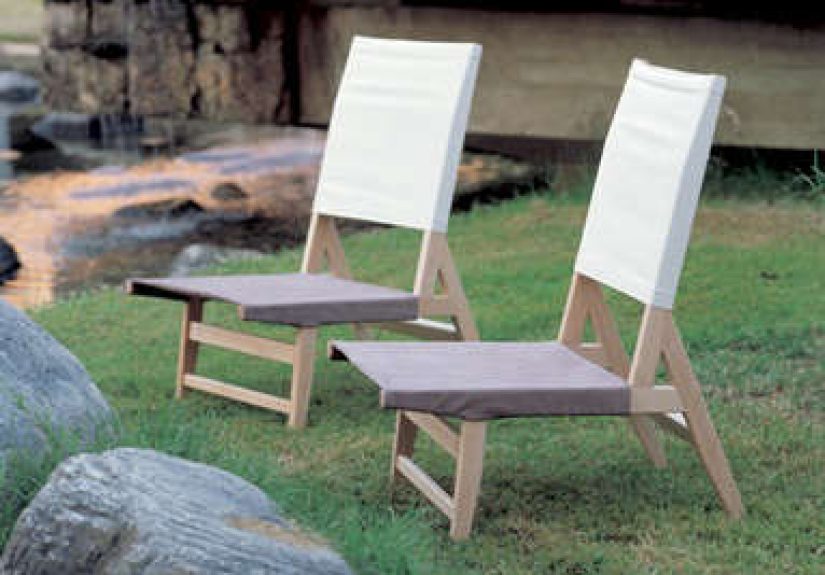
Keep an eye out for low, armless lounge pieces that seem made for lingering conversations and late-night reading. One standout is Barceloneta, a chair designed in the 1950s by Alfonso Milá and Federico Correa. It sits close to the ground, with a relaxed sling profile that captures the easygoing spirit of Mediterranean Rationalisma movement that balanced clean lines with human comfort.
In the showroom, these chairs are often paired with compact tables and Santa & Cole floor lamps, creating micro-living rooms that feel both modern and timelessperfect for stealing ideas for your own home.
Benches, Rockers, and Subtle Showstoppers
Remodelista’s coverage of Santa & Cole has highlighted pieces like the Banco Taka bench and a humble, canvas-covered rocking chair inspired by anonymous rural craftsmen. Both embody the brand’s sweet spot: solid wood, unfussy silhouettes, and proportions that feel surprisingly generous in person.
Even when a design is decades old, Santa & Cole’s editing ensures it doesn’t read as nostalgic. These pieces still feel made for everyday lifesling a bag over the bench, throw a jacket over the rocker, curl up with a laptop under a warm pool of light, and nothing feels too precious.
Why Remodelista (and Design Fans) Love This Spot
Remodelista’s “Best of Barcelona” pick for the Santa & Cole showroom isn’t about hype. It’s about consistency. While other design destinations lean heavily into spectacle, this space is about restraint and clarity. Every object earns its place.
For Remodelista readers, who tend to gravitate toward warm minimalism, long-lasting materials, and subtle craftsmanship, Santa & Cole feels like a physical expression of everything they bookmark: linen-soft lighting, edited color palettes, and vintage-friendly silhouettes that play nicely with old floors and new technology alike.
And then there’s the city context. Barcelona’s creative scene has been expanding beyond the obvious tourist circuits for years, with districts like Poblenou and other former industrial zones filling up with galleries, studios, and co-working spaces. Santa & Cole’s gallery fits into this broader story: design woven into the daily life of the city instead of locked away in a museum.
Planning Your Visit
The Galería Santa & Cole in Barcelona is located at Carrer del Rosselló, 256within the Eixample grid and easy to fold into a day of design wandering. The gallery typically opens Tuesday to Friday with morning and late-afternoon hours, plus shorter hours on Saturdays, though it’s always smart to double-check the current schedule on Santa & Cole’s official site before you go.
Because this is a gallery rather than a traditional shop, don’t be shy about lingering. Sit in the chairs, walk around the lamps, and look at how the light hits the artwork. If you’re working on a project, staff can help you think through finishes, scale, and how specific pieces might behave in your space.
Budget-wise, many pieces are investment items rather than impulse buys. But even if you’re not planning to ship a TMM lamp home, the visit is still incredibly worthwhile. Consider it a free design masterclass, with the added bonus that you can bring the ideasif not the exact chairback to your own living room.
A Design Lover’s Field Notes: Experiencing Santa & Cole in Barcelona
Visiting the Santa & Cole showroom isn’t like ticking off another tourist attraction; it feels more like sneaking into a private studio visit. The street outside is pure everyday Barcelonaneighbors, scooters, someone walking a dog. Then you step inside, and the sound drops a notch. The air smells faintly of wood, books, and fresh coffee from somewhere nearby. Light, not noise, does most of the talking.
Start by giving yourself permission to slow way down. This is not IKEA. Walk the space once without trying to “figure it out.” Notice how the lighting changes from one corner to another: a long communal table washed in gentle, low-contrast light; a vertical tube lamp drawing your eye upward; a small, portable lamp glowing on a low shelf like a candle that never drips. Even if you don’t know the model names yet, your body will tell you which pieces feel calm, which feel energizing, and which feel like they should live next to your sofa immediately.
If you’re a design professional, bring a notebook or open a notes app. Pay attention to the proportions: how high the lamps sit relative to seating, how far they are from walls, how much empty space Santa & Cole leaves around each grouping. These are all cues you can steal for your own projects. Notice, too, how often the brand chooses warm, diffuse light over bright, directional beams. It’s a great reminder that atmosphere usually beats sheer lumen output.
Casual design fan? Turn the visit into a mini treasure hunt. See if you can spot the Cesta and Cestita lamps in different contextsa reading nook, a low table, maybe even on the floor near a stack of books. Look for the subtle differences between floor lamps with masts, ones that arc, and those that stand tall and straight. Check how the same lamp behaves next to art versus next to a window. Suddenly, you’re not just “liking” a product photoyou’re reading light like a language.
Don’t forget to interact with the furniture. Sit in a low chair and notice how it changes your posture. Lean back and look around the room from that angle; the lamps will frame your view in new ways. Rest your hands on a table edge and feel the finish and thicknessit’s surprisingly educational if you’re thinking about upgrading your own dining or work surface at home.
If you’re traveling with someone who doesn’t care about design (yet), Santa & Cole is still an easy sell. The space is comfortable, non-intimidating, and mercifully free of hard-selling. They can hang out on a sofa, snap photos, or quietly judge how many lamps you’re adding to your mental wish list. If you need a break, you’re in a neighborhood with plenty of cafés and bakeries, so you can step out, caffeinate, and come back with fresh eyes.
The best part? You’ll leave with more than just pictures. You start to realize how powerful good lighting is in real lifehow it softens faces, calms a room, and makes even a simple wooden chair feel like an invitation to stay. Back home, you might not own a Cesta lamp (yet), but you’ll almost certainly rethink how you use light in your own space. That’s the quiet genius of Santa & Cole: you walk in to browse, and you walk out seeing your home a little differently.