Table of Contents >> Show >> Hide
- Quick Guide
- So… Is It Actually Real?
- Why Japan? The Culture That Makes It Make Sense
- Kimono 101: The Clothing Behind the Cute
- Cats in Kimono: From Art History to Merch
- How to Dress a Cat Safely (Without Becoming Their Villain)
- If You’re Buying a Cat Kimono, Here’s What Matters
- So Why Do People Love This So Much?
- Experiences: What “Cats in Kimonos” Feels Like in Japan (A 500-Word Add-On)
If you’ve ever scrolled past a photo of a perfectly unimpressed cat wearing a tiny kimono and thought,
“No way that’s real”welcome to the wonderful truth: cats in kimonos are, in fact, a thing in Japan.
Sometimes it’s a pet outfit for a special occasion. Sometimes it’s a lucky-cat figurine dressed in traditional style.
Sometimes it’s centuries-old art where cats act like people (and frankly, look like they’re doing a better job at it).
This isn’t just “internet cute.” It’s a playful collision of Japanese cat culture, traditional clothing like
kimono and yukata, and modern pet fashionplus a healthy dose of kawaii humor and good-luck symbolism.
Let’s unpack why the look exists, where it comes from, how people do it safely, and what it feels like to encounter “kimono cats”
out in the world (and online).
So… Is It Actually Real?
Yesthough “cats in kimonos” is less of a single official tradition and more of a very Japan-flavored overlap:
traditional dress aesthetics + cats as cultural icons + pet fashion + photo culture.
You’ll see it in a few forms:
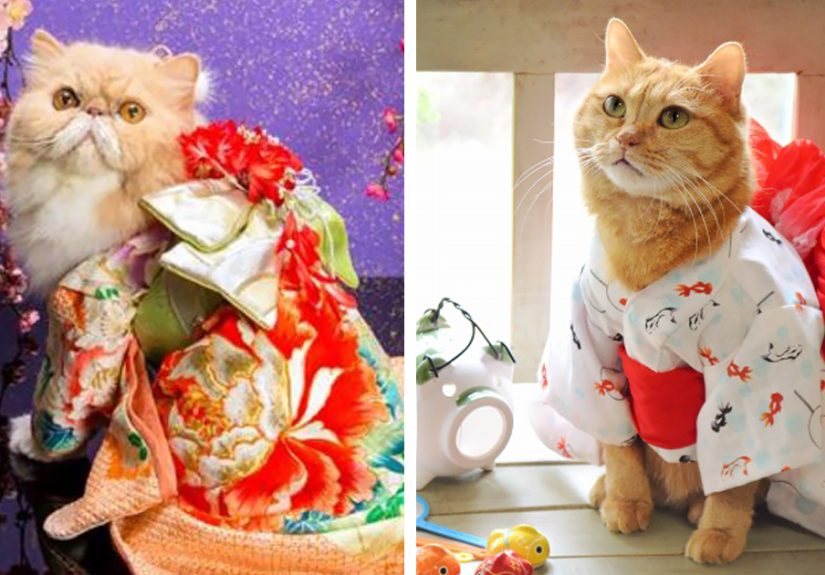
1) Pet outfits inspired by kimono and yukata
Pet clothing in Japan ranges from practical (warmth, rain protection) to celebratory (New Year’s photos, festivals, family milestones).
Kimono-style outfits for pets typically borrow the silhouette, patterns, and “obi-like” sash detail, but are simplifiedbecause the goal
is “tiny formalwear energy,” not a full traditional dressing ceremony.
2) Lucky cats and cat-themed décor “dressed” in Japanese style
The famous maneki-neko (“beckoning cat” figurine) is everywhere in Japanshops, restaurants, homesoften styled with bibs,
collars, bells, or decorative elements that echo traditional motifs. Some versions lean into kimono imagery more explicitly, especially in
souvenirs and themed displays.
3) Cats-as-people in Japanese art
This is the secret sauce. Japan has a long tradition of depicting animalsespecially catsin humorous, human-like roles. In Edo-period
prints, cats may appear doing people things: gossiping, shopping, playing, performing… and yes, wearing clothing that reads as traditional
Japanese dress. It’s not “cats were literally dressed like this in the 1800s.” It’s that the visual joke has deep roots.
Put those three together, add modern cameras and social media, and you get today’s vibe:
a cat in a kimono-style outfit is both cute and culturally legible in Japanlike a wink that says,
“Yes, this is silly. That’s the point.”
Why Japan? The Culture That Makes It Make Sense
Japan doesn’t just “like cats.” Japan has built entire subcultures, destinations, and aesthetics around themranging from folklore and
good-luck symbolism to modern tourism and themed spaces. That’s why “cats in kimonos” doesn’t feel random there; it feels like the logical
next step in a very cat-friendly cultural ecosystem.
Cats as symbols: luck, charm, and a little mystery
The maneki-neko is the headline act: a beckoning cat associated with good fortune and prosperity. Its long-running popularity
makes cats feel like more than petsthey’re also icons. When a culture already treats cats as symbols, dressing them in symbolic clothing
(even playfully) lands differently than it might elsewhere.
Cats as destinations: cafés, shrines, and “cat islands”
Japan’s urban lifestyle and housing constraints helped popularize cat cafés as a way to spend time with cats without owning one.
Meanwhile, cat-themed temples and shrines, plus islands known for large cat populations, made “cat appreciation” something you can do as an outing,
not just a personality trait.
Pets as family: the emotional logic of pet fashion
Pet spending in Japan has been shaped by demographic and lifestyle changes for decades, with owners often treating animals as close companions.
When pets are family, dressing them for a celebration isn’t strangeit’s the same impulse as matching holiday pajamas, just with more fur
and dramatically more judgment in the eyes.
Kimono 101: The Clothing Behind the Cute
Before we slap a tiny obi on a cat (metaphoricallyplease don’t startle your cat with surprise fabric), it helps to understand the basics.
“Kimono” is often used as a catch-all in English, but Japanese clothing has categories, seasonality, and context.
Kimono: not just a garment, but a cultural language
Historically, kimono evolved over centuries. It was once everyday wear, then gradually shifted toward formal and special-occasion use.
Patterns, colors, fabrics, and accessories can signal season, occasion, and formality.
In other words, kimono is fashionbut it’s also communication.
Yukata: the summer-friendly cousin people actually wear casually
A yukata is a lighter, typically cotton garment associated with warm weather, summer festivals, and relaxed settings.
If you’ve seen photos of people in Japan strolling at night festivals in colorful traditional outfits, there’s a strong chance they’re wearing yukata.
Most “cat kimono” outfits in the modern pet sense resemble simplified yukata or kimono-inspired wraps:
they borrow the look (the fold, the sash, the patterns) while ditching the complexity (because your cat did not sign up for a 12-step dressing ritual).
Cats in Kimono: From Art History to Merch
The internet wants you to believe “cat in kimono” started as a meme. The internet is wrongpolitely, but firmly.
The deeper story is that cats have been a recurring subject in Japanese visual culture, and artists have long enjoyed giving cats human behavior.
Edo-period prints: cats acting like people
In ukiyo-e, cats appear in playful, satirical scenessometimes mimicking human social life. This is where the “cats wearing clothes” feeling
has historical resonance. Exhibitions focused on cats in Japanese prints have highlighted themes like “Cats as People,” showing that the joke
(and affection) has been around for a long time.
Modern museums and exhibitions keep the thread alive
In the U.S., major institutions have explored kimono’s evolution and cultural reach, and separate shows have spotlighted cats in Japanese art.
Put those together and you can see why today’s kimono-cat photos don’t feel totally out of the blue:
Japan has centuries of visual tradition mixing cats, style, and storytelling.
Souvenirs, shops, and the “this would be adorable on a cat” economy
Japan is also exceptionally good at turning cultural motifs into charming objectswithout losing the sense of craft.
Lucky-cat figurines, cat-themed stationery, cat-patterned textiles, and festival goods often borrow traditional patterns
(waves, florals, seasonal motifs) that naturally pair with kimono imagery.
The result: a spectrum.
On one end, you have art and symbolismcats as cultural icons. On the other, you have modern pet fashioncats as beloved companions.
In the middle is where the kimono-cat lives: a small outfit with big “Japan” energy.
How to Dress a Cat Safely (Without Becoming Their Villain)
Here’s the deal: the cutest cat kimono in the world becomes instantly uncute if the cat is stressed, restricted, or overheating.
A safe approach isn’t just kinderit also makes better photos, because relaxed cats look like regal little weirdos instead of tiny hostages.
Know your cat’s personality first
- Some cats tolerate clothing. Many do not.
- Never force it. If your cat freezes, hides, flattens ears, or tries to escape, that’s your answer.
- Start small. A soft bandana-style accessory is often better than a full outfit.
Fit and function matter more than aesthetics
Animal welfare groups consistently recommend keeping costumes minimal and ensuring they don’t restrict movement, breathing, vision, or communication.
Avoid dangling parts that can be chewed off, and never leave a costumed pet unattended.
Keep sessions short and calm
If you’re doing a kimono-cat moment for a holiday photo, think: two minutes, not “a whole afternoon of content.”
Prep your camera first, set the cat on a stable surface, take a few quick shots, then reward and remove the outfit.
Your cat should walk away thinking, “That was weird… but snacks happened.”
Watch for stress signals
Stress can look subtle: crouching, tucked tail, whale-eye (wide eyes showing whites), ears pinned back, rapid grooming, or frantic pulling at the outfit.
If you see it, stop. The goal is cute, not chaos.
If You’re Buying a Cat Kimono, Here’s What Matters
Whether you’re shopping in Japan or ordering from abroad, treat a “cat kimono costume” like functional gear, not just a costume.
The best ones are simple, soft, and designed for quick on/off.
Look for these features
- Breathable fabric: lightweight cotton or a soft blend.
- Safe closures: Velcro that won’t snag fur, or ties that don’t create choking risk.
- Freedom of movement: no tight sleeves, no compression across the chest.
- No small parts: avoid tiny dangling ornaments, bells, or beads your cat can chew.
Get sizing right (cats are not “small dogs,” emotionally or anatomically)
Cats vary wildly in body shape. Measure chest girth and neck, and choose a size that allows normal walking, sitting, and grooming.
If the outfit shifts into the armpit area or limits shoulder movement, it’s a no.
Consider the “kimono-inspired” alternative
If your cat is a hard no on clothing, you can still get the vibe:
a kimono-print blanket behind them, a cat-safe bow tie with a traditional pattern, or a photo next to a maneki-neko.
Same aesthetic. Zero cat resentment.
So Why Do People Love This So Much?
Because it hits the trifecta:
visual comedy (a cat dressed like a tiny dignitary),
cultural texture (kimono and yukata motifs people recognize),
and cat energy (the face that says, “I didn’t agree to this, but I will look fabulous anyway”).
And in Japan specifically, it fits into a broader tradition: cats as good-luck icons, cats as characters in art, cats as social companions in cafés,
and cats as photogenic little celebrities. The kimono simply gives that cat celebrity a wardrobe upgrade.
The best version of the trend is also the kindest: light, brief, respectful, and optional for the cat.
When you treat your cat like a collaborator instead of a prop, the result is what everyone actually wants:
a moment that’s funny, charming, and unmistakably “Japan-coded.”
Experiences: What “Cats in Kimonos” Feels Like in Japan (A 500-Word Add-On)
If you’re imagining Japan as a place where kimono cats roam the streets like tiny furry aristocratsbad news:
they do not. (Cats have unions. The paperwork would be brutal.) But the experience of “cats in kimonos are a thing in Japan”
shows up in a surprisingly real, surprisingly memorable way once you know what to look for.
The first time you notice it, it’s usually not a real cat
You’re walking through a shopping street near a station, or wandering the outer edges of a temple area, and there it is:
a beckoning cat figurine by the door, paw up, looking like it’s trying to recruit you into buying noodles.
Some of these lucky cats are plain; others are dressed up with fabrics, bibs, or seasonal decorations that feel adjacent to traditional dress.
That’s the “aha” moment: cats here aren’t only pets. They’re symbols. They belong to the landscape.
Then you see the patternsliterally
Cat motifs show up in textiles and prints: little repeating cats on pouches, cat illustrations on cloth, cats posing like people in artwork.
If you browse museum gift shops or well-curated souvenir stores, you’ll find designs inspired by historic Japanese aestheticswaves, florals,
seasonal colorsoften paired with cats doing something delightfully human. The overall effect is: “This is traditional… and it’s also hilarious.”
That’s the exact emotional lane a kimono-cat photo lives in.
Cat cafés, shrines, and photo culture give it a modern stage
In big cities, cat cafés are a familiar concept: a calm interior, rules about how to interact, and cats that (depending on personality)
either charm you or ignore you with professional-level skill. In cat-themed spacescafés, shrine areas, or cat-friendly tourist spotsyou
notice how carefully the aesthetic is curated. People take photos of cats the way they take photos of food: lovingly, respectfully,
and with the understanding that the subject may not cooperate.
Where the “kimono cat” appears in real life: special-occasion pets
If you’re traveling with friends who live in Japan, or you happen to meet pet owners through a home-stay, you may see it as a special-occasion thing:
a quick outfit for a New Year’s card photo, a family celebration, or a seasonal post. The experience isn’t “the cat wears this all day.”
It’s more like a tiny, carefully planned photoshoot: outfit on, a few quick shots, outfit off, treat provided, cat returns to being a creature of pure opinion.
The vibe is playful, not performativewhen it’s done right
The most common “good” experience people describe is how brief and gentle it is: the outfit is light, the cat isn’t forced to move unnaturally,
and the whole situation feels like affectionate comedy rather than control. The cat’s expression is the punchline.
And afterward, the cat goes back to what cats do best: being the main character without trying.
So yes, cats in kimonos are a thing in Japannot because Japan is a theme park, but because cats and traditional aesthetics already have deep
cultural roots there. Once you see those roots, the tiny kimono doesn’t feel random. It feels inevitable.