Table of Contents >> Show >> Hide
- Atopic dermatitis vs. allergic contact dermatitis: what’s the difference?
- Are children with eczema really at higher risk for allergic contact dermatitis?
- Why eczema increases the risk: skin science in everyday language
- Common allergens that trigger allergic contact dermatitis in children
- How to tell an eczema flare from allergic contact dermatitis
- Patch testing: the detective work for allergic contact dermatitis
- Everyday strategies to lower the risk of allergic contact dermatitis
- Real-world experiences: what it’s like when eczema and contact allergy collide
- The bottom line
If you’re parenting a child with eczema, you already know the drill: moisturizers everywhere, laundry labels scrutinized like legal contracts, and a bedtime routine that involves more creams than a spa. Just when you think you’ve got atopic dermatitis under control, another term shows up: allergic contact dermatitis.
Here’s the twist many parents don’t realize: children with eczema (atopic dermatitis) may be at higher risk for developing allergic contact dermatitis. That means some of the very things you use to soothe their skin lotions, wipes, clothing dyes, or topical medications can sometimes become part of the problem instead of the solution.
In this in-depth guide, we’ll break down what this increased risk really means, how to spot allergic contact dermatitis in kids who already have eczema, which everyday products can trigger it, and what you can do to protect your child’s skin barrier without losing your mind (or your entire weekend) to reading ingredient lists.
Atopic dermatitis vs. allergic contact dermatitis: what’s the difference?
Atopic dermatitis in children: the “base layer” skin condition
When we talk about childhood eczema, we’re usually talking about atopic dermatitis (AD). It’s a chronic, itchy, inflammatory skin condition that often starts before age 5 and affects an estimated 20–25% of children.
Atopic dermatitis is driven by a combination of:
- Skin barrier problems – The outer layer of the skin doesn’t hold moisture and lipids as well, making it “leaky” and more vulnerable to irritants and allergens.
- Immune system overactivity – The immune system reacts strongly to minor triggers, causing inflammation and intense itching.
- Genetics and environment – Variants in skin-structure genes (like filaggrin), family history of allergies, climate, and lifestyle all play a role.
The result? Dry, itchy, often red patches that tend to flare and calm down in cycles. In young children, eczema often appears on the cheeks, scalp, and extensor surfaces, then shifts to the creases of elbows and knees as they grow.
Allergic contact dermatitis: a second skin problem on top
Allergic contact dermatitis (ACD) is different. Instead of being driven by internal immune tendencies alone, it is a delayed allergic reaction to substances that touch the skin things like metals, fragrances, preservatives, or topical antibiotics.
Here’s how it works:
- An allergen (for example, nickel in jewelry or a fragrance in lotion) penetrates the skin.
- The immune system learns to recognize it as a threat.
- On future exposures, the immune system responds with inflammation at the contact site often 24–72 hours later causing redness, itching, and sometimes blistering.
Importantly, ACD is not contagious. You can’t “catch” it from someone else but you can definitely inherit a tendency toward allergic or atopic diseases.
Are children with eczema really at higher risk for allergic contact dermatitis?
Short answer: yes, many studies suggest they are, although the relationship is complex.
Research over the last decade has shown that contact allergy is common in children with atopic dermatitis. Older studies reported contact allergy in roughly 30–45% of children with eczema referred for patch testing, a much higher rate than in healthy controls.
A large multicenter case–control study published in 2023 in the Journal of the American Academy of Dermatology evaluated 912 children (615 with atopic dermatitis and 297 without). Children with AD were more likely to:
- Have allergic contact dermatitis
- Show positive patch tests to common allergens
- Have a longer history of dermatitis and more chronic symptoms
A news summary in late 2023 highlighted this key takeaway in plain language: children with atopic dermatitis may be more at risk for other skin conditions, including allergic contact dermatitis.
Specialized pediatric skin allergy clinics also report that more than half of referred children show sensitization to at least one contact allergen on patch testing, again underlining how frequent ACD is in this group.
Not every child with eczema will develop ACD, and not every study finds the exact same numbers. But overall, the evidence points in the same direction: kids with eczema are more likely to become sensitized to allergens that touch their skin.
Why eczema increases the risk: skin science in everyday language
A leaky skin barrier invites trouble
Think of healthy skin as a sturdy brick wall. In atopic dermatitis, some of those bricks and mortar are missing or damaged. This “leaky wall” (skin barrier dysfunction) means:
- More water escapes → dry, itchy skin.
- More chemicals, allergens, and microbes sneak in → higher chances of irritation and allergy.
When the skin is already inflamed or broken from scratching, allergens penetrate even more easily and interact with immune cells in the skin, increasing the risk that a child develops a true allergic contact reaction over time.
More products, more exposure, more risk
Children with eczema usually:
- Use multiple moisturizers, soaps, and cleansers
- Get frequent topical medications (like corticosteroid ointments or antibiotic creams)
- Wear special clothing, bandages, or adhesive patches to protect their skin
Each additional product is another opportunity for exposure to potential allergens like fragrances, preservatives, and metals. In fact, studies of pediatric allergic contact dermatitis repeatedly identify cosmetic products, topical antibiotics, and personal care items as common culprits.
A primed immune system
Atopic dermatitis is associated with a tendency toward allergic disease sometimes alongside asthma, food allergies, or hay fever (the “atopic march”). The immune system is already on high alert, and that heightened reactivity can make true contact allergy more likely when the skin repeatedly encounters the same substance.
Common allergens that trigger allergic contact dermatitis in children
The specific allergens vary by country and by age, but several patterns show up consistently in pediatric studies:
- Metals – Especially nickel, used in costume jewelry, snaps, zippers, coins, and electronics. Cobalt and chromium can also be involved.
- Fragrances – Perfumed lotions, shampoos, bubble baths, detergents, and even “natural” essential oils can contain strong fragrance allergens.
- Preservatives – Such as methylisothiazolinone, formaldehyde-releasing preservatives, and others used to keep products from spoiling.
- Topical antibiotics – Especially neomycin and bacitracin, often used in over-the-counter antibiotic ointments.
- Ingredients in “gentle” products – Emollients, lanolin, surfactants like cocamidopropyl betaine, and propolis (a bee-derived ingredient used in some “natural” products) show up frequently on patch tests.
- Rubber and adhesives – Rubber accelerators in gloves or shoe soles, and resins in adhesive bandages or medical tapes.
In one recent pediatric series, propolis, carmine (a red dye), cocamidopropyl betaine, and nickel were among the most frequent allergens detected not exactly the short list you’ll find on a parenting blog, which is why patch testing can be so helpful.
How to tell an eczema flare from allergic contact dermatitis
Because both conditions cause red, itchy rashes, it can be hard even for professionals to tell them apart. Still, there are some clues that should make parents and clinicians think about allergic contact dermatitis in a child with eczema:
- New rash in a new place – A sudden rash appears in an area that wasn’t previously affected by eczema, especially where a new product or material touches the skin (under a watch band, behind the ears from glasses, on eyelids from cosmetics or hand transfer).
- Sharp borders and patterns – Rash outlines that match a bandage, clothing tag, jewelry, or mask straps suggest contact allergy.
- “Mysterious” worsening of eczema – The child’s eczema suddenly gets worse despite consistent treatment and good moisturization, especially after starting a new cream, ointment, or cleanser.
- Eyelid or lip dermatitis – Involvement of thin skin areas like eyelids or lips is often associated with contact allergens from products, metals, or airborne exposures.
- Delayed reaction – Symptoms may appear a day or two after exposure, not necessarily immediately.
None of these signs proves allergic contact dermatitis, but together they raise suspicion and justify a conversation with a pediatric dermatologist or allergist.
Patch testing: the detective work for allergic contact dermatitis
When ACD is suspected, patch testing is the gold-standard diagnostic tool.
Here’s what typically happens:
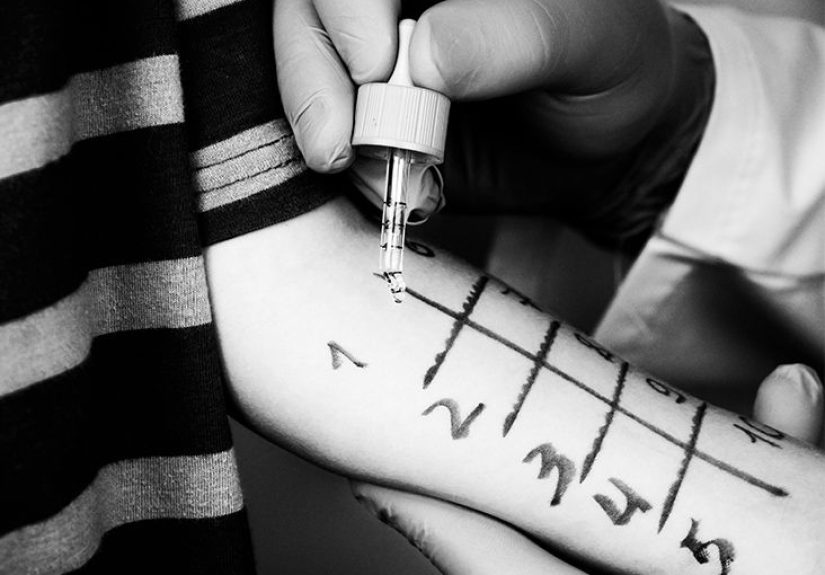
- Tiny amounts of common allergens (and sometimes your child’s own products) are placed in small chambers on adhesive strips.
- These strips are applied to your child’s back, where they stay for about 48 hours (yes, this means delicate shower logistics).
- The doctor removes the patches and checks the skin for reactions at 48–72 hours, and sometimes again later.
Patch testing is generally considered safe, even in preschool-age children, as long as it’s done by experienced clinicians and the allergen set is carefully chosen.
If a relevant allergen is found, the payoff can be huge: removing that allergen from your child’s environment can dramatically improve chronic rashes that had seemed “unsolvable.”
Everyday strategies to lower the risk of allergic contact dermatitis
1. Strengthen the skin barrier
A strong skin barrier is your child’s best built-in armor. Evidence-based eczema care emphasizes:
- Daily moisturizing with thick, fragrance-free creams or ointments
- Short, lukewarm baths followed by immediate moisturization (“soak and seal”)
- Using gentle, non-soap cleansers sparingly
Keeping eczema well-controlled may reduce scratching and barrier breakdown, potentially decreasing the risk of new contact sensitizations over time.
2. Choose products wisely
For children with eczema:
- Look for “fragrance-free” (not just “unscented”) products.
- Use eczema-focused or hypoallergenic moisturizers recommended by your child’s clinician.
- Avoid “just in case” use of topical antibiotic ointments unless they are specifically recommended.
- Test new products on a small area for a few days before slathering them everywhere.
Organizations like the National Eczema Association maintain product guides and stress minimizing fragrances and known irritants for children with eczema.
3. Watch out for metals and other hidden triggers
Practical steps include:
- Choosing nickel-free jewelry and avoiding metal snaps or fasteners that sit directly on eczema-prone skin.
- Covering metal buttons on jeans with fabric or tape if they coincide with recurrent rashes.
- Being mindful of school supplies (like scissors or metal tools) if there are recurrent hand or wrist rashes.
4. Work with your child’s care team
If you’re concerned about allergic contact dermatitis, share details with your child’s clinician:
- Take photos of rashes at their worst.
- Bring a bag of products (lotions, soaps, creams, bandages, makeup, jewelry) your child uses.
- Note any patterns, such as “the rash is always under this strap” or “it got worse after we switched detergent.”
Your child’s pediatrician, dermatologist, or allergist can help decide whether patch testing is appropriate and design a personalized care plan. This article is for general education and cannot replace professional medical advice tailored to your child.
Real-world experiences: what it’s like when eczema and contact allergy collide
Numbers and patch-test statistics are useful, but if you’re living with a child who has eczema, what you really want to know is: What does this look like in real life, and what actually helps? The experiences of families and clinicians offer some powerful insights.
The “magic cream” that backfires
Imagine a 6-year-old with long-standing atopic dermatitis. Her parents do everything “right” fragrance-free detergent, careful moisturizing, and regular follow-ups with a pediatric dermatologist. One winter, a relative gifts a fancy “natural” balm that smells like a spa. The child loves it, and within a week, her cheeks and eyelids are bright red and much itchier than usual.
At first, everyone assumes it’s just a seasonal eczema flare. The family steps up steroid ointment use and moisturizers, but every time they apply that beautifully scented balm, the redness returns and gets a bit worse. Only when the dermatologist asks specifically about new products do they connect the dots. The balm is stopped, and over the next couple of weeks, the rash calms dramatically.
Later, patch testing reveals fragrance allergies and sensitivity to a botanical extract used in many “clean” skincare lines. The takeaway for the family is not to fear all products, but to recognize that “natural” does not automatically mean “non-allergenic” especially on eczema-prone skin.
When “sensitive skin” wipes aren’t so sensitive
Another common scenario involves baby wipes. Parents of toddlers with eczema may rely on “sensitive” wipes for quick cleanups, assuming they’re gentle. But some wipe formulations contain fragrances or preservatives like methylisothiazolinone, which have been repeatedly implicated in allergic contact dermatitis in both adults and children.
A parent might notice that a child’s diaper area or hands look red and bumpy after days of heavy wipe use, particularly during travel or illness. Switching from standard wipes to plain water and soft cloths or to a dermatologist-approved, truly fragrance-free wipe can sometimes lead to dramatic improvement within a week. Parents often describe this as “like someone finally turned down the volume on the rash.”
Allergic contact dermatitis hiding in plain sight
In specialty clinics, clinicians frequently see children whose “stubborn eczema” around the wrists, waistline, or feet turns out to be allergic contact dermatitis from metals or rubber components. A child might have perfectly controlled eczema everywhere else but continues to have an angry ring of redness under a watch, bracelet, or waistband.
Once patch testing identifies nickel or a rubber accelerator as the culprit, making small changes replacing a watchband, switching to nickel-free snaps, or changing shoes can produce outsized benefits. Parents often describe it as both a relief and a surprise: the problem wasn’t their parenting, their child’s scratching, or some mysterious deficiency in their skincare routine; it was a specific allergen hiding in everyday objects.
Emotional impact and reassurance for families
Living with eczema, and possibly allergic contact dermatitis on top of it, can be emotionally draining. Children may feel self-conscious about visible rashes; parents may feel guilty or overwhelmed by the constant trial-and-error of products and routines. It’s important to remember:
- Your child is not “allergic to everything.” They may simply be allergic to a few very specific ingredients.
- Discovering an allergen is empowering, not frightening it opens the door to targeted avoidance and better control.
- Good eczema management plus smart allergen avoidance often leads to smoother skin, better sleep, and fewer “itch meltdowns” for the whole household.
Many families also find it helpful to keep a simple journal of new products, foods, and environmental changes, alongside flare patterns. While it won’t replace medical testing, it can provide useful clues and help your child’s care team zero in on possible triggers more quickly.
The bottom line
Children with eczema already deal with plenty of skin challenges. Because of skin barrier issues, immune overactivity, and higher exposure to skincare and medical products, they are also more likely than their peers to develop allergic contact dermatitis. Research shows that contact allergy is common in kids with atopic dermatitis, and patch testing often uncovers treatable triggers that were previously overlooked.
As a parent or caregiver, you don’t need to memorize the names of every preservative under the sun. Instead, focus on what you can control:
- Keep the skin barrier strong with regular, fragrance-free moisturization.
- Introduce new products slowly, one at a time.
- Watch for rashes that match patterns of contact or don’t behave like usual eczema.
- Partner with your child’s healthcare team and ask about patch testing if you suspect contact allergy.
With the right mix of eczema management, careful product choices, and, when needed, patch testing, many children can enjoy much calmer skin and you can reclaim a little mental space from reading ingredient labels at 11 p.m.