Table of Contents >> Show >> Hide
- Why hardware finish matters more than people think
- The most popular bathroom hardware finishes, decoded
- How to match the finish to your bathroom style
- Do not choose by color alone
- Should you mix metals in the bathroom?
- Best hardware finish based on your top priority
- Common mistakes to avoid
- Real-world experiences and lessons from bathroom finish choices
- Final thoughts
Picking a bathroom hardware finish sounds easy until you realize there are roughly 4,000 shades of “metal but make it fancy.” Chrome, brushed nickel, matte black, brass, bronze, gold, graphitesuddenly you are staring at faucet samples like you are judging an Olympic event for reflective surfaces.
The good news is that choosing the right hardware finish for your bathroom is not about chasing the trendiest shiny object in the aisle. It is about matching your finish to your bathroom’s style, your cleaning habits, your lighting, your water conditions, and the level of drama you want your sink area to deliver before coffee. Get those pieces right, and your bathroom will feel polished, cohesive, and far more expensive than it has any business feeling.
This guide breaks down the most popular bathroom hardware finishes, how they behave in real life, when to mix metals, what mistakes to avoid, and which finish works best for different design goals. Whether you are remodeling a primary bath, refreshing a powder room, or trying to keep a guest bathroom from looking like a random collection of clearance-bin decisions, this will help you choose with confidence.
Why hardware finish matters more than people think
Bathroom hardware does not just “match the faucet.” It shapes the entire tone of the room. A polished chrome faucet can make a bathroom feel crisp, bright, and classic. Brushed nickel usually reads softer and more forgiving. Matte black adds contrast and a modern edge. Brass and gold finishes bring warmth and a collected, designer look. Bronze finishes can lean traditional, rustic, or moody depending on the space.
Finish also affects how your bathroom looks at 7 a.m. under overhead lighting, how often fingerprints show up, how well the room handles hard-water spots, and how easy it is to coordinate towel bars, mirror frames, shower trim, cabinet pulls, and even the drain stopper. In other words, finish is style and maintenance. Beauty and chores, hand in hand.
The most popular bathroom hardware finishes, decoded
Chrome
Chrome is the dependable white T-shirt of bathroom hardware. It is bright, reflective, affordable, and timeless. If you want a finish that works in modern, transitional, vintage-inspired, or builder-basic bathrooms, chrome is rarely a wrong answer.
Its biggest strengths are brightness and versatility. Chrome reflects light well, which makes it especially helpful in smaller bathrooms or bathrooms that feel a little cave-like. It also plays nicely with cool-toned palettes like white, gray, blue, and black.
The downside is that chrome shows water spots, fingerprints, and smudges more readily than lower-sheen finishes. It is a beautiful finish, but it can be a tiny snitch. If your bathroom sees heavy daily use and you do not enjoy wiping hardware down often, chrome may require a little more upkeep.
Brushed nickel
Brushed nickel remains one of the safest and smartest choices for a bathroom. It is softer than chrome, less reflective, and generally better at hiding fingerprints and water marks. It also has a slightly warmer cast, which helps it bridge the gap between cool and warm color schemes.
If chrome can sometimes feel a bit “new hotel sink,” brushed nickel tends to feel calmer and more lived-in. It works especially well in transitional bathrooms, family baths, and spaces where you want a timeless finish without a mirror-like shine.
Brushed nickel is often the finish people choose when they want their bathroom to look good without demanding daily admiration and a microfiber cloth. That is a perfectly noble goal.
Polished nickel
Polished nickel is the more elegant cousin of chrome. It has a soft glow rather than a sharp shine and often feels more upscale. It can be stunning in traditional, classic, and luxury-inspired bathrooms, especially with marble, paneled walls, or warm white cabinetry.
Still, polished nickel tends to cost more and may show wear or spotting more than brushed finishes. It is beautiful, but it is not always the most low-maintenance choice for a high-traffic family bathroom.
Matte black
Matte black became wildly popular for a reason: it is bold, modern, versatile, and instantly graphic. It adds contrast to white bathrooms, sharpens minimalist spaces, and looks great with wood vanities, concrete, zellige tile, and both warm and cool palettes.
It also tends to hide fingerprints better than highly reflective finishes, which is a win. But matte black is not automatically effortless. Depending on the product quality, finish coating, soap residue, toothpaste splatter, or hard-water residue can still become visible. In some bathrooms, matte black looks quietly sophisticated. In others, it becomes a dramatic stage actor who notices every mineral deposit.
If you love the look, choose quality pieces from reputable manufacturers and check the recommended cleaning method before you buy.
Brass and brushed gold
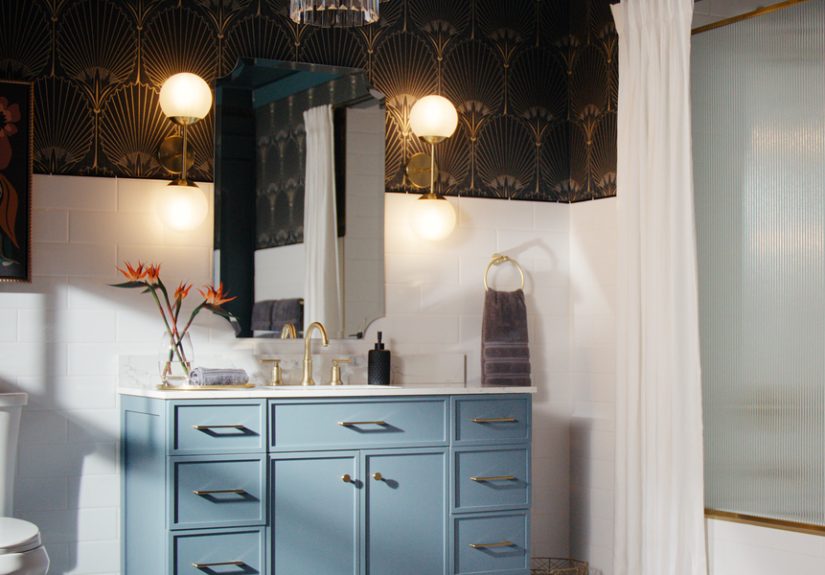
Warm metallics are still going strong, and for good reason. Brass and brushed gold finishes add warmth, richness, and personality. They can make a plain vanity look more custom and give a bathroom that layered, designer feel people love in magazine spreads and social feeds.
The key difference is sheen and tone. Brushed gold tends to be softer and more muted than the very shiny gold looks of decades past. Brass can range from polished and glam to antique and mellow. Some versions skew yellow, some honey-toned, and some almost bronze. Translation: not all “gold” is the same. Not even close.
These finishes look especially good with deep greens, blues, black, walnut, oak, and creamy neutrals. If your bathroom needs warmth, brass is often the answer.
Oil-rubbed bronze and darker bronzes
Bronze finishes bring depth and old-world character. Oil-rubbed bronze is especially popular in traditional, farmhouse, rustic, and Mediterranean-style bathrooms. It pairs well with warm cabinetry, stone surfaces, and classic details.
Because darker finishes can visually weigh down a small room, they usually work best when the rest of the palette supports them. In a bright white modern bathroom, bronze can feel either dramatic and intentional or like it wandered in from another house. Context matters.
How to match the finish to your bathroom style
For a timeless bathroom
Choose chrome, brushed nickel, or polished nickel. These finishes have staying power and generally appeal to the widest range of people. If resale matters, they are often the easiest bet.
For a warm, elevated look
Choose brushed gold, antique brass, or softer bronze tones. These finishes add warmth and can make standard fixtures look more custom. They are especially effective in powder rooms, where a little jewelry is welcome.
For a clean modern look
Choose matte black, chrome, or a restrained mixed-metal combination. Pair them with simple silhouettes and minimal visual clutter.
For a traditional or vintage-inspired bathroom
Choose polished nickel, unlacquered-style brass looks, or oil-rubbed bronze. These finishes play well with cross handles, classic sconces, marble tops, and furniture-style vanities.
For a soft transitional look
Brushed nickel is usually the hero. It is balanced, understated, and easy to coordinate with other bathroom elements.
Do not choose by color alone
A finish sample in a showroom can be misleading. The lighting is different, the tile around it is different, and nobody in the showroom has just brushed their teeth over it. Before you commit, think about these real-world factors:
Water spots and hard water
If you live in an area with hard water, highly reflective finishes can show spotting faster. Lower-sheen finishes like brushed nickel may be more forgiving. Some matte or coated finishes can also perform well, but always check manufacturer care guidance.
Humidity and maintenance
Bathrooms are moisture-rich spaces, so durability matters. Finishes behave differently depending on the plating, coating, and maintenance routine. A gorgeous finish is less charming when it requires a weekly spa treatment and emotional support.
Undertones
Silver-toned finishes are not all the same. Some lean warm, some lean cool. Gold finishes vary even more. Hold your finish choices next to your countertop, tile, paint, mirror, and lighting. A brass that looks rich and lovely next to creamy white may look oddly yellow beside stark gray tile.
Brand variation
One company’s brushed gold can look champagne-soft while another’s looks almost bronze. If you want your faucet, shower trim, and accessories to match closely, buying from the same collection or at least the same manufacturer usually gives the best result.
Should you mix metals in the bathroom?
Yes, absolutelybut do it on purpose. The best mixed-metal bathrooms look curated, not accidental. A good rule is to choose one dominant finish and one supporting finish. In many bathrooms, the plumbing fixtures stay in a classic finish like chrome or nickel, while mirrors, sconces, and cabinet hardware bring in warmth or contrast through brass or matte black.
To make mixed metals work:
- Pick one finish as the main character.
- Repeat each finish at least twice so nothing looks lonely.
- Mix finishes that are clearly different rather than almost matching.
- Pay attention to undertones so the palette feels intentional.
- Keep the overall style consistent even if the metals vary.
For example, brushed nickel faucets with matte black mirror frames can look crisp and balanced. Brushed brass sconces with polished nickel plumbing can feel classic and layered. Chrome with shiny brass can be trickier unless the room is designed to support the contrast. The goal is rhythm, not randomness.
Best hardware finish based on your top priority
If you want the easiest all-around choice
Brushed nickel. It is versatile, forgiving, and rarely feels dated.
If you want the brightest look for a small bathroom
Chrome. It reflects light and keeps the room feeling fresh and open.
If you want warmth and designer appeal
Brushed gold or brass. Best for adding character and richness.
If you want contrast and a modern edge
Matte black. Striking, graphic, and great with simple forms.
If you want a classic look with more depth
Polished nickel. Elegant and traditional without feeling stuffy.
If you want old-world charm
Oil-rubbed bronze. Rich, moody, and traditional in the best way.
Common mistakes to avoid
Choosing the finish last. Hardware affects the whole palette. Do not treat it like a footnote.
Matching every single metal blindly. A perfectly matched bathroom can look flat. Coordination is good. Overmatching can feel like a catalog page with no pulse.
Ignoring daily maintenance. The prettiest finish on day one is not always the prettiest finish after six months of toothpaste mist and hard-water spots.
Mixing near-matches. Two golds that are almost the same can look like a mistake. Two finishes that are obviously different usually look more intentional.
Forgetting accessibility. In bathrooms designed for aging in place or broader accessibility, durability, visibility, grip, and compliance matter just as much as style. Grab bars, shower controls, and door hardware should be both beautiful and functional.
Real-world experiences and lessons from bathroom finish choices
One of the most common experiences homeowners report is that the finish they loved in a photo does not always behave the way they expected in daily life. Matte black is a great example. In inspiration images, it looks crisp, modern, and effortlessly cool. In a real family bathroom with hard water, rushed mornings, and children who treat toothpaste like performance art, matte black can still collect residue. It may hide fingerprints better than chrome, but that does not make it invisible. The lesson is not “do not choose matte black.” The lesson is “choose matte black because you love it, not because you think it is magic.”
Chrome creates a different kind of experience. People often describe it as the finish that looked almost too plain in the store but ended up being the easiest finish to live with visually. It brightens small bathrooms, coordinates with almost anything, and rarely fights the tile, countertop, or paint color. The tradeoff is that chrome can reveal water spots quickly, especially around the faucet base and handles. Many homeowners discover that chrome is a fantastic long-term choice as long as they are comfortable giving it a quick wipe now and then. It is not high drama. It is just a reliable adult.
Brushed nickel tends to win people over slowly. It may not be the most exciting sample on the board, but in real bathrooms it often becomes the finish no one regrets. Homeowners who chose brushed nickel for busy kids’ bathrooms or guest baths often appreciate how flexible it feels. It works with warm woods, cool grays, white vanities, soft beige walls, and a wide range of mirror frames and lighting. It is the finish equivalent of someone who shows up on time, remembers your birthday, and brings snacks.
Warm brass and brushed gold create some of the happiest renovation stories because they change the mood of a bathroom so dramatically. Many people start with a white or neutral bathroom that feels clean but bland. Adding warm metallic hardware can transform that same room into something that feels layered, cozy, and expensive. The experience here is often emotional as much as visual: the room suddenly feels finished. The caution, however, is consistency. Homeowners who mix several different “gold” tones from different brands sometimes end up with a bathroom that feels confused instead of curated.
Another common lesson comes from people trying to match everything exactly. In theory, that sounds smart. In practice, bathrooms often look better when there is one lead finish and one supporting finish. A faucet, shower trim, and towel bar in brushed nickel with brass sconces and a mirror frame can look more collected than a room where every object is forced into one metal. The experience most people describe after getting this right is that the room feels designed, not assembled.
Accessibility-focused bathrooms also teach an important lesson: function does not have to kill style. Homeowners planning for aging in place often assume grab bars and durable hardware will make the bathroom look institutional. But when the finish is selected thoughtfully and coordinated with the rest of the room, those elements can blend in beautifully. The most successful bathrooms are the ones that respect both usability and aesthetics from the start instead of treating practical features like awkward add-ons.
In the end, the best finish is rarely the one that looked trendiest for five seconds on a phone screen. It is the one that still looks right when the steam clears, the lights come on, and you are living with it every day.
Final thoughts
Choosing the right hardware finish for your bathroom comes down to a simple question: what do you want this room to feel like, and how do you actually live in it? If you want bright and classic, chrome is hard to beat. If you want quiet durability and flexibility, brushed nickel is the all-star. If you want warmth, brass and brushed gold bring instant personality. If you want contrast, matte black makes a statement. And if you want character with tradition, bronze still has plenty to say.
The smartest choice is the one that fits your bathroom’s style, your maintenance tolerance, your water conditions, and your long-term goals. Trends can inspire, but real life gets the final vote. Choose the finish that will still make sense when the renovation dust settles and the bathroom goes back to doing what bathrooms do: getting used, getting messy, and quietly revealing whether you made a brilliant choice or simply fell in love with a shiny object under showroom lighting.