Table of Contents >> Show >> Hide
- What “common household plastics” really means (spoiler: it’s not just water bottles)
- What the newer research is saying (and what it is not saying)
- How could plastics affect the heart? Plausible pathways scientists are studying
- Where exposure sneaks in at home (a practical tour of your stuff)
- 8 realistic ways to reduce exposure (without becoming a full-time jar collector)
- 1) Stop heating food in plastic
- 2) Choose glass, stainless steel, or ceramic for daily “repeat use” items
- 3) Eat more “less-packaged” foods
- 4) Go fragrance-free when you can
- 5) Be cautious with vinyl/PVC items
- 6) Dust and wet-mop like you mean it
- 7) Don’t assume “BPA-free” means “all set”
- 8) Pick a “top 3” you’ll actually keep doing
- What not to do (your heart doesn’t need the stress)
- When to talk with a clinician
- Experiences from the real world: what “reducing plastics” looks like in everyday life (about )
- Bottom line
If you’ve ever microwaved leftovers in a “definitely dishwasher-safe-ish” plastic container, this headline may feel a little personal.
The good news: nobody’s saying one rogue Tupperware moment equals instant doom.
The more honest news: the science around plastics, plastic additives, and cardiovascular health is getting harder to shrug off.
In recent years, researchers have reported links between exposure to certain plastic-related chemicals (especially a group called phthalates)
and higher cardiovascular risk. Separately, scientists have detected microplastics and nanoplastics in human tissuesincluding artery plaque
and found associations with more heart attacks, strokes, and deaths in follow-up.
These findings don’t prove plastics are the lone villain behind heart disease (that role is already booked by smoking, hypertension, diabetes, and friends),
but they do suggest plastics may be a real part of the background risk we live in.
What “common household plastics” really means (spoiler: it’s not just water bottles)
When headlines say “plastics,” they often mean one of three related things:
(1) the plastic material itself, (2) the additives mixed into plastic to make it flexible, durable, or clear,
and (3) the tiny plastic particles that form as plastics break down over time.
1) Phthalates: the “make it soft and flexible” chemicals
Phthalates (pronounced THAL-ates) are used as plasticizerschemicals that help make certain plastics, especially some vinyl/PVC products, bendy and soft.
They also show up in places that don’t scream “plastic,” like fragrance-containing personal care items.
A key detail: many phthalates are not tightly bound to the product, which means they can migrate into air, dust, and food.
2) Bisphenols (BPA and related compounds): the “hard, clear, and lined” helpers
BPA (bisphenol A) has been used in some food-contact applications (for example, certain can linings and plastic materials).
The U.S. FDA’s position is that BPA is safe at the current levels that occur in foods for currently approved uses.
That said, BPA has also been studied for potential endocrine-disrupting effects, and “BPA-free” doesn’t automatically mean “risk-free,” because substitutes may have their own questions.
3) Microplastics and nanoplastics: the confetti nobody ordered
Microplastics are typically described as plastic bits smaller than 5 millimeters (about the size of a pencil eraser or less),
while nanoplastics are far smallermicroscopic. These particles come from the breakdown of larger plastic items and can be found in air, water, soil,
and the food chain. Researchers are still sorting out what they do inside the body, but the presence alone has raised eyebrows… and grant funding.
What the newer research is saying (and what it is not saying)
Let’s translate “linked to” into plain English: most of the headline-making studies are observational.
Observational research can spot patterns in real life (helpful!), but it can’t prove cause-and-effect on its own (also important!).
So the right takeaway is not panicit’s informed caution.
Study signal #1: DEHP (a common phthalate) and estimated cardiovascular deaths
A 2025 analysis in eBioMedicine focused on a phthalate called DEHP (di(2-ethylhexyl) phthalate),
which has been widely used to make some plastics more flexible. Using global cardiovascular mortality data alongside exposure estimates,
the authors estimated that 356,238 deaths worldwide in 2018 among adults ages 55–64 were attributable to DEHP exposure,
representing about 13.5% of cardiovascular deaths in that age group. They estimated the majority of those deaths were tied specifically to plastics use.
That’s a jaw-dropping numberso it deserves careful interpretation.
These are modeled estimates, not a death certificate that says “Cause: salad dressing + plastic wrap.”
Still, the paper adds weight to a growing body of evidence that phthalate exposure may be more than a minor nuisance.
Study signal #2: Microplastics in artery plaque and higher risk of events
In 2024, a prospective observational study in the New England Journal of Medicine examined carotid artery plaque removed during surgery.
Researchers detected microplastics/nanoplasticsmost commonly polyethylene, and sometimes PVCin a significant portion of plaque samples.
Over roughly 34 months of follow-up, patients with microplastics/nanoplastics detected in plaque had a substantially higher risk of a combined outcome
(heart attack, stroke, or death) compared with those without detectable particles.
This is the kind of finding that makes scientists sit up straight: it combines real human tissue data, imaging, and clinical follow-up.
But it still doesn’t prove the particles caused the events. They could be markers of other exposures, behaviors, or environmental conditions.
Think of it as a flashing “worth investigating” signnot a final verdict.
Study signal #3: Microplastics exposure and cardiometabolic risk patterns
The American Heart Association has also highlighted emerging research connecting microplastics pollution patterns and cardiometabolic outcomes in U.S. counties.
Ecological studies can’t pin down individual-level cause, but they can identify where risk and exposure may overlapand where deeper, more precise studies should focus.
How could plastics affect the heart? Plausible pathways scientists are studying
Endocrine disruption (hormone interference) can ripple into metabolism
Many plastic-related chemicals are discussed as endocrine disruptorsmeaning they can interfere with hormone signaling.
Hormones help regulate metabolism, inflammation, and blood vessel function. Disruptions may connect indirectly to obesity, insulin resistance,
blood pressure changes, or lipid patterns that matter for cardiovascular risk.
Inflammation and oxidative stress
Cardiovascular disease has a major inflammatory component.
Researchers have proposed that phthalates and micro/nanoplastics may contribute to chronic inflammation or oxidative stress,
which can influence plaque stability and vascular health. Some studies assessing plaque have also examined inflammatory biomarkers,
aiming to understand whether “plastic-positive” plaque behaves differently.
Physical presence + “chemical hitchhikers”
Microplastics can carry additives from manufacturing and can also pick up other chemicals from the environment.
The concern isn’t just “tiny plastic splinter” (though that’s not great either); it’s that the particle may be a delivery vehicle,
a local irritant, or both.
Where exposure sneaks in at home (a practical tour of your stuff)
You don’t need a chemistry degree to find common routes of exposure. Start with the places where plastic meets heat, fat, friction, or fragrance:
- Food packaging and processing: wraps, tubs, takeout containers, and industrial food handling materials.
- Heating plastics: microwaving or pouring hot liquids into plastic can increase migration of chemicals and shedding of particles.
- Vinyl/PVC products: some shower curtains, flooring, garden hoses, and certain flexible plastic items (often associated with recycling code #3).
- Fragranced personal care: products labeled “fragrance” may include chemicals used to help scents last longer.
- Household dust: additives can accumulate in dust; kids (and pets) have extra hand-to-mouth exposure.
- Bottled beverages and single-use plastics: convenience sometimes comes with invisible hitchhikers.
8 realistic ways to reduce exposure (without becoming a full-time jar collector)
You can’t eliminate plastics from modern life, and you don’t need to. The goal is to reduce the highest-yield sourcesespecially those tied to food and heat.
1) Stop heating food in plastic
Move leftovers into glass or ceramic before microwaving. If you do one thing, make it this one.
Heat is basically the hype-man for chemical migration.
2) Choose glass, stainless steel, or ceramic for daily “repeat use” items
Water bottles, coffee tumblers, and meal-prep containers are used over and overso switching materials can meaningfully cut exposure over time.
3) Eat more “less-packaged” foods
Whole foods (produce, grains, beans, fresh proteins) generally have less contact with plastic packaging and processing compared with heavily packaged,
ultra-processed foods. Bonus: your heart likes fiber and potassium anyway.
4) Go fragrance-free when you can
“Fragrance” can be a catch-all term. If your goal is exposure reduction, picking fragrance-free personal care and cleaning products is a practical move.
5) Be cautious with vinyl/PVC items
If you’re replacing a shower curtain, flooring, or a garden hose anyway, consider non-vinyl alternatives.
And if you can’t, ventilation helpsnew products can off-gas more at first.
6) Dust and wet-mop like you mean it
Dry dusting can kick particles into the air. Wet-mopping and using a damp cloth can reduce the “dust highway” for additives.
7) Don’t assume “BPA-free” means “all set”
BPA-free can be useful, but it’s not a magic spell.
Focus on the bigger levers (heat + food contact + repeat use), not just the marketing label.
8) Pick a “top 3” you’ll actually keep doing
The best exposure-reduction plan is the one that survives Tuesday night chaos.
Choose three habits you can maintain: for example, no microwaving plastic, glass water bottle, and fragrance-free soap.
What not to do (your heart doesn’t need the stress)
- Don’t catastrophize: cardiovascular disease is multi-factorial. Plastics are a potential contributor, not the entire plot.
- Don’t trade plastic panic for unhealthy habits: stress-eating while doomscrolling is not the vibe.
- Don’t chase perfection: focus on reducing the highest-impact exposures rather than purging your home overnight.
When to talk with a clinician
If you have established cardiovascular disease, diabetes, chronic kidney disease, high blood pressure, or you’re pregnant,
it’s reasonable to ask your clinician about environmental exposures as part of an overall prevention plan.
The fundamentals still matter most: blood pressure control, lipid management, blood sugar, activity, sleep, and avoiding tobacco.
Experiences from the real world: what “reducing plastics” looks like in everyday life (about )
People who try to cut back on plastic exposure rarely start with a dramatic “throw everything away” moment.
It usually begins with one of those tiny annoyances that flips a switch: a plastic lid that warps in the dishwasher, a takeout container that smells like last week’s curry forever,
or the unsettling realization that your “fresh” salad came in enough packaging to rebuild a small canoe.
The most common experience is that the kitchen becomes mission control.
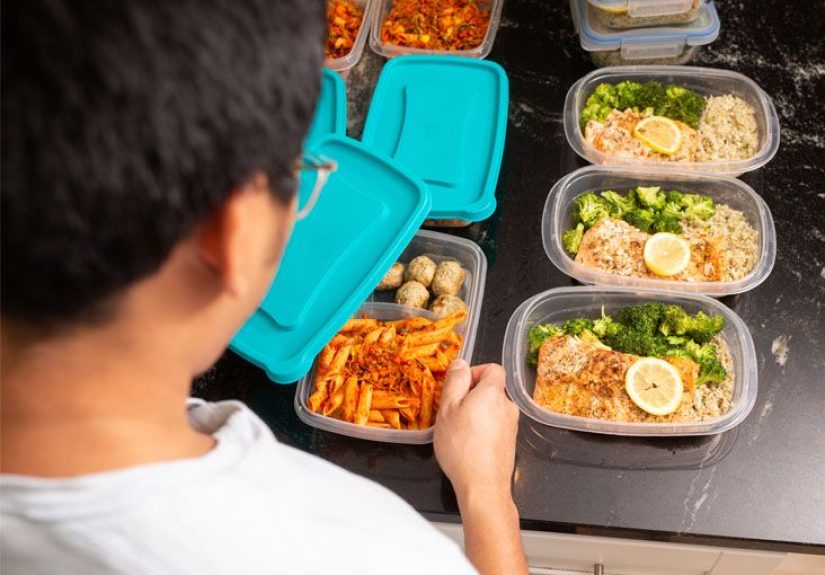
Folks swap a couple of plastic food containers for glass ones, and suddenly meal prep feels a little more “adult.”
One unexpected perk people mention: glass doesn’t hold onto odors.
(No disrespect to plastic, but if your container still smells like chili after three washes, it’s not “memory,” it’s a haunting.)
Many families notice that once glass containers are in the rotation, microwaving plastic becomes less temptingbecause the glass is already sitting right there, ready to go.
Another frequent change is fragrance-free everything.
Not because everyone becomes anti-perfume overnight, but because the label is an easy decision point.
People often describe a short “detox period” where the bathroom stops smelling like a tropical thunderstorm.
Then something weird happens: you adjust, and the new normal feels… calmer.
It’s not that fragrance-free products are magical; it’s that removing one category of heavily scented items makes the space feel less chemically “loud.”
Some parents say it also simplifies shopping, because once you commit to fragrance-free, half the aisle becomes a quick “nope.”
There are also the “I didn’t expect this to be emotional” moments.
For example, replacing an old vinyl shower curtain can feel oddly satisfyinglike you just took down a questionable poster from college.
People report that they become more aware of plastics in surprising places: soft plastic toys, the flexible plastic smell of a new car accessory,
or the way certain synthetic fabrics shed fuzz in the dryer lint trap.
That awareness can be empowering, but it can also be overwhelming if you aim for perfection.
The healthiest approach people share is to treat it like nutrition: you don’t have to eat perfectly to eat better.
Finally, many describe the “habit stack” effect: once you start with one change, others follow naturally.
Drinking from a stainless bottle leads to refilling tap water more often; refilling more often leads to keeping water cold in the fridge in a glass pitcher;
and suddenly you’re the kind of person who owns a glass pitcher.
It’s not a personality transplantit’s just small, repeatable choices.
And while nobody can feel their arteries cheering in real time, people consistently say the biggest benefit is peace of mind:
they’re not living in fear of plastics, but they’re also not pretending the science doesn’t exist.
Bottom line
Evidence is accumulating that some chemicals used in plastics (notably certain phthalates) and micro/nanoplastic exposure are associated with cardiovascular risk
and, in some studies, higher rates of heart attack, stroke, and death. The science is still evolving, and causation is not settledbut the precautionary steps are straightforward:
avoid heating food in plastic, reduce heavily packaged foods when possible, consider fragrance-free products, and choose durable non-plastic materials for everyday use.
Small changes are realisticand they add up.