Table of Contents >> Show >> Hide
For most of nuclear history, the industry has followed a pretty predictable script: build a massive plant above ground, wrap it in layers of engineered safety systems, add a heroic amount of concrete and steel, and then spend years proving to regulators and investors that the whole thing will behave itself. Deep Fission wants to flip that script upside downthen drop it down a borehole.
The startup’s big idea is simple enough to explain at a dinner party and strange enough to make everyone stop chewing for a second: instead of building a small reactor on the surface, put it about a mile underground. In Deep Fission’s vision, a compact pressurized water reactor would sit inside a narrow, very deep well. The surrounding geology and water column would do some of the heavy lifting that traditional plants handle with bulky above-ground containment structures. It is part advanced nuclear, part drilling-tech remix, and part “what if we took the reactor and hid it where the Earth already has good pressure?”
That pitch has drawn attention because it lands at the intersection of three hot topics: advanced nuclear, energy-hungry data centers, and the increasingly urgent hunt for reliable carbon-free power. It also raises obvious questions. Is this clever engineering, or just a very expensive way to play hide-and-seek with a reactor? Can underground placement genuinely improve safety and economics? And even if the concept makes technical sense, can it survive the brutal reality of licensing, supply chains, and public trust?
The short answer is that Deep Fission is trying to solve a real problem with a bold design. The longer answer is that the company’s underground reactor concept is intriguing precisely because it promises advantages and complications in equal measure. In other words, it is a nuclear idea with serious ambitionand a decent chance of generating both excitement and raised eyebrows.
What Deep Fission Is Actually Proposing
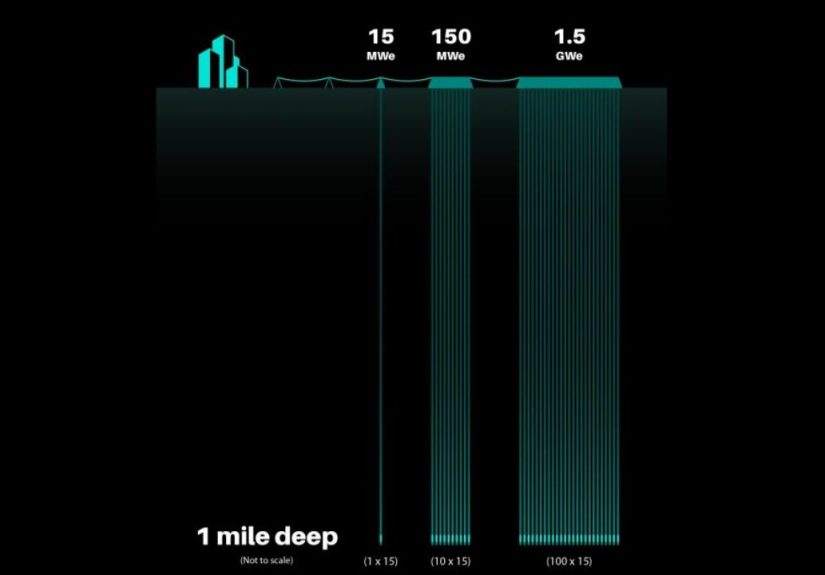
Deep Fission is developing a small pressurized water reactor designed to operate deep underground in a borehole roughly 30 inches in diameter and about a mile deep. The company’s early public materials and regulatory documents describe a reactor module in the microreactor range, with thermal output around 45 megawatts and electric output around 15 megawatts per unit. Stack enough of those units together on one site, and the result starts to look less like a science-fair experiment and more like a modular power plant with serious commercial ambitions.
This matters because Deep Fission is not pitching a totally unfamiliar reactor chemistry. It is leaning on pressurized water reactor technology, which the nuclear industry knows well. That is not a small detail. In advanced nuclear, the scariest sentence for investors is often, “We invented a completely new everything.” Deep Fission instead says, more or less, “Let’s use reactor principles people already understand, but deploy them in a radically different place.”
The company argues that deep placement can create natural pressure conditions that help support reactor operation while reducing the need for giant above-ground containment buildings. The underground location is also meant to improve security, shrink the surface footprint, and cut construction complexity. In theory, the result is a reactor that is easier to site near industrial loads or large data centers without looking like a traditional nuclear campus landed from orbit.
Why Put a Reactor Underground?
1. To cut construction costs
One of the biggest problems in nuclear energy is not physics. It is project management, capital cost, and schedule chaos. Traditional large nuclear plants are notorious for cost overruns, delays, and enough paperwork to fill a canyon. Deep Fission’s underground model is an attempt to trim that burden by using drilling methods and modular construction rather than enormous civil works above ground.
If the company can really replace some expensive surface infrastructure with a borehole-based design, it could attack the single biggest reason nuclear scares investors: sticker shock. That does not make nuclear cheap overnight. Nothing involving uranium, regulators, and industrial-grade metallurgy is ever going to feel like buying a toaster. But it could make advanced nuclear more financially approachable for customers that need firm power and cannot wait until the next decade and three budget revisions from now.
2. To improve safety by design
Deep Fission’s core safety argument is that depth helps. By placing the reactor underground, the company says it can use the surrounding geology and hydrostatic pressure as part of the overall safety and containment concept. The underground setting may also provide better protection from external threats such as weather, aircraft impact, or sabotage.
That does not mean geology magically solves every nuclear safety challenge. It means the safety case changes shape. Instead of asking only how much engineered containment sits around the reactor, regulators also have to ask how the subsurface environment behaves under normal and off-normal conditions. That opens a new set of questions about heat removal, access, maintenance, corrosion, groundwater interaction, and emergency planning. So yes, underground can look inherently safer in some waysbut it also means proving that “out of sight” does not become “out of control.”
3. To meet the power appetite of data centers
Another reason this concept is getting attention is timing. U.S. electricity demand is rising again, and data centers are a major part of the story. AI workloads do not run on vibes. They run on vast quantities of dependable electricity, preferably available around the clock. Wind and solar are important, but hyperscale computing operators and industrial customers increasingly want firm, low-carbon power that does not disappear when clouds roll in or the grid gets cranky.
Deep Fission has leaned into this opportunity, promoting its reactors as a fit for data centers and large industrial users. A modular underground fleet could, in theory, serve customers that want dedicated power with a smaller land footprint and fewer visible structures. In the nuclear world, that qualifies as a flirtation strategy.
Why the Idea Sounds Smart on Paper
There is a reason this proposal has attracted serious attention instead of being laughed back into a geology textbook. It pulls together several mature or maturing technologies rather than betting entirely on one moonshot breakthrough. Deep drilling is real. Pressurized water reactors are real. Modular manufacturing is real. The question is whether stitching them together creates a practical product rather than a very polished PowerPoint.
Deep Fission also benefits from the broader shift in how people talk about nuclear energy. A decade ago, many clean-energy conversations treated nuclear like an awkward ex at a wedding. Now, with grid reliability worries, manufacturing growth, and data-center demand soaring, advanced nuclear has moved back into serious policy and investment discussions. Companies that can promise smaller footprints, faster deployment, and clearer paths to customers are suddenly hearing fewer polite coughs and more genuine interest.
The underground model also has a certain intuitive appeal. If a reactor is hard to protect because it is sitting in a visible, vulnerable place, one obvious solution is to stop putting it there. That is not the whole story, but it is not nonsense either. Some of the most interesting infrastructure ideas come from asking whether a problem exists because we got too used to one layout. Deep Fission is basically asking whether the surface is overrated.
The Challenges Are Not Small
Licensing is still the giant boss battle
The company is in pre-application engagement with the U.S. Nuclear Regulatory Commission, which is important but not the same as being licensed to build and operate. Pre-application work is where ideas meet the cold shower of real regulatory scrutiny. For a conventional reactor, the licensing path is already demanding. For an unconventional deployment model like a deep-borehole reactor, it can get even more interesting.
Regulators will want evidence not only that the reactor behaves safely, but that the underground environment does what the company claims it does. That means thermal-hydraulic modeling, accident analysis, materials performance, inspection strategies, maintenance plans, and detailed answers to the eternal engineering question: “Okay, but what happens if something weird happens?” And in nuclear, something weird is a very long list.
Maintenance and access are not trivial
Putting a reactor underground sounds elegant until someone asks the rude but necessary question: how do you service it? Deep Fission says modules can be retrieved and handled in a controlled way, but underground deployment inevitably complicates inspection, replacement, and repair. Every system that becomes simpler above ground may become harder once it lives in a mile-deep shaft.
This is where many advanced nuclear concepts face a reality check. A beautiful design can become much less beautiful when operators have to maintain it for years, under real-world conditions, with all the normal failures industrial systems experience. Pumps fail. Valves misbehave. Materials age. Sensors lie. Any successful underground reactor design must show not just that it can run, but that it can be serviced without turning every maintenance outage into a scene from a particularly tense engineering documentary.
Waste and end-of-life questions do not disappear underground
Another issue is spent fuel and waste management. Deep underground siting may sound like it naturally pairs with underground disposal, but reactor operation and permanent waste disposal are not the same thing. The United States still does not have a finished long-term commercial spent-fuel repository, and that broader policy problem does not vanish just because the reactor started life in a borehole.
Deep Fission has signaled interest in spent-fuel management partnerships, which is smart. Still, any nuclear company selling a bold new reactor concept has to answer the same public concern: what happens to the fuel after use? An underground location may help the sales pitch, but it does not grant a free pass on the backend of the fuel cycle.
How Deep Fission Fits Into the Advanced Nuclear Race
Deep Fission is entering a market crowded with startups pursuing different versions of the same dream: dependable, lower-carbon power with smaller reactors, faster build times, and better economics than legacy mega-projects. Some are chasing sodium-cooled systems. Others are going after high-temperature gas, molten salt, or portable microreactors. Deep Fission’s differentiator is not an exotic coolant or a dramatically new fuel. It is location.
That could be a strength. By avoiding some of the technological novelty risk that haunts other advanced reactor firms, Deep Fission may have a more approachable story for customers and some regulators. But it also means the company must prove that the deployment innovation is enough to create a meaningful advantage. Investors do not want interesting. They want bankable. Customers do not want elegant. They want power at a price and timeline that does not make their CFO break into interpretive despair.
Deep Fission’s commercial pitch to data centers is especially strategic. These buyers increasingly care less about owning generation and more about securing reliable capacity. If a reactor company can offer dedicated, modular, firm power near a large load, it may not need to win the entire grid to win a profitable niche. That is how many disruptive infrastructure businesses begin: not by replacing the whole system, but by serving customers that are desperate enough to try something new.
So, Is This Brilliant or Bonkers?
The honest answer is: a little of both, which is usually where the most interesting energy ideas live before the data comes in. Deep Fission’s concept is not bonkers in the cartoon sense. It is grounded in real engineering principles, serious market demand, and a plausible effort to reduce the capital intensity that has kneecapped too many nuclear projects. But it is also bold enough that skepticism is healthy.
If the company can demonstrate that underground deployment really lowers cost, preserves or improves safety, and remains maintainable over time, it could carve out a meaningful place in the future of advanced nuclear. If it cannot, the concept may join the large and crowded museum of energy ideas that sounded magnificent until physics, operations, and regulation all asked to see the spreadsheets.
Still, Deep Fission deserves attention because it is attacking a real bottleneck. America needs more reliable electricity. Data centers are growing. Industrial decarbonization is hard. Traditional nuclear builds remain painfully expensive. In that context, asking whether reactors belong underground is not weird for weirdness’ sake. It is a serious attempt to redesign the physical and economic assumptions of nuclear power.
And honestly, the industry could use a little constructive weirdness. The energy transition will not be solved by repeating the same playbook and hoping concrete becomes emotionally supportive.
Experience and Industry Perspective: What This Idea Feels Like in the Real World
Talk to people who have watched the energy industry for a while, and a pattern emerges. The technologies that win are not always the flashiest. They are the ones that solve an operational headache so effectively that utilities, developers, or customers decide the hassle of change is worth it. Deep Fission’s underground reactor concept has that kind of energy. It feels like the sort of idea engineers come up with after staring at traditional nuclear cost curves long enough to become personally offended by them.
There is also a familiar emotional arc around concepts like this. At first, people laugh a little. Then they squint. Then they start asking whether the odd-looking idea might actually address a set of old constraints better than the polished mainstream approach. That does not mean the concept is destined to succeed. It means it has crossed the line from novelty to serious debate, and that is a meaningful milestone in energy.
From an infrastructure perspective, the underground model has a surprisingly practical appeal. Communities often resist large industrial facilities when they dominate the landscape, raise visual concerns, or trigger anxiety about safety and land use. A smaller surface footprint changes the conversation. It does not erase public concernthis is still nuclear, not a lemonade standbut it could make siting discussions more manageable for some industrial zones and energy-intensive campuses.
There is also a psychological advantage in the way Deep Fission frames its technology. Traditional nuclear projects often sound like civilization-scale endeavors. Deep Fission sounds more modular, more contained, and oddly more legible to modern customers. A data-center operator does not necessarily want to become an amateur utility planner. It wants reliable power, predictable schedules, and something that can be replicated across sites. A clustered underground-reactor model speaks that language better than a giant one-off plant that takes forever and turns every earnings call into a hostage situation.
Still, people with operating experience in energy systems are likely to focus on the boring stuff, because the boring stuff is what makes or breaks projects. Can crews inspect components efficiently? Can modules be swapped without chaos? What happens when actual field conditions differ from design assumptions? How does a company train an operations workforce for a configuration that barely resembles the classic plant layout? Those questions are not glamorous, but they are where commercial credibility lives.
In that sense, Deep Fission’s future will depend less on whether the concept sounds futuristic and more on whether it behaves predictably under ordinary conditions. Infrastructure investors do not fall in love with novelty. They fall in love with repeatability. If Deep Fission can move from “fascinating concept” to “repeatable energy product,” it could become one of the more important experiments in advanced nuclear. If not, it may still influence the industry by proving that rethinking siting and physical layout is worth pursuing.
Either way, the company has already done something useful: it has forced the market to think differently about where a reactor can live. For an industry that has spent decades wrestling with cost, complexity, and public skepticism, that is no small contribution. Sometimes progress begins with a wild question asked seriously. In this case, the question is whether the future of nuclear power might be hiding underground.