Table of Contents >> Show >> Hide
- Why an Umbrella Works as a Lighting Fixture
- Umbrella Lighting Styles to Know (and How They Read in a Room)
- Design Rules That Keep Umbrella Lighting From Looking Like a Craft Accident
- Materials and Light Effects: Picking the Right Umbrella “Canopy”
- Safety Notes You Shouldn’t Ignore (Because Ceilings Are Not Great at Putting Out Fires)
- How to Get the Umbrella Lighting Look Without Turning Your Weekend Into an Electrical Drama
- Where Umbrella Lighting Looks Best
- Maintenance and Longevity
- FAQ: Quick Answers for Curious Design Sleuths
- Field Notes: “Umbrella Lighting” Experiences That Keep Showing Up
- Case File #1: The Thrifted Floral Parasol That Became the Dining Room’s Personality
- Case File #2: The “Why Does This Feel So Cozy?” Bedroom Glow
- Case File #3: The Sunroom That Finally Looked Finished
- Case File #4: The Playroom That Went Whimsical Without Going Babyish
- Case File #5: The Party Trick Effect (a.k.a. Why Guests Won’t Stop Talking About It)
- Conclusion: The Verdict on Umbrella Lighting
Somewhere between “brilliant” and “who let you in the craft aisle unsupervised?” lives the umbrella light fixture.
It’s playful. It’s sculptural. It’s oddly logical. And yeswhen it’s done wellit looks like it wandered out of a boutique hotel lobby,
sat down in your dining room, and started charging rent in compliments.
This design sleuth case starts with a simple question: Why does an umbrella make such a convincing light?
Answer: because umbrellas already know how to manage light. They’re built to diffuse glare, soften shadows, and create a cozy “under here” zone.
In other words, they’re basically lampshades with better PR.
Why an Umbrella Works as a Lighting Fixture
1) The geometry is already “lighting-friendly”
Umbrellas and parasols are engineered as shallow domes. That shape is a classic in lighting because it spreads illumination outward while
shielding your eyes from the direct bulb. The ribs also create a built-in structure that reads as intentionallike you bought it that way
on purpose (even if your origin story begins with “I found it in a closet”).
2) It’s an instant statement piecewithout needing a chandelier budget
Statement lighting is having a long, glorious moment, and the umbrella fixture plays right into that: big silhouette, strong personality,
and a little theatrical flair. It’s the fashion hat of interior designsometimes you don’t need more furniture, you need one dramatic accessory
that makes everything else look curated.
3) It can look vintage, coastal, whimsical, or moderndepending on the umbrella
Swap the umbrella style and you change the entire vibe:
a scalloped edge feels romantic and retro; a crisp black canopy looks modern and graphic; a woven or fabric parasol reads coastal and organic;
a translucent canopy becomes dreamy and atmospheric. Same concept, different personality.
Umbrella Lighting Styles to Know (and How They Read in a Room)
The “Parasol Pendant”
Picture a suspended dome that looks like a chic parasol hovering midair. These often have scalloped edges, textured weaves, or fabric panels
that filter light softly. They’re ideal over breakfast nooks, round dining tables, and any spot where you want flattering light
(and fewer overhead shadows making everyone look like a spooky campfire story).
The “Umbrella Chandelier” (a.k.a. The Conversation Starter)
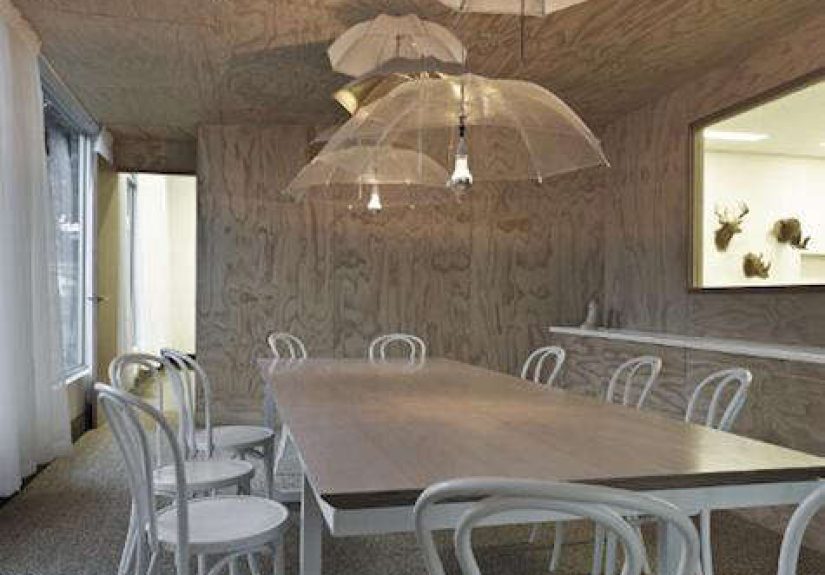
This is the multi-umbrella look: several small umbrellas grouped together, or one large canopy with layered elements underneath.
Done thoughtfully, it feels like an art installation. Done badly, it feels like the ceiling is hosting a yard sale.
The difference is usually scale, spacing, and a consistent palette.
The “Table-Lamp Parasol”
A smaller umbrella shape used as a shade on a table lamp gives off boutique energyespecially in bedrooms, entry consoles,
and cozy reading corners. This version often works best when the umbrella is clearly “shade-sized” and proportionate,
not full “rainstorm survival mode.”
The “Outdoor-Inspired Glow” (for sunrooms and covered patios)
Umbrella-inspired lighting feels right at home where you’d normally see an umbrella: sunrooms, porches, covered patios, and indoor spaces
with lots of plants. The trick is ensuring the lighting components match the location rating (dry/damp/wet) if it’s truly outdoors.
When in doubt, treat anything exposed to humidity like it’s plotting against your wiring.
Design Rules That Keep Umbrella Lighting From Looking Like a Craft Accident
Rule 1: Let the umbrella be the herokeep everything else calm
If your umbrella has stripes, florals, fringe, or a scalloped edge, don’t compete with it. Pair it with simpler furniture lines,
quieter wall colors, and fewer “look at me!” accessories nearby. Statement lighting works best when it has space to breathe.
Rule 2: Match the umbrella’s “era” to something else in the room
A parasol-style shade loves company: vintage-inspired mirrors, brass accents, warm wood tones, or a single antique piece can make the fixture
feel anchored. In a very modern room, echo the umbrella’s shape elsewhererounded chairs, arched mirrors, or a curved credenza
so it looks like part of a design language, not a random cameo.
Rule 3: Scale is everything
Umbrella lighting is supposed to be noticeable. But it still needs proportion:
over a dining table, you generally want a fixture that feels centered and substantial without blocking sightlines.
In a small room, a smaller parasol or tighter profile prevents the “giant hat” effect.
When in doubt, go slightly larger than you thinkthen raise it a bit so it feels airy, not bulky.
Rule 4: Light quality beats light quantity
Umbrella shades often create soft, ambient light. That’s wonderfuluntil you realize you can’t read a menu, chop an onion,
or find the dog’s favorite toy. Plan for layered lighting: the umbrella fixture for mood,
plus task lighting (under-cabinet strips, floor lamps, sconces) where you actually do things.
Materials and Light Effects: Picking the Right Umbrella “Canopy”
Fabric umbrellas
Fabric gives the warmest, coziest glow. Lighter fabrics create brighter diffusion; darker fabrics create moody pools of light.
Textured weaves can throw subtle patterns, which is magicalunless it lands on your face like “zebra interrogation lighting.”
Paper or rice-paper parasols
These can look stunning and airy, especially in boho, Japandi, or eclectic rooms. But paper is delicate and should be paired
only with cool-running, low-heat light sources and plenty of clearance. If you’re aiming for this look,
prioritize safety and keep it away from anything that could touch the bulb.
Transparent or translucent canopies
A translucent canopy can create a dreamy “glow dome” effect, especially with warm color temperatures.
These are best when you want the umbrella silhouette to read clearly, like a floating shape, rather than a bold pattern.
Woven and natural-fiber “umbrella” looks
Rattan, seagrass, raffia, and similar textures are popular because they add depth even when the light is off.
Expect some light-and-shadow texture on the walls and ceilingoften a feature, not a bug.
Safety Notes You Shouldn’t Ignore (Because Ceilings Are Not Great at Putting Out Fires)
Umbrella-as-lighting is a design move, not a permission slip to improvise electrical work.
If you’re buying a ready-made umbrella-style fixture, look for products that are safety certified and appropriate for the location
(dry/damp/wet). If you’re adapting an umbrella as a shade, keep the project strictly on the “shade and styling” side and avoid
modifying wiring or electrical components yourself.
Practical safety principles that apply to umbrella shades
- Choose cool-running bulbs: LEDs typically run cooler than older incandescent bulbs, but fixtures still have wattage limitsfollow them.
- Maintain clearance: Ensure the shade can’t touch the bulb and that heat can escape upward.
- Don’t trap heat: Avoid sealing the top or “capping” the shade; hot air needs a path out.
- Keep burnables away: Curtains, paper décor, and fabrics should not drift into bulb territory.
- Use listed components: In the U.S., listed/certified luminaires and lampholders are the safer pathespecially for anything overhead.
If you want the look with minimal risk, the simplest route is an umbrella-shaped shade paired with a low-heat LED bulb,
or a purpose-built parasol-style fixture from a reputable manufacturer.
For anything that involves ceiling power, a licensed electrician is the grown-up in the room.
How to Get the Umbrella Lighting Look Without Turning Your Weekend Into an Electrical Drama
Option A: Buy umbrella-inspired fixtures
Many modern pendants and table lamps borrow parasol silhouettesscalloped edges, dome shapes, woven textures, and “floating canopy” profiles.
This gives you the umbrella charm with engineered safety and stable mounting. It’s also the easiest way to avoid the “looks cute / scares your insurance company” dilemma.
Option B: Use an umbrella as a non-electric shade adaptation
If you’re determined to use an actual umbrella, keep it strictly as a decorative diffuser around an existing, safe light source
think of it like fashion for your lamp, not a DIY rewiring project. The goal is visual transformation, not electrical invention.
(Your ceiling does not need innovation; it needs stability and respect.)
Option C: Create the vibe with shade-like accessories
Want the parasol look but not the commitment? Use scalloped lamp shades, pleated shades, or woven domes.
Even a single parasol-shaped table lamp on a sideboard can echo the theme and make the room feel intentional.
Where Umbrella Lighting Looks Best
Dining rooms
Umbrella pendants shine (literally) over round or oval tables. They soften faces, reduce glare, and make dinner feel like an event
even if the event is “we found frozen dumplings and we’re proud.”
Bedrooms
A parasol-shaped lamp shade by the bed reads romantic and calm without being overly precious. Choose warm bulbs and a fabric canopy
for the most flattering glow.
Entryways
Entryways benefit from a bold fixture because it sets the tone immediately. Umbrella lighting signals personality and a sense of humor:
you’re telling guests, “Yes, I own a coat rack, but I also own a point of view.”
Kids’ rooms and playful spaces
Umbrella lighting can be whimsical without being childishespecially with solid colors, gentle scallops, or subtle prints.
Keep materials safe and durable, and prioritize cool light sources and stability.
Maintenance and Longevity
- Dust gently: Fabric and woven shades prefer a soft brush or low-suction vacuum attachment.
- Spot-clean cautiously: Test any cleaner on a hidden area first, especially on dyed fabric or paper.
- Check hardware periodically: Tighten fittings and ensure the shade stays centered and secure.
- Replace bulbs thoughtfully: Stick to the recommended bulb type and wattage limit for your fixture.
FAQ: Quick Answers for Curious Design Sleuths
Will an umbrella light fixture make my room darker?
It can, depending on the canopy material and color. Dark or heavily patterned umbrellas absorb more light.
If you want brightness, use lighter canopies and choose bulbs based on lumens (brightness) rather than “watts equivalent.”
Does umbrella lighting work with modern interiors?
Absolutelyespecially if you keep the umbrella clean-lined: solid colors, minimal trim, and a crisp silhouette.
Pair it with modern furniture and let the fixture be the one playful note.
Is it better as a pendant or a table lamp?
Pendants deliver maximum drama; table lamps deliver maximum flexibility. If you’re testing the idea,
start with a parasol-style table lamp or shadethen graduate to overhead once you’re sure the look fits your space.
Field Notes: “Umbrella Lighting” Experiences That Keep Showing Up
Since this is a design sleuth story, let’s end with field notescomposite “case files” inspired by the patterns designers and homeowners
commonly describe when they try umbrella-as-lighting for the first time. Think of these as the greatest hits album of
“what actually happens once it’s hanging in a real home.”
Case File #1: The Thrifted Floral Parasol That Became the Dining Room’s Personality
The first surprise is almost always scale. In photos, an umbrella shade looks charming; in person, it becomes a centerpiece.
Homeowners who pick a floral parasol tend to realize quickly that everything else in the dining room now needs to stop yelling.
The win is huge, though: the parasol gives the room a story. Suddenly the dining area isn’t “table + chairs,” it’s “that delightful space
with the vintage parasol light.” The most common lesson learned here is restraintneutral linens, simpler wall art, and maybe one accent color
pulled from the umbrella print. When the palette clicks, the room looks curated, not chaotic.
Case File #2: The “Why Does This Feel So Cozy?” Bedroom Glow
Parasol-style bedside lighting is often chosen for aesthetics, but people keep it because of the mood.
Fabric canopies soften contrast, reduce harsh shadows, and make nighttime feel calmer. The “experience” people describe is less about brightness
and more about atmosphere: winding down feels easier in light that doesn’t glare. One practical takeaway repeats:
add a second light source for tasks. The parasol lamp can be your sunset glow, while a reading light handles the pages
(and prevents you from holding your book like a detective examining a clue).
Case File #3: The Sunroom That Finally Looked Finished
Sunrooms are tricky because they’re already bright in the day, so the light fixture becomes décor first and illumination second.
Umbrella-inspired lighting works here because it echoes the “outdoor shade” feelingwithout needing a literal patio umbrella indoors.
People who choose woven or scalloped parasol silhouettes in sunrooms often report the same satisfaction:
it gives the ceiling a focal point. The room stops feeling like a hallway of houseplants and starts feeling like a destination.
The most consistent lesson is texture: natural fibers, warm metals, and gentle curves make the space feel intentional,
even when the sun is doing most of the lighting work.
Case File #4: The Playroom That Went Whimsical Without Going Babyish
In playful spaces, umbrella lighting tends to succeed when it leans graphic rather than cutesythink solid colors, tidy stripes,
or a clean scallop edge. The experience people describe is “joy” with a side of “wow, this is surprisingly stylish.”
The fixture becomes a design anchor: toys can be colorful, walls can be calm, and the umbrella shape ties the room together.
A repeated takeaway is durability and safety: avoid fragile materials, keep heat low, and choose stable, secure setups.
In other words, build the whimsy on top of sensible choices.
Case File #5: The Party Trick Effect (a.k.a. Why Guests Won’t Stop Talking About It)
Umbrella lighting is a social fixtureliterally. People notice it. They ask about it. They take photos of it.
The consistent “experience” is that it makes a room feel more personal because it’s not the most expected choice.
Even when the rest of the décor is simple, the umbrella shade reads like a signature.
The final lesson from this case file is confidence: if you commit to the shape, match it with one or two supporting details,
and keep the lighting comfortable, the idea stops feeling quirky and starts feeling clever.
Conclusion: The Verdict on Umbrella Lighting
The umbrella-as-lighting fixture isn’t just a gimmickit’s a smart mashup of function and flair.
The shape is naturally good at diffusing light, the silhouette is instantly sculptural, and the styling possibilities run from
coastal to vintage to modern graphic. Treat it like a statement accessory, respect the basics of safe lighting, and you get a fixture
that does what great design always does: it makes a space feel like someone interesting lives there.