Table of Contents >> Show >> Hide
- What Thatch Is (and Why It’s Not Automatically the Villain)
- How to Tell If Your Lawn Needs Dethatching
- Dethatching vs. Aeration vs. “Raking Really Hard”
- The Best Time to Dethatch (Timing Is Basically Everything)
- Step-by-Step: How to Dethatch Without Wrecking Your Lawn
- Aftercare: The 2–4 Weeks That Decide Everything
- Preventing Thatch From Coming Back Like a Bad Sequel
- Common Dethatching Mistakes (a.k.a. How Lawns Get Traumatized)
- Real-Life Examples: What “Right Time, Right Method” Looks Like
- Extra : Homeowner Experiences From the “Thatch Wars”
- Conclusion: A Cleaner Base Layer, A Stronger Lawn
Your lawn is basically a tiny outdoor carpet that you water, feed, and then ask to look fabulous while you walk on it in muddy shoes.
So when it starts looking tiredthin spots, soggy patches, water that runs off instead of soaking init’s tempting to blame “bad luck” or “that neighbor’s vibes.”
Often, the real culprit is something far less dramatic: too much thatch.
Here’s the good news: dethatching is one of the most satisfying lawn fixes because it’s immediate. You do the work, you pull out the mess, and your grass finally
gets air, water, and nutrients where it wants themdown at the roots. Done at the right time and with the right intensity, dethatching can be the difference
between “meh” and “movie-set lawn.”
What Thatch Is (and Why It’s Not Automatically the Villain)
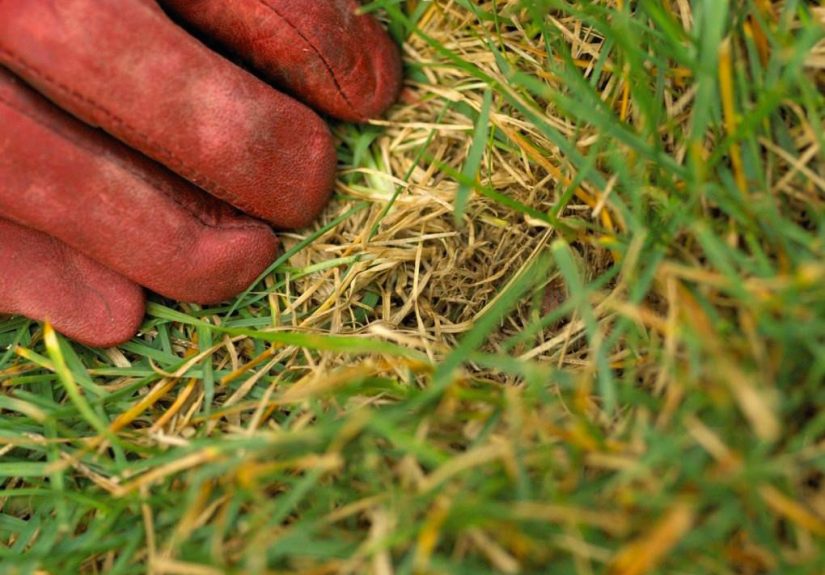
Thatch is a spongy layer of partially decomposed stems, roots, and runners that forms between green grass blades and the soil surface.
A little thatch is normaland can even be helpful. Think of it as a light “insulation layer” that cushions the lawn and slows down moisture loss.
The problem starts when that layer gets too thick and becomes a barrier instead of a buffer.
Why thatch builds up
Thatch accumulates when organic material is produced faster than soil microbes can break it down. That imbalance can happen for several reasons:
- Over-fertilizing (especially with lots of quick-release nitrogen) pushes growth faster than decomposition can keep up.
- Overwatering or frequent shallow watering encourages shallow roots and can reduce healthy microbial breakdown.
- Compacted soil limits oxygen in the root zone, slowing decomposition and stressing grass.
- Low or off-balance soil pH can reduce microbial activity and weaken the lawn’s natural recycling system.
- Grass type matterssome turfgrasses are more prone to thatch because they spread via stolons/rhizomes.
One myth worth retiring: grass clippings are not usually the main cause of thatch. When you mow correctly (not scalping, not letting it get
jungle-tall), clippings are mostly water and break down quicklyreturning nutrients to the lawn. Thatch is more about stems and roots than leaf tissue.
How to Tell If Your Lawn Needs Dethatching
Not every lawn needs dethatching. Some lawns will go years without it, especially if they’re mowed properly, not overfed, and grown in healthy soil.
The key is to measure instead of guessing.
Quick signs that suggest excess thatch
- The lawn feels spongy or “bouncy” underfoot.
- Water puddles or runs off instead of soaking in.
- You see thin growth even though you water and fertilize.
- You notice more disease or pests hanging around than usual.
- Roots look shallow when you pull up a small area of turf.
The simple “lawn plug” test
- Use a spade or knife to cut out a small wedge/plug of grass (a few inches deep).
- Look at the layers: green grass on top, soil at the bottom, and a brown fibrous layer in between.
- Measure that brown layer. If it’s around 1/2 inch or more, your lawn is a good candidate for dethatching.
Some turf experts note that lawns can tolerate a moderate thatch layer (and that not all thatch is harmful). The goal is to remove
excess thatchenough to restore movement of water/air/nutrients without shredding your lawn like it owes you money.
Dethatching vs. Aeration vs. “Raking Really Hard”
“Dethatching” gets used as a catch-all term, but different tools do different jobs. Choosing the right method can save your grassand your weekend.
Manual raking (best for light thatch and cleanup)
A sturdy thatch rake or leaf rake can pull up dead grass and a small amount of surface material. It’s useful when your issue is mostly
matted debris and not a thick, dense thatch layer. It’s also a solid warm-up if you enjoy cardio disguised as yard work.
Core aeration (great for compaction and gradual thatch reduction)
Core aeration removes plugs of soil, improving airflow and helping water move down into the root zone. It can also help reduce thatch over time,
especially when combined with good mowing, watering, and fertilizing habits. It’s typically less aggressive than heavy dethatching and is often
the better first move if your lawn is compacted and only moderately thatchy.
Power dethatching / power raking / vertical mowing (for thicker thatch)
These machines use tines or vertical blades to pull up and cut into the thatch layer. They can remove a lot of material quicklysometimes
shockingly quickly, like “Where did all this come from and do I need therapy?” quickly. This is the method you use when thatch is truly
blocking your lawn’s ability to function.
Important reality check: power dethatching is stressful for turf. It’s effective, but it can leave your lawn looking rough temporarily.
That’s not failurethat’s the process. Your aftercare determines whether you get a comeback story or a cautionary tale.
The Best Time to Dethatch (Timing Is Basically Everything)
Dethatch when your grass is actively growing so it can recover fast. Dethatching at the wrong time is like scheduling a haircut
the day before picture dayexcept your lawn can’t wear a hat.
Cool-season grasses (common in the North and transition zones)
Cool-season lawns (think Kentucky bluegrass, perennial ryegrass, tall fescue) typically recover best when dethatched in
late summer to early fall. Early spring can work in some situations, but fall is often preferred because it pairs well with overseeding
and gives grass time to establish before winter.
Warm-season grasses (common in the South)
Warm-season lawns (like bermudagrass and zoysiagrass) are generally best dethatched in late spring to early summer,
after the lawn has greened up and is growing strongly. Avoid dethatching during dormancy or during extreme heat or drought stress.
Conditions to avoid
- Very wet soil (you’ll tear turf and compact soiltwo problems for the price of one).
- Drought or heat waves (your lawn is already stressed; don’t add insult to injury).
- When the grass is dormant (recovery is slow and damage is more likely).
Step-by-Step: How to Dethatch Without Wrecking Your Lawn
You don’t need to treat dethatching like a high-stakes heist, but you do want a plan. Here’s a homeowner-friendly approach that works across many lawns.
(If you’re younger or new to power equipment, ask an adult for helpdethatchers are not the “learn on hard mode” tool.)
1) Prep the lawn
- Mow slightly shorter than usual so the machine can reach the thatch layer more easily (avoid scalping).
- Water lightly 24–48 hours before if the soil is dryaim for “slightly moist,” not muddy.
- Mark obstacles (sprinkler heads, shallow cables, hidden rocks) so you don’t discover them the exciting way.
2) Choose your method
If your thatch is barely over the line, core aeration + improved practices may be enough. If it’s clearly thick (around 1/2 inch or more),
a power dethatcher or vertical mower is usually the most direct fix.
3) Set the machine correctly
Start with a conservative setting. You’re trying to remove the thatch layer, not excavate for a backyard pool. The machine should pull up
thatch and dead material without digging deep trenches or ripping out massive chunks of living turf.
4) Dethatch in passes
- Make one pass in straight lines, like mowing.
- If needed, do a second pass in a different direction (crosshatch) for more thorough removal.
- Stop occasionally and check your progress. If you’re pulling up almost no material, adjust slightly. If you’re pulling up the lawn’s will to live, dial it back.
5) Rake and remove debris
Dethatching creates piles of material that must be removed. Leaving it in place can smother the lawn you just tried to help.
Bag it, compost it (if it’s not full of weed seed heads), or use municipal yard-waste pickup if available.
Aftercare: The 2–4 Weeks That Decide Everything
Dethatching opens the door. Aftercare is what walks your lawn through it.
Right after dethatching (days 1–3)
- Water lightly as needed to prevent dryingespecially if you exposed soil.
- Don’t panic about a messy look. Temporary ugliness is a normal stage in many lawn glow-ups.
Renovation boost (week 1)
- Overseed cool-season lawns if you see thin areasdethatching improves seed-to-soil contact.
- Fertilize appropriately for your grass type and season (avoid overdoing nitrogen).
- Consider topdressing with a thin layer of compost to support microbial breakdown and recovery (optional but helpful).
Back to normal (weeks 2–4)
- Resume regular mowing once growth picks upnever remove more than about one-third of the blade at a time.
- Water deeply and less frequently as the lawn stabilizes (instead of constant shallow watering).
- Watch for bare spots and reseed/patch early while conditions are favorable.
Preventing Thatch From Coming Back Like a Bad Sequel
If dethatching feels like a lot, you’ll love this section: the best dethatching schedule is the one you rarely need.
Preventing excess thatch is mostly about balanced lawn care.
Mow smarter
- Mow often enough that you’re not scalping the lawn.
- Keep blades sharp for clean cuts (ragged cuts stress turf).
- Leave clippings when mowing is consistentthey decompose quickly and recycle nutrients.
Water better
- Avoid constant shallow watering that encourages shallow roots.
- Water based on weather and soil conditions, not “because it’s Tuesday.”
Feed responsibly
- Don’t overdo nitrogen, especially quick-release formulas that push excessive growth.
- Base fertilizer decisions on your lawn’s needs (soil testing helps, even if it’s not glamorous).
Relieve compaction
Core aerationespecially for compacted lawnscan improve soil structure and help your lawn process organic material more efficiently.
If your thatch problem keeps returning, compaction and drainage are often part of the story.
Common Dethatching Mistakes (a.k.a. How Lawns Get Traumatized)
- Dethatching at the wrong time (dormancy, extreme heat, or severe drought).
- Going too deep and tearing into living turf and soil.
- Skipping cleanup and leaving piles of thatch to smother regrowth.
- Assuming dethatching is annual. Many lawns don’t need it every year; some rarely need aggressive dethatching if maintained well.
- Ignoring the “why”. If you don’t address compaction, overwatering, or overfertilizing, thatch can rebuild.
Real-Life Examples: What “Right Time, Right Method” Looks Like
Example 1: A cool-season lawn in the Midwest with a spongy feel
You measure 1/2 inch of thatch in several spots. The lawn is thin after summer stress. You schedule dethatching in early fall, clean up thoroughly,
then overseed and water consistently for two weeks. By late fall, the lawn looks thicker because new seedlings established in open spaces created by dethatching.
Next year, you add core aeration and dial back nitrogen, so the thatch layer doesn’t rebound.
Example 2: A warm-season lawn in the South that greens up late
You notice runoff during watering and a thick, springy layer under bermudagrass. You wait until the lawn is fully green and actively growing,
dethatch in late spring, and follow with a careful watering plan. The lawn looks rough for a couple of weeks, but summer growth fills in fast.
You avoid dethatching in fall so the turf doesn’t head into cooler months weakened.
Extra : Homeowner Experiences From the “Thatch Wars”
Ask five homeowners about dethatching and you’ll get five different storiesmostly because dethatching has a unique way of turning “a simple yard task”
into “why is my driveway covered in what looks like an ancient hay bale?”
One of the most common experiences is the shock factor. People rent or buy a dethatcher expecting a light dusting of debris,
like a polite little exfoliation for the lawn. Instead, they make the first pass and the machine pulls up enough brown material to knit a sweater.
The first reaction is usually: “Did I just ruin my yard?” The second reaction is: “Wait… was my lawn wearing this the whole time?”
That’s when it clicksthatch isn’t always obvious from above. You can have a lawn that looks decent from the sidewalk but still has a thick layer
blocking water and air down where it matters.
Another classic experience is the timing lesson. Plenty of people try dethatching during the first warm weekend of spring because
they’re energized, the grill is out, and the yard is calling. But if the grass isn’t actively growing yetor if the weather swings back coldthe lawn
can sulk instead of bouncing back. Homeowners describe that phase as “the awkward teenager stage” where the lawn looks patchy and unhappy for longer
than expected. The ones who succeed usually share the same follow-up: they watered appropriately, didn’t over-fertilize in panic, and gave the lawn time.
Dethatching also tends to expose hidden lawn habits. People who water lightly every day often discover their lawn had been rooting
into the thatch layer instead of the soil, so when the thatch is removed, the lawn suddenly feels more sensitive. That’s not failurethat’s feedback.
After dethatching, switching to deeper, less frequent watering helps train roots back down where they’re more drought-tolerant.
Then there’s the cleanup reality. Homeowners who planned a “quick dethatch” often end up spending more time raking and bagging than
they spent running the machine. The experienced folks treat cleanup like part of the job, not an optional side quest: they keep tarps handy, rake in sections,
and compost what they can. Some even call dethatching “a two-part workout”: the machine pass is legs, the cleanup is arms.
The best homeowner stories end with the same line: “It looked worse before it looked better.” If you dethatch at the right time, avoid going too deep,
and follow with smart aftercarewatering, overseeding where needed, and adjusting the habits that caused the buildupyour lawn usually rewards you.
The lawn becomes less spongy, water soaks in faster, and growth looks more even. That’s the moment dethatching stops being a chore and starts feeling
like a reset button. Your grass doesn’t need perfectionit just needs a clear path to the soil. And dethatching, done wisely, gives it exactly that.
Conclusion: A Cleaner Base Layer, A Stronger Lawn
Dethatching isn’t about chasing a “perfect lawn” fantasy. It’s about restoring the basics: airflow, water movement, nutrient access, and healthy rooting.
Measure first. Dethatch only when the thatch layer is truly excessive. Time it to your grass type’s active growth period. Then follow up with smart aftercare
and prevention so you’re not fighting the same battle next season. Do that, and your lawn can go from tired to tip-topwithout needing a miracle or a new mower.