Table of Contents >> Show >> Hide
- Why Make a DIY Cookbook Box Instead of Buying One?
- Pick Your Cookbook Box Style
- Size Guide: Make It Fit Your Cookbooks (Not the Other Way Around)
- Materials and Tools
- DIY Cookbook Box: Step-by-Step Build (Open-Top Version)
- Upgrades That Make Your Cookbook Box Feel “Store-Bought”
- Finish Options: Make It Durable and Kitchen-Friendly
- Decor Ideas: Make Your DIY Cookbook Box Look Like You Meant It
- How to Organize Your Cookbook Box Like a Pro
- Mistakes to Avoid (So Your Box Doesn’t Become “Rustic” by Accident)
- Frequently Asked Questions
- Final Thoughts
- Experiences From Real Kitchens: What It’s Like Living With a DIY Cookbook Box
Cookbooks are kind of like houseplants: you start with one “easy” one, and then suddenly you’re
rearranging your kitchen around a towering collection that insists it needs sunlight and a dedicated shelf.
If your cookbooks are currently stacked like a delicious game of Jengaor shoved in a cabinet that
avalanches every time you reach for paprikaa DIY cookbook box is the tidy, good-looking,
budget-friendly solution you didn’t know you needed.
A cookbook box is basically a sturdy, stylish container designed to store cookbooks (and optionally recipe
cards, notebooks, and that one spatula you swear you’ll put away later). The best part: you can build one
in an afternoon, customize it to your space, and make it look like it came from a fancy home storewithout
paying “fancy home store” prices.
Why Make a DIY Cookbook Box Instead of Buying One?
Sure, you can buy a cookbook storage bin. But building your own gives you three superpowers:
the right size, the right style, and the right features.
Your kitchen, your rules.
Real-life wins you’ll notice immediately
- Less clutter: cookbooks stop migrating across countertops like they’re on a cooking show.
- Safer storage: fewer toppling stacks and fewer accidental cookbook “face taps.”
- Faster meal planning: everything is in one placebooks, notes, recipe cards, bookmarks.
- Better kitchen vibe: a pretty box is decor that also pulls its weight.
Pick Your Cookbook Box Style
Before you cut wood (or commit to a look), decide how your box will live in your kitchen. Here are the
most popular options, each with its own personality.
1) Open-top crate-style cookbook box (easiest)
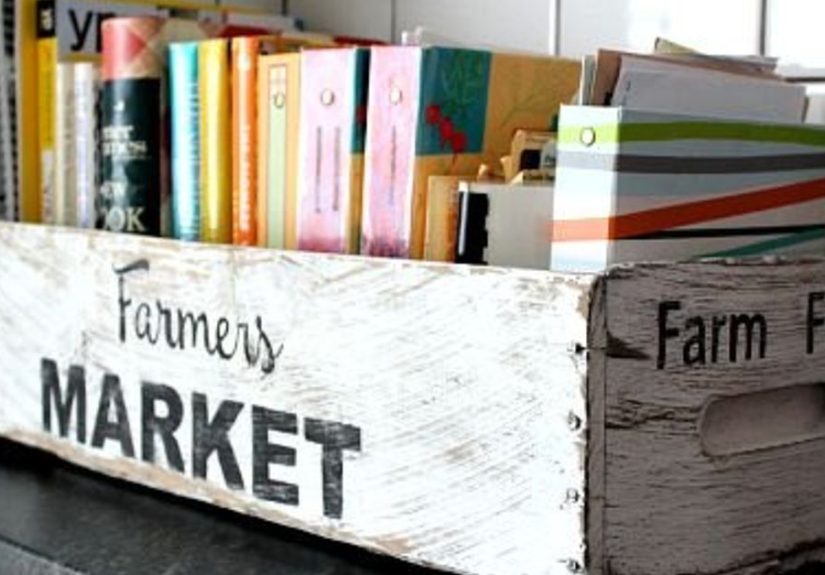
Think “wooden crate meets countertop assistant.” This is the fastest build: four sides, a bottom, done.
It’s perfect if you want grab-and-go access to books. Also perfect if you are the type of person who
thinks lids are just “extra steps.”
2) Lidded recipe-and-cookbook hybrid (best for mixed storage)
Want to store recipe cards, clipping envelopes, a small notebook, or divider tabs? Add a lid and/or
interior rails. This style feels more “heirloom” and keeps things dust-free.
3) Leather-wrapped or decoupaged “statement box” (prettiest)
If your kitchen aesthetic is “cozy but curated,” consider wrapping a simple box with leather (or faux
leather) or decoupaging it with patterned paper. It’s like giving your box a tiny outfitbecause
organization deserves fashion too.
Size Guide: Make It Fit Your Cookbooks (Not the Other Way Around)
The most common mistake with DIY storage projects is building a box that’s technically beautiful…
and then realizing it holds exactly one cookbook and a single sad pamphlet.
Recommended interior dimensions
- For standard cookbooks: aim for an interior width of about 9–10 inches and a depth of 10–12 inches.
- For oversized cookbooks: go 11–12 inches wide and 13–14 inches deep.
- For 4×6 recipe cards: interior width about 6.5–7 inches, plus height to allow tabbed dividers.
Pro tip: measure your largest cookbook (including the cover), then add about 1 inch of wiggle room.
Cookbooks like personal space too.
Materials and Tools
This project can be beginner-friendly. You can build it with basic tools, or level up with nicer joinery
if you want a sturdier, more polished finish.
Materials
- Wood boards (pine, poplar, or plywood are great starter options)
- Wood glue
- Brads or finishing nails (optional but helpful)
- Sandpaper (80/120/220 grit)
- Finish (paint, stain + topcoat, or food-safe oil/wax if desired)
- Optional: hinges + latch (for a lid), handles, label holder, divider rails
Tools
- Measuring tape + pencil
- Square (for crisp 90° corners)
- Saw (miter saw, circular saw, or even a handsaw)
- Drill/driver
- Clamps (or painter’s tape in a pinch)
- Sander or sanding block
DIY Cookbook Box: Step-by-Step Build (Open-Top Version)
This is the simplest, most practical version: an open-top box sized to hold cookbooks upright or stacked.
You can build it from 1×10 boards, plywood, or reclaimed wood.
Step 1: Decide your final dimensions
Example “standard cookbook” size:
Interior 10″ wide x 12″ deep x 10″ tall.
Add wood thickness to calculate your cut list (most 1x boards are about 3/4″ thick).
Step 2: Cut your pieces
For a basic box, you’ll cut:
- 2 long sides
- 2 short sides
- 1 bottom panel
Keep cuts straight and square. If your cuts are slightly off, the box will still work, but you’ll spend
more time sanding and whispering, “Why are you like this?” to a piece of wood.
Step 3: Choose a joinery method
Beginner-friendly options:
- Butt joints: easiestglue and nail/screw through the sides.
- Rabbet joints: strongermore glue surface and cleaner edges if you can cut rabbets.
- Mitered corners: prettyrequires precise cuts, often reinforced with splines or brads.
Step 4: Assemble the frame
- Dry-fit your pieces first (no glue) to confirm everything aligns.
- Apply wood glue along the edge of a short side and attach to a long side at 90°.
- Clamp or tape the corner, then repeat for the remaining sides.
- Check for square by measuring diagonalsif they match, you’re square.
Step 5: Attach the bottom
You can set the bottom panel flush with the lower edge, or inset it slightly for a cleaner look.
Glue it, then secure with brads or screws. If the box will hold heavy cookbooks, don’t be shy about
reinforcementbooks are deceptively heavy and love testing your craftsmanship.
Step 6: Sand everything (yes, everything)
Start with 80 grit to knock down rough spots, move to 120, then finish with 220 for smooth edges.
Focus on corners and any glue squeeze-out. Smooth wood feels better, looks better, and won’t snag
your favorite tea towel like it’s starting a rivalry.
Upgrades That Make Your Cookbook Box Feel “Store-Bought”
Add handles for easy carrying
Side handles turn your box into a portable cookbook caddy. Great for moving from pantry to counter or
bringing recipes to the table. Use metal handles, leather straps, or routed handholds.
Add a divider system
If you want the box to double as a recipe card organizer, add interior rails or grooves so you can slide
in dividers. You can even create sections like “Weeknights,” “Holiday Chaos,” and “I Swear I’ll Make This.”
Build a lid (and keep things dust-free)
A hinged lid is perfect if you store recipe cards, clippings, or handwritten notes. Use small brass
hinges and add a latch. If you want a cleaner look, mount hinges without mortising to keep the build quick.
Label holder or chalkboard label
A small label holder makes it easier to categorize your collection. Bonus: it looks charming in a
“vintage kitchen library” way without requiring you to actually own a library ladder.
Finish Options: Make It Durable and Kitchen-Friendly
A kitchen is not a gentle place. It’s humid, it’s messy, and it contains spaghetti saucean ancient force
that ignores all known laws of splash physics. So your finish matters.
Paint (easy and forgiving)
Paint is great for farmhouse style, modern color pops, or hiding imperfect wood. Use a primer if the wood
is knotty or stained. Seal with a clear topcoat for wipeability.
Stain + protective topcoat (classic wood look)
Stain adds warmth and makes inexpensive wood look more expensive. Follow with polyurethane or a clear
water-based topcoat for durability. Let it cure fully before loading books.
Food-safe oil and wax (optional, but nice)
If the box might touch food (like holding recipe cards near messy prep, or doubling as a breadboard storage),
consider a food-safe finish like mineral oil and beeswax blends. It’s not mandatory for a cookbook box, but it’s
a good option if you want a natural, low-sheen finish.
Decor Ideas: Make Your DIY Cookbook Box Look Like You Meant It
Decoupage for a patterned, custom look
Decoupage is basically “wallpaper for small things.” Apply decoupage medium, smooth your paper, then seal it.
Choose patterns that match your kitchen: vintage botanicals, classic gingham, bold modern shapes, or even
photocopies of handwritten family recipes (for a sentimental flex).
Leather or faux leather wrap
A leather-wrapped box looks upscale and is surprisingly doable: wrap panels, glue neatly, and trim edges cleanly.
It’s a sleek way to make a simple build feel boutique.
Wood-burning or stencil lettering
Add “RECIPES,” your family name, or a funny label like “DO NOT TRUST ME WITH EXTRA GARLIC.”
Wood burning gives a rustic look; stencils keep it crisp and modern.
How to Organize Your Cookbook Box Like a Pro
Your box isn’t just storageit’s a system. A tiny, beautiful system that makes you feel like you have your life
together (even if your spice drawer says otherwise).
Option A: Theme-based sections
- Weeknight dinners
- Baking
- Grilling
- Holiday meals
- “Trying soon” (the optimism section)
Option B: Cross-reference cookbooks with recipe cards
If you have favorite recipes in books, create a recipe card that lists: recipe name, cookbook title, and page number.
Then you can browse your box like a menu of hits instead of flipping through ten books every Tuesday at 6:12 p.m.
Option C: Keep a small notebook inside
Add a notebook for tweaks and notes (“use less salt,” “double the sauce,” “do not attempt when hungry”).
Your future self will thank you.
Mistakes to Avoid (So Your Box Doesn’t Become “Rustic” by Accident)
- Skipping the square check: a box that’s out of square will wobble and annoy you forever.
- Too-thin bottom panel: cookbooks are heavy; flimsy bottoms sag and crack.
- No protective finish: kitchens are tough; protect your work so it stays wipeable.
- Overbuilding: you don’t need museum-grade joinery unless you want it. Functional first.
Frequently Asked Questions
Is this a beginner project?
Yes. If you can measure, cut, glue, clamp, and sand, you can build a DIY cookbook box. Start with butt joints,
then level up later.
What’s the best wood for a cookbook box?
Pine is affordable and easy to work with. Poplar is a great paint-grade option. Plywood works well for clean,
modern builds. Reclaimed wood adds characterjust watch for nails and warping.
Can I make this without power tools?
You can, especially if you buy boards cut to size at a home improvement store. Use a handsaw for small adjustments,
and focus on careful measuring.
Final Thoughts
A DIY cookbook box is one of those rare projects that’s equal parts practical and charming. It
organizes your kitchen, protects your favorite recipes, and looks good doing it. Build it simple or build it fancy
either way, you’ll end up with a piece that feels personal, useful, and surprisingly satisfying every time you slide
a cookbook into place like you’re filing away culinary ambition.
Experiences From Real Kitchens: What It’s Like Living With a DIY Cookbook Box
Once a cookbook box enters your kitchen, something funny happens: you start using your cookbooks more.
Not because the box is magical (although we can’t fully rule that out), but because the books stop hiding.
When cookbooks are stacked in a cabinet behind the slow cooker you only use twice a year, they become
“someday books.” When they’re sitting neatly in a box on a shelf or counter, they become “Tuesday night books.”
A lot of home cooks notice the box becomes a mini command center. The first week, you’ll toss in a few favorites
and feel proud. The second week, you’ll add sticky notes and bookmarks and a pen because apparently you’re now
the kind of person who annotates recipes like a college textbook. By the third week, you’ll discover the box
is also holding a notepad, a grocery list, and that coupon you forgot existed. Congratulationsyou built storage,
and storage built a lifestyle.
Another common experience: your family starts treating the box like a menu. Someone will flip through cookbooks
and say, “Can we make this?” which is both adorable and mildly dangerous. Because now you’re considering homemade
ramen on a weeknight, and it’s 8:15 p.m., and the sink is already judging you. This is where the box shines as a
reality checkif you organize it well, you can keep “quick wins” upfront and tuck the “weekend projects” in the back.
It’s like meal planning with guardrails.
If you add a recipe-card section, you’ll probably go through a nostalgic phase. Handwritten cards feel personal in
a way screenshots never will. People often find themselves calling relatives for “that cookie recipe” or copying
notes from older cookbooks. The box becomes part storage, part memory keeper. And yes, it’s okay if some of the
handwriting is just you writing “more cheese” with the confidence of a scientist publishing peer-reviewed research.
Practical reality: the finish matters. Kitchens are messy, and your box will eventually meet flour dust, oily fingers,
and whatever that mysterious sticky spot is near the stove. Folks who apply a wipeable topcoat tend to stay happier
long-term because cleaning becomes a quick swipe instead of a whole “why did I choose untreated wood” moment.
If you paint it, you’ll probably do at least one touch-up after a yearbecause life happens and so does marinara.
The most satisfying moment people describe is the “reset.” At the end of a week, you put the books back, stack your
recipe cards, and the kitchen looks calmer instantly. It’s a tiny ritual that signals, “Okay, we fed ourselves.
We did the thing.” And if you built the box with handles, you’ll eventually carry it to a table or a different room
like a little culinary briefcasebecause nothing says confidence like walking into your dining area with your recipes
in one hand and a wooden spoon in the other.
In short: living with a DIY cookbook box feels like upgrading from “kitchen chaos” to “kitchen with intentions.”
It won’t cook dinner for you (rude), but it will make cooking feel more organized, more accessible, and a bit more fun.
And honestly, if a wooden box can help you find your favorite pancake recipe faster, it deserves a place of honor.