Table of Contents >> Show >> Hide
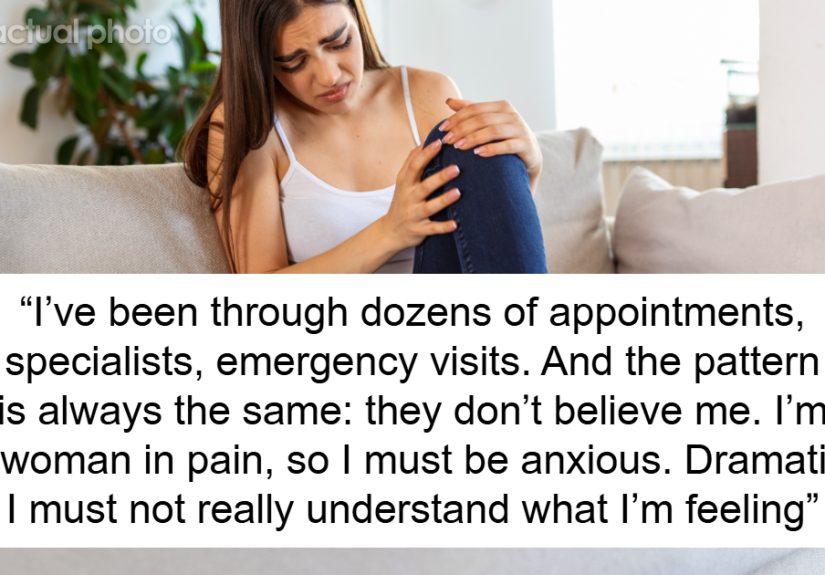
Some headlines sound so outrageous they practically come with their own eye-roll. This is one of them. A woman explains her pain. She gets brushed off. Her husband repeats the same concern, maybe with fewer apologies and a slightly deeper voice, and suddenly the room gets serious. She can’t believe it. Honestly, neither can anyone who has spent time listening to women talk about the health care system.
But here’s the uncomfortable part: this story feels believable because it fits a pattern. For years, women have described being told their symptoms are stress, hormones, anxiety, or “just part of being a woman.” Meanwhile, many of the conditions that hit women hardest endometriosis, autoimmune disorders, migraine, chronic pelvic pain, and even some forms of heart disease can be hard to spot quickly, easy to underestimate, and far too easy to wave away. When that happens, a husband, partner, parent, or friend can accidentally become the translator of pain. Same message. Different messenger. Very different response.
This article is not about dunking on every doctor in America. Most clinicians are trying to help. It is about the stubborn ways bias, old stereotypes, rushed appointments, and imperfect research still shape who gets believed, who gets tested, and who gets told to “monitor it and see.” For women in pain, that gap can feel less like a crack in the system and more like a canyon with fluorescent lighting.
Why This Headline Hits Such a Nerve
At first glance, the headline sounds like one bizarre story. In reality, it lands because it captures a bigger truth about credibility. Pain is subjective. Doctors cannot scan every ache the way they can scan a broken bone. So medicine relies heavily on what patients say, how they say it, and whether the clinician unconsciously trusts the person saying it. That is where trouble begins.
Women have long been filtered through old assumptions: they are emotional, they exaggerate, they are anxious, they are dramatic, they are “fine, but worried.” None of those stereotypes need to be spoken out loud to shape a visit. They can quietly influence how a complaint is labeled, how fast tests are ordered, or whether pain relief is offered promptly. The stethoscope is not supposed to double as a mute button, but for many women, it can feel that way.
When a husband speaks up, the system sometimes hears authority instead of emotion. It hears urgency instead of sensitivity. It hears “something is wrong” instead of “someone is upset.” That does not mean husbands should stay silent. Advocacy helps. It does mean women should not need a male co-signer for their own suffering.
The Gender Pain Gap Is Real
Women Often Carry a Heavier Pain Burden
One of the maddening ironies here is that women are not complaining more while hurting less. In many cases, they are hurting more, more often, and for longer stretches of time. Chronic pain conditions disproportionately affect women, and women are also more likely to live with pain that limits daily activities. So the patient population most likely to need thoughtful pain assessment is also the population most likely to describe feeling dismissed.
That mismatch matters. When pain is frequent, complex, or difficult to trace to one neat lab result, clinicians can fall into a lazy mental shortcut: if the explanation is not obvious, the person must be overreacting. That is not medicine at its best. That is medicine guessing in a hurry.
Women May Wait Longer and Receive Less Immediate Relief
Research has repeatedly raised concerns that women are less likely to get quick, adequate pain treatment in emergency and urgent care settings. Some studies have found longer waits for evaluation, less frequent pain scoring, and lower odds of receiving pain medication for similar complaints. In plain English: two people walk in hurting, and the woman may leave with less validation, less medication, or more delay.
That gap becomes especially dangerous when the condition is serious but not “classic.” Chest pain is a good example. Women’s heart attack symptoms can be dismissed because they may look less like the Hollywood version of a man clutching his chest and collapsing near a salad bar. Women may report fatigue, nausea, jaw pain, upper back pain, dizziness, or pressure that is easier to shrug off if a clinician is anchored to the wrong template.
Symptoms Still Get Framed as Emotional
Another recurring theme is psychological mislabeling. To be clear, anxiety and depression are real and important. But they can also become diagnostic escape hatches. Once a chart starts whispering “anxious,” every future complaint risks being interpreted through that lens. A real pain condition can end up wearing the wrong name tag for months or years.
That framing is especially damaging in women’s health. Pelvic pain, severe menstrual pain, pain during procedures, and postpartum symptoms have all been minimized historically because suffering has been normalized as part of womanhood. If half the population is expected to just tough it out, the system can become weirdly impressed by endurance and weirdly uninterested in relief.
Why a Husband’s Voice Can Change the Room
Credibility Bias Is Powerful
People do not enter exam rooms as blank slates. They carry social assumptions with them, including assumptions about gender, emotion, reliability, and authority. A husband who says, “My wife is in severe pain and this is not normal,” may be heard as objective, calm, and credible. The wife may have said the same thing ten minutes earlier and been read as distressed, overwhelmed, or “health anxious.”
That difference is infuriating, but it is not mysterious. Medicine exists inside culture, and culture still rewards male certainty more than female insistence. Apparently, pain becomes more official when it arrives with a bass voice and a wedding band. That is not how it should work, but it is how many women describe it working.
The “Good Patient” Trap
Women are often socialized to be agreeable, polite, and not too demanding. In health care, that can backfire. If a woman stays composed, she may be told she cannot be in that much pain. If she cries or presses harder for help, she may be labeled dramatic. It is a lose-lose routine: too calm to be urgent, too upset to be credible.
A spouse or partner can sometimes break that trap by speaking with the kind of bluntness patients fear will get them written off. He may ask for imaging, insist on escalation, question discharge, or demand a second opinion. Suddenly the concern feels harder to sidestep.
Invisible Conditions Make the Problem Worse
Some of the most commonly dismissed pain conditions are not obvious from the doorway. Endometriosis, migraine, fibromyalgia, autoimmune disorders, and some gastrointestinal or pelvic pain syndromes can be debilitating without producing a dramatic first glance. If there is no visible wound and the labs are not screaming, patients can end up doing exhausting extra work just to be seen as believable.
That helps explain why so many women talk about bringing a witness to appointments. Not because they forgot their symptoms, but because they learned that corroboration sometimes counts more than first-person experience. Imagine needing a reference letter for your own uterus. That is the level of absurdity we are dealing with.
Where Women’s Pain Gets Dismissed Most Often
Endometriosis and Pelvic Pain
Endometriosis is one of the clearest examples of delayed belief. Many patients spend years being told their period pain is normal, their digestive symptoms are unrelated, or their exhaustion is stress. By the time some women get a diagnosis, they have been through multiple clinicians, plenty of trial-and-error treatment, and more heating pads than should legally fit in one apartment.
The damage is not just physical. Long diagnostic delays teach patients that severe pain can still be treated like an inconvenience. They also train women to doubt themselves, which may be the sneakiest injury of all. When your body keeps yelling and the system keeps shrugging, self-trust starts to erode.
Heart Symptoms
Heart disease in women has been historically underrecognized, and symptom patterns can differ enough to create dangerous delays. Women do experience chest pain, but they may also have shortness of breath, unusual fatigue, nausea, jaw pain, or back pain. If a clinician expects a textbook male presentation, a woman with a serious cardiac event can be misread as having indigestion, panic, or “something noncardiac.”
That is one reason the husband-steps-in dynamic feels so unsettling. If a spouse has to legitimize symptoms before clinicians escalate care, the patient is not just inconvenienced. She may be put at real medical risk.
Autoimmune, Neurologic, and Chronic Pain Conditions
Women are also heavily represented in autoimmune diseases and chronic pain syndromes that do not always produce fast, obvious answers. When symptoms come and go, spread across body systems, or resist simple explanation, patients may get bounced between specialties like a hot potato with excellent insurance paperwork.
Each handoff can bring fresh doubt. “Maybe it’s stress.” “Maybe it’s lifestyle.” “Maybe this is just how your body is.” The cumulative effect is not just delayed diagnosis. It is emotional wear and tear, financial burden, and the exhausting need to perform seriousness over and over again.
The Cost of Not Being Believed
Dismissal has consequences beyond hurt feelings. It can mean delayed testing, slower diagnoses, untreated pain, more emergency visits, worse outcomes, and deep mistrust of the medical system. Some women stop seeking care because they are tired of auditioning for sympathy. Others wait too long to return because they do not want to be labeled difficult. Neither response is irrational. Both are dangerous.
There is also the issue of medical records. Once a patient is described as anxious, dramatic, or unreliable, that framing can follow her across visits. A biased note can become a ghost that keeps speaking long after the appointment ends. For women of color, the burden can be even heavier, because gender bias and racial bias can collide in especially harmful ways.
And then there is the private cost: the humiliation of knowing your pain became believable only after your husband repeated it. It can make a woman feel erased in her own appointment, like a narrator whose lines were cut from the script until a male guest star entered the scene.
What Better Care Looks Like
For Clinicians
Better care starts with listening as if the patient is the primary source, because she is. It means not reflexively translating women’s symptoms into stress, not normalizing severe gynecologic pain, and not requiring objective proof before treating suffering seriously. It also means paying attention to procedures that have historically been under-medicated in women’s health settings, from IUD placement to other in-office gynecologic care.
Clinicians can also slow down their own assumptions. Ask: Would I react differently if this exact story came from a man? Would I be ordering the same tests? Using the same tone? Reaching for the same explanation? Self-audits are not glamorous, but neither is bias.
For Patients and Families
Patients should not have to become courtroom attorneys for their own bodies, but practical advocacy still helps. Bringing a written symptom timeline, naming how pain affects daily function, asking what diagnoses are being ruled out, and requesting clear follow-up steps can all sharpen the conversation. If a partner is present, the best role is not to replace the patient’s voice but to reinforce it.
A good spouse does not become the spokesperson. He becomes the amplifier. He says, “You heard her. I am telling you the same thing because she should not have to say it a fourth time.” That is support, not substitution.
Conclusion
The story of doctors taking a woman’s pain seriously only after her husband speaks up feels shocking, but not exactly surprising. That is the problem. It fits too neatly into what women have been reporting for decades: pain minimized, symptoms reframed, urgency downgraded, and credibility outsourced to someone else. The issue is not that husbands should stay quiet. It is that women should be fully heard before anyone else opens their mouth.
If medicine wants to close the gender pain gap, it has to do more than publish better guidance. It has to treat women’s accounts of their own bodies as evidence, not atmosphere. Until then, stories like this will keep circulating, and women will keep having the same stunned thought: I said that exact thing.
Related Experiences Women Keep Sharing About This Topic
The following section reflects common patterns reported by patients, clinicians, and advocates around women’s pain being minimized or taken seriously only after outside reinforcement.
One common experience starts in adolescence. A girl has crushing period pain, heavy bleeding, nausea, and days where she can barely function. She is told this is normal, that some women “just have bad periods,” and that she should try to relax, take ibuprofen, and keep moving. Years later, after missed classes, ruined plans, and too many nights sleeping with a heating pad like it is a full-time roommate, she finally sees a specialist and learns the pain was never routine at all. It was endometriosis, adenomyosis, or another legitimate condition that had been hiding in plain sight.
Another familiar story happens in the emergency room. A woman shows up with chest pressure, nausea, or pain in her jaw, back, or arm. She does not look like a movie heart attack, so people move more slowly. Maybe she is triaged later. Maybe someone assumes panic before considering cardiac risk. Her husband or partner, alarmed by how unlike herself she seems, pushes harder than she does. He asks why no one has done more. Suddenly the tone changes. Tests appear. Concern appears. The same symptoms become more official because someone else packaged them.
There are also women with migraines, autoimmune diseases, nerve pain, or fibromyalgia-like symptoms who spend years collecting referrals the way some people collect airline miles. Neurology says rheumatology. Rheumatology says gynecology. Gynecology says gastroenterology. Somewhere in the middle, someone suggests stress. Eventually, a family member attends an appointment and repeats what the patient has been documenting for months: the pain is real, it is worsening, and it is changing her ability to work, sleep, eat, parent, or think clearly. The family member is praised for being observant. The patient wonders whether invisibility counts as a side effect.
Some women describe an even stranger version of the same problem: they are believed only when they become visibly worse. When they are articulate, dressed, and trying to stay composed, clinicians assume they cannot be suffering that much. When they are crying, vomiting, fainting, or unable to sit still, then the pain seems to register. It creates a brutal lesson: act normal and be doubted, or fall apart and risk being labeled unstable.
And then there is the aftertaste these encounters leave behind. Women talk about feeling embarrassed that a husband, boyfriend, father, or brother had to validate what they had already said clearly. They are grateful for the support, but also angry that support had to take that shape. It is not just about getting a diagnosis or medication. It is about personhood. Being heard in your own body should not require a witness, a male echo, or a mini press conference in the exam room.
That is why stories like this spread so quickly online. Women recognize themselves in them. Maybe not the exact diagnosis, clinic, or wording, but the emotional architecture is painfully familiar: explain, repeat, doubt yourself, get dismissed, bring backup, and watch the room finally listen. The details change. The pattern does not. And that is exactly why it deserves serious attention.