Table of Contents >> Show >> Hide
- The Short Answer: Yes, Plywood Often Has a Practical Advantage
- What People Mean by “Solid Wood Cabinets”
- Why Plywood Performs So Well in Kitchens
- Where Solid Wood Still Shines
- So Which Is Better: Plywood or Solid Wood?
- When Plywood Clearly Wins
- When Solid Wood Might Be Worth the Splurge
- The Real Secret: Construction Matters as Much as Material
- Cost: Is Plywood More Expensive?
- Final Verdict
- Experience-Based Insights: What Homeowners and Remodelers Often Notice Over Time
- SEO Tags
If kitchen cabinets had a family reunion, plywood and solid wood would absolutely end up in a polite but intense debate near the snack table. Solid wood would show up looking timeless and confident. Plywood would arrive with spreadsheets, engineering diagrams, and a very convincing case about moisture. And honestly? Both would have a point.
For homeowners planning a remodel, the question is not just which material sounds fancier. It is which one performs better in a real kitchen, where steam rises from pasta pots, dishwashers breathe out humidity like tiny dragons, and cabinet doors get opened approximately one million times a week. So, does plywood have an advantage over solid wood kitchen cabinets? In many cases, yes, especially for cabinet boxes. But the full answer is a little more interesting than a simple yes-or-no.
The smartest way to think about cabinet materials is this: plywood often has the edge where structure and stability matter most, while solid wood still wins points for beauty, craftsmanship, and premium appeal in visible components like doors, drawer fronts, and face frames. In other words, this is less a boxing match and more a dream-team situation.
The Short Answer: Yes, Plywood Often Has a Practical Advantage
If you are comparing plywood vs. solid wood kitchen cabinets, plywood usually offers the bigger advantage for the cabinet box itself. That is because plywood is engineered from thin layers of wood veneer that are glued together with the grain running in alternating directions. This cross-laminated construction helps it resist warping, shrinking, swelling, and seasonal mood swings caused by humidity.
Solid wood, on the other hand, is a natural material that expands and contracts as moisture levels change. That movement is not a defect. It is simply what real wood does. In furniture, this can be managed beautifully. In cabinet boxes, however, movement can become a nuisance over time if the design and installation are not done carefully.
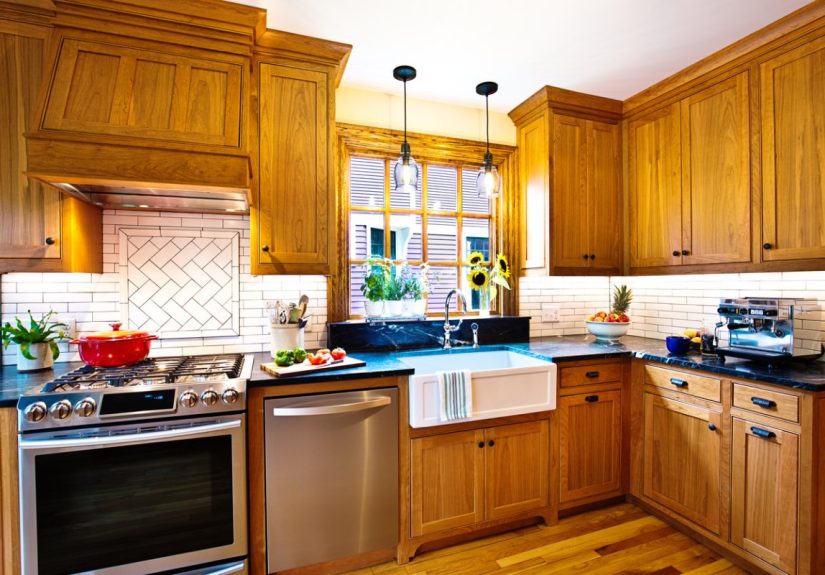
That is why many well-made cabinets use a hybrid approach: plywood cabinet boxes with solid wood doors, drawer fronts, and face frames. It is one of the most common “best of both worlds” formulas in cabinetry.
What People Mean by “Solid Wood Cabinets”
This is where cabinet shopping gets a little sneaky. When shoppers hear solid wood kitchen cabinets, many imagine every single cabinet component is cut from solid lumber like a fancy heirloom armoire. In reality, that is not always what the term means.
In many cabinet lines, the visible parts, such as doors, drawer fronts, and face frames, may be solid hardwood, while the cabinet box is plywood or another engineered panel. That is not a downgrade. It is often an intentional design choice based on performance. Visible surfaces benefit from the natural beauty of hardwood grain, while the box benefits from a material that stays straighter and more dimensionally stable.
So before you fall in love with the phrase “all wood cabinets,” read the specifications. Marketing language can sound like a violin solo. Construction details are the actual music.
Why Plywood Performs So Well in Kitchens
1. Better Dimensional Stability
The biggest advantage of plywood is stability. Kitchens experience constant shifts in temperature and humidity. Solid wood responds to those shifts by expanding and contracting across the grain. Plywood is far less reactive because its layers balance one another out.
That stability matters in cabinet boxes, side panels, bottoms, backs, and shelves. A stable box helps doors hang properly, drawers glide smoothly, and joints stay tight. Nobody wants a gorgeous kitchen ruined by one drawer that closes like it has an old grudge.
2. Strong but Lighter Than You Might Expect
Plywood has an excellent strength-to-weight ratio. That is a fancy way of saying it can be impressively tough without being ridiculously heavy. In cabinet construction, that matters for hanging wall cabinets, spanning openings, and supporting daily loads of dishes, cookware, small appliances, and the suspiciously heavy mug collection every household seems to accumulate.
3. Better Resistance to Moisture Than Many Budget Alternatives
Plywood is not waterproof, and no honest article should pretend otherwise. But compared with lower-cost materials like particleboard, it tends to handle moisture and screw fasteners better. That is one reason many shoppers upgrade to all-plywood construction when they want better durability in the kitchen.
This matters around sinks, dishwashers, refrigerators, and coffee stations, where a little water exposure is less a possibility and more a lifestyle.
4. A Smart Choice for Cabinet Boxes
Because plywood is stable and strong, it is often considered one of the best materials for cabinet carcases or boxes. It helps the cabinet maintain its shape, and shape matters more than people realize. A cabinet box that stays square supports the hinges, shelves, drawers, and doors attached to it. If the box drifts out of alignment, everything starts complaining at once.
5. Great Base for Veneers and Finishes
Plywood can also be faced with beautiful hardwood veneers, giving homeowners the look of premium wood species without requiring every structural panel to be solid lumber. That can deliver a polished, upscale appearance while keeping performance and cost in a more practical range.
Where Solid Wood Still Shines
Now, let us defend solid wood before it starts writing angry letters. Solid wood remains a premium cabinet material for very good reasons.
1. Natural Beauty and Character
Nothing quite matches the warmth, depth, and grain variation of real hardwood. Maple, oak, cherry, hickory, birch, and walnut each bring a different personality to a kitchen. If you want a kitchen that feels rich, organic, and classic, solid wood doors and drawer fronts can be a major part of that look.
2. Repairability
Solid wood can often be sanded, refinished, touched up, or repaired more easily than some engineered or wrapped surfaces. Minor dents and wear can become part of a patina rather than a tragedy. For homeowners who love materials that age with character, solid wood has real charm.
3. Furniture-Style Craftsmanship
Inset cabinetry, detailed door profiles, custom millwork, and traditional joinery often pair beautifully with hardwood. In luxury kitchens, solid wood contributes to that handcrafted, custom-built feeling people associate with fine furniture.
4. Strong Screw Holding in the Right Applications
Solid wood is excellent in many structural and joinery situations, especially in components like face frames, stiles, rails, and drawer boxes. This is one reason many quality cabinet makers use solid hardwood strategically rather than universally.
So Which Is Better: Plywood or Solid Wood?
For most homeowners, the best answer is not “plywood everywhere” or “solid wood everywhere.” It is using each material where it performs best.
If you are buying kitchen cabinets for everyday family use, plywood often has the advantage for the cabinet box because it is more dimensionally stable and practical in a humid, high-use environment. Solid wood often makes the most sense for the parts you see and touch most: doors, drawer fronts, and face frames.
That combination is popular for a reason. It gives you strength, stability, appearance, and long-term performance without asking your renovation budget to take up extreme sports.
When Plywood Clearly Wins
- Busy family kitchens: More moisture, more wear, more door slamming, more reasons to choose a stable cabinet box.
- Homes in humid climates: Plywood handles humidity swings better than all-solid panels.
- Large cabinet layouts: More boxes means more opportunity for movement-related headaches if materials are not stable.
- Remodels focused on durability: All-plywood construction is often a smart upgrade for long-term value.
- Frameless cabinet designs: These rely heavily on the integrity of the box, so panel quality becomes especially important.
When Solid Wood Might Be Worth the Splurge
- Custom luxury kitchens: Especially if craftsmanship, grain matching, and heirloom style are top priorities.
- Traditional or historic homes: Solid wood details can feel more authentic and architecturally appropriate.
- Homeowners who value refinishability: Solid wood surfaces can age beautifully and be renewed over time.
- Statement doors and visible details: If you want the character of natural grain front and center, hardwood delivers.
The Real Secret: Construction Matters as Much as Material
Material matters, but construction quality matters right alongside it. A poorly made plywood cabinet can still disappoint. A beautifully designed cabinet with solid hardwood components can still perform well if it is engineered correctly. So when evaluating kitchen cabinet quality, do not stop at the word plywood or solid wood. Look deeper.
What to Check Before You Buy
- Panel thickness: Thicker sides, shelves, and backs usually signal a sturdier box.
- Back construction: Captured or integrated back panels can improve rigidity.
- Joinery: Dovetail drawers, solid corner construction, and strong box assembly are good signs.
- Hardware: Soft-close hinges and quality drawer slides often matter as much as the wood itself.
- Certification: Cabinets tested to recognized performance standards offer extra confidence.
- Finish quality: Even a strong cabinet can suffer if the finish is thin, uneven, or vulnerable to moisture.
A kitchen is not a showroom sample. It is a working environment. Materials need to survive steam, grease, sticky fingers, cleaning products, and the occasional impact from a rogue cast-iron skillet. If a cabinet line is built well, it should feel solid in motion, not just look good in a brochure.
Cost: Is Plywood More Expensive?
Usually, yes. Plywood cabinet boxes often cost more than boxes made from particleboard or furniture board, and in many cabinet lines, “all-plywood construction” is treated as a premium upgrade. But when comparing plywood to truly all-solid-wood cabinet boxes, plywood can actually be the more economical and more practical choice.
That is part of why plywood is so popular in quality cabinetry. It offers a strong middle ground: better performance than many low-cost sheet goods, more stability than all-solid wood panels in box construction, and a price that is often easier to justify than solid wood everywhere.
Put another way, plywood is the material that quietly does its job while solid wood gets the glamour shots.
Final Verdict
Yes, plywood does have an advantage over solid wood kitchen cabinets in one very important area: cabinet box performance. Thanks to its layered construction, plywood is generally more dimensionally stable, better suited to moisture-prone environments, and extremely practical for the structural parts of cabinetry.
That does not mean solid wood is inferior. Far from it. Solid wood still brings timeless beauty, premium character, and excellent performance in doors, drawer fronts, face frames, and custom details. But for cabinet boxes, plywood is often the smarter engineering choice.
If you want the most balanced solution, look for cabinets with plywood boxes and solid wood fronts. That combination gives you the strength of a reliable structure and the natural beauty of hardwood where it matters most. In kitchen design, that is not settling. That is making a smart, informed choice.
Experience-Based Insights: What Homeowners and Remodelers Often Notice Over Time
Once cabinets move from the showroom to an actual kitchen, people start noticing the difference between what looks impressive on day one and what still behaves nicely on day 1,001. This is where experience tends to favor plywood cabinet boxes.
Many homeowners say their first clue is not visual. It is functional. Drawers keep gliding smoothly. Doors stay aligned. Shelves feel solid. The cabinet interior remains square and dependable even after years of cooking, cleaning, and opening every door with one hand while holding groceries in the other. Plywood tends to earn its reputation quietly, which is exactly what you want from structural materials. Nobody brags about a cabinet box at dinner. But they definitely complain when one starts acting weird.
Remodelers and installers often appreciate plywood for a different reason: predictability. A stable cabinet box is easier to install, easier to shim into place, and easier to keep aligned across a long run of cabinets. That matters in real houses, where walls are not perfectly straight and floors occasionally seem designed by a mischievous architect. When the box stays true, the rest of the installation usually goes more smoothly.
Homeowners who chose solid wood for every cabinet component sometimes love the premium feel, especially in custom kitchens. But they also learn that natural wood has a personality. In dry winters or humid summers, small changes can show up as expansion, contraction, or hairline movement at joints and panels. That does not automatically mean the cabinets are failing. Often, it just means the material is doing what wood naturally does. Still, not every homeowner enjoys getting a seasonal reminder that their cabinets are alive in spirit.
Another common experience shows up around sinks and dishwashers. Even careful households get the occasional drip, splash, or puff of warm moisture. In those areas, cabinet boxes made with quality plywood often inspire more confidence than cheaper engineered panels. Owners tend to feel better knowing the structure has a little more resilience if the kitchen has a minor plumbing surprise or a spill that is not discovered right away.
Design-wise, a lot of people end up happiest with a mixed-material cabinet package. They get the warmth and grain character of solid wood on the outside, where the eye lingers, and the stability of plywood in the hidden structure, where the real work happens. That combination often feels like the renovation equivalent of common sense: spend where beauty shows, invest where performance matters, and skip the drama.
In the long run, the most satisfied homeowners are usually not the ones who chased the flashiest label. They are the ones who understood how cabinets are actually used. They asked about box construction, hinges, shelf thickness, drawer joinery, and moisture resistance. They chose materials based on function, not just showroom charm. And years later, when the cabinets still close neatly and look good doing it, that decision tends to feel very smart.