Table of Contents >> Show >> Hide
- Why dry skin and acne happen together
- The best treatment strategy: clear acne without wrecking your skin barrier
- Top treatments for dry, acne-prone skin
- Home remedies that actually make sense
- A simple routine for dry skin with acne
- What to avoid when your skin is dry and breaking out
- When to see a dermatologist
- The bottom line
- Real-life experiences with dry skin and acne
Having dry skin and acne at the same time feels a little rude, honestly. Your face is flaky enough to resemble pastry, yet it still manages to produce pimples like it is auditioning for a teenage sitcom. But this combination is common, especially in adults, people using acne treatments, and anyone whose skin barrier is already a bit cranky.
The tricky part is that many acne products are designed to reduce oil, clear clogged pores, and speed up skin turnover. That is helpful for breakouts, but it can also leave skin tight, irritated, and peeling. Then people do what seems logical: scrub harder, use more spot treatment, or skip moisturizer. Unfortunately, that often turns a manageable problem into a full-blown skin rebellion.
The good news is that dry, acne-prone skin can improve with a smarter routine. The goal is not to smother pimples under a thick cream or nuke every blemish with harsh actives. It is to balance acne treatment with barrier support, so your skin can calm down while breakouts gradually clear.
Why dry skin and acne happen together
Acne is usually linked to excess sebum, clogged pores, inflammation, and bacteria in the hair follicles. Dry skin, on the other hand, is about a weakened barrier and loss of moisture. They sound like opposites, but they can absolutely show up on the same face at the same time.
Common reasons this combo shows up
- Acne treatments: Benzoyl peroxide, salicylic acid, and adapalene are effective, but they can also cause dryness, peeling, and irritation.
- Over-cleansing: Washing too often or using aggressive cleansers strips away protective oils and worsens dryness.
- Cold or dry weather: Indoor heating, wind, and low humidity can make skin drier while acne continues anyway.
- Barrier damage: Scrubs, alcohol-heavy toners, and over-exfoliation can weaken the outer skin layer.
- Adult acne: Many adults break out while also dealing with skin that is more sensitive and less naturally resilient than it was in the teen years.
It also helps to remember that oily skin and hydrated skin are not the same thing. Skin can feel greasy on the surface but still be dehydrated and irritated underneath. That is why a shiny forehead does not automatically mean you should skip moisturizer.
The best treatment strategy: clear acne without wrecking your skin barrier
If your skin is both dry and acne-prone, the winning routine is usually simple, steady, and boring in the best possible way. Think gentle cleanser, carefully chosen active ingredients, a noncomedogenic moisturizer, and sunscreen. Not glamorous, but effective.
1. Use a gentle cleanser
Start with a mild, fragrance-free cleanser. If your skin is dry and sensitive, a creamy cleanser may feel better than a foaming one. If you are oily in some areas, a gentle foaming cleanser can still work, but it should not leave your face squeaky or tight. That “clean” feeling is often your moisture barrier filing a complaint.
Wash with lukewarm water, not hot water, and use your fingertips instead of abrasive brushes, loofahs, or scrubs. In most cases, cleansing twice a day is enough. More is not more here. More is usually irritation wearing a fake mustache.
2. Pick one acne treatment and introduce it slowly
When skin is dry, it is smart to avoid stacking three strong actives at once. Choose one main treatment, use it consistently, and give it time to work.
3. Moisturize like you mean it
Yes, even if you have acne. Especially if you have acne. A good moisturizer helps reduce dryness caused by acne medications and supports the skin barrier so treatment is easier to tolerate.
Look for a moisturizer labeled noncomedogenic, fragrance-free, and ideally oil-free or lightweight if your pores clog easily. Helpful ingredients often include:
- Ceramides to support the skin barrier
- Glycerin to draw in moisture
- Hyaluronic acid to hydrate
- Dimethicone to reduce moisture loss
- Petrolatum or thicker creams for very dry patches, used carefully if your skin tolerates them
Apply moisturizer right after washing, while skin is still slightly damp. If you use a treatment that stings, the “moisturizer sandwich” method can help: moisturizer first, then acne treatment, then another thin layer of moisturizer.
Top treatments for dry, acne-prone skin
Benzoyl peroxide
Benzoyl peroxide helps reduce acne-causing bacteria and unclog pores. It is a staple for inflammatory acne, but it can be drying. Lower strengths, such as 2.5%, often work just as well as stronger formulas while being easier on sensitive skin.
Try a lower-strength wash or gel a few times a week at first. If your skin tolerates it, increase gradually. Be aware that it can bleach towels, pillowcases, and probably your favorite T-shirt if given half a chance.
Salicylic acid
Salicylic acid is useful for blackheads, whiteheads, and clogged pores because it helps clear dead skin and oil from inside the pore. It can also be drying, so people with dry skin often do better with a gentle cleanser containing salicylic acid rather than multiple leave-on acids.
If your skin gets flaky fast, try using it two or three times a week instead of daily.
Adapalene
Adapalene is an over-the-counter retinoid that helps prevent clogged pores and treat mild to moderate acne. It is effective, but it can definitely cause dryness and irritation during the first several weeks.
Use a pea-sized amount for the whole face, not a blob per pimple. Start every other night or even two to three nights a week. If your skin calms down, slowly build up. Retinoids reward patience, which is annoying but true.
Azelaic acid
Azelaic acid can be a good option for people who want something that may help with acne, redness, and post-acne marks without being quite as harsh as some other actives. It can still irritate sensitive skin, but many people tolerate it well when introduced gradually.
Prescription options
If over-the-counter care is not enough, a dermatologist may recommend prescription retinoids, topical antibiotics combined with benzoyl peroxide, hormonal treatment, or oral medication. This is especially important if acne is causing scars, deep painful bumps, or major emotional stress.
Home remedies that actually make sense
Not every “home remedy” deserves shelf space in your routine. Some belong in the kitchen, some belong on social media, and some should politely stay away from your face. The safest and most useful home remedies are the boring skin-barrier basics.
Try these at-home steps
- Take shorter showers: Five to ten minutes with warm, not hot, water helps reduce moisture loss.
- Apply moisturizer immediately after washing: This helps trap water in the skin.
- Use a humidifier: Dry indoor air can make flaking and irritation worse.
- Stop scrubbing: Physical exfoliation can worsen both acne inflammation and dryness.
- Choose fragrance-free products: Fragrance can irritate already sensitive skin.
- Use sunscreen daily: Many acne treatments increase sun sensitivity, and sun exposure can worsen irritation and dark marks.
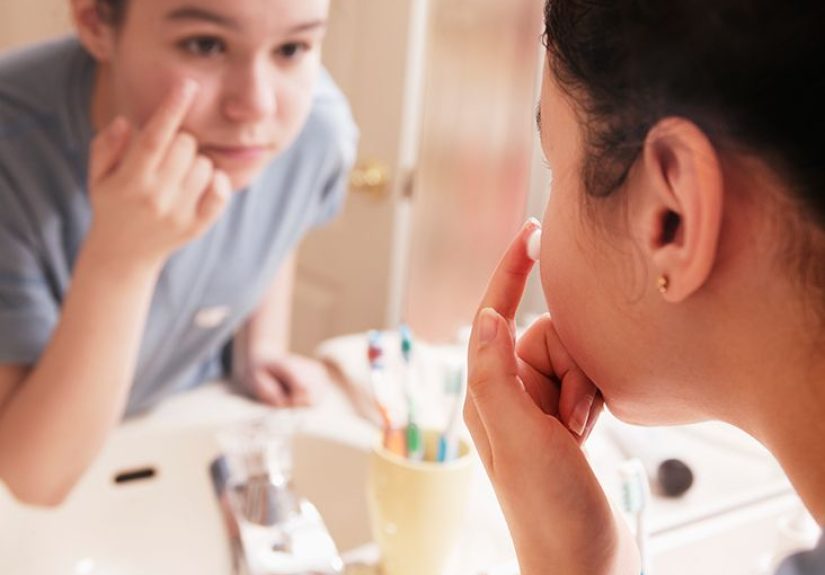
- Do not pick pimples: Picking increases inflammation, slows healing, and raises the risk of scarring.
What about tea tree oil, toothpaste, lemon juice, or baking soda?
Skip the toothpaste. Skip the lemon juice. Skip the baking soda. Your skin is not a bathroom tile or a salad. While some plant-based ingredients, including tea tree oil, have been studied for acne, they can also irritate sensitive or dry skin. If you want to try a botanical product, patch-test first and do not treat it like a miracle just because it grew from the ground.
A simple routine for dry skin with acne
Morning routine
- Wash with a gentle cleanser.
- Apply a lightweight, noncomedogenic moisturizer.
- Finish with broad-spectrum sunscreen, SPF 30 or higher.
Evening routine
- Cleanse gently.
- Apply your acne treatment, such as adapalene or benzoyl peroxide, in a thin layer.
- Follow with moisturizer.
If your skin becomes red, stings, or peels heavily, scale back the active treatment instead of quitting moisturizer. Sometimes the fix is not a new product. Sometimes it is simply using the current one less often.
What to avoid when your skin is dry and breaking out
- Harsh scrubs and cleansing brushes
- Alcohol-heavy toners and astringents
- Using multiple exfoliating acids at once
- Applying spot treatment over large areas too often
- Hot water and long showers
- Fragranced creams that irritate sensitive skin
- Picking, squeezing, or “just checking” a pimple ten times a day
When to see a dermatologist
Home care and over-the-counter products can help mild acne, but there are times when it makes sense to bring in a professional.
- Your acne is cystic, painful, or leaving scars.
- Your skin burns, cracks, or peels badly with routine treatment.
- You have not improved after about 8 to 12 weeks of consistent care.
- You are pregnant or trying to become pregnant and need guidance on safe acne treatment.
- You suspect something other than acne, such as eczema, rosacea, or contact dermatitis.
That last point matters. Not every bump is acne, and not every flaky patch is “just dry skin.” Sometimes the real issue is rosacea, perioral dermatitis, eczema, or a reaction to a product you thought was helping.
The bottom line
Dry skin and acne can absolutely coexist, and they often make each other harder to manage. The best approach is not to fight your face. It is to support it. Cleanse gently, use proven acne ingredients carefully, moisturize consistently, and protect your skin barrier like it is the VIP section. Because it is.
Most people do better with a simple routine than a dramatic one. Acne usually improves over weeks, not overnight, and dry skin calms down when you stop attacking it. Once you find the balance between treatment and hydration, your skin often becomes less reactive, less flaky, and much easier to live with.
Real-life experiences with dry skin and acne
If you have ever stood in front of the mirror wondering how your face can feel tight enough to crack and still produce a breakout on your chin, welcome to the club. This is a strangely crowded club, and many people arrive after trying to “fix” acne by throwing every drying product in the bathroom at it.
A common experience goes like this: someone gets a few breakouts, buys a strong cleanser, a scrub, a toner that smells like it could remove house paint, and a spot treatment with enough benzoyl peroxide to scare a pillowcase. For a few days, it seems like something is happening. Then the skin starts stinging. The corners of the nose peel. Makeup pills. Moisturizer feels suspicious. New breakouts show up anyway. Morale drops.
Another frequent story involves adult acne. A person may have had oily teenage skin, then suddenly in their late 20s, 30s, or 40s they are dealing with breakouts and dryness together. Their old acne routine no longer works because their skin is more sensitive now. The foaming cleanser that used to feel refreshing suddenly feels like betrayal. They need something gentler, but it takes time to accept that gentler does not mean weaker.
People who do best often describe a turning point: they stop changing products every four days and start following a steady routine. Maybe they switch to a creamy cleanser, use adapalene only a few nights a week, and finally add a fragrance-free moisturizer without assuming it will clog every pore on contact. Within a few weeks, the skin looks less angry. Within a couple of months, the breakouts are not necessarily gone, but they are calmer, smaller, and less frequent. That is real progress.
There is also the emotional side, which deserves more credit than it usually gets. Dry, flaky acne can be frustrating because it is hard to hide. A fresh pimple is one thing; a pimple surrounded by peeling skin under concealer is another. Many people become self-conscious at work, school, or social events. Some start avoiding photos or overanalyzing every mirror they pass. That does not mean they are vain. It means skin conditions can affect confidence in a very human way.
One practical lesson comes up again and again: consistency beats intensity. People often expect skin care to behave like a fire extinguisher, but acne treatment is usually more like gardening. You prepare the soil, remove what is getting in the way, water carefully, and try not to stomp on the progress every afternoon. A little patience is not glamorous, but it works better than panic-buying three exfoliants at midnight.
The most reassuring experience many people report is realizing their skin did not need punishment. It needed support. Once they treated dryness as part of the acne problem rather than a side note, everything got easier. Their routine became shorter. Their skin became more comfortable. And they spent a lot less time trying to outsmart their face, which, to be fair, had been winning for a while.
Note: This article is for informational purposes only and does not replace medical advice, diagnosis, or treatment from a qualified healthcare professional.