Table of Contents >> Show >> Hide
- Why baby facial skin dries out so easily
- Common causes of dry skin on a baby’s face
- 1) Normal newborn peeling (the “welcome to air” phase)
- 2) Dry air, cold weather, and indoor heating
- 3) Too much bathing or harsh cleansers
- 4) Drool rash (aka “my baby is part faucet now”)
- 5) Eczema (atopic dermatitis)
- 6) Seborrheic dermatitis (cradle cap that wandered south)
- 7) Contact dermatitis (irritation from “innocent” products)
- 8) Less common causes (worth knowing)
- Quick clues: Is it dryness, drool rash, eczema, or cradle cap?
- Remedies: A gentle, effective plan that actually works
- What to avoid (because baby skin is not a chemistry lab)
- When to call the pediatrician
- A simple daily routine (steal this)
- Bottom line
- Real-world experiences: what parents commonly notice (and what tends to help)
Baby cheeks are supposed to be soft enough to make you forget your own name. So when those cheeks turn dry, flaky, or
mysteriously “sandpapery,” it can feel like your newborn is auditioning for a skincare commercialjust not the fun kind.
The good news: facial dryness is incredibly common in babies, and most of the time it’s fixable with a few gentle tweaks.
The key is figuring out why it’s happening, then using remedies that protect your baby’s still-under-construction skin barrier.
This guide breaks down the most common causes of dry skin on a baby’s face (from normal newborn peeling to eczema and drool rash),
what you can safely do at home, what to avoid, and when it’s time to call your pediatrician.
Why baby facial skin dries out so easily
Baby skin isn’t just “adult skin, but smaller.” It’s thinner, more sensitive, and loses moisture faster.
Add in drool, frequent face-wiping, indoor heating, and the occasional well-meaning over-bath, and you’ve got a recipe for
dry patchesespecially on the cheeks and around the mouth.
Think of your baby’s skin barrier like a brand-new raincoat: it works, but it’s not fully broken in yet. Your job is to help it do its job
not strip it, scrub it, or perfume it into confusion.
Common causes of dry skin on a baby’s face
1) Normal newborn peeling (the “welcome to air” phase)
In the first couple of weeks after birth, many newborns peel or flake as they transition from a watery environment to dry air.
It can show up on the face, hands, feet, or wherever your baby feels like being dramatic that day. If your baby seems comfortable
and the skin isn’t very red, oozing, or cracked, this is usually normal and temporary.
2) Dry air, cold weather, and indoor heating
Winter (or aggressive air conditioning) can pull moisture out of the airand out of your baby’s skin.
Cheeks are especially exposed, so they often take the hit first. If your baby’s face looks drier after walks outside,
naps near a vent, or nights with the heater blasting, humidity is a suspect.
3) Too much bathing or harsh cleansers
Babies don’t need daily bubble-bath-level scrubbing (and honestly, bubble bath is a chaos gremlin for sensitive skin).
Long, hot baths and fragranced soaps can strip natural oils and worsen dryness.
Even “baby-scented” products can be irritatingbecause fragrance is still fragrance, even if it smells like a cloud had a cupcake.
4) Drool rash (aka “my baby is part faucet now”)
Teething, pacifiers, and the normal baby habit of producing heroic amounts of saliva can irritate the skin around the mouth, chin, and cheeks.
Saliva is wet, yesbut it also breaks down the skin barrier. Repeated wiping (especially with rough tissues or wipes) adds friction,
and suddenly you’ve got dry, red, chapped-looking patches.
5) Eczema (atopic dermatitis)
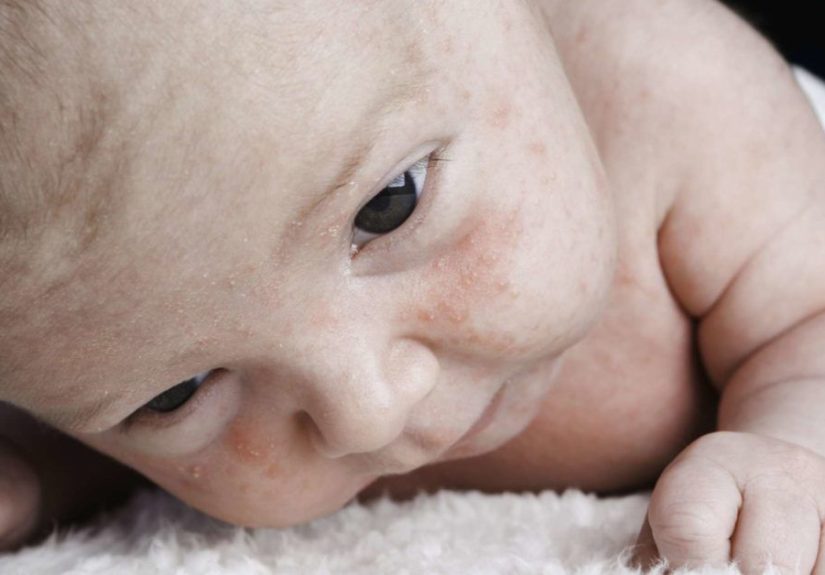
Baby eczema often shows up as dry, rough, itchy patchescommonly on the cheeks and face in infants.
Skin may look red (or darker than usual, depending on skin tone), feel bumpy, and seem persistently dry despite basic moisturizing.
Family history of eczema, asthma, or allergies can increase the odds, but eczema can also show up in families with zero drama on record.
6) Seborrheic dermatitis (cradle cap that wandered south)
Cradle cap isn’t always limited to the scalp. Seborrheic dermatitis can also appear on the eyebrows, forehead, sides of the nose,
or behind the ears. It often looks flaky or scaly and can be slightly greasy (not always).
This condition is common, not contagious, and usually resolves with timethough it can look like your baby is cosplaying as a tiny croissant.
7) Contact dermatitis (irritation from “innocent” products)
Contact dermatitis happens when skin reacts to an irritant or allergenlike fragranced lotions, soaps, detergents, fabric softeners,
some wipes, or even saliva plus friction. It may look red, dry, or rashy, and tends to show up where the skin touches the trigger.
The fix is often simple: remove the trigger and let the skin recover.
8) Less common causes (worth knowing)
Occasionally, dryness plus other symptoms can point to something elselike a skin infection (for example, oozing or honey-colored crusting),
a fungal rash, or a viral illness that includes a facial rash. These are less common than basic dryness, drool irritation, eczema,
or seborrheic dermatitisbut they’re important because they may need medical treatment.
Quick clues: Is it dryness, drool rash, eczema, or cradle cap?
| What you see | Common location | Likely culprit | Helpful first step |
|---|---|---|---|
| Light flaking, minimal redness, baby comfortable | Anywhere (often face/hands/feet) | Normal newborn peeling | Gentle care; avoid picking; moisturize lightly |
| Red/chapped-looking skin, worse with drool/pacifier | Mouth, chin, neck, cheeks | Drool rash | Blot drool; barrier ointment; gentle cleansing |
| Dry rough patches, itchiness, recurring flares | Cheeks/face (infants), later arms/legs | Eczema | Moisturize often; trigger reduction; ask pediatrician if persistent |
| Flaky/scaly patches that may look greasy | Scalp, eyebrows, forehead, behind ears | Seborrheic dermatitis | Gentle washing; soften scales; avoid scrubbing |
| Rash/dryness after a new product or detergent | Where product touched | Contact dermatitis | Stop the suspected product; simplify routine |
Skin isn’t always textbook-perfect, and babies love to multitaskso you can see overlap (drool rash and eczema, for example).
If you’re unsure, start with the gentlest routine and watch how the skin responds over 3–7 days.
Remedies: A gentle, effective plan that actually works
Step 1: Bath smarter, not harder
- Keep baths short (about 5–10 minutes) and use lukewarm water.
- Skip soap on areas that aren’t dirty. Use a mild, fragrance-free cleanser only when needed.
- No scrubbing the face with washcloth grit. Soft hands are enough.
Over-bathing or using harsh cleansers can worsen dryness. If your baby’s face is dry, a daily “full wash” isn’t automatically the answer.
Sometimes it’s the problem wearing a tiny bathrobe.
Step 2: Moisturize immediately (the “3-minute rule” vibe)
The best time to moisturize is right after bathing or washing the facewhile the skin is still slightly damp.
This helps trap water in the skin barrier.
- Choose fragrance-free, dye-free products.
- Ointments and thick creams generally work better than lotions for true dryness.
- Apply a thin, even layer to the faceenough to soothe, not enough to make your baby look like a glazed donut (unless it’s bedtime and you’re committed).
Step 3: Protect skin from drool and friction
- Blot drool gently instead of wiping aggressively.
- Use soft bibs and change them often so wet fabric isn’t rubbing the skin.
- Apply a barrier ointment (like plain petroleum jelly-type products) around the mouth and chin before naps, teething marathons, or pacifier time.
The goal is to create a protective layer so saliva doesn’t camp out on the skin and throw a tiny rave.
Step 4: Fix the environment (hello, humidity)
- Consider a cool-mist humidifier in your baby’s room if the air is dry.
- Avoid overheatingheat + sweat can irritate skin.
- Dress baby in breathable fabrics (cotton is a reliable classic).
Step 5: Simplify everything that touches the face
- Switch to fragrance-free detergent and avoid fabric softeners.
- Rinse laundry well (extra rinse can help for sensitive skin).
- Be cautious with wipes on the face; lukewarm water and a soft cloth can be gentler.
Targeted tips by cause
For normal newborn peeling
- Hands off the flakes (tempting, yes). Picking can irritate skin and invite infection.
- Use a gentle, fragrance-free moisturizer if skin looks dry or cracked.
- Give it timethis phase usually fades as baby skin adjusts.
For eczema-prone cheeks
- Moisturize consistentlyoften at least twice daily, plus after washing.
- Reduce triggers: fragrance, harsh detergents, scratchy fabrics, dry air.
- Medication note: Avoid using steroid creams on a baby’s face unless your pediatrician specifically recommends/prescribes it. Facial skin is sensitive and needs careful dosing.
For seborrheic dermatitis on the face/eyebrows
- Gently wash with mild baby cleanser; avoid harsh scrubbing.
- If scales are stubborn, you can soften them with a small amount of plain emollient and gently loosen with a soft cloth.
- Call your pediatrician if it’s spreading, very red, or not improvingsometimes medical treatments are needed.
For contact dermatitis
- Stop any new product introduced in the last 1–2 weeks (lotions, soaps, detergents, wipes).
- Use a “skin vacation” routine: lukewarm water + bland moisturizer only.
- If it’s worsening or baby seems very uncomfortable, check in with your pediatrician.
What to avoid (because baby skin is not a chemistry lab)
- Fragrance and essential oils on the face (common irritants).
- Alcohol-based products (drying and stingy).
- Scrubs, exfoliants, acne products, or “tingly” ingredients.
- Powders on the face (can irritate and isn’t great to inhale).
- Overusing wipes for every drool eventblotting with a soft cloth is often kinder.
- OTC medicated creams on the face without medical guidance, especially steroids.
When to call the pediatrician
Most dry facial skin is manageable at home, but you should call your pediatrician if you notice any of the following:
- Skin that is cracking, bleeding, or very painful
- Oozing, pus, honey-colored crusting, or a bad smell (possible infection)
- Widespread rash, rapidly worsening redness, or swelling
- Baby seems very itchy, can’t sleep, or is feeding poorly because of discomfort
- Fever or your baby seems unusually sick
- Dry patches that don’t improve after 1–2 weeks of gentle care
If you’re stuck between “this is fine” and “why is my baby’s face auditioning for a desert documentary,” your pediatrician can help confirm
whether it’s eczema, seborrheic dermatitis, irritation, or something elseand recommend safe treatments.
A simple daily routine (steal this)
Morning
- Rinse face with lukewarm water (especially after a night of drool).
- Pat dry (no rubbing).
- Apply a fragrance-free cream/ointment to dry areas.
- If drool is expected: add a thin barrier layer around mouth/chin.
Evening
- Short lukewarm bath if needed (5–10 minutes).
- Moisturize immediately afterward while skin is slightly damp.
- Use a thicker layer at bedtime if cheeks are very dry (comfort matters).
On-the-go “tiny face rescue kit”
- Soft cloth
- Small travel-size bland moisturizer
- Barrier ointment (especially for drool rash)
Real-world experiences: what parents commonly notice (and what tends to help)
Below are common experiences parents report when dealing with dry skin on a baby’s face. Think of this as the “group chat” version of the topic
the patterns that show up again and again in real homes, with real heaters, real drool, and real babies who absolutely refuse to keep their hands out of their mouths.
Experience #1: The “winter cheeks” surprise.
A lot of parents notice dryness the first time temperatures drop or the heater gets turned on at night. Baby’s cheeks look fine at bedtime,
then suddenly in the morning: flaking, mild redness, and a texture that says, “I slept next to a radiator, didn’t I?”
What typically helps is adding moisture back into the environmentoften with a cool-mist humidifierand switching to a thicker moisturizer.
Parents also report that less face washing helps: lukewarm water only, pat dry, moisturize right away. It’s not dramatic, but it’s effective.
Experience #2: The drool rash that looks dry (because it is).
Drool rash often confuses people because it can look “wet” and “dry” at the same time: red around the mouth and chin, with flaky edges.
Parents frequently say they were wiping constantlyafter every dribblebecause it felt hygienic. But the constant wiping added friction and made the dryness worse.
The change that usually turns the corner is switching from wiping to gentle blotting, using softer cloths, and applying a barrier ointment before naps,
feedings, or pacifier sessions. Parents also mention that changing bibs more often matters more than buying fancier bibs. (Wet fabric rubbing = not your friend.)
Experience #3: “We bathed more… and it got worse.”
When baby skin dries out, a natural instinct is to wash it moreespecially if flakes look like “dirt.”
Many parents later realize the dryness ramped up after frequent baths or scented baby wash. Once they cut baths back,
shortened bath time, and used a fragrance-free cleanser only where needed, baby’s facial skin calmed down within days.
A common “aha” moment is moisturizing immediately after bathing. Parents describe it as the difference between “soothing” and “smearing lotion onto a desert.”
Experience #4: The eczema question mark.
Some parents notice that no matter how carefully they moisturize, the patches keep coming backoften on the cheeks.
Baby may rub their face against a parent’s shirt, mattress, or their own hands. That recurring, itchy pattern is when many families start wondering about eczema.
What tends to help at home is consistency (moisturize multiple times daily, avoid fragrance, keep nails short to reduce scratching),
plus a pediatrician visit if it’s persistent. Parents often feel relieved once they have a clear plan from a clinicianespecially because
the face is sensitive and it’s important to use any medicated creams correctly.
Experience #5: Product overload (aka “we tried everything and nothing helped”).
A surprisingly common story is that parents try multiple lotions, balms, and “natural” oils in quick succession.
Baby’s skin gets more irritated, and it becomes hard to tell what’s causing what.
What often helps is a reset: pause new products, switch to a simple routine (lukewarm water + bland fragrance-free moisturizer + barrier ointment for drool),
and make one change at a time for several days. Parents describe this as boringbut it usually helps them identify whether the issue was irritation,
dryness from the environment, or something like eczema that needs medical guidance.
If there’s one takeaway from real-life stories, it’s this: baby facial dryness usually improves when the routine gets simpler, gentler, and more consistent.
And when it doesn’t, that’s valuable informationbecause it’s a sign your pediatrician can help you target the true cause.