Table of Contents >> Show >> Hide
- Why Facebook Wanted a VR Chatroom in the First Place
- Meet Facebook Spaces: The “Chatroom” That’s More Like a Tiny Living Room in Space
- Avatars That Start With Your Actual Facebook Photos
- The Table, the Sphere, and Those 360-Degree “How Are We Here Right Now?” Moments
- 3D Doodles: Yes, You Can Draw a Hat and Put It on Someone
- The Virtual Selfie Stick: Peak Internet, Now in VR
- Pulling Non-VR Friends Into the Room via Messenger Calls
- The “Emotion Engine” and the Uncanny-Valley Speed Bump
- How Facebook’s VR Chatroom Compared to Other Social VR Apps
- The Hard Parts: Why a VR Chatroom Is Both Magical and Maddening
- From Facebook Spaces to the Meta Era: What Happened Next
- What Facebook Spaces Got Right (And Why It Still Matters for VR Chatrooms)
- Practical Tips for Brands, Creators, and Developers Building VR Chatrooms Today
- Conclusion
Remember when “chatroom” meant a beige box, a questionable username, and someone typing asl? at 200 words per minute? Facebook looked at that whole era and said, “Cool. Let’s do it again… but this time, you’re a floating cartoon torso in space.”
That’s essentially the vibe behind Facebook Spaces: Facebook’s early swing at a VR chatroom built for the Oculus Rift. Instead of a scrolling text log, you get avatars, hand gestures, 3D doodles, shared videos, and the slightly magical feeling that your friend is actually in the roomeven if the room is a shiny, virtual “hangout pod” that looks like an Apple Store designed by Pixar.
In this deep dive, we’ll break down what Facebook launched, why it mattered, what it got right (surprisingly a lot), what made people say “neat demo… now what?”, and how the idea of social VR chatrooms evolved into the broader Meta-era approach to VR and beyond.
Why Facebook Wanted a VR Chatroom in the First Place
Facebook’s core product has always been social connectionphotos, comments, groups, events, reactions, and a feed that somehow knows you’re hungry before you do. So once Facebook owned Oculus, a social VR experience wasn’t just likely; it was practically inevitable.
The pitch was simple: if social media is about being together, then virtual reality could be the most “together” you can get without sharing a couch, a pizza, or your friend’s suspiciously aggressive cat.
But Facebook didn’t just want another multiplayer game lobby. It wanted a VR hangout that felt like a real conversationlike a dinner party, not a chaotic theme park. That design philosophy shaped everything Spaces did: small groups, familiar identities, and a toolkit designed to spark interaction rather than distract from it.
Meet Facebook Spaces: The “Chatroom” That’s More Like a Tiny Living Room in Space
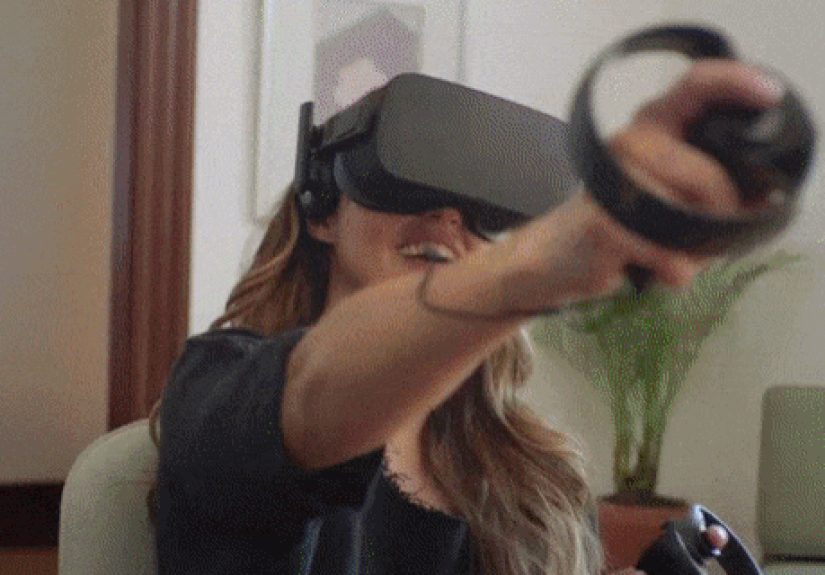
Facebook Spaces launched as a beta VR app for Oculus Rift users, framing itself as a place to hang out with real Facebook friends in a shared virtual environment. It wasn’t “text chat, but in 3D.” It was “presence,” built from avatars, spatial audio, gestures, and shared media.
Avatars That Start With Your Actual Facebook Photos
Instead of letting you show up as a neon dragon with a top hat (no shade to neon dragons), Spaces pushed familiarity. You’d choose a Facebook photo and then tweak facial features, hair, and other details into a cartoony version of “you.” The goal was recognition: your friend should know it’s you, not an anonymous stranger who might try to sell you crypto in the middle of a panda habitat.
The Table, the Sphere, and Those 360-Degree “How Are We Here Right Now?” Moments
Spaces centers you around a virtual tablean intentional choice. A table is social gravity. People know how to talk at a table. And in Spaces, the “room” could transform using Facebook content, including 360 photos and 360 videos. One moment you’re chatting; the next you’re standing inside a bubble of immersive video like you just teleported into someone’s vacation.
This was a clever move: Facebook already had massive amounts of personal media. Spaces didn’t need to invent a new content ecosystem. It could pull from what you and your friends already posted and watched.
3D Doodles: Yes, You Can Draw a Hat and Put It on Someone
If you’ve ever wanted to doodle in the air and immediately regret your artistic confidence, Spaces delivered. A virtual marker let you draw in 3D spacesimple, playful, and surprisingly “sticky” as a social mechanic. You could create quick props, sketch games (tic-tac-toe was a classic), or just leave floating scribbles like a polite VR ghost.
The Virtual Selfie Stick: Peak Internet, Now in VR
Nothing says “the future” like humans immediately recreating the same old behavior in a new medium. Spaces included a virtual selfie stick for taking photos of your VR hangout and sharing that moment back to your regular Facebook feed. The message was clear: VR shouldn’t be a separate universeVR should be something you can bring back to the people not wearing headsets.
Pulling Non-VR Friends Into the Room via Messenger Calls
One of the smartest features was how Spaces tried to break the headset barrier. With Messenger video calling, someone on a phone could appear as a “window” into your VR world. They’d see your avatar; you’d see their video in VR.
That mattered because VR adoption has always had a practical problem: your best friend might love you, but not enough to buy a gaming PC, a headset, sensors, and controllers just to watch you draw a questionable 3D banana in midair.
The “Emotion Engine” and the Uncanny-Valley Speed Bump
VR presence is weirdly sensitive. If a face feels lifeless, the whole experience can go from “I’m with my friend” to “I’m talking to a well-meaning robot.” Spaces used animation tricksblinks, subtle facial cues, and controller-driven expressionsto make avatars feel more human.
And it mostly worked… until it didn’t. Some people found it “alarmingly real” in a good way; others found it jarring, especially when talking to someone they didn’t know well. Social VR is intimate in a way the internet historically is not.
How Facebook’s VR Chatroom Compared to Other Social VR Apps
Even in the “early” era of social VR, Facebook wasn’t alone. Social VR has long been a mix of two broad styles: (1) identity-forward hangouts, and (2) activity-forward worlds.
Facebook Spaces: Identity-Forward, Small Group, Familiar Faces
Spaces leaned hard into real-life relationshipsyour Facebook friends, your photos, your shared feed content. It felt closer to a private living room than a public square.
Activity-Forward Platforms: Come for the Game, Stay for the People
Other social VR experiences often anchor conversation to an activity: mini-games, events, shared building tools, or community-run spaces. That approach can make it easier to avoid awkwardness because you’re not just “staring at each other in VR,” you’re doing something together.
The Hidden Truth: The Best VR Chatrooms Give You Something to Do With Your Hands
Facebook figured this out early: doodles, media sharing, selfies, and environment changes weren’t gimmicksthey were social glue. In VR, idle time feels louder than in a normal call. A little playful interactivity keeps the conversation moving.
The Hard Parts: Why a VR Chatroom Is Both Magical and Maddening
Hardware Friction: “Just Hop In” Wasn’t Really a Thing Yet
Early Spaces required an Oculus Rift setup and Touch controllers. That’s not “download an app,” that’s “start a hobby.” And if even one friend in your group doesn’t have the gear, the hangout becomes a club with a very expensive cover charge.
Why “Up to Four People” Wasn’t a BugIt Was a Social Design Choice
Big group calls can be chaotic on flat screens. In VR, they can be overwhelming. Keeping Spaces small helped maintain presence and reduce “who’s talking?” confusion. It also matched the dinner-party philosophy: fewer people, more connection.
Moderation and Safety: VR Feels More Personal Than Text Ever Did
The more “real” a virtual space feels, the more important safety tools become. Social VR platforms eventually leaned into features like personal boundaries, muting, blocking, reporting, and “safe zones” that let users quickly remove themselves from uncomfortable interactions.
Privacy and Identity: Real Names Change the Vibe
Anonymous chatrooms can be chaotic, but they’re also familiar internet territory. Facebook Spaces steered toward real identity and existing relationships, which can reduce some risksbut also raises the stakes. A weird interaction in VR isn’t just a random encounter; it can feel like a real social moment with real social consequences.
From Facebook Spaces to the Meta Era: What Happened Next
Facebook Spaces didn’t become the default way the world socializes in VR. It didn’t turn into a cultural phenomenon the way early metaverse hype imagined. In fact, the original Spaces app was eventually shut downframed as making way for the company’s next attempt at social VR.
The “Spaces DNA” Lived On: Oculus Rooms, Events, and Creator-Led Worlds
The broader Oculus ecosystem experimented with hangout concepts like Rooms and Partiesvirtual meetups plus voice chatwhile also building toward larger social experiences, live events, and creator tools. Over time, the ambition shifted from “hang out around a table” to “explore thousands of worlds.”
Horizon Worlds: Bigger, More Creator-Driven, More Like a Platform
Horizon Worlds expanded the concept into a social VR platform where people could build and explore worlds, not just meet in a single hangout space. It also emphasized conduct policies and safety features designed for a broader communitynot just your friend group.
The 2026 Twist: Meta’s “Metaverse” Momentum Shifts Toward Mobile
Here’s the fascinating part: the story of VR chatrooms has always been tangled with one stubborn realityheadsets are amazing, but phones are everywhere. Meta’s strategy around Horizon Worlds has increasingly emphasized reaching a larger audience by leaning into mobile access, positioning its worlds to compete with mainstream, phone-first platforms rather than staying exclusively VR-first.
That doesn’t mean VR is dead. It means the “social graph” and the “creator economy” keep pulling these experiences toward the biggest on-ramp: the device already in your pocket.
What Facebook Spaces Got Right (And Why It Still Matters for VR Chatrooms)
1) Presence Beats Features
Spaces didn’t try to be everything. It tried to make conversation feel real. The table layout, small groups, expressive avatars, and shared media were all in service of one goal: making you forget (briefly) that you’re wearing a headset.
2) Shared Media Is Social Fuel
A VR chatroom with nothing to do becomes awkward quickly. Spaces used the best kind of “content”: your memories, your feed, your videos, your photospheres. It wasn’t just entertainmentit was conversation starter.
3) Bridging VR and Non-VR Users Is Non-Negotiable
Messenger calling into VR was a sneakily huge idea. Social VR grows faster when it’s not a walled garden. Any modern VR social app that ignores “how do we include people without headsets?” is basically choosing slow growth on purpose.
4) VR Social Design Needs Guardrails
When VR feels personal, safety features can’t be buried in menus. Users need quick exits, personal boundaries, and easy reporting tools. It’s not just “community guidelines.” It’s user experience.
Practical Tips for Brands, Creators, and Developers Building VR Chatrooms Today
If your goal is to build a VR chat experience that people actually return to (not just demo once and say “cool!”), here are a few lessons the Facebook Spaces era made painfully clear.
Design for “micro-activities,” not endless options
Give people simple, repeatable things to do together: draw, place objects, watch short clips, play a tiny game, or explore a shared memory. Too many features can distract from the social core.
Make onboarding ridiculously simple
VR already asks users to wear hardware. Don’t also make them wrestle five logins, three permissions screens, and a tutorial narrated by a robot who sounds like it’s disappointed in them.
Support “mixed attendance”
Let headset users and non-headset users share a moment together. If someone can join from a phone, tablet, or desktop, your chatroom becomes a social product, not a hardware-exclusive club.
Prioritize safety like it’s part of your brand
In VR, bad interactions can feel physically invasive. Make personal space tools obvious, reporting easy, and consequences real. If users don’t feel safe, they won’t feel social.
Conclusion
“Facebook just launched a chatroom for VR” sounds like a headline from the futureuntil you realize the future is mostly humans doing what they’ve always done: hanging out, sharing stories, making inside jokes, and taking selfies… only now the selfie stick is virtual and your background might be Mars.
Facebook Spaces was an early, oddly charming attempt to make social VR feel normal. It proved that presence is real, that shared media is powerful, and that the hardest part of VR chatrooms isn’t the technologyit’s building a reason to come back after the novelty wears off. Whether you’re a developer, a creator, or a brand exploring immersive social experiences, the Spaces story still offers a clear lesson: the best “metaverse” moments are the ones that strengthen real relationships, not just show off fancy graphics.
Experience: What Hanging Out in a Facebook-Style VR Chatroom Actually Feels Like (500+ Words)
Imagine it’s Friday night. You’re not going out, because you’ve reached that adult stage where “going out” means “changing pants,” and honestly, you’ve built a deep emotional bond with sweatpants. But you still want to see your friends. So you put on a VR headset and launch a social app inspired by the same principles Facebook Spaces popularized: familiar faces, small groups, shared media, and playful tools.
The first sensation is always the same: the world clicks away, and suddenly you’re somewhere else. Not a dramatic sci-fi somewhere elsemore like a clean, friendly lounge with a table in the center. Your hands appear before you, tracking your controllers. You wave. The avatar waves back. Your brain does a tiny double-take, like, “Oh. We’re doing this now.”
One friend joins. Their avatar pops in across the table. You recognize them instantlynot because the avatar is photorealistic, but because it’s intentionally “them-ish”: familiar hair, familiar vibe, familiar voice coming from the right direction. Spatial audio is doing its quiet magic. They laugh, and it sounds like they’re actually in the room. It’s not the same as real life, but it’s closer than a phone call has any right to be.
Then you do what humans always do when given a new medium: you test the limits in the silliest way possible. You pick up a marker tool and draw in the air. Your first sketch looks like a confused jellyfish. Your friend draws a crown and places it on your head anyway, because friendship is 30% support and 70% gentle roasting. Another friend appears and immediately takes a virtual selfieno greeting, no warm-up, just straight to documentation like “This moment must be preserved for the feed.”
Someone pulls up a 360 video. The room transforms, and now you’re all standing inside a bubble of immersive scenery: a beach, a city skyline, a rainforest, or a surreal space station that makes you feel cooler than you are. The content becomes a conversational anchor. “Look over there,” someone says, and everyone turns at once. That synchronized attention is subtle but powerfulyour body language is suddenly part of the conversation again.
The awkwardness arrives in small waves, because VR is still VR. You’ll accidentally talk over each other when someone’s mic picks up breathing too loudly. Someone’s tracking gets weird and their avatar hand does a brief interpretive dance. Somebody tries to sip a drink in real life and bonks their headset because cups were not designed for face computers. But the charm is that those glitches become part of the shared memory, like inside jokes you earn by being early to something.
The most surprisingly emotional moment is when a non-VR friend joins through a “window” callphone, desktop, whatever the app supports. They can’t see the room the same way you do, but they can see you. And you can see them. Suddenly it’s not “VR people” and “normal people.” It’s just friends in different modes, sharing the same moment. That bridge is the difference between a cool demo and a real social product.
By the end of the night, you realize what worked wasn’t the novelty. It was the design: a small group, a shared space, and simple activities that keep conversation flowing. That was the core promise behind Facebook’s VR chatroom idea: not replacing real life, but making distance feel a little smaller. And if you log off feeling like you actually spent time with people you care aboutmission accomplished.