Table of Contents >> Show >> Hide
- Why Family Stargazing Is Such a Great Idea
- How to Plan a Family Stargazing Night That Actually Works
- What to Bring for Family Stargazing
- How to Find Constellations Without Feeling Lost
- The Best Apps for Finding Constellations as a Family
- How to Use an App Without Letting the App Ruin the Night
- Family-Friendly Stargazing Games and Ideas
- Important Stargazing Safety Tips for Families
- Simple Stargazing Routine for Beginners
- Conclusion: The Best Family Stargazing Nights Are the Ones That Feel Easy
- Family Stargazing Experiences: What These Nights Really Feel Like
There are few family activities more magical than stepping outside, looking up, and realizing the ceiling of the universe has been there the whole time, quietly showing off. Family stargazing is low-cost, surprisingly educational, and just dramatic enough to make everyone feel like they’re in a movie trailer. One minute your kids are asking for snacks, and the next they’re pointing at Orion like tiny celestial detectives.
The best part is that you do not need a backyard observatory, a fancy telescope, or a PhD in astrophysics to enjoy the night sky. For most families, the smartest way to start is with your eyes, a comfy blanket, maybe a pair of binoculars, and one good constellation-finding app. With a little planning, your family can learn the major star patterns, spot bright planets, and turn an ordinary evening into something unforgettable.
This guide covers practical family stargazing tips, beginner-friendly ways to find constellations, and the best apps to help you identify what is actually up there. Because while “Wow, that star is pretty” is a lovely observation, “That’s Vega in Lyra” sounds much more impressive around the snack bag.
Why Family Stargazing Is Such a Great Idea
Stargazing hits a rare parenting sweet spot: it feels fun, but it also sneaks in science, patience, observation, and curiosity. Kids learn that the sky changes with the seasons, that patterns like the Big Dipper can guide them to other stars, and that not every bright thing overhead is “definitely a UFO.” Adults get something too: a forced pause from screens, schedules, and the usual chaos.
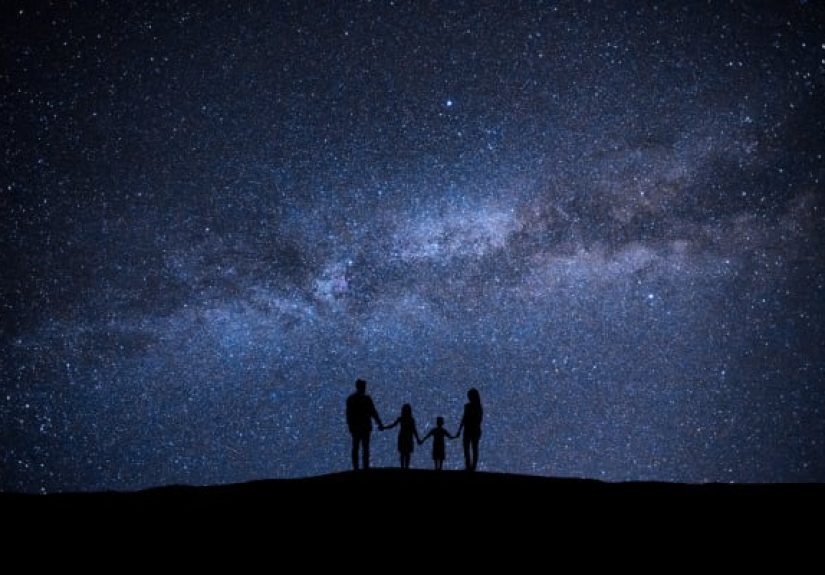
It also scales beautifully. You can do a 15-minute driveway sky check on a school night or plan a full family outing to a dark-sky park on the weekend. Some nights you may spot only a few bright stars and one planet. Other nights, especially near a new moon and away from city lights, you may see the Milky Way stretching overhead like spilled sugar across black velvet. Either way, the experience tends to stick.
How to Plan a Family Stargazing Night That Actually Works
1. Choose the right night
If you want to see more stars, avoid bright moonlight when possible. A clear, moonless night usually gives you the darkest sky, which makes faint stars and constellations easier to spot. Check the weather, the cloud cover, and the moon phase before you head out. This one simple habit can save your family from the classic “We packed snacks for a cloud” experience.
2. Pick a darker location
You do not need to drive into the wilderness, but moving away from porch lights, parking lots, and streetlamps makes a huge difference. A local park, open field, lakeside, campground, or dark backyard can work well. The fewer nearby lights, the more stars your family will see.
3. Arrive before full darkness
Getting set up while there is still some twilight is easier, especially with kids. You can spread blankets, organize snacks, test your app, and explain the plan before the sky goes fully dark. Once night falls, let your eyes adapt. It often takes 20 to 30 minutes for your night vision to improve, so patience pays off.
4. Use red light, not white light
Bright white flashlights and glowing phone screens can wreck your night vision in seconds. Switch your flashlight to red mode if possible, or use an app’s night mode. This helps everyone keep their eyes adjusted to the dark and makes the whole experience much more enjoyable.
5. Dress like the night sky owes you warmth
Even summer nights can feel chilly when you’re sitting still. Bring layers, blankets, hats, and maybe bug spray depending on the season. Stargazing ends early when people are cold, cranky, or being eaten alive by mosquitoes.
6. Keep the first outing simple
Do not try to conquer the universe on Night One. Pick two or three things to find, such as the Moon, the Big Dipper, and one easy constellation. Small wins build excitement. Trying to locate twelve constellations with a tired eight-year-old is how parents end up whispering to themselves in the dark.
What to Bring for Family Stargazing
- A blanket or reclining lawn chairs
- Warm layers and extra socks
- Water and easy snacks
- A flashlight with red mode
- A fully charged phone with one stargazing app
- Binoculars, if you have them
- A notebook for kids to sketch what they see
Binoculars are often the ideal first astronomy tool for families. They are easier to use than a telescope, less expensive, quicker to carry outside, and wide enough to help beginners find objects without frustration. A simple pair can reveal Moon craters, star clusters, and richer views of bright parts of the sky.
How to Find Constellations Without Feeling Lost
The night sky can look overwhelming at first because it is full of bright dots that seem determined to blend together. The trick is to start with the biggest, brightest, easiest patterns and work outward from there.
Start with asterisms first
An asterism is a well-known star pattern that may be part of a constellation. The Big Dipper is the most famous example. It is not its own constellation; it is part of Ursa Major. But it is one of the best landmarks in the sky and perfect for beginners.
Once your family finds the Big Dipper, you can use it to locate Polaris, the North Star. Follow the two stars at the end of the Dipper’s bowl upward, and they point toward Polaris. That one little trick makes kids feel like they have unlocked a secret level.
Use easy seasonal favorites
In much of the United States, a few constellations are reliable crowd-pleasers:
- Winter: Orion, with its bright belt stars, is the superstar of beginner stargazing.
- Spring: Leo is easier to spot once you learn its backward question-mark shape.
- Summer: The Summer Triangle helps families find Lyra, Cygnus, and Aquila.
- Fall: Cassiopeia forms a bright “W” shape that is easy for kids to recognize.
Look for the brightest stars first
Constellations become easier to recognize when you identify one or two bright anchor stars. For example, Vega, Deneb, and Altair form the Summer Triangle. Betelgeuse and Rigel help define Orion. Once you know the key stars, the rest of the shape stops looking like random glitter.
Use “star-hopping”
Star-hopping means using one familiar pattern to guide you to another. Find the Big Dipper, then Polaris. Find Orion’s Belt, then look for nearby bright stars and nebula-rich regions. This approach is much easier than scanning the sky and hoping a constellation politely introduces itself.
The Best Apps for Finding Constellations as a Family
A good sky app can turn confusion into instant recognition. Most work by using your phone’s sensors so the map moves as you point the device at the sky. For families, the best apps are the ones that are easy to use in the dark, label constellations clearly, and do not bury you in a thousand settings before anyone has even found the Moon.
1. Stellarium Mobile
Best for: families who want a realistic sky map and a great free starting point.
Stellarium Mobile is one of the strongest all-around options for beginners and curious kids. Point your phone at the sky, and it identifies stars, constellations, planets, satellites, and more in real time. The interface is clean, the sky simulation looks realistic, and it works well for learning how the sky is actually arranged.
Why families like it: It feels educational without feeling boring, which is a rare and beautiful thing.
2. Sky Guide
Best for: Apple users who want a polished, beginner-friendly experience.
Sky Guide is especially strong for families using iPhones or iPads. It uses your device’s compass to help you locate constellations and other celestial objects, and it layers in dramatic visuals and detailed descriptions. It is approachable enough for casual use but still satisfying for adults who want more context.
Why families like it: It feels smooth, beautiful, and easy to use when children are asking questions faster than you can blink.
3. Night Sky
Best for: families who want a strong AR-style sky map and event reminders.
Night Sky shows a live 3D map of the heavens when you aim your device upward. It includes constellations, stars, planets, and satellites, plus a night mode and weather features that can help with planning. If your family likes visual overlays and a more immersive, “planetarium in your pocket” feel, this is a strong pick.
Why families like it: The app makes the sky feel less abstract and more interactive.
4. Star Walk 2
Best for: kids who enjoy visual learning and animated features.
Star Walk 2 is colorful, intuitive, and especially appealing for families with younger kids. It offers real-time sky mapping, 3D constellation models, and a “Visible Tonight” style approach that helps users focus on what they can actually see instead of drowning in celestial trivia.
Why families like it: It adds a little sparkle to the learning process, which is exactly what you want when introducing children to astronomy.
5. SkySafari
Best for: families growing into serious stargazing.
SkySafari is more advanced than the others, which makes it fantastic for older kids, parents who love gadgets, or families ready to move beyond “What star is that?” and into planning observations. It has a large object database and powerful features, but it can be more than casual users need on their first few outings.
Why families like it: It grows with you. Start simple, then geek out later.
How to Use an App Without Letting the App Ruin the Night
Here is the golden rule: the sky is the main character, not your phone. Use your app to orient yourself, identify a pattern, and confirm what you are seeing, then put the phone down. This keeps kids engaged with the actual night sky instead of treating stargazing like another screen-based activity.
It also helps to choose just one app for the outing. Too many apps create confusion, and someone inevitably ends up comparing menus instead of constellations. One good app, used briefly and in night mode, is plenty.
Family-Friendly Stargazing Games and Ideas
Make a constellation scavenger hunt
Create a short list of targets such as the Big Dipper, Orion, Polaris, or Scorpius. Let kids check them off as they find them. Add a “bonus object” like a bright planet or the Moon.
Tell the stories behind the constellations
Constellations become much stickier when they come with stories. Orion is a hunter. Cassiopeia is a queen. Leo is a lion. Suddenly the sky becomes part map, part mythology, part bedtime story with better lighting.
Sketch what you see
Ask kids to draw a constellation shape and then compare it with the app. This slows the experience down in a good way and builds observation skills.
Track the sky across seasons
Go out once a month and see what has changed. Families quickly notice that the night sky is not static. Different constellations take center stage as the year moves along.
Important Stargazing Safety Tips for Families
- Never look at the Sun through binoculars, a telescope, or your camera without a proper solar filter.
- Keep kids close in dark areas, especially near roads, water, or rocky ground.
- Bring enough light for walking safely, but use red light whenever possible.
- Tell someone where you are going if you head to a remote viewing spot.
- Do not expect everyone to stay thrilled for hours. End while the mood is still good.
If your family does not have a good dark place nearby, look for public observing nights hosted by local astronomy clubs, parks, or science centers. These events can be ideal for beginners because they often provide telescopes, guidance, and a friendly “ask all your questions here” atmosphere.
Simple Stargazing Routine for Beginners
- Check the weather and moon phase.
- Choose one dark, safe location.
- Bring blankets, snacks, and one app.
- Let your eyes adjust for at least 20 minutes.
- Find one major pattern first, like the Big Dipper or Orion.
- Use that pattern to locate a second object.
- End the night with one “wow” target, like the Moon, a bright planet, or a star cluster through binoculars.
Conclusion: The Best Family Stargazing Nights Are the Ones That Feel Easy
Family stargazing does not need to be elaborate to be memorable. In fact, the best nights are often the simplest: a blanket on the lawn, a cup of hot chocolate, a child pointing at a bright star, and one app helping everyone learn the names of what they are seeing. That is enough. More than enough, actually.
Start small, keep expectations realistic, and focus on shared discovery. Learn one constellation at a time. Use an app as a helper, not a crutch. Let the kids ask big questions. Let the adults admit when they are also learning. The sky does not grade you. It just keeps showing up, ready whenever your family is.
Family Stargazing Experiences: What These Nights Really Feel Like
One of the most charming things about family stargazing is that it rarely goes exactly as planned, and somehow that makes it better. Maybe the kids were wild during dinner, maybe someone forgot the bug spray, maybe the blankets are mismatched and the snacks are suspiciously all crumbs. Then you step outside, the sky darkens, and the whole mood changes. People start whispering for no reason. Even the most energetic child seems to understand that the night sky deserves a different kind of attention.
For many families, the first real victory is not spotting a difficult constellation. It is hearing a child say, “Wait, I see it now.” That moment matters. The stars stop being random and start becoming a pattern the child can recognize. The Big Dipper turns into a landmark. Orion’s Belt becomes obvious once someone points it out. A bright point that looked ordinary becomes Jupiter, and suddenly the sky feels less far away and more personal.
Apps help a lot here, especially for beginners. They remove some of the frustration and replace it with confidence. Instead of debating whether a bright object is a star, a planet, or “definitely an airplane,” families can point the phone up and get an answer. That quick confirmation makes kids more likely to stay engaged. It also gives adults a chance to sound knowledgeable, even if five minutes earlier they were guessing with great confidence and very little accuracy.
There is also something wonderfully democratic about stargazing. Little kids, grandparents, teenagers, and tired parents can all participate at the same level. No one needs to be the expert. Everyone can notice something different. One person might love the mythology behind constellations. Another might care more about using binoculars to look at the Moon. Someone else may simply enjoy lying back and feeling tiny in the most peaceful way possible.
Over time, these little outings can become family traditions. Maybe you always go outside during the first clear night of summer. Maybe you watch meteor showers from the driveway with cocoa in travel mugs. Maybe your kids keep a notebook of the constellations they have learned. The details do not have to be grand to become meaningful. What families tend to remember is the feeling: the cool air, the shared silence, the thrill of finding something together, and the strange comfort of realizing that these same stars have been seen by generations before you.
That is what makes family stargazing more than just another activity. It is a memory-making machine disguised as a science lesson. It invites curiosity, patience, and wonder without forcing anything. And in a world full of loud entertainment, that quiet kind of awe can feel surprisingly powerful. One good night under the stars can spark an interest in astronomy, deepen family connection, or simply become one of those small, glowing memories that stays with your kids long after they have forgotten what snacks you packed.