Table of Contents >> Show >> Hide
- Start With the Not-So-Glamorous Stuff (Because Mold Doesn’t Care About Your Accent Wall)
- Finished Basement Ideas 2019: The Big Themes That Made Basements Feel Like “Real Rooms”
- 12 Finished Basement Ideas You Can Steal (Politely) and Adapt
- 1) The basement family room that doesn’t feel like a hand-me-down living room
- 2) A home theater that fits your basement (not a movie studio budget)
- 3) The “wet bar” or beverage station
- 4) Game room + flexible table zone
- 5) A kid-proof playroom that still looks nice
- 6) Home office or craft studio with real lighting
- 7) The home gym corner (small but mighty)
- 8) Guest suite vibes (even if it’s just a “nice couch and a door”)
- 9) A basement bathroom that feels spa-adjacent
- 10) Laundry + utility zone that doesn’t wreck the mood
- 11) Flooring that can handle basement reality
- 12) Ceiling tricks for low headroom
- Lighting: The Fastest Way to Make a Basement Feel Finished
- Mini Checklist: Planning a Finished Basement That Ages Well
- What Homeowners Wish They’d Known in 2019 (Real-World Experiences)
In 2019, basements officially stopped being the place where old treadmills go to die. Homeowners started treating the lower level like real living space: a cozy hangout, a guest suite, a movie room, a play zone, even a mini “second home” for teenagers who swear they’re independent (until dinner is ready).
If you’re hunting for finished basement ideas 2019 style, here’s the good news: the trends were less about “one specific look” and more about making basements brighter, tougher, and more flexible. The even better news? Most of the best ideas still work todaybecause water, lighting, and storage never go out of fashion.
Start With the Not-So-Glamorous Stuff (Because Mold Doesn’t Care About Your Accent Wall)
1) Win the moisture battle first
A finished basement should feel like a room, not a humid terrarium. Before you pick paint colors, look for signs of water and humidity: stains, musty smells, peeling paint, efflorescence (that chalky white residue), or a dehumidifier that runs like it’s training for a marathon. Fixing water issues now saves you from redoing drywall lateraka the least fun “before and after” in human history.
- Control bulk water: gutters, downspouts, grading, and drainage outside the house.
- Manage seepage: seal cracks, address foundation issues, and consider interior/exterior waterproofing methods where needed.
- Control humidity: run a dehumidifier and make sure the HVAC plan includes the basement.
2) Test for radon before you finish
Radon is an invisible gas that tends to be highest on the lowest level of a home. If you’re turning the basement into living space, testing is a smart (and relatively inexpensive) step. If levels are elevated, mitigation is usually easier before the basement is fully built out.
3) Design with code and safety in mind (so your “guest room” can actually be a bedroom)
If you plan a basement bedroom, most areas require an emergency escape and rescue opening (often an egress window) with minimum size and sill-height rules. Even if you’re not building a bedroom, permits and inspections commonly apply to electrical, plumbing, and structural work. Translation: it’s easier to plan for compliance than to argue with an inspector while holding a latte and pretending you didn’t read the permit website.
4) Insulate and air-seal like you mean it
Basement walls are often cold and can be moisture-prone, so the insulation approach matters. Many pros favor rigid foam against concrete for moisture resistance, then framing and additional insulation where appropriate. Don’t skip air sealing at rim joists and penetrationstiny gaps can leak a surprising amount of air, comfort, and money.
Finished Basement Ideas 2019: The Big Themes That Made Basements Feel Like “Real Rooms”
Theme A: Multipurpose spaces (because life isn’t one-activity-at-a-time)
In 2019, the “one big basement room” came backjust with smarter zoning. Instead of walls everywhere, people used rugs, lighting, furniture placement, and half-height built-ins to create distinct areas while keeping the space open and brighter.
Example layout: Put the TV/lounge on one end, a game table (or puzzle table) in the middle, and a small bar or snack zone near the stairs. That way, the basement works for movie night, rainy-day hangouts, and “we just need somewhere to put the giant LEGO castle.”
Theme B: Brighter basements (a.k.a. the war on the dungeon vibe)
Basements don’t need to be dark. In 2019, designers leaned into light paint, warm whites, soft grays, and strategic contrast (hello, matte-black hardware) to sharpen the look. If you have windows, keep treatments simple. If you don’t, cheat: mirrors, glossy tile backsplashes, glass doors, and layered lighting make the space feel bigger.
Theme C: Built-in storage everywhere
Finished basements are happiest when clutter has a home. The most useful 2019 basement remodel ideas included under-stair closets, wall-to-wall cabinets for games and craft supplies, and media built-ins that hide cords and “mystery bins.” If you’re framing anyway, consider recessed niches between studs for books or display.
12 Finished Basement Ideas You Can Steal (Politely) and Adapt
1) The basement family room that doesn’t feel like a hand-me-down living room
Anchor the space with a comfortable sectional, then add one “grown-up” detail: a statement coffee table, a large art piece, or textured wall treatment (shiplap and board-and-batten were everywhere in 2019). Use an oversized area rug to define the seating zone and reduce echo.
2) A home theater that fits your basement (not a movie studio budget)
You don’t need a velvet rope. A great basement home theater is about sightlines and sound. Keep the screen on a solid wall, use blackout shades if you have windows, and add soft surfaces (carpet tiles, a plush rug, fabric seating) to tame sound bounce. If your ceiling is low, skip a big hanging projector mount and choose low-profile solutions.
3) The “wet bar” or beverage station
Basement bar ideas were huge in 2019 because they’re social and space-efficient. Even a small niche can work: base cabinets, a countertop, open shelving, and a mini-fridge. If plumbing is expensive, do a “dry bar” and keep it simplebecause nobody has ever said, “This party is ruined, there’s no sink downstairs.”
4) Game room + flexible table zone
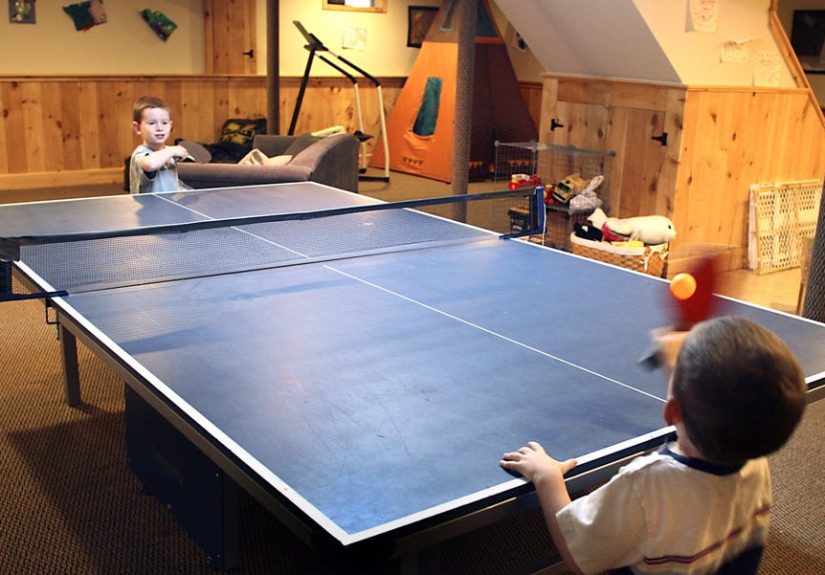
A pool table is great, but so is a multi-use table that flips between board games, crafts, and homework. Add durable seating, storage for controllers and chargers, and lighting directly over the play surface so you’re not squinting at Monopoly money like it’s fine print on a mortgage.
5) A kid-proof playroom that still looks nice
Choose finishes that forgive spills and scuffs: washable paint, closed storage bins, and floors that can handle juice-box incidents. In 2019, many families carved out a play zone with a soft rug and a low bench of cubbiesthen kept the rest of the basement “adult-friendly.”
6) Home office or craft studio with real lighting
Basements can be fantastic for focusquiet, tucked away, and free from kitchen chaos. Give your basement office idea good task lighting, a comfortable chair, and a backdrop that doesn’t look like you’re taking Zoom calls inside a storage unit. Built-in shelves or a pegboard wall keeps supplies organized.
7) The home gym corner (small but mighty)
A full gym is optional. A well-planned corner with rubber flooring, a mirror, and wall-mounted storage for bands and weights can do a lot. In 2019, “functional fitness” setups were popularmore open space for movement, fewer giant machines collecting dust.
8) Guest suite vibes (even if it’s just a “nice couch and a door”)
If you’re adding a bedroom, plan it like a real room: proper egress, a closet if required, and lighting that feels warm. Add a small dresser, a luggage bench, and a nightstand with an outlet nearby. If it’s a sleeper sofa instead, create a sense of privacy with a divider or bookcase.
9) A basement bathroom that feels spa-adjacent
Nothing makes a finished basement feel complete like a bathroom. To keep it from feeling like a gas-station pit stop, use bright tile, good ventilation, and layered lighting. If you’re dealing with below-grade plumbing, plan earlythis is one area where “we’ll figure it out later” can get expensive.
10) Laundry + utility zone that doesn’t wreck the mood
Basements often need to keep mechanical systems accessible. The 2019 solution: build a tidy utility closet with louvered or vented doors, and treat the laundry area like a mini room with cabinets, a folding counter, and decent lighting. It’s glamorous in the way a well-labeled pantry is glamorous: quietly satisfying.
11) Flooring that can handle basement reality
Basements want water-resistant materials. In 2019, luxury vinyl plank/tile (LVP/LVT) became a go-to because it looks like wood, feels warmer than tile, and handles moisture better than traditional hardwood. Carpet can still work if you choose low-pile options or carpet tiles you can replace individually. Sealed concrete is another durable option if you like an industrial lookadd area rugs for comfort.
12) Ceiling tricks for low headroom
Low ceilings are a common basement complaint. Popular 2019 fixes included painting the ceiling a uniform color for a modern “open” look, using soffits to hide ductwork cleanly, and choosing low-profile lighting (recessed or slim LED fixtures) to preserve headroom.
Lighting: The Fastest Way to Make a Basement Feel Finished
Basements need layered lighting: ambient (overall), task (where you work), and accent (to avoid that flat, office-y glow). Recessed lighting is a common choice for low ceilings, but don’t stop there. Add wall sconces near seating, a table lamp on a side table, and under-shelf lighting in a bar or kitchenette zone. Your basement will instantly feel more “living room” and less “rec room from 1994.”
Mini Checklist: Planning a Finished Basement That Ages Well
- Comfort: dehumidification, heat/cooling, insulation, and draft control.
- Safety: smoke/CO detectors where required, safe stairs/handrails, and proper egress for sleeping rooms.
- Access: keep shutoffs and service panels reachable (future-you will thank you).
- Storage: build it in early so it doesn’t become an afterthought (or a pile).
- Flexibility: choose furniture and layouts that can evolve as your household changes.
What Homeowners Wish They’d Known in 2019 (Real-World Experiences)
Ask people who finished a basement in 2019 what they’d do differently, and you’ll hear the same themesusually told with the thousand-yard stare of someone who has patched drywall twice. First: they wish they’d taken moisture even more seriously. Plenty of basements look “dry” in summer, then reveal their true personality during a heavy rain or spring thaw. Homeowners who installed better drainage, a reliable sump pump setup, and a dehumidifier from day one report fewer odors, fewer stains, and far less anxiety every time the weather app turns dramatic.
Second: they learned that lighting is not a “later” decision. People often start with one bright overhead fixture and promise themselves they’ll add lamps and accents later. Then later becomes never, and the basement feels like a break room. The happy stories come from homeowners who planned lighting zones: recessed lights on dimmers for the whole space, a brighter task light over the game table, warm sconces near the TV, and a little under-cabinet glow at the bar. That layered approach made the basement feel inviting even on a random Tuesday night.
Third: outlets and data lines. Everyone thinks they have “enough” until they try to plug in a TV, a streaming box, a soundbar, a lamp, two phone chargers, and a game consoleplus the router they moved downstairs because the Wi-Fi was sad. Homeowners who added more outlets than they thought they needed (and planned where wall-mounted TVs and desks would go) avoided extension-cord spaghetti. Many also ran ethernet or at least a pathway for future wiring, because nothing says “finished basement” like buffering in 4K.
Fourth: they underestimated sound. Basements can echo, and noise travels up through the floor above. People who added insulation in the ceiling cavities, used rugs and upholstered furniture, and installed solid-core doors for a theater or office reported a quieter, more comfortable home overall. On the flip side, open ceilings can look cool, but they also leave sound bouncing off hard surfacesso adding soft materials matters.
One more lesson shows up again and again: basement materials should be chosen like they’re going to live a harder life than the upstairs. Homeowners who picked moisture-resistant drywall where appropriate, kept trim slightly off the slab, and used removable carpet tiles or washable area rugs found cleanup was far less dramatic. Several also mentioned “the smell test”: before closing walls, they ran the basement with a dehumidifier for a few weeks, checking for lingering odors after rain. If the space still smelled funky, they paused and solved itbecause once furniture and soft textiles move in, odors don’t politely disappear. And if you’re debating a door at the top of the basement stairs, the experience crowd is loud and unanimous: add one. It helps with sound, temperature control, and keeping the basement from feeling like it’s permanently connected to the HVAC mysteries below.
Finally: they discovered that flexibility beats perfection. A basement that tries to be a gym, a theater, a guest suite, and a storage warehouse at the same time usually becomes none of those things. The success stories come from basements designed around the household’s real habits: a family room first, storage second, and one “extra” feature (a bar nook, a desk zone, or a play corner). That prioritization kept budgets sane and made the space actually usablebecause the best finished basement isn’t the fanciest one. It’s the one your family naturally drifts into.