Table of Contents >> Show >> Hide
- What Is a Gastrointestinal Perforation (and Why It’s Dangerous)
- Common Causes of Gastrointestinal Perforation
- Symptoms: What GI Perforation Feels Like
- Diagnosis: How Doctors Confirm GI Perforation
- Why Some Perforations Are “Obvious” and Others Are Sneaky
- Conditions That Can Mimic GI Perforation
- What Happens After Diagnosis (Quick Overview)
- Prevention and Risk Reduction (Because Nobody Wants This Plotline)
- Real-Life Experiences: What It Can Feel Like ()
- Conclusion
A gastrointestinal (GI) perforation is exactly what it sounds like: a full-thickness hole somewhere along the “hollow-tube” organs of digestion
the esophagus, stomach, small intestine, large intestine (colon), rectum, or even the gallbladder. And yes, it’s as serious as it sounds.
When a hole opens up, air, stomach acid, bile, digestive enzymes, and bacteria can leak where they absolutely do not belong: your abdominal (or chest) cavity.
The result can be rapid inflammation, infection (peritonitis), and sepsismeaning this is a medical emergency, not a “sleep it off” situation.
That said, understanding what causes GI perforation, how it tends to feel, and how doctors diagnose it fast can help you recognize
red flags and get the right care quickly. Think of this article as your “don’t-ignore-this” guideserious content, with just enough humor to keep your eyes open.
(Because if your gut has a hole in it, you need your attention span fully intact.)
What Is a Gastrointestinal Perforation (and Why It’s Dangerous)
A perforation is a breach through the entire wall of a GI organ. That wall normally acts like a sealed pipeline: food and fluid inside, everything else outside.
When the wall breaks, the pipeline becomes a sprinkler systemexcept the “water” is contaminated material that irritates tissues and can seed infection quickly.
The danger comes from two main issues:
- Chemical irritation (for example, stomach acid leaking from a perforated ulcer can inflame tissues fast).
- Bacterial contamination (especially when the colon is involved, because it naturally contains lots of bacteria).
The body responds with inflammation and sometimes a “board-like” rigid abdomen. If contamination is widespread, infection can become systemic (sepsis).
This is why a GI perforation is often treated as a surgical emergency.
Common Causes of Gastrointestinal Perforation
GI perforation isn’t one diseaseit’s a final common pathway of many problems. The cause often depends on which organ perforated
and why the wall became weak or ruptured.
1) Inflammation and Infection That “Burst” an Organ
- Appendicitis: an inflamed appendix can rupture, spilling infected material.
- Diverticulitis: inflamed diverticula (small pouches in the colon) can perforate, sometimes gradually.
- Inflammatory bowel disease (Crohn’s disease or ulcerative colitis): chronic inflammation can weaken the bowel wall.
- Severe infectious colitis: certain infections can damage the colon wall enough to perforate.
2) Ulcers and Erosion
A peptic ulcer (stomach or duodenal ulcer) can deepen over time until it breaks through. Risk factors often include
NSAID use (like ibuprofen/naproxen), H. pylori infection, smoking, and older age.
When an ulcer perforates, pain can be sudden and intenselike your abdomen is filing a complaint in ALL CAPS.
3) Obstruction and Pressure Build-Up
Anything that blocks the bowel can increase pressure behind the blockage. If blood flow is compromised (ischemia), the wall can die (necrosis) and perforate.
Examples include:
- Adhesions (scar tissue after surgery)
- Hernias that trap bowel
- Tumors (including colon cancer)
- Volvulus (twisting of the bowel)
4) Trauma
- Penetrating injury (stabbing, gunshot)
- Blunt injury (car accidents, major falls)
5) Medical Procedures (Iatrogenic Causes)
Rarely, a perforation can occur during procedures such as colonoscopy or upper endoscopy (EGD).
Risk can be higher when the bowel wall is already fragile (severe inflammation, recent surgery, certain tumors, or significant diverticular disease).
6) Caustic Ingestion and Foreign Bodies
- Caustic substances (certain cleaners) can burn through tissue, particularly the esophagus.
- Sharp objects (fish bones, toothpicks) can rarely puncture the GI tract.
- Multiple magnets (often in children): magnets can trap bowel between them and cause pressure necrosis and perforation.
7) Less-Discussed (But Real) Contributors
Some medications and conditions can increase risk by weakening tissue or impairing healingthink long-term steroids, certain chemotherapy agents,
immune suppression, or severe constipation that causes dangerous pressure and injury in the colon.
Symptoms: What GI Perforation Feels Like
Symptoms can vary by location and cause, but most cases involve a version of “something is deeply wrong.”
The classic story is sudden, severe abdominal painoften worse with movementfollowed by tenderness and a rigid abdomen.
But not every perforation announces itself with fireworks; some (especially colon-related) can be more gradual.
Common Symptoms
- Severe abdominal pain (often sudden, may spread)
- Abdominal tenderness, guarding, or pain with even light touch
- Fever and/or chills
- Nausea and vomiting
- Fast heart rate, weakness, dizziness
- Bloating or a distended abdomen
- Confusion (especially in older adults) or feeling faintpossible signs of sepsis
Symptoms That Hint at Location
- Esophagus: sudden chest pain, pain after forceful vomiting, shortness of breath, neck pain/swelling.
- Stomach/duodenum (perforated ulcer): abrupt upper abdominal pain that may feel “knife-like,” sometimes with shoulder pain.
- Colon: pain may build more gradually; fever and lower abdominal pain are common, especially with diverticulitis.
When to Seek Emergency Care
If you have sudden severe abdominal pain, abdominal rigidity, high fever, fainting, confusion, or signs of shock (cold/clammy skin, rapid breathing,
racing heart), treat it as an emergency. A true perforation is not the moment for “Let me just finish this meeting.”
Diagnosis: How Doctors Confirm GI Perforation
Diagnosis is a mix of fast clinical reasoning and imaging. In the emergency department, the goal is to answer three urgent questions:
Is there a perforation? Where is it? and What caused it?
1) The History (What You Tell the Clinician Matters)
Expect questions like:
- When did the pain startsuddenly or gradually?
- Where is the pain, and does it move?
- Any vomiting (especially forceful), black stools, blood in stool, or recent constipation?
- NSAID use, steroids, chemotherapy, or known ulcer/IBD/diverticulitis?
- Recent endoscopy/colonoscopy?
- Any trauma, swallowing a foreign object, or possible caustic ingestion?
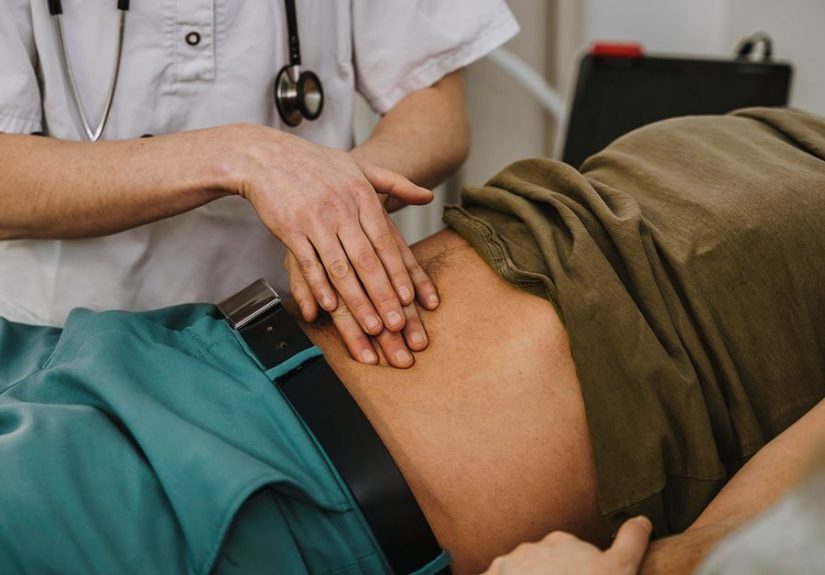
2) The Physical Exam
Clinicians look for signs of “peritoneal irritation,” which can include:
- Guarding (tensing of abdominal muscles)
- Rebound tenderness (pain worsens when pressure is released)
- Rigid abdomen (sometimes described as “board-like”)
- Absent or decreased bowel sounds in more advanced cases
Vital signs are critical. A fever, low blood pressure, rapid heart rate, or rapid breathing can indicate systemic infection or shock.
3) Imaging: The Fastest Way to Spot Trouble
Imaging is often the turning point from “we suspect” to “we know.”
Plain X-ray (Chest or Abdomen)
A chest or abdominal X-ray can sometimes show free air under the diaphragm (pneumoperitoneum), which strongly suggests a perforation.
X-rays are quick and widely availableuseful when time matters. However, they can miss smaller perforations or early cases.
CT Scan (Often the Preferred Test)
A CT scan of the abdomen and pelvis is commonly considered the best imaging test to confirm a perforation and identify the location and cause.
CT can show:
- Free air (even in small amounts)
- Fluid collections
- Inflammation around a specific segment of bowel
- Abscesses
- Obstruction, tumors, or diverticulitis as the underlying driver
Contrast may be used depending on the clinical scenario. The care team balances speed, kidney function, allergy history, and what they’re trying to visualize.
4) Lab Tests: Clues About Infection and Severity
Blood tests can’t “see” a hole, but they help measure how sick someone is and guide next steps. Common tests include:
- White blood cell count (often elevated with infection/inflammation)
- Lactate (can rise with poor perfusion, sepsis, or ischemic bowel)
- Electrolytes and kidney function (important before imaging/contrast and for resuscitation)
- Blood cultures if sepsis is suspected
5) Endoscopy: Sometimes Helpful, Not Always First
Endoscopy can help identify certain perforations (or the cause, like an ulcer), but it’s not always the first diagnostic step when perforation is suspected,
especially if the patient is unstable. The priority is usually stabilization and imaging.
Why Some Perforations Are “Obvious” and Others Are Sneaky
Not every perforation creates a dramatic, instantly recognizable picture. Sometimes the body walls off the leak, forming a localized abscess.
In those cases, pain may be more localized and symptoms may build over days rather than minutes. Older adults, people with diabetes,
and immunocompromised patients may also have less dramatic pain or fevermaking diagnosis trickier.
That’s one reason clinicians rely on a combination of history, exam, vitals, labs, and imaging. The diagnosis is detective workbut the kind where the
“plot twist” can be prevented if you get to the ER early.
Conditions That Can Mimic GI Perforation
Many problems cause severe abdominal pain (“acute abdomen”). Doctors often consider:
- Pancreatitis
- Gallbladder infection (cholecystitis)
- Kidney stones
- Severe gastroenteritis
- Ruptured ovarian cyst or ectopic pregnancy (in people who can become pregnant)
- Ischemic bowel (which can also lead to perforation)
This is why imaging and careful evaluation matter. You can’t reliably diagnose a perforation at home with vibes, unfortunately.
(If you could, emergency medicine would be a very different TV show.)
What Happens After Diagnosis (Quick Overview)
While this article focuses on causes, symptoms, and diagnosis, it helps to know what typically happens next:
- Stabilization: IV fluids, pain control, monitoring, and sometimes oxygen.
- Antibiotics: started early if perforation and infection are suspected.
- Surgical consultation: many perforations require urgent surgery; some contained perforations may be managed non-operatively in select cases.
- Source control: repairing/closing the hole, removing diseased tissue if needed, and washing out contamination.
The exact approach depends on location (stomach vs colon), cause (ulcer vs diverticulitis vs trauma), and how stable the patient is.
Prevention and Risk Reduction (Because Nobody Wants This Plotline)
Not all perforations are preventable, but risk can be lowered in several real-world ways:
- Use NSAIDs carefully and avoid chronic overuse; discuss stomach protection if you need them long-term.
- Treat H. pylori when identified, since it’s a major driver of ulcers.
- Manage chronic conditions like IBD with medical guidanceuncontrolled inflammation increases complications risk.
- Take new abdominal pain seriously, especially with fever, persistent vomiting, or a rigid abdomen.
- Keep magnets and small objects away from children; multiple magnet ingestion is a high-risk emergency.
Real-Life Experiences: What It Can Feel Like ()
The stories below are composite experiences based on commonly reported patterns in emergency and hospital settingsnot any one person’s medical record.
They’re included to make the warning signs feel more “human,” because symptoms on a list can look oddly polite for something that is, in reality, alarmingly loud.
Experience 1: “I Thought It Was Heartburn… Until I Couldn’t Stand Up Straight”
One classic pattern is the perforated ulcer story: a person has nagging upper abdominal discomfort for weeksburning after meals, maybe worse at night.
Then one day the pain flips a switch. It’s sharp, sudden, and intense enough that standing upright feels impossible. Some people describe it as
“a hot knife,” others as “something popped.” Within hours, even small movements (like rolling in bed) hurt. Nausea may follow, but the pain is the headline.
In the ER, an X-ray may show free air, and a CT scan can confirm the source. The takeaway: pain that suddenly changes characterespecially to severe and unrelenting
is not the time to self-diagnose with antacids and optimism.
Experience 2: “It Started Like a Diverticulitis FlareThen I Got Weirdly Weak”
Colon perforations can be sneakier. Someone might have lower left abdominal pain and low-grade fever and assume it’s a typical diverticulitis flare.
Maybe they try a bland diet and wait for it to pass. But over a day or two, the pain becomes more diffuse, the abdomen feels swollen, and fatigue turns into
a heavy, scary weakness. They may notice chills, a racing heartbeat, or lightheadedness when standing. In older adults especially, confusion can creep in.
This “systemic” feelinglike the whole body is alarmedis often what pushes people to seek care. Imaging may reveal a localized abscess or free perforation.
The takeaway: gradual pain plus fever plus worsening weakness isn’t “just a stomach bug,” particularly if symptoms escalate instead of easing.
Experience 3: “After the Procedure, Something Felt OffNot Normal Soreness”
After colonoscopy or other GI procedures, mild cramping or bloating can be normal. But patients who develop a perforation often describe pain that doesn’t behave
like routine discomfort: it intensifies, doesn’t improve with passing gas, and becomes more tender to touch. Sometimes there’s fever or shoulder pain.
A key emotional detail patients mention is the sense that the pain is “wrong”different from anything they’ve felt. In these situations, clinicians take symptoms
seriously, because early diagnosis can change outcomes. The takeaway: if post-procedure pain is severe, worsening, or paired with fever, call the care team or seek urgent evaluation.
Experience 4: “I Didn’t Have Much PainBut I Was Getting Sicker Fast”
Not everyone has dramatic pain. People who are immunocompromised, on long-term steroids, or older may present with less tenderness but more signs of systemic illness:
low blood pressure, fast heart rate, confusion, or rapid breathing. That mismatch“I don’t hurt that much, but I feel like I’m crashing”is important.
It’s also why emergency clinicians rely heavily on vital signs, labs, and CT imaging. The takeaway: the absence of extreme pain does not guarantee the absence of a serious problem.
Conclusion
Gastrointestinal perforation is rare compared with everyday stomach problems, but it’s one of the most important diagnoses to catch quickly.
The symptoms can be dramatic (sudden severe pain, rigid abdomen) or deceptively gradual (worsening pain, fever, weakness), especially when the colon is involved.
Diagnosis relies on fast evaluation, physical exam, blood tests that signal infection severity, and imagingoften a CT scanto pinpoint the problem.
If you suspect a perforation, the right move is urgent medical evaluation. In this scenario, speed isn’t “nice to have.” It’s the whole game.