Table of Contents >> Show >> Hide
- Why Glass Bottle Vases Look Expensive (Even When They’re Free)
- Choosing Bottles That Actually Work as Vases
- 1) Narrow-neck bottles (sparkling water, soda, vinegar, olive oil)
- 2) “Bud vase” mini bottles (medicine-style, small sauce bottles)
- 3) Jar-style containers (mason jars, jam jars, pasta sauce jars)
- 4) Milk-bottle shapes (classic “bottle vase” silhouette)
- 5) Decorative tinted bottles (amber, green, cobalt)
- Cleaning and Prepping Glass Bottle Vases (So They Don’t Smell Like History)
- Design Rules That Make Bottle Vases Look Styled, Not Random
- How to Arrange Flowers in Narrow-Neck Bottle Vases
- Glass Bottle Vase Centerpiece Ideas for Real Life
- Easy DIY Upgrades (That Won’t Ruin the Bottle)
- Common Problems (and Fixes That Don’t Require a Personality Transplant)
- Conclusion: The Secret Is Simplicity (and a Clean Bottle)
- Experiences With Glass Bottle Vases (A Real-World, 500+ Word Add-On)
- References Consulted (No Links)
Glass bottle vases are proof that “pretty” and “practical” can be the same thing. One minute your recycling bin is
minding its own business, and the next, it’s starring in a centerpiece that looks like you have your life together
(even if you ate cereal for dinner). Whether you’re styling a single dramatic stem or building a whole tablescape of
tiny bud vases, glass bottles deliver that clean, airy look that works in modern, farmhouse, coastal, eclectic, and
“I’m still figuring it out” homes.
This guide covers how to choose the right bottles, clean them properly, style them like a grown-up, and keep flowers
looking fresh longer. You’ll also get concrete centerpiece ideas, seasonal tweaks, and a long, real-world
“here’s-what-actually-happens” experience section at the end.
Why Glass Bottle Vases Look Expensive (Even When They’re Free)
They’re visually light, so your room feels less cluttered
Clear or lightly tinted glass doesn’t “block” the view the way a solid ceramic vase can. That makes bottle vases
perfect for small spaces, busy countertops, and dining tables where people would like to see each other’s faces.
Bonus: seeing stems through water is genuinely prettylike your flowers are doing ballet backstage.
They give you control over the vibe
One bottle vase can read minimalist. Three can feel curated. Nine can feel like a wedding planner arrived and started
charging you by the hour. The same flowers look completely different in a skinny-neck bottle versus a wide jar:
narrow necks keep arrangements upright and tidy; wider openings let blooms fan out for a fuller look.
They’re inherently flexible
Glass bottles work for fresh flowers, dried stems, branches, faux florals, and even “nothing at all” (because a
beautiful bottle can stand on its own). They also layer beautifully with candles, linens, wood boards, and greenery.
Choosing Bottles That Actually Work as Vases
Not every bottle is destined for greatness. The best glass bottle vases have smooth rims, stable bases, and openings
that match the stems you plan to use. Here are the most useful types (including non-alcohol options) and what each is
best for:
1) Narrow-neck bottles (sparkling water, soda, vinegar, olive oil)
- Best for: single stems, small bouquets, wildflowers, airy greenery
- Why they work: the neck acts like built-in floral support
- Watch out for: very tall bottles that tip easily on busy tables
2) “Bud vase” mini bottles (medicine-style, small sauce bottles)
- Best for: one bloom each (ranunculus, carnation, small rose), tiny clippings, herbs
- Why they work: they make group styling effortless and forgiving
- Watch out for: openings that are too tight for thicker stems
3) Jar-style containers (mason jars, jam jars, pasta sauce jars)
- Best for: fuller bouquets, garden mixes, “I bought too many tulips” situations
- Why they work: wide mouth = easy arranging and easy cleaning
- Watch out for: short, squat jars can look top-heavy with long stems
4) Milk-bottle shapes (classic “bottle vase” silhouette)
- Best for: casual centerpieces, wildflowers, ribbon/twine styling
- Why they work: wide enough for a small bunch but still structured
- Watch out for: very thin glass in some decorative versions
5) Decorative tinted bottles (amber, green, cobalt)
- Best for: moody fall styling, vintage looks, shelf decor
- Why they work: tinted glass adds color without screaming for attention
- Watch out for: too many different colors can look messypick a “palette”
Safety note: skip bottles with chipped mouths or sharp edges. And if you’ve seen “cut glass bottles”
onlinethose projects can involve tools and techniques that aren’t beginner-friendly. For home decor, you can get
95% of the look using intact bottles with smooth rims (and 0% of the emergency room storyline).
Cleaning and Prepping Glass Bottle Vases (So They Don’t Smell Like History)
Step 1: Remove labels without turning it into a wrestling match
Most labels loosen with a hot, soapy soak. The stubborn part is usually the sticky residue. Household methods that
commonly work on glass include rubbing alcohol, warm vinegar, hot water + baking soda, gentle heat (like a hair dryer),
and oils (vegetable oil or peanut butter) that help release adhesivefollowed by a good wash afterward.
Step 2: Deep-clean the inside
- Fill with warm water + dish soap and let it sit.
- Use a bottle brush if you have one (or uncooked rice + soapy water for a swish-and-scrub effect).
- Rinse until the water runs clear and there’s no soapy film.
Step 3: Sanitize before fresh flowers
Clean containers matter because bacteria shorten the life of cut flowers. If you want an extra-clean start, use a mild
bleach-and-water solution, then rinse well. The goal is “fresh and clean,” not “swimming pool bouquet.”
Design Rules That Make Bottle Vases Look Styled, Not Random
Rule 1: Use odd numbers (but don’t get weird about it)
Groups of 3 or 5 bottles tend to look more natural than pairs. Think “casually curated,” not “symmetry police.”
Rule 2: Vary height and shape, unify something else
Mix tall and short bottles, but keep at least one element consistent: all clear glass, all amber glass, all wrapped
with the same ribbon, or all placed on one tray. That consistency is what reads intentional.
Rule 3: Respect proportion
A classic guideline: your stems often look best when the total height of flowers + vase is about 1.5–2 times the vase
height. You can break this ruleespecially for dramatic branchesbut it’s a strong default when you’re unsure.
Rule 4: Let negative space do its job
Glass bottle vases shine when you don’t overstuff them. A single bloom with a little airy greenery can look more
“designer” than a crowded bundle that’s fighting for oxygen.
How to Arrange Flowers in Narrow-Neck Bottle Vases
Narrow openings are your friend: they hold stems upright and reduce the need for extra floral “engineering.” The trick
is choosing the right stems and caring for them properly.
Flower choices that behave well in bottles
- Great for single stems: rose, ranunculus, gerbera, sunflower, hydrangea (shortened), peony (in season)
- Great for airy mixes: spray roses, lisianthus, asters, chamomile-style daisies, waxflower
- Great supporting greenery: eucalyptus (use sparingly), ruscus, ferns, seasonal branches
- Great dried options: bunny tails, dried lavender, wheat, pampas (trim and tame it)
Care steps that extend vase life
- Trim stems cleanly (often at an angle) and refresh cuts over time for better water uptake.
- Remove submerged leaves so they don’t rot in the water and feed bacteria.
- Change water regularlyevery couple of days, or sooner if it turns cloudy.
- Keep arrangements cool, away from direct sun, heater vents, and drafts.
- Keep flowers away from ripening fruit if you can; produce releases ethylene gas that can shorten bloom life.
If you have flower food, use it. If you’re experimenting with DIY additives (like tiny amounts of bleach), moderation
matterstoo much of anything can do more harm than good. Clean water and clean glass are the real MVPs.
Glass Bottle Vase Centerpiece Ideas for Real Life
The “weekday table” trio
- 3 small bottles (or jars) in a line
- One stem per bottle (like a mini rose, a small daisy cluster, and a bit of greenery)
- Optional: a few tea lights between them
This is the easiest way to look like you triedwithout actually trying too hard.
The long-table runner look (great for gatherings)
- Mix 7–11 mini bottles/bud vases down the center of the table
- Use one “signature” flower (like white stock) and one supporting green
- Add candles at two heights for depth
The “collected vintage” centerpiece
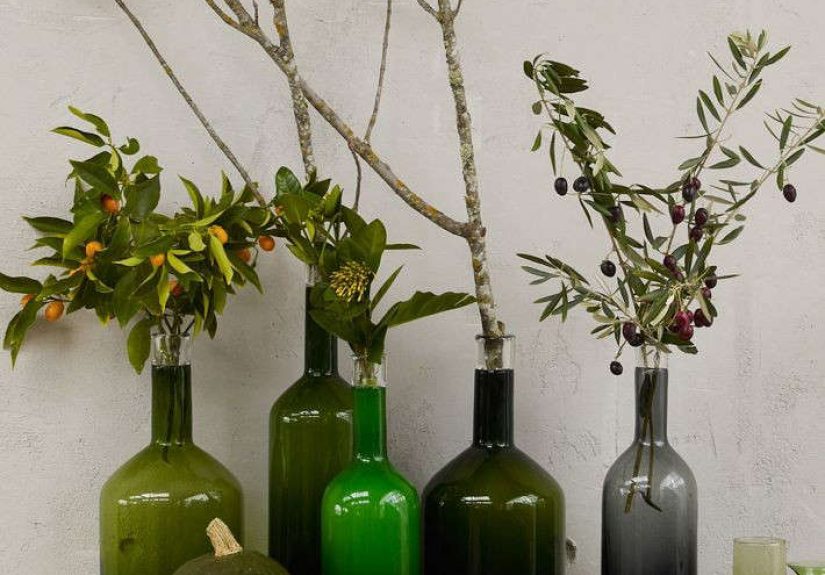
Use tinted bottles (amber/green) and keep flowers simplewildflowers or greenery-heavy stems. Twine or ribbon around
the necks can lean rustic, but keep it neat and consistent so it looks intentional.
The layered glass moment
If you have larger glass vessels (like hurricane-style containers), you can create a layered display by nesting
smaller glass inside larger glass, then using greenery or leaves in the outer layer for a dramatic, modern centerpiece.
It’s a “quiet luxury” trick that still feels approachable.
Easy DIY Upgrades (That Won’t Ruin the Bottle)
Temporary wraps
- Thin ribbon, linen strip, or jute twine (especially for casual or rustic styling)
- Paper labels you design yourself (for parties or seasonal decor)
Subtle finishes
- Frosted-glass spray on the outside (light coats)
- Removable vinyl shapes for a clean pattern
- One-color paint “dip” on the bottom third (modern and simple)
Tip: avoid coating the inside of bottles. Water + flower food + paint experiments = the kind of science fair nobody
wants in the dining room.
Common Problems (and Fixes That Don’t Require a Personality Transplant)
“My bottle keeps tipping.”
- Use shorter stems or fewer blooms.
- Group bottles together on a tray so they stabilize each other visually and physically.
- Choose bottles with wider bases for dining tables.
“The water turns cloudy fast.”
- Clean the bottle more thoroughly before arranging.
- Remove all leaves below the water line.
- Change water more often and refresh the stem cut.
“There’s sticky label residue that won’t quit.”
- Try a solvent approach (rubbing alcohol) or an acid approach (warm vinegar).
- Try a gentle abrasive (baking soda) after soaking.
- Try an oil approach for stubborn glue, then wash well.
- Use plastic scrapers (not metal) to avoid scratching glass.
Conclusion: The Secret Is Simplicity (and a Clean Bottle)
Glass bottle vases are one of the easiest ways to level up your home decor without buying more stuff you’ll later have
to organize (ironic). Choose stable bottles, clean them well, and let the glass do what it does best: make flowers and
greenery look crisp, light, and intentional. Start with a trio on the table, graduate to a bud-vase “runner,” and you’ll
quickly see why this trend never really disappearsit just keeps getting re-styled.
Experiences With Glass Bottle Vases (A Real-World, 500+ Word Add-On)
If you’ve never tried styling glass bottle vases before, the experience usually starts with innocent optimism and ends
with you staring at a sink full of bottles like you’ve opened a tiny glass museum. And honestly? That’s part of the
charm. People who adopt bottle vases tend to discover a few consistent “lessons” that only show up once you’ve done it
in a real home, with real time constraints, and real-life distractions (like pets, siblings, or the sudden mystery
crumb that appears on every kitchen counter).
One of the first things you notice is how quickly a single stem can transform a space. A tall, narrow bottle with one
bloomjust oneoften looks more polished than a crowded bouquet in a wide container. It’s not because the bouquet is
“wrong,” but because narrow-neck bottles naturally create structure. People commonly find that they stop buying “filler”
once they realize a little greenery plus one focal bloom feels modern and intentional. The bottle does the hard work by
holding everything upright without tape grids or fancy floral foam.
The second experience is the label-removal reality check. You’ll peel a label, feel victorious, and then meet the sticky
residue that refuses to leave. This is where most beginners go from “cute upcycle” to “why do adhesives exist.” Over
time, you learn to treat it like a system: soak first, then choose a method based on what you have in the house (alcohol,
vinegar, baking soda, a little heat, or an oil approach), and always finish with a proper wash. The most surprising part
for many people is that the last stepwashing and drying wellmakes the bottle look dramatically better. A bottle can be
clean but still look dull from leftover film. Once it’s truly clean, it looks like decor instead of “recently rescued.”
Another common “aha” moment: sets look better than solos. A single bottle vase can feel a little lonely, like it’s
waiting for its friends to arrive. But the moment you group three bottlesespecially with varied heightsit starts to
feel designed. Many people end up building a small “core collection”: a short jar for fuller stems, a medium bottle for
a small bunch, and a tall skinny bottle for drama. Once you have those three, you can rotate flowers and greenery based
on what’s available. Grocery-store bouquets become a mix-and-match situation: split one bunch across multiple bottles,
and suddenly you have decor for the dining table, bathroom vanity, and bedside table all at once.
People also tend to learn the “table manners” of bottle vases. Tall bottles look great on a console or shelf, but on a
dining table they can block sightlines and feel awkward during a meal. That’s why bud vases become so popular for
gatherings: guests can actually see each other, and the table still looks special. If you’ve ever sat behind a tall
centerpiece and felt like you were talking to a bouquet instead of a person, you already understand this lesson.
Finally, there’s the flower-care experience: glass makes everything visibleespecially cloudy water. With opaque vases,
you can pretend the water is fine. With glass, the water will politely (and loudly) expose your procrastination. This
visibility nudges people into better habits: changing water, trimming stems, removing submerged leaves, and keeping
arrangements away from heat or fruit. Over time, you’ll notice your flowers last longer simply because the bottle
“reminds” you when it’s time to refresh.
In the end, glass bottle vases are less about perfection and more about rhythm: collect a few good shapes, keep them
clean, style in small groups, and let simple stems shine. The best part is that you can make the look as minimal or as
abundant as you wantwithout needing a brand-new vase every time your mood changes.
References Consulted (No Links)
- Better Homes & Gardens (centerpiece and jar-vase ideas)
- The Spruce (label and sticker residue removal methods)
- Teleflora (fresh flower care guidance and moderation with additives)
- ProFlowers (flower longevity experiments and notes on bleach)
- University Extension resources (cut flower handling and vase-life guidance)
- Associated Press gardening guidance (home flower care and ethylene considerations)
- The Knot (bottle-vase wedding centerpiece examples)
- BobVila.com (sticker residue removal approaches)
- Real Simple (hot water soak and residue-cleaning steps)
- Apartment Therapy (bud vase and centerpiece styling inspiration)