Table of Contents >> Show >> Hide
- Why We Need New Kinds of Batteries
- So What Exactly Is a Gravity Battery?
- Real-World Gravity Batteries Already in Action
- How Gravity Batteries Work (Without Melting Your Brain)
- Where Gravity Shines: The Pros
- The Challenges: Gravity Has Baggage Too
- Where Gravity Batteries Fit in the Big Energy Picture
- What This Means for Cities, Homes, and the Grid
- Experiences from the Gravity Battery Frontier (500-Word Deep Dive)
- Conclusion: The Heaviest Battery You’ll Never Notice
If you’ve ever watched your phone battery plummet from 12% to “goodbye forever” in 30 seconds, it’s easy
to think batteries are the weak link in our high-tech world. Now zoom out from your phone to an entire
power grid packed with solar panels and wind turbines. Suddenly, the question isn’t just how to keep your
phone alive, but how to keep the lights on when the sun goes down and the wind goes quiet.
That’s where a surprisingly old force steps into a shiny new role: gravity. The same force that tips over
your coffee, pulls your keys off the counter, and reminds you that heels plus ice are a terrible combo is
now being harnessed as a kind of giant, mechanical battery. Gravity batterieslarge systems that lift and
lower heavy weights to store and release energyare emerging as one of the most intriguing
long-duration energy storage technologies on the market.
It sounds almost too simple to be cutting-edge, but gravity has already powered the world’s biggest energy
storage technology for decades. And now, with new designs using concrete blocks, steel weights, and
abandoned mine shafts, gravity storage is going from “old school hydro” to “next-gen grid solution.”
Why We Need New Kinds of Batteries
Renewable energy is booming. Solar and wind costs have fallen dramatically in the last decade, and in many
regions they’re now the cheapest new sources of electricity. But they come with one unavoidable catch:
they’re moody. The sun doesn’t shine at night; the wind doesn’t check your peak demand schedule before
taking the day off.
To make a clean grid reliable, we need long-duration energy storagesystems that can store
energy for many hours (or days) and release it later without breaking the bank. Traditional
lithium-ion batteries are great sprinters: they respond in milliseconds, they’re compact, and their
costs keep dropping. But they degrade over time, rely on critical minerals, and get expensive if you try to
stretch them from a few hours of storage to, say, a full night of backup.
That’s why researchers, utilities, and startups are now exploring a whole zoo of new storage technologies:
flow batteries, thermal storage, hydrogen, compressed air, and yesmechanical, gravity-based storage. In
independent comparisons of long-duration technologies, gravity storage consistently shows up as a high
efficiency, long-life option with promising potential as costs fall.
So What Exactly Is a Gravity Battery?
A gravity battery is basically a huge rechargeable “weight.” When there’s extra electricity on the gridsay
at midday when solar power is abundantthe system uses that electricity to lift something very heavy: blocks
of concrete, steel weights, or water in an elevated reservoir. That lifting stores energy as
gravitational potential energy.
When the grid needs power later, the system lets the weight come back down. As it descends, motors and
generators kick in and convert that potential energy back into electricity. The physics is the same as a
kid’s yo-yo, just on a slightly bigger scale and with fewer tangles.
The Original Gravity Battery: Pumped Hydro
We’ve actually been using gravity as an energy storage solution for decades through
pumped hydro storage. When there’s extra power, water is pumped uphill into a reservoir.
When demand rises, the water flows back down through turbines to generate electricity. This simple idea is
responsible for about 96% of the world’s existing energy storage capacity.
The challenge? Pumped hydro needs specific geographybig elevation differences, suitable land, and often
complex permitting. That’s not something you can casually roll out next to every city.
The New Wave: Towers, Mines, and Skyscrapers
Modern gravity batteries keep the core idea of pumped hydro but ditch the requirement for mountains and
giant lakes. Instead, they rely on:
- Gravity towers that stack and unstack heavy blocks.
- Underground shafts in mines that raise and lower weights.
- High-rise buildings that could double as vertical storage systems.
In other words, instead of needing a mountain, you can build your ownor reuse the vertical spaces
we’ve already created.
Real-World Gravity Batteries Already in Action
Energy Vault: Concrete Blocks and Giant Cranes
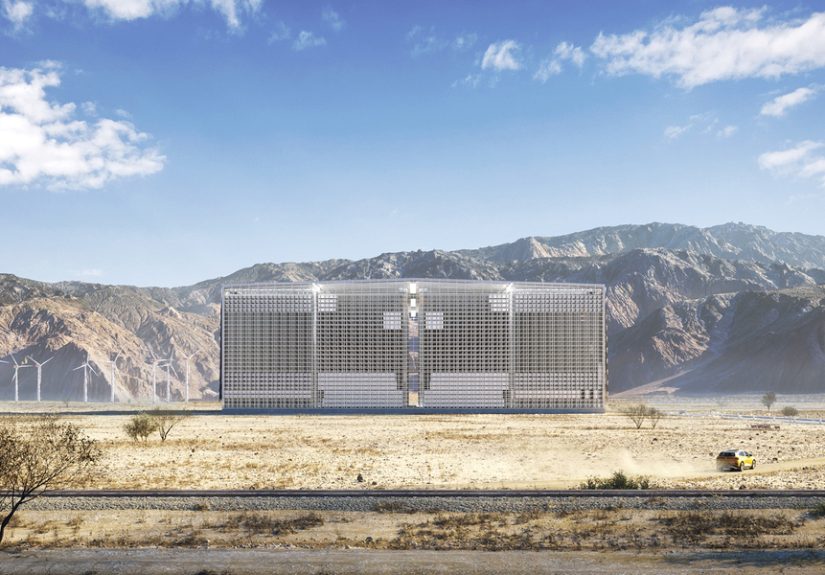
One of the best-known players in the gravity battery space is Energy Vault, a company whose
systems look like a mash-up of a shipping yard, a crane factory, and a sci-fi movie set. Their design uses
a massive multi-arm crane to lift and stack 30-plus-ton composite or concrete blocks into a tall tower
when electricity is cheap or abundant.
When the grid needs power, the system lowers these blocks, and the motors work in reverse as generators,
feeding electricity back into the grid. A demonstration system in India using this tower concept was
designed with around 35 MWh of storage capacity and about 4 MW of peak
power, with a response time of under three secondsfast enough to help stabilize the grid during quick
fluctuations.
Energy Vault’s more recent EVx systems, including a project in China rated at
25 MW / 100 MWh, show how gravity storage can operate at utility scale, providing up to
four hours of discharge and targeting round-trip efficiencies above 80%.
Gravitricity: Turning Old Mines into Giant Batteries
Another approach comes from Gravitricity, a company based in the U.K. that focuses on
dropping weights in deep shafts. Their prototype system in Scotland raised and lowered 50-ton weights in a
15-meter tower to prove the concept, and they’re now working on using deep mine shafts across Europe as
full-scale gravity storage systems.
The idea is elegant: mines already have the depth and infrastructure; instead of filling them in, you hang
a heavy weight, attach it to a motor-generator system, and use surplus renewable electricity to hoist it
up. When power is needed, the weight descends, spinning the generator. It’s an industrial-strength version
of an elevator that pays its own bills.
Using Skyscrapers as Vertical Batteries
Researchers have also proposed integrating gravity storage into high-rise buildings, using elevator-like
systems to move heavy blocks between floors. Studies suggest that such systems, using motor-generator units,
hoisting ropes, gears, and concrete or steel blocks, could operate at elevator-like speeds while storing
large amounts of energy within existing city infrastructure.
Picture a future where office buildings quietly charge themselves overnightno rooftop battery packs, just
clever use of the vertical space they already have.
How Gravity Batteries Work (Without Melting Your Brain)
Charging: Lifting Heavy Things on Purpose
During times of surplus electricitylike a windy night or a sunny afternoongravity systems switch into
“charge” mode:
- Electricity drives motors that lift heavy masses (blocks or weights) upward.
- As the masses rise, the system stores energy as gravitational potential energy.
- Software optimizes which weights to move and when, maximizing efficiency and minimizing wear.
It’s like going to the gym and doing squats, except the grid gets stronger instead of your quads.
Discharging: Controlled Falling, Not Freefall
When demand increases or renewable output dips, the system goes into “discharge” mode:
- The weights are allowed to descend in a carefully controlled way.
- The motors now act as generators, converting the motion back into electricity.
- Power electronics and control systems synchronize this electricity with the grid.
Modern gravity systems can respond in a matter of seconds and are being designed for round-trip efficiencies
in the 70–90% rangecompetitive with electrochemical batteries, especially for longer storage durations.
Why Lifetime Matters
One of gravity storage’s biggest advantages is longevity. Mechanical systemscables, pulleys, bearings, and
motorsdo wear, but they don’t suffer the same kind of chemical degradation that lithium-ion batteries do.
Reviews of gravity energy storage suggest significantly longer lifetimes and higher cycle counts, which
could translate into lower lifetime costs even if the upfront capital is higher today.
Where Gravity Shines: The Pros
1. Long Lifespan and Low Degradation
Gravity systems don’t depend on electrodes slowly losing capacity or electrolytes breaking down. With proper
maintenance, the core mechanical components can last decades. Analyses of long-duration storage technologies
highlight gravity systems as especially promising for multi-hour storage where cycle life is critical.
2. Resource-Light and Recyclable
Instead of cobalt, nickel, or rare earth metals, gravity batteries rely mostly on:
- Concrete or composite blocks, steel weights, or rock/gravel.
- Standard industrial components like motors, cables, and gears.
- Existing infrastructure such as mine shafts or high-rise buildings.
That makes them attractive for countries aiming to reduce dependence on imported battery materials or to
reuse industrial sites instead of building entirely new facilities.
3. Safe, Non-Combustible Storage
Gravity systems don’t involve flammable electrolytes or thermal runaway events. If something goes wrong,
the worst-case scenario is usually a mechanical failurenot a large-scale fire. For communities wary of big
battery installations, “a system that lifts heavy blocks” can be an easier sell than “a massive warehouse of
lithium cells.”
4. Perfect Partner for Renewables
Because gravity storage can deliver power for hours and respond quickly, it’s well-suited to smoothing out
the daily ups and downs of wind and solar. Many studies on long-duration storage put gravity systems in the
same conversation as flow batteries, hydrogen, and thermal storage as key tools for balancing a renewable
grid.
The Challenges: Gravity Has Baggage Too
1. High Upfront Costs (for Now)
Let’s address the elephantor the 35-ton blockin the room: gravity storage isn’t cheap yet. Recent analyses
place global average capital costs for gravity storage systems at around
$600+ per kWh, higher than lithium-ion, flow batteries, or thermal storage at today’s
prices.
The counter-argument: if these systems last longer and cycle more frequently with minimal performance loss,
their lifetime cost per kWh delivered could become competitive as the technology matures and scales.
2. Big, Visible, and Very Physical
This isn’t a “hide it in a shipping container” technology. Gravity batteries need vertical spacetowers,
shafts, or tall buildingsand plenty of structural engineering. That can trigger land-use debates or
aesthetic concerns, especially for large above-ground towers.
3. Still Early in Commercial Adoption
Outside of pumped hydro, modern gravity systems are still in the early commercial phase. A handful of
demonstration and first-of-a-kind projects are operating or under construction, but the global installed
base is tiny compared with lithium-ion. Policy support, investor confidence, and proven long-term
performance will all be essential for gravity storage to move from “cool demo” to “standard grid
infrastructure.”
Where Gravity Batteries Fit in the Big Energy Picture
No single storage technology will win every role. Think of the future grid as a team sport:
- Lithium-ion handles fast response, short-duration needs, and behind-the-meter storage.
- Flow batteries offer flexible multi-hour storage with deep cycling.
- Thermal and hydrogen storage tackle ultra-long duration and even seasonal shifts.
- Gravity storage shines in the 4–24 hour range, where high cycle life, simple materials,
and mechanical reliability are huge advantages.
Gravity won’t replace your EV battery or your phone charger. But it could quietly sit behind the grid,
catching renewable energy when it’s plentiful and returning it at night or during calm spellslike a
patient, endlessly reusable weight that just keeps going up and down.
What This Means for Cities, Homes, and the Grid
In the near term, gravity batteries are most likely to show up at utility scalepaired with large solar and
wind projects, supporting industrial operations, or repurposing mines and ports. Companies are already
pursuing projects that turn former mining regions into clean energy hubs, rather than abandoned holes in the
ground.
Longer term, research into building-integrated systems suggests a future where some high-rises could host
their own gravity storage, turning elevator shafts or dedicated spaces into vertical batteries that support
urban microgrids.
You may never see the heavy blocks movingthey’ll be tucked away in towers, shafts, or machine roomsbut
gravity storage could be quietly working in the background every time you flip a light switch during a
windless night.
Experiences from the Gravity Battery Frontier (500-Word Deep Dive)
So what does all this look like up close? Imagine visiting a gravity-battery site on a breezy afternoon.
From a distance, Energy Vault’s tower system looks like an industrial art piecea tall steel frame surrounded
by chunky blocks, with robotic cranes gliding along rails. Up close, you can hear the low hum of motors and
the occasional clank as a block locks into place.
A technician hands you a hard hat and points to a control room filled with screens. One display shows live
grid prices, another shows wind generation ramping up, and another shows the position of every single block
in the tower. When excess wind power surges, the software automatically decides which blocks to lift, how
fast to move them, and which crane arm should handle the job. It feels less like a power plant and more like
watching a gigantic Tetris game that happens to stabilize the grid.
When the operator switches the system into discharge mode, the motion is surprisingly calm. Blocks descend
slowly, almost dignified, as the motors flip into generator mode. On the monitoring screen, you see the
power output ramp up from zero to several megawatts in seconds. You’re not staring at glowing chemical cells
or roaring turbinesjust gravity doing what it has always done, now channeled into clean electricity.
Visiting an underground gravity system has a very different vibe. At a test site modeled on Gravitricity’s
approach, you ride a small hoist cage down a shaft that was once used to ferry miners. The air gets cooler
as you descend. At the bottom, heavy steel weights hang from thick cables attached to a motor-generator unit
mounted on rugged supports.
When the system charges, the weights rise, and you can feel the faint vibration of mechanical power flowing
through the structure. When it discharges, the weights descend, and the generator sends electricity back up
the cables to the surface. The operators explain that this shaft once symbolized fossil-fuel extraction; now
it represents a different kind of energy futureone that’s renewable, reversible, and far cleaner.
Engineers at these sites love talking about real-world trade-offs: how they balance the thickness of cables
against mechanical stress, how they design braking systems so that a fault doesn’t turn a weight into a
wrecking ball, and how they tune control algorithms so the system can respond quickly to grid signals without
over-stressing components. The technology may look simple from the outside (“you’re just lifting stuff!”),
but under the hood there’s a serious amount of optimization and control theory in play.
Perhaps the most striking experience is seeing how ordinary everything feels. The cranes, blocks, motors,
and shafts are all made from familiar industrial materials. There’s no mysterious chemistry, no exotic
components flown in from across the worldjust a clever reimagining of gravity as an everyday workhorse for
the energy transition.
When you leave one of these sites and drive past wind turbines or solar farms, it’s easier to picture the
full ecosystem: renewables feeding power into gravity systems during times of surplus, then drawing that
energy back out when demand ramps up. It doesn’t feel like science fiction anymore. It feels like the kind
of infrastructure that, with the right policies and investments, could quietly become part of the landscape
of a fully renewable grid.
Conclusion: The Heaviest Battery You’ll Never Notice
Gravity batteries won’t replace every other storage technology, and they won’t solve the energy transition
single-handedly. But they don’t have to. Their real promise lies in carving out a crucial niche in
long-duration storage: durable, safe, resource-light systems that can back up renewable energy for hours at
a time using the most reliable force in the universe.
For decades, gravity just showed up in the fine print of physics textbooks and the occasional clumsy moment
in your kitchen. Now, it’s being promoted to co-star in the clean-energy story. The next time you see a
crane, a mine shaft, or a towering high-rise, it might not just be a piece of infrastructureit might be a
battery, quietly charging and discharging with every rise and fall of a very heavy weight.